

Create an itemized estimate for your project, with materials, labor, and quantities you can review and edit.
Create my estimateStart a 7-day free trial. Sign up, then enter your project details.
For 2026 Austin budgeting, a safety harness kit (full-body harness plus a 6' shock-absorbing lanyard and basic connectors suitable for boom lift rental tie-off) typically pencils out at $15–$35/day, $55–$110/week, or $140–$260 per 4-weeks per kit, with lower effective rates when you align the term to the rental house's billing cycle and pick up/return with your boom lift rental logistics. You will also see very low posted rates for harness-only rentals in the Austin-area market, which can be useful for short-duration coverage but may require adders (lanyard/SRL, extra cleaning, proof-of-inspection) to meet a boom lift rental site safety plan. In Austin, national chains (for example, the major lift rental networks) and local independents both carry fall protection, but the delivered cost is usually driven more by policies (damage waiver, off-rent cutoffs, return condition) than the base day rate.
| Vendor | Daily Rate | Weekly Rate | Review Score | Website |
|---|---|---|---|---|
| United Rentals | $45 | $125 | 9 | Visit |
| Sunbelt Rentals | $42 | $118 | 8 | Visit |
| Herc Rentals | $51 | $142 | 8 | Visit |
| EquipmentShare | $40 | $110 | 9 | Visit |
| Ahern Rentals | $39 | $105 | 6 | Visit |
Reality check on posted pricing: A Liberty Hill shop advertising service into Austin shows a harness rental at $5/day, $15/week, $45/month (typically harness-only unless otherwise specified). Other posted examples in North America show harness-with-lanyard pricing such as $20/day, $50/week, $110/month. Another published rate card shows $27/day, $54/week, $81 per 4-weeks for a safety harness with lanyard. Use those as anchors when validating your 2026 equipment hire budget, then adjust for Austin delivery radius, downtown access constraints, and your project’s documentation requirements.
When your work term is boom lift rental, “safety harness kit hire” can mean different packages depending on the rental counter and the GC’s lift plan. To keep pricing apples-to-apples, define the kit on the PO:
For planning, treat “harness-only” pricing as a separate line item than a “boom lift ready” kit. In the Austin area, you can encounter harness-only posted rates that are very low (helpful for compliance coverage on low-risk tasks), but a boom lift rental job typically requires the lanyard/SRL configuration to match the manufacturer and site rules.
SRLs are the most common cost step-up from the base harness kit. If your boom lift rental spec or your EHS team requires an SRL (or leading-edge SRL for certain structures), budget a separate weekly/monthly charge per unit. A 2026 published rental guide for fall protection devices shows SRL weekly/monthly pricing examples including 23' web SRL at $56.75/week and $169/month, and 50' cable SRL at $109/week and $324/month; a 20' leading-edge SRL at $68/week and $205/month is also listed. These SRL numbers can exceed the harness kit base rate, so confirm early whether your boom lift rental plan is lanyard-based or SRL-based.
Most equipment hire programs in construction treat “monthly” as 4-weeks (28 days), not a calendar month. The commercial advantage is predictable billing, but it affects how you schedule swaps and returns. If you rent for 10–13 days, you may be better off rolling to a 4-week term if the weekly rate is not heavily discounted. Conversely, if you only need harness kits for a single boom lift rental weekend, daily pricing plus weekend billing rules can dominate.
In Austin, weekend work around downtown corridors can create two cost pressures: (a) delivery timing (limited loading zones, lane closures, staging constraints), and (b) billing windows (Friday afternoon pick-ups, Monday morning returns). Common rental-house policies that change the invoice (set allowances on your estimate even if your supplier varies):
Safety harness kits are small, but many fleets still treat them like other equipment hire items for dispatching and returns—especially when bundled with boom lift rental deliveries. In Austin metro estimating, typical allowances to carry (validate per supplier and jobsite access):
Austin-specific note: downtown and campus-adjacent sites frequently require narrow delivery windows (for example, before morning pedestrian peak or after a lane closure goes live). If your driver waits on site, some suppliers pass through wait time at $90–$150/hour after a short grace period. Build that risk into your harness kit equipment hire cost when you cannot guarantee dock access.
Many rental invoices add a damage waiver / rental protection line (even on small PPE). For 2026 planning, carry 10%–15% of the base rental as a typical allowance unless your MSA/insurance program explicitly replaces it. Also clarify whether PPE is treated as a “consumable risk” item: some houses will charge replacement cost if gear returns with abrasion, paint overspray, or evidence of fall loading (even if no fall occurred).
For boom lift rental work, harness kits commonly come back exposed to concrete dust, silicone, roofing tar, spray foam, or coatings. Rental houses often require gear to return dry, free of concrete slurry, and with legible tags. Common charges to carry as allowances:
These “small” line items are why harness kit equipment hire costs can swing materially on Austin projects with interior dust-control requirements. If you are doing overhead MEP in a finished space, consider assigning a clean PPE tote and requiring return photos to prevent reconditioning charges.
Use the checklist below to pressure-test the quote before you issue a PO for safety harness kit hire tied to boom lift rental:
Scenario: You have one 60' boom lift rental and one 45' boom lift rental working near the CBD. Four operators require fall protection. Work runs 6 billable days (Tue–Sun), but the rental house is closed Sunday for returns.
Result: the “$480” line item can realistically land closer to $700–$850 after weekend handling, logistics, cleaning, and waiver—before any loss/damage exposure. That’s why safety harness kit equipment hire costs should be managed like any other boom lift rental accessory, not treated as negligible PPE.
Use these line items (no tables—copy into your estimate notes) to budget safety harness kit equipment hire costs in Austin:
To keep harness kit hire clean on a boom lift rental PO in Austin, require the following at ordering time and at return:
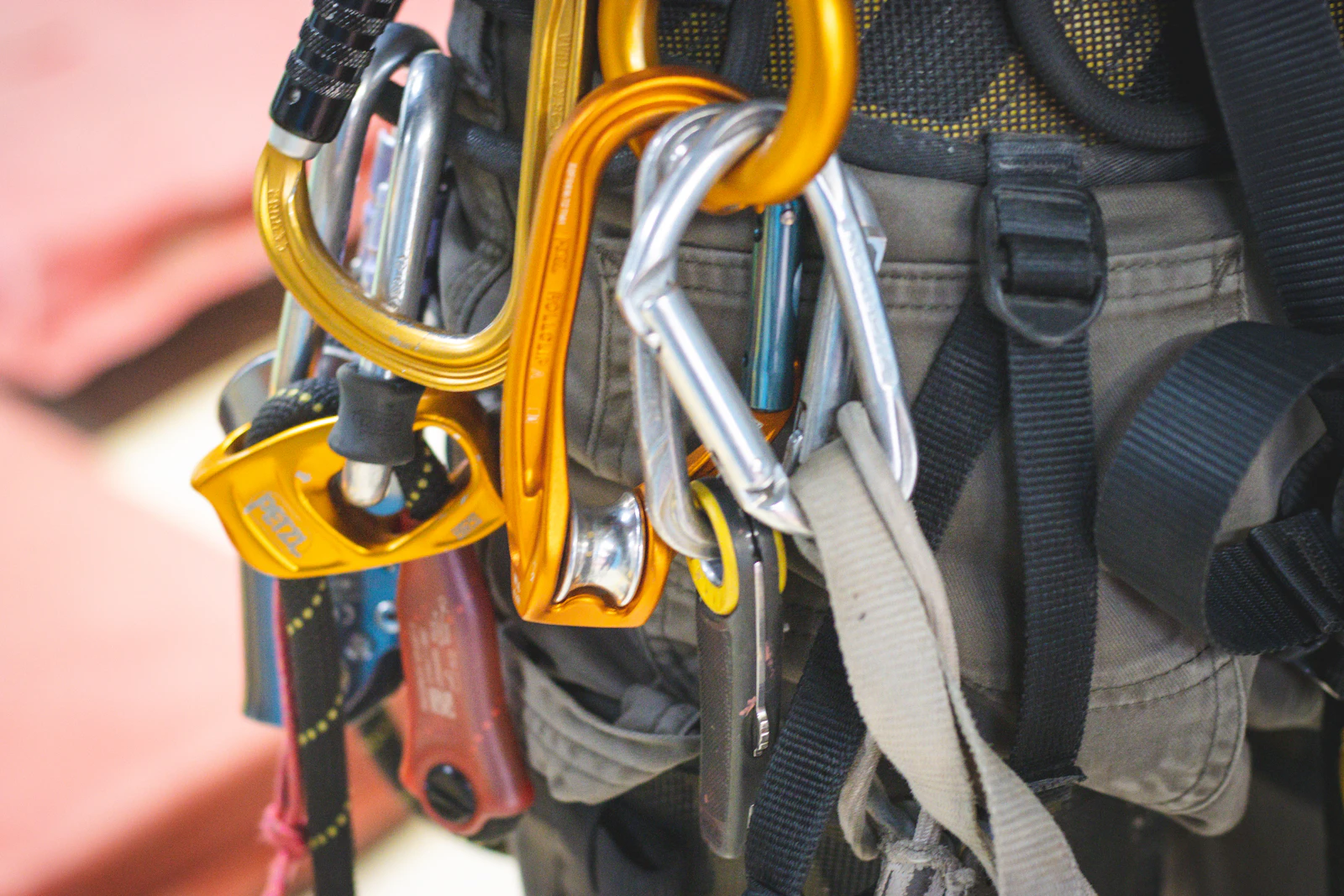
Austin’s harness kit equipment hire costs are usually not higher because the harness itself is special—it’s higher because your operational friction is higher. Three local considerations that routinely show up on invoices when the harness kits are tied to boom lift rental scopes:
From an equipment manager perspective, harness kits sit in a gray zone: they are low-dollar items compared with a boom lift rental, but they can create outsized admin and replacement cost. Hire can make sense when:
Owning is often cheaper when kits are continuously deployed across multiple crews and you have a controlled inspection program. Even then, you may still use rental harness kits as “gap coverage” when owned units are quarantined due to contamination or suspected loading.
Write one internal standard for “boom lift fall protection kit” and price it quarterly. If one superintendent orders harness-only and another orders harness + SRL, your historical cost data becomes unusable. Standardization also reduces surprise replacement exposure (for example, dual-leg vs. single-leg lanyards).
If you are already paying delivery/pickup on the boom lift rental, push to include harness kits on the same dispatch. This is the cleanest way to avoid the $75 minimum trip charge that can distort small PPE orders. When you cannot bundle, consolidate PPE shipments to reduce repeat handling fees.
Most harness kits that get charged cleaning fees were not “dirty by accident”—they were stored on the floor next to slurry, left in open beds during rain, or taped/paint-marked for crew identification. Implement two controls that rental coordinators actually see work:
Because harness kits are often added late to a boom lift rental order, they sometimes slip through without a clear read of the fine print. Confirm these items to prevent avoidable cost:
If you need a single “safe” number for early-phase bidding on a boom lift rental scope in Austin, a practical estimator’s approach is:
This approach keeps safety harness kit equipment hire costs visible, auditable, and controllable—so they don’t quietly balloon during the last week of a boom lift rental project when access, schedule, and return condition are hardest to manage.
Continue with estimating workflows, reviewed plan quantities, or cost guides organized by topic.