Build your next estimate with CountBricks
Create an itemized estimate for your project, with materials, labor, and quantities you can review and edit.
Create my estimateStart a 7-day free trial. Sign up, then enter your project details.
Safety Harness Kit Rental Rates Boston 2026
For Boston-area safety harness kit equipment hire supporting boom lift rental work in 2026, plan typical per-person rates of $25–$45/day, $75–$160/week, and $200–$480/month for a standard full-body harness + shock-absorbing lanyard kit (not a self-retracting lifeline). Pricing moves with ANSI/OSHA compliance requirements, inspection/traceability expectations, and whether the kit is bundled on the same contract as the lift. National rental houses that commonly provide fall protection equipment alongside MEWPs include United Rentals, Sunbelt Rentals, and Herc Rentals, with availability varying by branch and jobsite requirements. Benchmark public rate sheets in the U.S. often show a “safety harness & lanyard kit” in the high-$20s/day range, which is directionally consistent with Boston planning ranges once you account for delivery/admin and compliance handling.
| Vendor |
Daily Rate |
Weekly Rate |
Review Score |
Website |
| United Rentals |
$25 |
$75 |
8 |
Visit |
| Sunbelt Rentals |
$24 |
$72 |
8 |
Visit |
| Herc Rentals |
$54 |
$149 |
9 |
Visit |
| Cambridge Taylor Rental |
$20 |
$60 |
7 |
Visit |
What’s Included In A “Safety Harness Kit” For Boom Lift Rental Work?
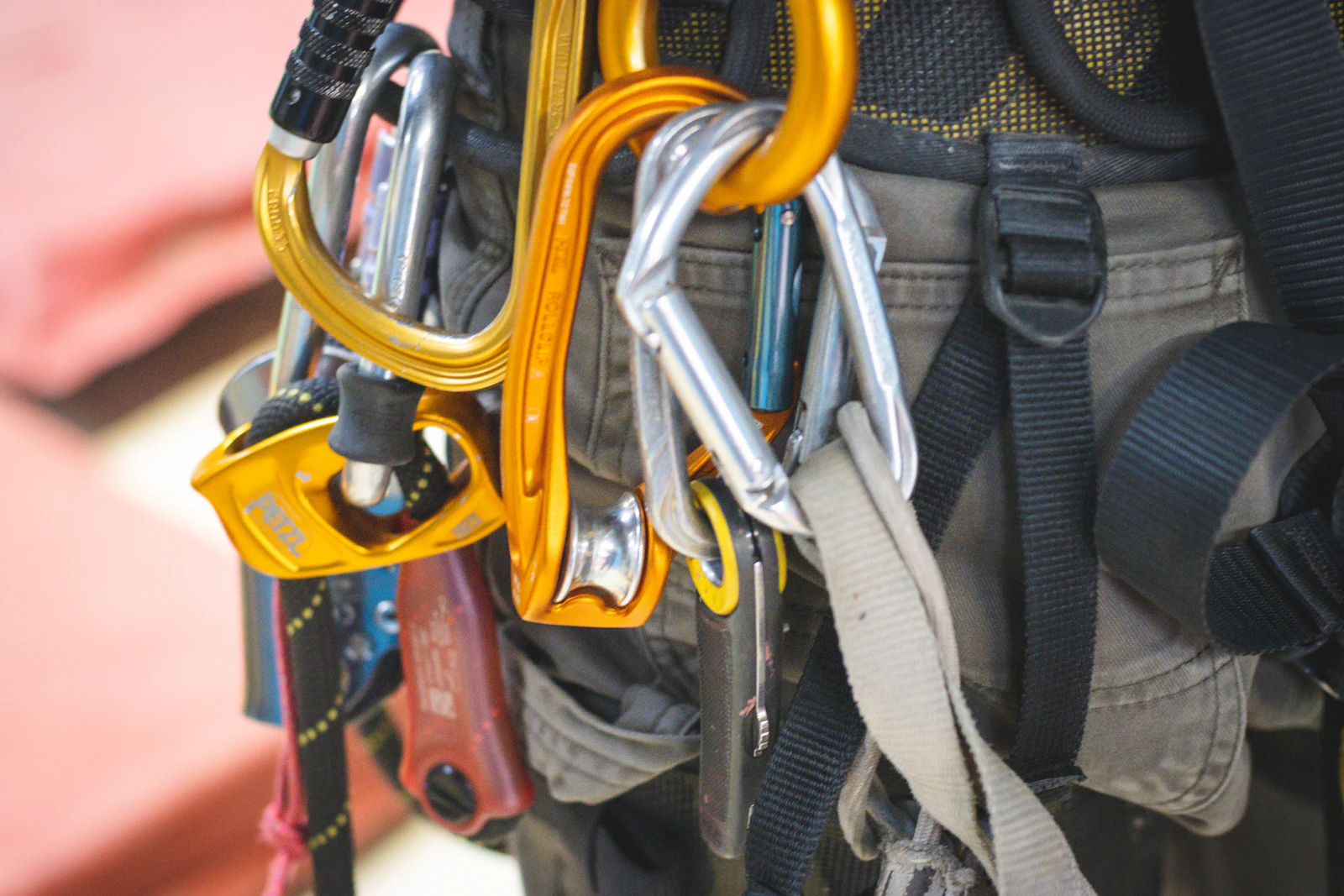
When rental coordinators request a fall protection harness kit hire item to support a boom lift rental, confirm the kit contents in writing—because “kit” can mean anything from a basic harness + 6 ft lanyard to a complete PFAS bundle. For Boston MEWP scopes, a typical rental kit is:
- Full-body harness (size-adjustable; often one universal size range per SKU)
- Shock-absorbing lanyard (commonly 6 ft / 1.8 m)
- Connectors (snap hooks / carabiners as supplied)
- Storage bag (sometimes included, sometimes an add-on)
- Inspection tag / serialized ID for traceability (critical on regulated sites)
Common adders you may need to quote separately for MEWP work include a self-retracting lifeline (SRL), an anchorage strap, or a twin-leg lanyard for 100% tie-off scenarios. These adders change your safety harness kit hire costs more than most teams expect.
Boston Equipment Hire Pricing Assumptions (So Your 2026 Budget Holds)
Use these assumptions when turning the planning ranges into a job-specific estimate:
- Rates are per kit, per worker, not “per lift.” A 2-person basket typically needs 2 kits.
- Standard kit assumes harness + shock-absorbing lanyard, not SRL. Upgrading to SRL typically adds $15–$35/day, $45–$110/week, or $120–$280/month depending on length rating and jobsite policies.
- Minimum billing is common. Even if the harness ships with the boom lift rental, many suppliers apply a 1-day minimum (and some apply a 3-day minimum for jobsite delivery setups).
- Off-rent timing matters: in the Boston metro, if you return after a 3:00–4:30 PM yard cutoff, the off-rent may start the next business day—which can add 1 extra day over a weekend.
- Condition/inspection requirements: most suppliers will not re-rent without inspection. Budget an inspection/handling line even if it’s bundled into the rate.
Cost Drivers Specific To Safety Harness Kit Hire On Boston Boom Lift Rental Jobs
Harness kits are “small ticket” compared to the boom lift rental itself, but they generate cost volatility through handling, compliance documentation, and replacement exposure. The biggest drivers we see in Boston estimates are:
- Compliance & traceability expectations: projects in healthcare, higher-ed, and lab/biotech fit-outs often require a serialized inspection log and return-condition documentation. If the vendor must re-tag or re-document, expect $10–$25/kit in admin/processing, or a higher base rate.
- Bundled vs. standalone contracting: when you add harness kits to the same contract as the boom lift rental, you may reduce separate handling charges (but you can also inherit the lift’s delivery rules and weekend billing terms).
- Jobsite access in Boston: downtown congestion, limited loading zones, and restricted delivery windows can add $75–$150 in jobsite coordination/after-hours fees if the harness kits are delivered with the MEWP rather than picked up.
- Winter and wet conditions: soaked or salt-contaminated gear can trigger cleaning or drying holds. A supplier may charge a $15–$40 cleaning/drying fee per kit if returned wet, muddy, or contaminated.
2026 Planning Ranges For Common Adders And “Small Fees” (High Impact Over A Month)
To keep Boston equipment hire costs realistic, it helps to model the fees that routinely land on invoices (even when base rates look good). Typical planning allowances:
- Damage waiver / rental protection plan: 10%–15% of the rental charges (some vendors apply this to accessories too, not just the lift).
- Pickup/return handling (counter/yard): $10–$35 per contract or per visit when you’re not on account terms.
- Delivery with boom lift rental: if accessories ride with the lift, freight is usually priced with the lift—commonly $150–$300 each way inside the inner Boston metro, plus $4–$7 per loaded mile outside a base radius.
- Minimum freight charge: even if the kit is small, on “deliver everything” jobs a supplier may apply a minimum of $175–$250 for a dedicated run.
- After-hours / timed delivery window: $100–$200 when a site demands a strict 7:00–9:00 AM arrival or night shift access.
- Weekend/holiday billing: some contracts bill Saturday/Sunday at 50%–100% of the daily rate if the gear remains on rent, or they enforce a 2-day weekend minimum.
- Lost/damaged inspection tag fee: $10–$30 if labels/IDs are removed or unreadable.
- Non-return / replacement exposure: plan replacement at $250–$450 per harness, $60–$120 per lanyard, and $200–$450 per SRL (varies by spec and brand).
- Decontamination / specialty cleaning: $50–$150 per kit if exposed to paint overspray, adhesives, or unknown substances (some suppliers will instead require full replacement).
- Restocking / early termination: if you demob mid-week, some vendors keep a 10%–20% restocking/processing fee on accessories returned early from a staged package.
Hidden-Fee Breakdown (Where Harness Kit Hire Costs Inflate Fast)
Harness kits are often treated as “accessories,” and accessory billing rules can differ from the boom lift rental rules. To avoid surprises, confirm these items on the PO and on the supplier’s contract terms:
- Delivery / pick-up basis: flat rate vs. mileage; whether accessories are “no additional freight” only when physically shipped with the lift.
- Fuel or recharge surcharges: not typical for harness kits, but some suppliers add a $5–$15 “consumables/environmental” line on small-ticket safety items. Ask upfront.
- Damage waiver vs. your insurance: confirm whether your COI waives the damage waiver; if not, budget the 10%–15% noted above.
- Cleaning fees: fees are most common when kits are returned wet/dirty or without being bagged; budget $15–$40 per kit for avoidable cleaning.
- Late return penalties: if the lift off-rents but the harness doesn’t (missing kit, missing tag, not checked in), you can pay 1–3 extra days at the daily rate.
Example: Boston Boom Lift Rental With Two Harness Kits (Real Constraints And Numbers)
Scenario: A façade punch-list in the Seaport requires a 60 ft boom lift rental for 12 working days with a 2-person crew. The GC requires documented inspection tags and gear bagging for indoor staging areas.
- Harness kit hire (2 kits): plan $35/day each x 12 days = $840 (or quote weekly: $120/week each x 2 weeks = $480, plus a few daily overrun days if needed).
- Damage waiver: 12% of harness rental (example) = $58–$101 depending on which rate structure is used.
- Timed delivery window coordination: jobsite restricts deliveries to 7:00–8:30 AM; allowance $150 if the supplier charges for timed access.
- Inspection/processing: allowance $20/kit = $40 if the vendor bills a separate handling line for serialized PPE.
- Boston cutoff risk: if returned after a 4:00 PM cutoff on Friday, you may incur 2 extra days at $35/day each = $140 (avoid by returning by noon Friday or scheduling Monday AM off-rent).
Takeaway: on a short 12-day MEWP scope, the harness kit base rate may be under $1,000, but timing, documentation, and weekend/off-rent rules can swing the total by $200–$450 without anyone “changing scope.”
Boston-Specific Operational Considerations That Change The Real Equipment Hire Cost
- Delivery radius norms: many branches serving Boston quote “local” within roughly 10–20 miles; outside that, mileage (often $4–$7/loaded mile) becomes material even for accessory-heavy orders.
- Downtown access and tunnels: if the boom lift rental is delivered on a flatbed that must route around restricted corridors, a “second attempt” fee of $100–$250 can hit if the site isn’t ready; confirm a live unload contact and a staging plan.
- Indoor dust-control expectations: on hospital or lab-adjacent floors, you may be asked to return harness kits bagged and separated from dusty rigging; failure can trigger cleaning/processing charges ($15–$40/kit).
How To Procure Harness Kit Hire Correctly (So It Matches The Boom Lift Rental Contract)
To keep your safety harness kit equipment hire costs aligned with the boom lift rental, standardize your internal request form with these details:
- Qty and basket occupancy: 1 kit per worker; note if you need 2-person occupancy.
- Connection type: lanyard vs SRL; if SRL, specify length class (common: 11 ft or 20–30 ft).
- Anchorage method: confirm the lift’s approved anchor points; add anchorage straps only if required and permitted.
- Start/stop times: request a delivery and off-rent time (e.g., 7:00 AM delivery, 2:00 PM return) to avoid cutoff billing.
- Documentation: require serialized ID list and inspection confirmation on delivery; require return sign-off on pickup.
Where The Public Benchmarks Land (Use As A Sanity Check)
If you need a quick benchmark to validate whether your Boston quote is in-family, public institutional price lists in the U.S. sometimes show a “Safety Harness & Lanyard Kit” around $27/day, $48/week, and $146/month, before local delivery/admin terms and before any SRL upgrades. That’s a useful reasonableness check when someone is trying to charge MEWP-level accessory margins on a basic kit.
Budget Worksheet
Use this bullet-only worksheet to build a Boston 2026 estimate for safety harness kit hire costs tied to a boom lift rental scope. Adjust quantities to match headcount and shift patterns.
- Safety harness kit rental (standard harness + shock-absorbing lanyard): ___ kits @ $___/day, $___/week, or $___/month
- SRL upgrade (if required by site policy): ___ units @ +$15–$35/day or +$120–$280/month
- Anchorage straps / tie-off accessories: ___ @ $15–$35 each (or $3–$8/day if rented)
- Damage waiver / rental protection: 10%–15% of accessory rental subtotal
- Delivery/pickup (if accessories ride with lift): $150–$300 each way inside inner metro OR $4–$7/loaded mile outside base radius
- Timed delivery or after-hours access allowance: $100–$200 per event
- Jobsite coordination / re-delivery contingency: $100–$250 (if site readiness is uncertain)
- Cleaning/processing allowance: $15–$40 per kit (wet/dirty returns)
- Documentation/admin allowance (serialized PPE): $10–$25 per kit
- Sales tax allowance (Massachusetts): apply per your tax status and contract terms (often 6.25% where applicable)
- Loss/damage reserve: $250–$450 per harness (only if your contract structure warrants a reserve)
Rental Order Checklist
This checklist is written for rental coordinators and equipment managers placing a PO for equipment hire that includes harness kits with a boom lift rental in Boston.
- PO scope alignment: confirm harness kits are listed as separate lines on the same contract as the MEWP (or explicitly as a linked accessory contract).
- Quantity control: 1 kit per worker; confirm if the platform will be occupied by 1 or 2 people.
- Compliance documentation: request serialized IDs, inspection status at dispatch, and any required cert/traceability documents.
- Delivery plan: specify delivery date/time window and site contact; confirm yard cutoff (often ~3:00–4:30 PM) to prevent off-rent slippage.
- Return requirements: confirm how the supplier wants kits returned (bagged, dry, tagged, free of paint/adhesive).
- Off-rent rules: confirm when billing stops (time of return vs next business day check-in) and weekend/holiday billing treatment.
- Damage waiver decision: accept/decline in writing; if declining, attach COI requirements and confirm acceptance before dispatch.
- Site rules that affect fees: indoor staging, dust control, and decon expectations—document who is responsible for cleaning prior to return.
- Closeout package: require pickup/return ticket with quantity verified (prevents “missing kit” charges).
How To Reduce Total Safety Harness Kit Equipment Hire Costs Without Compromising Compliance
- Match the billing unit to duration: if you’re going beyond ~3–4 days, weekly pricing often beats daily; beyond ~3–4 weeks, monthly usually beats stacked weeks.
- Control off-rent timing: schedule returns before Friday cutoffs to avoid 2 extra days over a weekend.
- Separate “wet work” gear: if crews are exposed to rain/salt slurry, keep rental kits dry and issue company-owned “sacrificial” gear for messy tasks—this can avoid $15–$40 cleaning fees and decon holds.
- Standardize kit specification: avoid last-minute SRL substitutions; upgrades can add $120–$280/month per worker and often trigger separate replacement exposure.
- Use documented return condition: photos at return + signed ticket reduces disputes over missing tags and “non-return” claims that can be $250–$450 per harness.
When Buying Beats Hiring (A Practical Threshold For Boston MEWP Programs)
Even for managers focused on equipment hire costs, harness kits are one of the few accessories where ownership can be cost-effective—if you can manage inspection, storage, and issuance. As a rough planning rule, if you routinely keep a kit on rent for 3+ months per year per worker (or you’re paying SRL upgrade rates continuously), compare annual rental spend against your internal ownership cost (purchase + periodic inspection + admin). If you do shift work across multiple Boston sites, ownership can also reduce timed delivery charges ($100–$200) and eliminate the “off-rent cutoff” problem.
Procurement Notes For 2026: What To Put On The Quote Request
To get apples-to-apples quotes for fall protection harness kit rental Boston, include:
- Exact kit definition: harness + 6 ft shock-absorbing lanyard (or SRL) + connectors + bag.
- Standard: require ANSI Z359-compliant components where applicable and jobsite-required labeling/serialization.
- Billing: request day/week/month rates, minimum days, weekend treatment, and off-rent cutoff time.
- Fees: ask for explicit values for damage waiver %, cleaning fees, timed delivery fees, and replacement charges for non-return.
- Boston access constraints: loading dock restrictions, delivery windows, badging/escort rules—these are the root cause of most “extra trip” charges.
Vendor Availability Note (Boston Market Reality)
Not every boom lift rental dispatch automatically includes harness kits, and some suppliers will only rent fall protection to established accounts due to liability/traceability policies. Start the harness kit request at the same time as the boom lift rental request—especially when your site requires serialized PPE documentation or when you need SRLs, which can be tighter in availability than basic lanyard kits.