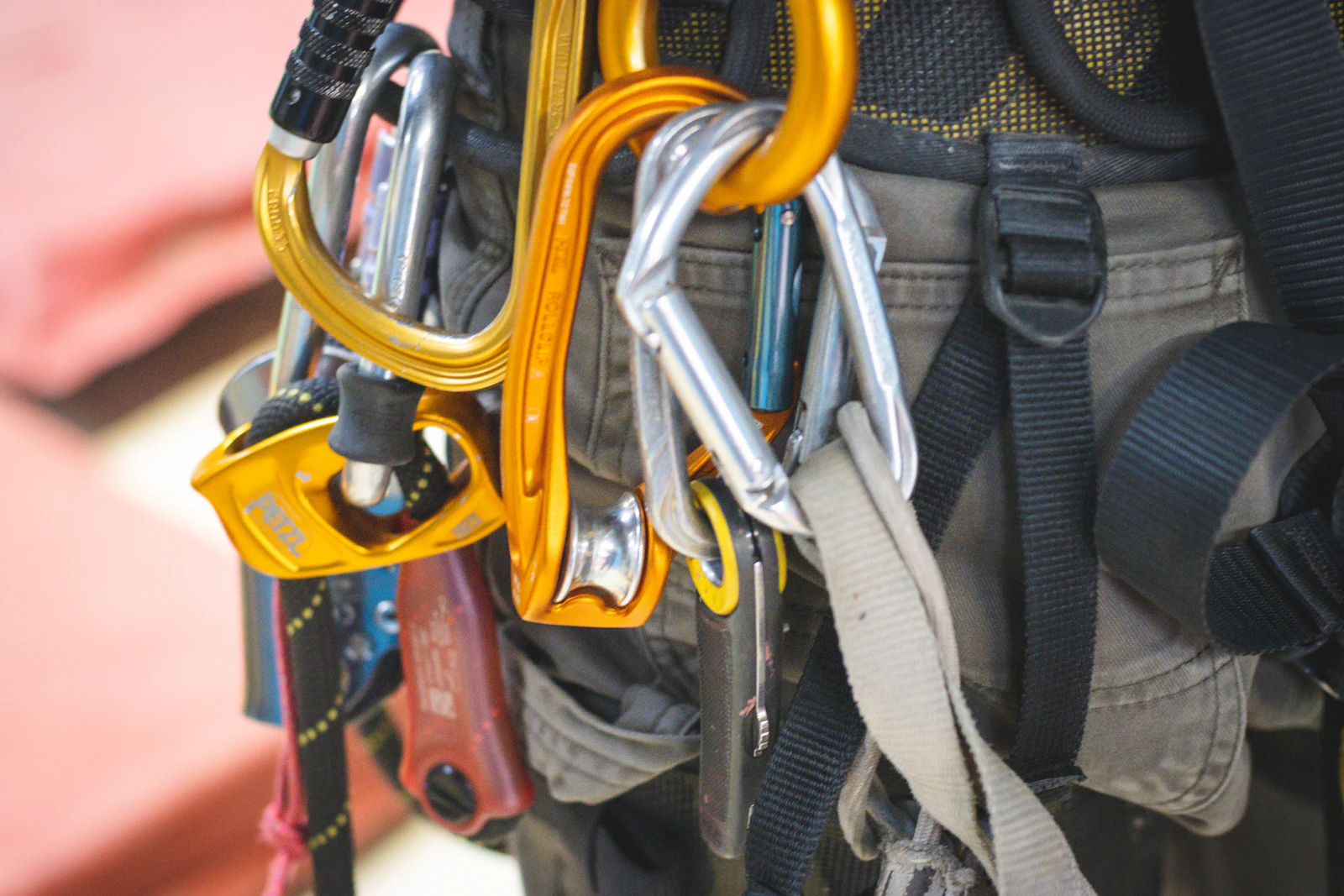
Safety Harness Kit Rental Rates Jacksonville 2026
For Jacksonville boom lift rental scopes in 2026, plan safety harness kit equipment hire in the following working ranges: $20–$45 per kit per day, $60–$175 per kit per week, and $150–$450 per kit per 4-weeks, depending on whether you are hiring a basic full-body harness + 6 ft shock lanyard kit versus a more complete fall-arrest kit that includes a rope lifeline/rope grab/anchor, or a self-retracting lifeline (SRL) package. As pricing anchors, published online rates show a harness-with-lanyard at $27/day, $54/week, $81 per 4-weeks and a more complete fall-arrest kit at $39/day, $156/week, $390 per 4-weeks, while another harness rental listing shows $25/day, $45/week, $105/month. Use these as calibration points, then confirm local branch availability and hygiene/inspection requirements (especially if kits are being hired alongside boom lift rental) with your preferred suppliers such as national rental fleets and Jacksonville-area safety specialists.
| Vendor |
Daily Rate |
Weekly Rate |
Review Score |
Website |
| United Rentals |
$50 |
$140 |
9 |
Visit |
| Sunbelt Rentals |
$49 |
$145 |
9 |
Visit |
| Herc Rentals |
$51 |
$142 |
9 |
Visit |
| EquipmentShare |
$45 |
$135 |
10 |
Visit |
What You’re Actually Hiring: Kit Definitions That Change the Rate
“Safety harness kit” can mean materially different things on a boom lift rental PO. Tighten your spec language so you can compare hire quotes apples-to-apples:
- Basic boom-lift kit (most common): full-body harness + single 6 ft shock-absorbing lanyard + storage bag/bucket. This usually sits at the lower end of the daily and weekly ranges.
- Enhanced kit for positioning/complex tie-off: harness + twin-leg (Y) lanyard, or harness + positioning strap. Typical adder: +$6–$15/day or +$20–$45/week depending on hardware grade and availability.
- Fall-arrest “compliance can” or roof-style kit: harness + lifeline/rope + rope grab + anchor bracket, sometimes packaged. These price higher (often closer to the $39/day class seen online).(m
- SRL-based kit: harness + SRL (common 20–50 ft) + connectors. SRLs typically drive the rate more than the harness itself; plan +$18–$45/day or +$70–$160/week incremental when an SRL is required by site policy or leading-edge exposure.
Jacksonville-specific note: if your boom lift rental work is coastal (Beaches, Mayport, port facilities) or in high-humidity summer conditions, expect stricter return-condition scrutiny (salt/soiling/odor) and a higher likelihood of cleaning or quarantine time impacting kit availability during peak periods.
Cost Drivers for Safety Harness Kit Equipment Hire on Boom Lift Rental Projects
Safety harness kit hire is “small-dollar” compared to boom lifts, but it is frequently a schedule extender and a fee multiplier when the order is not managed. The main cost drivers in Jacksonville are below.
1) Duration Billing: 24-Hour Day vs. Calendar Day
Many providers bill PPE on a true 24-hour clock (start time to start time). If your boom lift rental is delivered at 2:30 PM but the crew only works mornings, you can accidentally buy extra days of harness kit hire. To control this:
- Request a 7:00–9:00 AM delivery window for kits that start billing on delivery.
- Align off-rent with your supplier’s cut-off (commonly 2:00–4:00 PM) so the kit can be off-rented same-day instead of billing overnight.
2) Hygiene, Inspection, and “Ready-to-Rent” Handling
Fall protection rentals are typically inspected between hires. Some branches also apply sanitation/handling charges when kits return wet, muddy, or heavily perspired. Budget these common line items:
- PPE sanitation/cleaning fee: $12–$30 per kit when returned with excessive dirt, paint transfer, concrete dust, or strong odor.
- Detailed inspection/recert log admin: $5–$18 per kit if the site requires serialized inspection documentation attached to the invoice package.
- Missing/illegible ID tag or asset label: $20–$50 replacement/admin charge (this is a common dispute item if tags get torn off).
3) Delivery, Pickup, and “Alongside Boom Lift” Bundling
Harness kits are often shipped or couriered, or they ride on the same truck as the boom lift rental. Your total equipment hire cost changes based on logistics:
- Local delivery/pickup charge (each way): $65–$125 inside a standard metro radius.
- Mileage beyond the included radius: commonly $3.00–$5.00 per mile after the first 10–20 miles from the branch (important when the boom lift is going to Nassau, Clay, or St. Johns County edges).
- Same-day or after-hours dispatch: $125–$200 when you miss the normal routing cut-off.
- Jobsite access delays (port, secure industrial, downtown): waiting time can show up as a carrier surcharge; plan an allowance of $75–$150 if escorts/badging routinely slow unloading.
4) Damage Waiver / Rental Protection Plan and Small “Environmental” Adders
Even for PPE, many rental contracts offer an optional damage waiver/limited damage waiver. Typical market guidance is ~7%–10% of the rental amount, with some documents explicitly stating 10%.(m Separate from waivers, you may also see:
- Administrative or environmental recovery fee: 2%–5% of time charges (varies by contract structure).
- Fuel surcharge (logistics only): 3%–12% applied to delivery lines during volatile periods.
Hidden-Fee Breakdown for Safety Harness Kit Hire (Jacksonville)
Use this section as a pre-award “catch list” when you’re adding fall protection kit hire to a boom lift rental order.
- Minimum rental: many branches treat PPE as a 1-day minimum even if used for a 3-hour call-out.
- Weekend billing rule: if a kit goes out Friday and returns Monday, some suppliers bill it as 1 additional day (best case) while others bill Saturday + Sunday unless you negotiate a weekend rate on the PO.
- Late return: $8–$25 per kit per day (or pro-rated daily rate) after the scheduled off-rent time.
- “Wet return” handling: if harnesses come back soaked (common in Jacksonville summer storms), expect either a cleaning fee ($12–$30) or a short “drying/quarantine” delay that effectively extends billed time if off-rent is not processed correctly.
- Lost storage bucket/bag: $10–$35 replacement.
- Hardware missing (snap hooks/carabiners): $25–$80 each, depending on connector type.
Compliance Notes That Affect Hire Cost (Don’t Skip These on Boom Lift Rental)
Many industrial owners in the Jacksonville region enforce strict fall protection rules for aerial work. For example, site specs may require a full-body harness with a shock-absorbing lanyard or SRL when working from articulating/extendible booms and can prohibit body belts.(m From a rental coordinator viewpoint, that requirement drives cost in three ways:
- Quantity control: you typically need one kit per authorized occupant in the platform (e.g., a 2-person boom lift means budgeting 2 kits, not one “shared” kit).
- Documentation: you may need serialized inspection history, which can add $5–$18/kit admin as noted above.
- Removal-from-service: if a kit is involved in a fall event, it is generally removed from service—most rental contracts treat that as billable replacement (budget a contingency instead of fighting it later).
Example: Jacksonville Boom Lift Rental + Harness Kit Hire (With Real Constraints)
Example: A mechanical contractor rents a 60 ft articulating boom for a hospital roof-top unit changeout in Jacksonville. Site rules require 2 occupants tied off at all times in the basket, daily pre-use checks, and return of PPE in clean condition.
- Rental duration: 9 working days, but weather risk (summer thunderstorms) means you should budget 12 calendar days on the lift and PPE.
- Kits required: 2 basic harness + 6 ft lanyard kits at $110/week each (planning rate), billed for 2 weeks = $440.
- Damage waiver: 9% of time charges = $39.60.
- Delivery/pickup: combined on the boom lift truck, but the carrier adds a small-stop charge for PPE handling: $85 each way = $170.
- Cleaning allowance: $20/kit because the job involves fiberglass dust and sweat exposure = $40.
Planning total for PPE line items: $689.60 (before tax/other contract fees). The operational constraint that changes the total is the 12-day calendar risk: if you don’t off-rent immediately after the final lift day (and miss the branch cut-off), you can easily add 1–2 extra billed days across two kits.
Budget Worksheet (No Tables)
- Safety harness kit equipment hire (basic): ___ kits × ___ weeks × $60–$175/week allowance
- SRL adder (if required): ___ SRLs × ___ weeks × $70–$160/week allowance
- Delivery/pickup (PPE lines): $130–$250 (round-trip) allowance, plus mileage after 15 miles at $3.00–$5.00/mi
- Damage waiver / rental protection: 7%–10% of PPE time charges allowance(m
- Sanitation/cleaning: $12–$30/kit allowance
- Admin/inspection documentation: $5–$18/kit allowance
- Contingency (lost/damaged components): $75–$250 per project (covers missing connectors/bags and minor disputes)
Rental Order Checklist (PPE + Boom Lift Rental Coordination)
- PO includes: kit type (basic harness + 6 ft lanyard vs. rope kit vs. SRL kit), quantity, sizes (S/M, L, XL), and maximum platform occupants.
- Specify billing: confirm whether PPE starts billing at dispatch, delivery, or sign-off; request AM delivery if using 24-hour billing.
- Delivery instructions: site access window, gate code, escort/badging needs (common at port/industrial sites), and dock vs. laydown location.
- Documentation: request serialized asset list and inspection confirmation if owner requires it; align with closeout package requirements.
- Return requirements: photo the harness condition and ID tag at off-rent; confirm the supplier’s off-rent cut-off (often 2:00–4:00 PM).
- Return condition: remove tape/labels, keep straps dry, and return in the provided bag/bucket to avoid $10–$35 replacement charges.
Procurement tip for Jacksonville: If your boom lift rental is running over multiple sites (e.g., Southside then JAXPORT), consider whether PPE should remain assigned to individuals and travel with the crew. That can reduce cleaning disputes but may increase the risk of “lost kit” charges if not tracked by badge/asset ID.
How to Compare Quotes for Safety Harness Kit Equipment Hire (Without Getting Burned)
When you receive pricing for safety harness kit rental in Jacksonville tied to a boom lift rental, the most important step is to normalize the quote structure. Two quotes can have the same “weekly rate” but differ by 20%–40% after waivers, delivery lines, and return-condition charges.
Normalize These Items
- Kit contents and rating: confirm whether the lanyard is single-leg or twin-leg and whether connectors are scaffold hooks or standard snap hooks (connector type is a cost driver).
- Included accessories: verify whether the quote includes a storage bucket/bag and whether the supplier will provide spare connector keepers or tag protectors.
- Billing unit: “4-week” may not equal “monthly” on every contract; some contracts treat a month as 28 days and then revert to daily rates afterward.
- Off-rent method: ask if off-rent is accepted by email/app, and whether it requires a confirmed pickup ticket number.
Managing Off-Rent on PPE: The Quiet Driver of Extra Days
PPE is small and easy to overlook at demobilization. That’s exactly why it tends to bill extra days—especially if the boom lift rental is picked up but the harness kits were left in a gang box, in a foreman truck, or at a different gate.
Practical controls that reduce billed time:
- Same-day off-rent discipline: set an internal deadline of 1:00 PM for the superintendent to confirm PPE is staged for pickup and off-rented with the vendor before the 2:00–4:00 PM typical cutoff.
- Return confirmation: require a receiving signature or check-in acknowledgement within 24 hours of pickup. If not received, escalate while the truck route data is still available.
- Weekend strategy: if the boom lift rental is idle over a weekend, confirm whether PPE can be off-rented Friday to avoid weekend billing (or negotiate a “weekend cap” on the PO).
Jacksonville Field Conditions That Change Total Hire Cost
Local operating realities can change harness kit hire cost even if the base rate is competitive:
- Heat and humidity load: in Jacksonville summer (especially July–September), perspiration drives more frequent cleaning and increases the probability of $12–$30/kit sanitation charges unless crews keep kits bagged and out of standing water.
- Afternoon storm downtime: weather pushes boom lift rental schedules, which quietly pushes PPE days too. If the job slips 2 days, two kits at $30/day planning rate is another $120 before waivers/fees.
- Security gates and restricted sites: port/industrial/downtown sites can force narrow delivery/pickup windows. If you miss the window and require redelivery, budget an extra $65–$125 trip charge.
When Hiring Is More Expensive Than Buying (And When It Isn’t)
Rental coordinators frequently ask whether they should just purchase harness kits rather than hire. The practical answer depends on how your company manages assignment, inspection, and replacement.
- Hire can win when the need is short-term (1–3 weeks), when you need quick surge capacity for a shutdown, or when you need a supplier-managed inspection process and don’t want internal QA overhead.
- Buying can win when the same technicians are in lifts weekly and you can assign one harness per worker, control storage, and maintain inspection logs. (Even then, you may still hire SRLs for specific scopes.)
Use a simple break-even thought process: if your local hire is $110/week for a kit and you expect to keep a harness in service for 20 working weeks per year, recurring hire is $2,200/year per worker before fees. At that point, purchasing plus internal inspection processes often pencils—but only if you have disciplined asset control to avoid “lost PPE” rebuys.
Loss, Damage, and Replacement Cost Exposure (Budget It Upfront)
Most disputes on harness kit rental are not about the weekly rate—they are about missing or damaged components at return. Plan and communicate replacement exposures in advance:
- Lost full-body harness (typical charge exposure): $150–$300 depending on class/brand.
- Lost shock-absorbing lanyard: $60–$140.
- Lost SRL: $300–$650 (length/type dependent).
- Lost rope lifeline/rope grab component: $90–$250 combined exposure, depending on kit configuration.
- Concrete slurry/paint contamination: can trigger a “non-returnable” determination; keep a contingency of $200+ on dirty scopes (demo, coating, sanding) if kits aren’t protected.
Practical Spec Language for the PO (Reduces Change Orders)
If you want stable equipment hire pricing, give vendors an unambiguous scope. Example PO line language you can adapt:
- “Safety harness kit rental” = ANSI/OSHA compliant full-body harness, size L/XL unless otherwise noted, with 6 ft shock-absorbing lanyard, locking snap hooks, and storage bag/bucket.
- Include documentation: serialized asset list and last inspection date provided with invoice closeout.
- Return condition: clean/dry, straps free of concrete/paint; missing bag billed at replacement cost.
- Commercial terms: damage waiver accepted at 9% of PPE time charges (or “waived” if you carry your own insurance and vendor agrees).
Closeout Procedure: Document Return to Prevent Extra Billing
To stop accidental overbilling on harness kit hire (common when coordinating multiple boom lift rental assets), implement a simple closeout routine:
- Take 4 photos per kit: full harness front, full harness back (show D-ring), lanyard label area, and the asset/ID tag.
- Email off-rent notice with photos before the vendor cutoff and request a pickup ticket number.
- Confirm pickup within 1 business day; confirm check-in within 2 business days.
- Reconcile invoice to PO: time charges + waiver (7%–10%) + delivery lines + cleaning/admin.(m
Bottom line for Jacksonville 2026 planning: if you manage timing and return condition, safety harness kit equipment hire typically stays predictable and low relative to boom lift rental. If you don’t, the “small” PPE line is where you’ll see avoidable extra days, cleaning fees, and replacement charges.