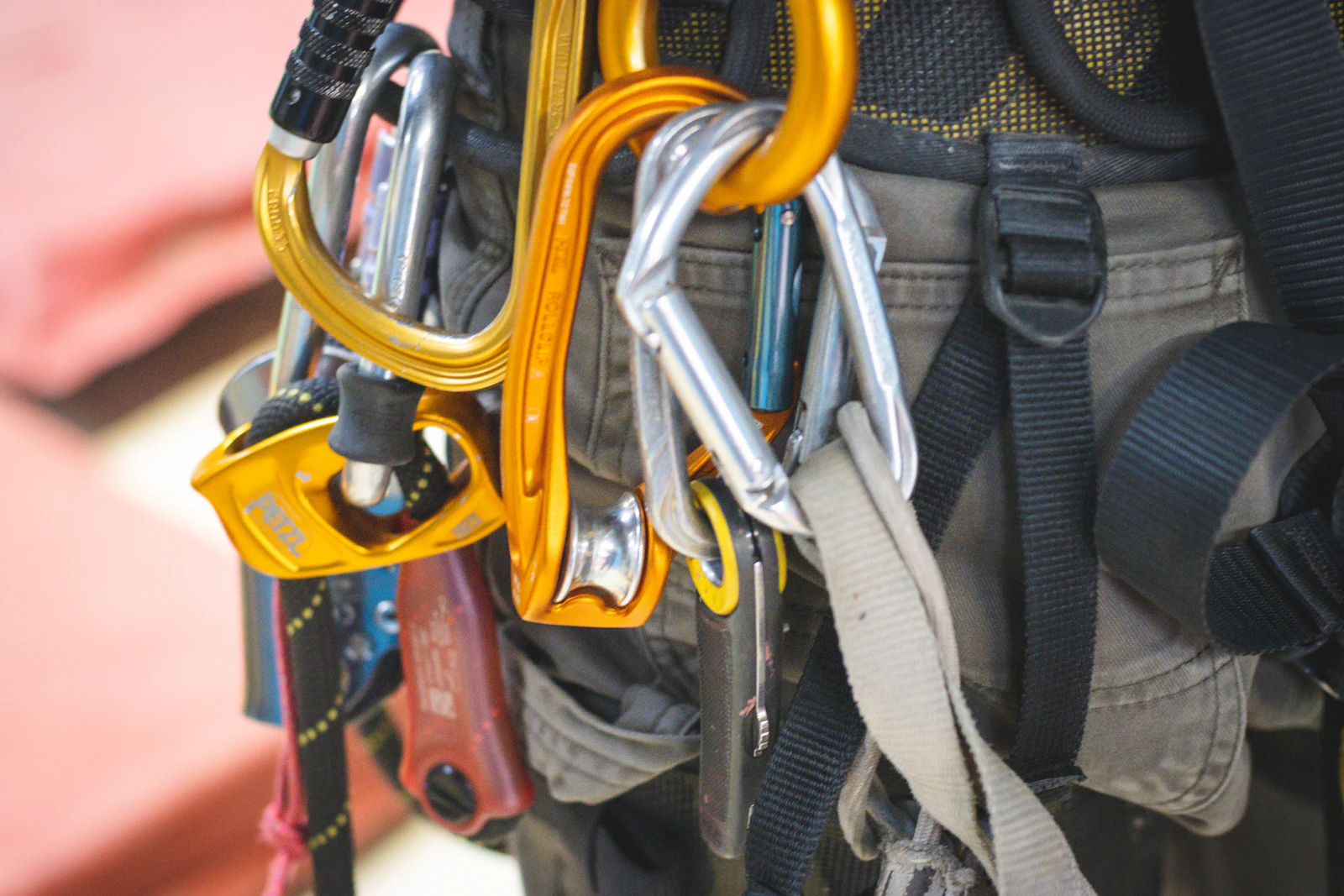
Safety Harness Kit Rental Rates New York 2026
For boom lift rental work in New York in 2026, plan safety harness kit equipment hire budgets in the range of $20–$35/day, $45–$85/week, and $120–$220/month per kit when you are renting standard fall-protection PPE (typical kit: full-body harness plus shock-absorbing lanyard, sized and tagged for one worker). These are planning ranges for NYC-area projects where last-mile logistics, documentation, and return-condition controls often drive total cost more than the base rate. As pricing anchors, a New York State contract schedule lists a Safety Harness & Lanyard Kit at $27/day, $48/week, $146/month (rate example) and shows a separate transport line item of $250 each way per item within 30 miles (logistics example). Another rental listing also shows $27/day for a safety harness with lanyard, reinforcing the day-rate order of magnitude you’ll see across the region.
| Vendor |
Daily Rate |
Weekly Rate |
Review Score |
Website |
| United Rentals |
$28 |
$56 |
8 |
Visit |
| Sunbelt Rentals |
$30 |
$60 |
9 |
Visit |
| Herc Rentals |
$27 |
$48 |
9 |
Visit |
| EquipmentShare |
$29 |
$58 |
8 |
Visit |
What’s Included In A Safety Harness Kit For Boom Lift Rental?
When a PM or rental coordinator asks for a “safety harness kit” to support a MEWP/boom lift rental scope, the pricing hinges on what the supplier considers a kit. In New York, most rental counters will interpret a basic kit as:
- Full-body harness (multiple sizes; may be universal but still must fit and be adjusted correctly).
- Shock-absorbing lanyard (commonly 6 ft; single-leg or twin-leg depending on access plan).
- Connectors (snap hooks/carabiners appropriate to the lift’s anchor and your tie-off method).
- Storage bag and, on better-managed programs, a tracking tag/ID to support inspections and turn-in.
Some large boom-lift rental providers market a “personal fall protection system for aerial work platforms” that includes a harness and lines intended for use on an AWP platform; in mixed packages, the harness-kit hire cost may be bundled or priced as an accessory add-on to the lift contract rather than a standalone PPE line.
What Drives Safety Harness Kit Equipment Hire Cost In New York?
To keep equipment hire costs predictable on NYC projects, treat the harness kit as a controlled asset with defined configuration, user assignment, and return requirements. The most common cost drivers for safety harness kit hire in New York include:
- Kit configuration and rating: a basic harness + lanyard is typically the lowest-cost hire. Upgrading to a self-retracting lifeline (SRL) can materially change the weekly/monthly burn (see SRL examples below).
- Rental term structure: many suppliers apply a 1-day minimum even if your crew only uses the kit for a partial shift; others push PPE to a 1-week minimum for tracking and hygiene control. Budget an allowance for whichever is stricter on your account.
- Per-worker assignment: NYC GCs frequently require PPE to be assigned to an individual (no sharing). That drives quantity and reduces your ability to “float” a single kit across multiple operators on rotating shifts.
- Documentation load: expect requests for serial number capture, inspection evidence, and sometimes manufacturer info on lanyards/harnesses before gate entry—admin time that becomes real cost when you’re trying to off-rent on a deadline.
- Return condition and contamination risk: interior fit-out, façade work, and concrete operations can contaminate webbing; that’s where cleaning/condemnation disputes happen.
NYC-Specific Cost Factors That Commonly Move The Total Hire Price
New York City is not a typical “will-call and toss it in the truck” market for PPE when the harness kit is supporting a boom lift rental scope in Manhattan or dense borough corridors. Two to three NYC realities that commonly change your total safety harness kit equipment hire cost are:
- Delivery and access constraints: many sites require booked dock windows, COI submission, and a check-in process that can turn a simple PPE drop into a chargeable service trip. If you miss the building’s receiving window, you may get bumped to the next day and pay an extra day of rental.
- Last-mile handling limits: suppliers often deliver to curb/dock only; moving PPE to a floor can require your labor or building labor. Plan internal handling time so the kits don’t sit “on rent” unused.
- Dust-control and housekeeping rules indoors: on occupied buildings and healthcare/education work, bagging requirements can reduce cleaning disputes on return; skipping them can trigger cleaning fees or condemnation.
Hidden-Fee Breakdown For Safety Harness Kit Hire In New York
Below are planning allowances that experienced rental coordinators commonly carry on NYC estimates for harness kit hire supporting boom lift rental scopes. These are not guaranteed charges—use them to prevent budget surprise and to pressure-test quotes before you cut the PO.
- Local delivery/pickup: carry $75–$175 per trip for standard borough delivery when bundled with a boom lift dispatch; for courier-style PPE-only runs, carry $40–$95 depending on cutoffs and access.
- After-hours / weekend receiving: if the site only takes deliveries before 7:00 a.m. or after 4:00 p.m., carry an additional $125–$250 service premium for a special run.
- Minimum rental charge: assume 1 day minimum per kit even if returned same day; for “issued PPE” programs, assume a 1 week minimum on the first issue.
- Damage waiver / RPP style coverage: carry 10%–15% of base rental as a typical waiver-style add-on on tool/PPE lines (varies by account and vendor program).
- Cleaning / decon fee: carry $35–$90 per kit if the harness is returned with concrete slurry, paint, roofing tar, heavy dust, or adhesive overspray.
- Missing tag / ID replacement: carry $10–$25 if the supplier uses serialized tags and they come back unreadable or removed.
- Late return penalty: carry 1 additional day when off-rent misses the vendor cutoff; as an internal control, budget $10–$20/day per kit as the cost of “lost time” if the kit sits at the gate waiting on paperwork.
- Loss / theft replacement (planning only): carry $180–$350 for a harness replacement and $60–$140 for a lanyard replacement if a kit cannot be returned/accepted.
Note on logistics line items: some public schedules in New York explicitly separate base rental from transport and show transport charges such as $250 each way per item within 30 miles (example). In NYC, even if your supplier’s structure differs, treat transport as a separate risk bucket rather than assuming PPE rides free with the lift.
SRL Upgrades (When A “Kit” Isn’t Just Harness + Lanyard)
If your boom lift job hazard analysis requires an SRL (or the GC’s safety plan mandates it for specific tasks), the rental cost shifts quickly. As reference pricing for 2026, MSA’s rental guide lists weekly/monthly examples such as a 23 ft web SRL at $56.75/week and $169/month and a 30 ft cable SRL at $87.50/week and $263/month. Treat these as SRL-only reference points (not a full kit), then add your harness kit rate on top if the SRL is not bundled.
Rent Vs Buy: When Purchasing Beats Safety Harness Kit Equipment Hire
For New York projects, the rent-vs-buy decision is usually driven by (a) how many unique workers must be issued PPE and (b) how long the crew will remain mobilized. If your vendor’s hire cost is around $120–$220/month per kit and your purchasing cost basis is roughly $190–$300 for a compliant harness + lanyard set (spec-dependent), the break-even can be as short as 1–2 months once you add delivery, cleaning risk, and administrative churn. Conversely, for short-duration façade punch, signage, or MEP tie-ins where you only need kits for 3–10 days, equipment hire keeps your PPE compliant without tying up capex or storing used harnesses between jobs.
Budget Worksheet (Equipment Hire Cost Allowances)
- Safety harness kit equipment hire (base): ____ kits × $20–$35/day (or $45–$85/week; $120–$220/month) × ____ time
- Delivery/pickup allowance: $75–$175 per trip × ____ trips (carry $125–$250 per special run)
- Damage waiver / protection plan allowance: 10%–15% of base rental
- Cleaning/decon allowance: $35–$90 per kit (apply to % of kits exposed to concrete/roofing/paint)
- Lost/missing components allowance: $10–$25 per kit for tags/labels; $20–$45 for a missing connector (planning)
- Replacement reserve (jobsite loss): $180–$350 per harness and $60–$140 per lanyard (planning)
- Admin/coordination time allowance: 1–2 hours per mobilization for COI/site receiving + off-rent confirmation
Rental Order Checklist
- PO details: list “Safety Harness & Lanyard Kit” (or exact kit configuration), quantity, and rental term (day/week/month structure).
- Jobsite documentation: COI requirements, delivery contact, and dock/curbside rules (include building delivery window cutoff time).
- Configuration: harness sizes required (S/M/L/XL), lanyard type (single vs twin leg), and any SRL requirement.
- Inspection/acceptance: require serialized ID/asset tag, and capture photos at receipt (webbing, labels, hooks).
- Use rules: confirm tie-off method for the boom lift and required accessories (anchor strap if permitted, tool lanyards if mandated by GC).
- Off-rent plan: confirm vendor’s off-rent cutoff (e.g., same-day off-rent must be called in before a stated time) and weekend/holiday billing rules.
- Return condition: require kits returned dry, bagged, and free of concrete slurry/paint; document any damage before pickup.
Example: NYC Boom Lift Rental With Short-Duration Harness Kit Hire
Example: A Midtown Manhattan project schedules a 2-day boom lift rental for atrium lighting work, with 2 operators requiring issued fall-protection kits. You carry 2 kits × $27/day × 2 days = $108 as a base benchmark (consistent with published day-rate examples). The site only receives deliveries 6:00–7:00 a.m., so you add a $175 special-run allowance and 12% damage waiver on the base. One kit returns with gypsum dust and adhesive overspray from ceiling patching; you carry a $50 cleaning allowance. Total planning cost for PPE hire becomes approximately $108 + $175 + $13 + $50 = $346, which is a realistic example of how NYC logistics and return condition can exceed the nominal harness-kit rental rate even on a short job.
Where New York Teams Typically Source Harness Kit Hire (Operational Note)
In practice, NYC teams often source harness kits through the same channels as the boom lift rental (national providers with local branches) or through metro-area tool houses that service Manhattan/Brooklyn/Queens corridors. When you’re aligning harness kit hire to a boom lift rental, the lowest total cost is usually achieved by matching delivery windows, keeping kits on the same contract as the lift where possible, and enforcing strict return-condition controls to avoid cleaning/condemnation.
How To Control Safety Harness Kit Equipment Hire Cost During The Job
Once the kits are on site, the cost-control play is less about negotiating a $2/day delta and more about eliminating avoidable extra days, special runs, and disputes. NYC projects are especially sensitive to off-rent timing and receiving access, so put process around the harness kit the same way you would around the boom lift rental itself.
- Assign kits by name and shift: if you have 3 shifts but only 2 kits, you’ll either end up noncompliant or paying for emergency courier runs. Align quantity to peak headcount, not average headcount.
- Bag-at-source rule: require operators to bag the harness kit before leaving the work area. This reduces contamination and supports “return as received.”
- Photo documentation at both ends: take receipt photos on Day 1 and return photos on off-rent day. This is the simplest way to avoid paying a $35–$90 cleaning charge that should have been contested.
- Cutoff discipline: if your supplier’s off-rent cutoff is midday (common), missing it can cost an extra day. Treat “off-rent call made” as a closeout task with a timestamp, not a verbal note.
Weekend, Holiday, And Off-Rent Rules (Why They Matter In New York)
For harness kit hire tied to boom lift rental schedules, weekend billing is frequently where budgets slip. If your boom lift is scheduled to off-rent Friday but the harness kits remain on site until Monday morning pickup, you can unintentionally add 2 extra days (or trigger a full additional week, depending on the vendor’s PPE rules). To prevent that, coordinate the harness kit pickup on the same ticket as the lift pickup whenever possible and confirm whether the supplier bills PPE on a 24-hour day or on a shift/day-count basis. In NYC, building access restrictions can force Monday-only pickup, so budget a contingency of 1–3 extra days for demob unless you have a staffed dock window on Friday.
Accessories That Commonly Get Added To The Harness Kit Line
Even when your original request is simply “safety harness kit,” NYC safety plans often trigger adders that should be carried as separate allowances under equipment hire cost:
- Tool tethering: if the GC requires dropped-object prevention, add tool lanyards and anchors as separate rental or purchase lines (common in Manhattan atriums and active sidewalks).
- SRL adders: if you move from a lanyard to an SRL mid-job, your weekly spend can jump by $56.75/week (23 ft web SRL example) up to $87.50/week (30 ft cable SRL example), plus the harness kit base if not bundled.
- Confined space / rescue scope creep: if the job transitions into a rescue-ready plan, costs escalate into tripod/winch/rescuer rentals (carry separate lines; do not let these get buried in “PPE”).
Documentation, Inspection, And Why “Clean Return” Is A Cost Item
Manufacturers and program operators commonly require inspection discipline (user pre-use and periodic examination by a competent person). For example, MSA’s lanyard documentation describes inspection expectations including pre-use inspection and periodic examinations at intervals that can be as frequent as 3–6 months under severe service. While your rental vendor owns the formal recertification burden, your project cost is affected when webbing is returned cut, painted, chemically exposed, or with missing labels—because the vendor may have to remove it from service and charge you for replacement. Treat “clean return” as a production requirement, not a courtesy.
New York Procurement Notes For Rental Coordinators
If you’re building a harness-kit hire line for New York work, use contract schedules and published regional examples as sanity checks, then validate your actual account pricing via quote. A New York State schedule shows $27/day, $48/week, $146/month for a safety harness & lanyard kit and separately shows transport as a billable item (e.g., $250 each way per item within 30 miles). Even if your commercial supplier prices differently, the takeaway is that (1) day/week/month rates for harness kits are relatively modest and (2) logistics, access, and return condition commonly dominate total cost in NYC.
Closeout: Fast Ways To Reduce Total Equipment Hire Cost Without Cutting Safety
- Bundle dispatch: align harness kit delivery/pickup with the boom lift rental truck to avoid a standalone $40–$95 courier run or $75–$175 delivery ticket.
- Right-size quantities: avoid renting “just in case” kits that sit unused; in NYC, unused kits still incur rental and are at higher risk of being lost on a crowded site.
- Preventable cleaning fees: a $35–$90 cleaning hit on 4 kits is $140–$360—often equal to (or more than) the base rental on short jobs.
- Off-rent confirmation: make the off-rent call before cutoff, get a confirmation number, and document the pickup window so you don’t pay extra days due to “no record of off-rent.”
If you want, share the borough (Manhattan/Brooklyn/Queens/Bronx/Staten Island), estimated headcount, and duration, and I can tighten this into a PO-ready allowance with realistic delivery/off-rent contingencies for your specific boom lift rental schedule.