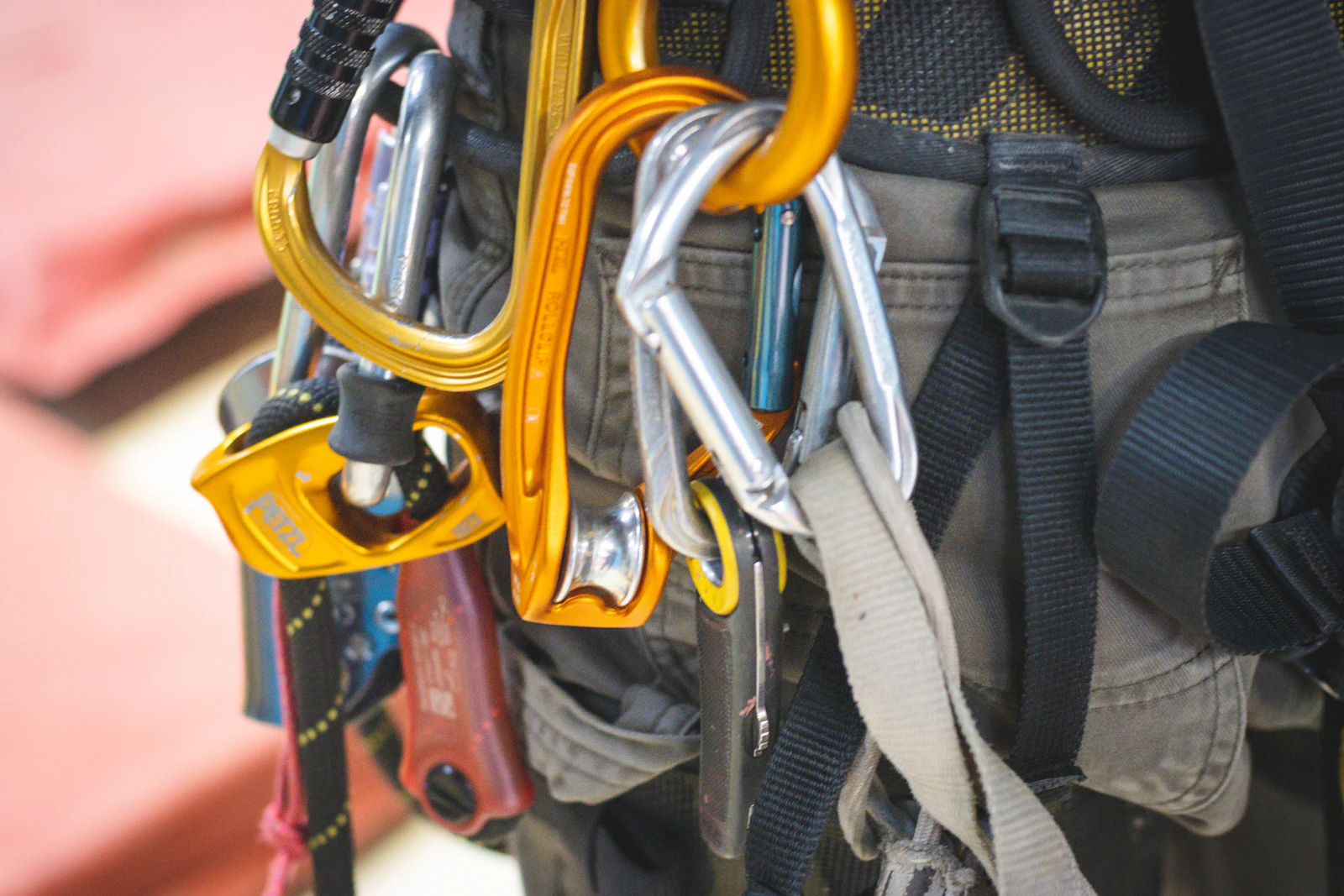
For San Francisco boom lift rental projects in 2026, plan safety harness kit equipment hire at roughly $20–$45/day, $80–$160/week, or $220–$480 per 28-day month per operator kit (full-body harness + appropriate aerial-lift lanyard and basic connectors). These are planning ranges (not guaranteed quotes) and assume commercial-grade PPE that is inspected, documented, and issued per operator, with Bay Area logistics and compliance overhead. Major rental fleets that supply boom lifts (e.g., national MEWP rental houses and local Bay Area branches) can often source the kit as an add-on, but it is frequently billed as a separate line item rather than “included” with the boom lift rental.
| Vendor |
Daily Rate |
Weekly Rate |
Review Score |
Website |
| United Rentals |
$45 |
$125 |
9 |
Visit |
| Herc Rentals |
$43 |
$120 |
9 |
Visit |
| Airgas (On-Site Safety Services) |
$40 |
$110 |
7 |
Visit |
Safety Harness Kit Rental Rates San Francisco 2026
How these 2026 San Francisco hire ranges are built: published rate sheets from other North American rental centers show very wide harness-and-lanyard pricing (for example, one rental shop lists $27/day, $54/week, $81/4-weeks, while another published list shows a $10/day, $40/week, $120/4-weeks line item for “Safety Body Harness & Lanyard,” and a separate published list shows “Safety Harness” at $5 on its rate sheet). San Francisco planning ranges typically trend higher once you layer in Bay Area delivery constraints, jobsite access, compliance documentation handling, and the fact that PPE is often treated as a low-dollar but high-liability item.
Assumptions (so estimators don’t get surprised): many California rental contracts use a 28-day month and may apply a 5-day week convention on some items (or different conventions by category). Confirm whether your supplier bills PPE on calendar days (7) or workdays (5), and whether weekends are “free time” or billable when the boom lift stays on rent.
What Drives Safety Harness Kit Hire Pricing On San Francisco MEWP Jobs?
With harness kits, the base rental number is rarely the only cost driver. The biggest swings for aerial lift fall protection equipment hire in San Francisco usually come from (1) what’s in the kit (restraint lanyard vs SRL vs leading-edge SRL), (2) how many individual operators need dedicated kits (one kit per person is the norm), (3) documentation and inspection traceability requirements from GC/EHS, and (4) delivery and return logistics in dense urban zones.
- Kit type: A basic harness + short aerial-lift restraint lanyard typically rents less than a kit that includes a self-retracting lifeline (SRL).
- Documentation burden: If the GC requires inspection logs, serial number tracking, and issue/return sign-off per operator, expect administrative handling to show up as fees or higher minimums.
- Downtown access: Union Square/SOMA/Fidi delivery constraints (parking, curb time limits, freight elevator scheduling) can add real cost even for small PPE.
What Is “A Safety Harness Kit” When It’s Tied To Boom Lift Rental?
For boom lift work, the “safety harness kit” being hired should be aligned to the lift manufacturer instructions and site EHS plan. In California aerial lift contexts, employees in an elevated aerial device are commonly required to be secured by a lanyard attached to the lift equipment, and anchor/connector rules apply (including anchorage strength criteria that often appears in fall-arrest standards). This matters for cost because the wrong lanyard (too long, shock-absorbing when restraint is required, incompatible connectors) leads to swap-outs, re-delivery, or downtime charges.
Typical components that affect safety harness kit hire costs:
- Full-body harness (size range matters; “universal” is not always practical for crews with mixed PPE sizing).
- Aerial-lift lanyard (often shorter restraint-style for boom lift baskets; confirm EHS requirements).
- Connectors (locking snap hook, rebar hook, or carabiner style per policy).
- Carry bag / storage bucket (loss-prone item that can become a back-charge if not returned).
Common Add-Ons That Change The Hire Total (Especially For Boom Lift Tasks)
Many San Francisco boom lift scopes are not “straight up and down” work; repositioning, outreach, and overhead interfaces often trigger add-ons. Budget these as separate lines even if you expect to source them from the same rental house that provides the lift:
- SRL (Self-Retracting Lifeline) upgrade: planning allowance $55–$115/week or $170–$340/month depending on length/type; leading-edge models trend higher. (MSA’s 2026 rental guide shows weekly SRL pricing examples such as $56.75/week for a 23' web SRL and $109/week for a 50' cable SRL, with monthly examples like $169/month and $324/month.)
- Rescue/controlled descent provisions: if the site requires a rescue plan with dedicated devices, this is usually a separate rental package (and not “included” in a basic harness kit).
- Training/orientation: if you need a documented fall-protection class for operator onboarding, budget a per-seat training cost. One published United Rentals price file shows fall protection training at $175 (classroom, full day) as an example market datapoint.
Hidden-Fee Breakdown For Safety Harness Kit Equipment Hire
Below are typical cost items that show up on real rental invoices for PPE and accessories (use these as estimating allowances in San Francisco, then reconcile to your vendor quote and MSA/waiver rules):
- Minimum PPE rental charge: $35–$75 per order (common when the harness kit is the only item on the ticket).
- Delivery/pickup (when not bundled with the boom lift truck): $95–$175 each way within a typical local radius; beyond that, add $3–$6 per mile (especially if crossing bridges or leaving core zones).
- Bridge/toll/urban access allowance: $10–$25 per trip (planning carry for tolls/parking/driver wait time in dense SF corridors).
- After-hours or timed-window delivery premium: $75–$150 when your site only accepts 6:00–7:00 a.m. or late-day dock windows.
- Damage waiver / rental protection: commonly 8%–15% applied to rental line items (check whether PPE is excluded or capped).
- Environmental / admin fees: $2–$10 per contract is a common placeholder category; confirm whether it applies to PPE-only tickets.
- Cleaning / decon fee: $10–$25 per kit if returned with concrete slurry, roofing tar, paint overspray, or biological contamination.
- Missing-item fees: $15–$40 for missing bags/buckets/labels and $25–$90 for missing connectors (varies widely by supplier).
- Late return / holdover: often billed as 1 extra day if not checked in by cutoff; plan $20–$45 per late day per kit in San Francisco if you’re on daily PPE billing.
Operational Rules That Change What You Pay (San Francisco Reality)
Even though the harness kit is small, your total equipment hire can move materially based on off-rent rules and access constraints:
- Off-rent cutoff time: many rental counters require notice and/or physical return before a mid-afternoon cutoff (commonly around 2:00–4:00 p.m.) to stop billing that day. Missing the cutoff can trigger another full day.
- Weekend/holiday billing: if your boom lift stays on rent over a weekend, confirm whether the PPE add-on is also billed for the weekend (some contracts mirror the lift term; others bill PPE strictly by calendar days).
- Return condition documentation: require your foreman to take time-stamped return photos (labels/serials visible) to avoid “missing harness” disputes.
- Indoor dust-control constraints: on interior TI jobs, gypsum/concrete dust can accelerate cleaning charges; bagging PPE before transport reduces the chance of a $10–$25 decon back-charge.
Example: Estimating A Two-Week Boom Lift Rental With 4 Harness Kits In San Francisco
Scenario: You have one articulating boom lift on a downtown SF façade scope for 10 working days (2 work weeks), with 4 operators rotating through the basket. GC requires each operator to have an individually issued kit (no shared harnesses). You choose to hire harness kits rather than buy, and you need timed delivery to a jobsite that only accepts deliveries 7:00–9:00 a.m.
- Harness kit hire (planning): assume $120/week per kit × 4 kits × 2 weeks = $960.
- Timed delivery premium: carry $100 due to restricted receiving window.
- Delivery/pickup: carry $140 each way = $280 (if not bundled with the boom lift transport).
- Damage waiver: assume 10% on rental lines = $96 (if applicable to PPE).
- Contingency for cleaning: carry $15/kit = $60 (dusty façade drill-out work).
Planning total (PPE only): approximately $1,496 before tax and any contract admin fees. The main estimator takeaway is that the “cheap” PPE line item can still land around $150/day effective once you account for access, timing, and compliance handling in San Francisco.
When Buying Beats Hiring (And When It Doesn’t)
For longer durations or high-frequency MEWP use, purchasing can be cheaper than repeated safety harness kit hire. As a purchase reference point, a retail safety harness kit with a double-leg lanyard can be around $193 (example online listing), which is often comparable to ~1–2 weeks of Bay Area rental once you include waiver and logistics. That said, many contractors still rent when they need fast turnaround, documented inspection status, or they don’t want to manage decon/retirement rules internally.
San Francisco-Specific Cost Considerations For Boom Lift Rental PPE
San Francisco creates a few predictable cost patterns for safety harness kit equipment hire tied to boom lift rental:
- Traffic and curb constraints: even when the harness kit is “small,” suppliers often schedule it like construction equipment because drivers need legal curb space. Plan a $25–$75 “wait time” risk if your site can’t receive at the agreed time.
- Bridge and peninsula travel: if the kit is sourced from a yard outside the city core, the marginal mileage adds up; carry $3–$6/mile beyond a base radius plus a $10–$25 toll/parking allowance per trip.
- Fog/salt air + concrete dust: coastal moisture and abrasive dust increase cleaning and inspection rejects; budget $10–$25 per kit for decon when work is near grinding/coring operations.
Compliance Notes That Affect Rental Scope (Why The “Right Kit” Costs More)
California and federal guidance for aerial lift tie-off is a common reason PPE gets re-issued mid-rental. Cal/OSHA language for aerial devices includes securing employees in an elevated position by a lanyard attached to the lift equipment, and fall protection rules include anchorage criteria (commonly referenced at 5,000 lb per employee attached unless engineered differently). If your supplier has to swap from a general-purpose lanyard to an aerial-lift-specific restraint configuration due to EHS direction, you can see additional delivery, restock, or minimum-rental charges.
How Rental Coordinators Keep PPE From Triggering Back-Charges
- Serial/asset control: record harness serials at issue; mismatches are a common source of “lost harness” disputes.
- Photo at return: take 3 photos per kit (label/serial, hardware close-up, overall condition) before the driver departs.
- Pack-out discipline: require operators to return the kit bag and all connectors; missing small hardware is where $15–$90 back-charges hide.
Budget Worksheet (Safety Harness Kit Equipment Hire Allowances)
- Safety harness kit hire: ____ kits × ____ weeks @ $80–$160/week
- SRL upgrade (if required): ____ units × ____ weeks @ $55–$115/week (or ____ months @ $170–$340/month)
- Minimum rental charge allowance: $35–$75 per order
- Delivery/pickup (PPE only): $95–$175 each way + $3–$6/mile beyond base radius
- Timed-window / after-hours receiving: $75–$150
- Damage waiver / rental protection: 8%–15% of rental lines
- Cleaning/decon contingency: $10–$25 per kit
- Loss/damage contingency (non-waiver): carry $125–$350 per harness and $45–$120 per lanyard for replacement exposure; if an SRL is used, carry $600–$1,400 exposure depending on model
- Admin/environmental fees: $2–$10 per contract
Rental Order Checklist (For Boom Lift Rental + Harness Kit Add-On)
- PO structure: separate lines for (1) boom lift rental, (2) safety harness kit hire, (3) SRL/leading-edge SRL if required, (4) delivery/pickup, (5) damage waiver %.
- Delivery requirements: confirm receiving hours, dock/curb access plan, contact name + phone, and whether the driver needs a COI on file before arrival.
- Site constraints: note elevator reservations, badge-in procedures, and any “no parking” tow zones that can cause $25–$75 wait-time exposure.
- Issue control: document which operator received which harness (serial number) and whether sizing exchanges are allowed without extra trip charges.
- Off-rent instructions: confirm cutoff time (often 2:00–4:00 p.m.) and whether you must call off-rent 24 hours in advance to avoid another day.
- Return condition: require kits to be dry, bagged, and free of concrete/tar/paint; take return photos and get a signed pickup/return receipt.
Procurement Tips To Control Safety Harness Kit Hire Costs In 2026
- Bundle logistics, not pricing: even if pricing is separate, ask the boom lift delivery truck to drop harness kits at the same time to avoid a second $95–$175 trip.
- Standardize kit spec: lock a single “approved” harness + aerial-lift lanyard spec in your EHS plan to prevent midstream swaps and re-deliveries.
- Use weekly over daily by day 3–4: for most Bay Area PPE pricing, you typically break even quickly; if the scope is more than a couple shifts, quote weekly to reduce holdover exposure.
Bottom Line For San Francisco Boom Lift Rental Planning
Safety harness kits are low-dollar per day compared to the MEWP itself, but they are high-friction operationally. For 2026 planning in San Francisco, carry $20–$45/day, $80–$160/week, and $220–$480/28-days per kit, then add realistic allowances for delivery timing, damage waiver, and cleaning/return documentation. The fastest way to reduce total equipment hire cost is to control trips (bundle delivery), control kit spec (avoid swaps), and control off-rent timing (avoid automatic extra days).