

Safety Netting Rental Rates in Colorado Springs (Daily/Weekly) — 2026 Costs

Price source: Costs shown are derived from our proprietary U.S. construction cost database (updated continuously from contractor/bid/pricing inputs and normalization rules).
Profile image of author
Eva Steinmetzer-Shaw
Head of Marketing

Safety Netting Rental Rates Colorado Springs 2026

For Colorado Springs window installation work in 2026, plan safety netting equipment hire in three practical “buckets,” because pricing changes dramatically by net type and whether you’re renting netting-only or a complete engineered system. (1) Debris netting / scaffold netting hire (HDPE mesh, typically supplied by the roll) commonly budgets at $25–$60/day, $90–$180/week, or $200–$325 per 28-day month per roll (material only). (2) Tighter mesh and/or flame-retardant netting typically budgets higher at $30–$75/day, $110–$240/week, or $250–$450 per 28-day month. (3) Personnel fall-arrest “catch net” systems (net plus brackets, cables, clamps, border ropes, and engineered layout) often price as a system at $250–$650/day, $900–$2,100/week, or $2,400–$5,800 per 28-day month depending on bay size and hardware package (equipment only; installation and reconfigurations are usually separate). In Colorado Springs, many contractors source debris screens/netting via scaffold-service branches (for example, Sunbelt’s Colorado Springs scaffold services lists “Privacy & Debris Screens”), and source engineered net systems through specialty providers that ship complete hardware packages nationwide (for example, FallProof notes it rents safety netting and the related poles/clips/clamps/cables/brackets as a complete rental solution).

Vendor Daily Rate Weekly Rate Review Score Website
Sunbelt Rentals (Colorado Springs – Scaffold Services) $95 $285 8 Visit
United Rentals (Colorado Springs metro) $90 $270 7 Visit
BrandSafway (Denver/Commerce City – serves Colorado Springs by delivery) $275 $825 10 Visit

Important estimating assumption (2026 planning ranges): The rate bands above assume (a) standard rental multipliers where weekly is commonly ~25%–40% of a 28-day month and daily is commonly ~5%–10% of a 28-day month, (b) a commercial account with standard credit terms, and (c) netting returned in re-rentable condition. If your “window installation” scope includes scaffold design/erect/dismantle, swing-stage, or a sidewalk protection canopy, treat safety netting hire as one line item inside a larger access-and-containment package rather than trying to force-fit everything into a netting-only rate.

What You’re Actually Renting When You Hire Safety Netting For Window Installation

On window replacement and new window installation, “safety netting” is usually rented for one (or more) of these operational purposes:

  • Debris containment netting (scaffold netting hire): limits falling hand tools, fasteners, glazing shims, glass chips, and cured sealant droppings; also helps define exclusion zones below facade work.
  • Personnel safety net systems (catch netting hire): used where the fall exposure and work method justify net-based passive fall protection (often engineered and installed by competent installers).
  • Temporary fence debris screening: netting mounted to fence panels to contain dust/debris at grade (less common for upper-floor window work unless you’re staging demolition or grinding at grade).

From a rental coordinator’s perspective, the key is to identify whether the supplier is quoting netting as a consumable-like roll (simple, low-dollar, easy to replace) or a rated fall-protection net system with hardware, layout constraints, and inspection requirements. Specialty containment contractors describe personnel safety nets as a designed system (not just mesh): for example, some personnel net assemblies combine debris netting and heavier-duty cargo-style netting to catch workers and larger falling items.

How Safety Netting Hire Is Measured (And Why This Impacts Your Cost)

Expect one of three measurement methods, and don’t mix them in your estimate:

  • Per roll (material-only): common for HDPE debris mesh. A typical roll size in the market is 10 ft × 150 ft (≈ 1,500 sq ft) or similar.
  • Per square foot (installed area): more common when netting is integrated into scaffold or an enclosure package. Your “area” may be facade length × height, including returns and tie-off allowances.
  • Per bay/system (engineered safety net): common when renting a personnel catch-net arrangement with dedicated brackets, border ropes, cables, and anchors.

Estimator tip: For window installation, the “netting takeoff” is rarely the clean architectural facade area. Add waste and overlap allowances. A practical planning allowance is 10%–20% extra netting length for overlaps, tie-in runs, corners/returns, and field trimming around outriggers, davits, or scaffold legs. If the site requires you to keep netting “continuous” past window bays (public sidewalk exposure), your waste factor tends to the high end because you can’t stop and start cleanly at mullions.

Anchoring Your 2026 Budget To Published Reference Prices (So Your Range Isn’t Guesswork)

If you need a sanity check for debris netting equipment hire, use at least one published, current reference point and then scale to your scope. One example of a published rental line is a 12 ft × 150 ft debris netting roll shown with a $225.60 monthly rental rate (with weekly/daily available on request). That size roll is ≈ 1,800 sq ft, which implies an “order of magnitude” rental basis around $0.13/sq-ft per 28-day month for netting-only (before hardware, labor, or logistics).

For replacement-value planning (which affects deposits and damage back-charges), product pricing for tighter mesh can also be used as a reference. For example, 1/8-inch mesh debris netting in a 48 in × 100 ft roll is advertised at $86.90 each (purchase). That figure is not a rental price, but it is a practical reference when you’re trying to forecast a “lost or destroyed roll” back-charge or decide whether buying is cheaper than renting for a long duration.

Cost Drivers That Commonly Move Safety Netting Hire Up Or Down In Colorado Springs

For Colorado Springs window installation scopes, the biggest cost swings usually come from project constraints—not the base netting rate. Common drivers include:

  • Fire-retardant (FR) requirement: FR netting (often specified to meet NFPA 701) tends to cost more and may be limited in local inventory.
  • Wind exposure on the Front Range: netting behaves like a sail. Even when you’re only hiring debris mesh, additional tie-offs, heavier borders, and more frequent re-tensioning can be required. Rental and access guides routinely flag that wind loads are significant with tarps or debris netting attached; budget for extra labor and potential “stand-down / reset” events in windy conditions.
  • Downtown delivery constraints: tight staging areas and limited laydown can push you toward phased deliveries (more trips) rather than one mobilization.
  • Access method (scaffold vs. swing stage vs. lift): if the netting is part of a scaffold-service package, it may be billed as an accessory line with its own monthly rent while the scaffold stands.
  • Cut-to-fit field conditions at window bays: netting that gets cut around anchors, brackets, or sharp edges is more likely to be rejected at return, triggering cleaning/repair or replacement charges.

Hidden-Fee Breakdown For Safety Netting Equipment Hire (Use These Line Items In Your Estimate)

To keep your safety netting rental estimate from getting “death by a thousand adders,” carry explicit allowances. The numbers below are common planning ranges used by rental coordinators; confirm exact terms with your supplier and PO.

  • Delivery / pick-up: $175–$450 each way for a small netting-and-hardware drop; $3–$6 per loaded mile beyond a local radius (often 10–20 miles), especially if multiple trips are required.
  • Minimum rental invoice: $250–$500 minimum charge is common when you need delivery, paperwork, and yard handling even for low-dollar netting.
  • After-hours or jobsite time-window premium: $200–$500 if you require a specific 30–60 minute arrival window, overnight staging, or after-hours coordination.
  • Damage waiver (DW): 10%–15% of rental charges when offered as an option (varies by supplier and category). Clarify whether DW applies to netting cuts/tears (some treat that as “consumable damage” excluded from DW).
  • Cleaning / decontamination: $75–$250 per roll if returned with sealant, adhesive, heavy dust loading, paint overspray, concrete slurry, or glass shards embedded; $40–$120 additional if the net is returned wet and must be dried/handled separately.
  • Late return / overage: often charged at 1.5× the daily rate once you miss the agreed off-rent cutoff (common cutoffs are 2:00 pm or 4:00 pm weekdays) or if you “call off-rent” after the billing clock has rolled.
  • Repair or replacement: $2–$6 per sq ft for damaged sections (cuts, melted spots, torn borders), or full replacement at supplier’s stated replacement value if it cannot be repaired.
  • Hardware loss: small items add up—carry allowances like $3–$8 each for specialty clips/hooks, $15–$35 per bag for heavy-duty ties/straps, and $2–$7 each for consumable anchors/fasteners if the system uses them.

Off-rent realism: Many access and scaffold suppliers bill in 28-day cycles, meaning a job that slips a few days can trigger another month of rent. That billing behavior is widely discussed in scaffold estimating guidance—carry schedule float (and a clear off-rent process) if your window installation schedule is weather-sensitive or dependent on glazing lead times.

When To Rent vs. Buy For Window Installation Netting (A Practical Threshold)

For basic debris netting, buying can be cheaper than hiring if (a) you expect significant cutting around window bays, (b) you have repeated small storefront jobs, or (c) you expect the netting to come back non-rentable. As a quick “back of napkin” test, compare monthly hire to replacement value: using the published $225.60/month example for a large roll, if your job runs 2+ months and you anticipate damage/contamination, your total hire may approach the cost of buying multiple smaller rolls outright (for example, a 48 in × 100 ft roll priced at $86.90 each as a purchase reference). In contrast, for engineered personnel net systems with proprietary hardware, hire is usually the correct commercial approach because the value is in the certified system configuration and the ability to return/rotate inventory between jobs.

Bottom line for 2026 estimating in Colorado Springs: treat safety netting equipment hire like a containment-and-logistics scope, not a “cheap accessory.” The base rent is often the smallest part of total cost once you include delivery windows, hardware packages, tie-off labor, wind-driven resets, and return-condition requirements.
Our AI app can generate costed estimates in seconds.

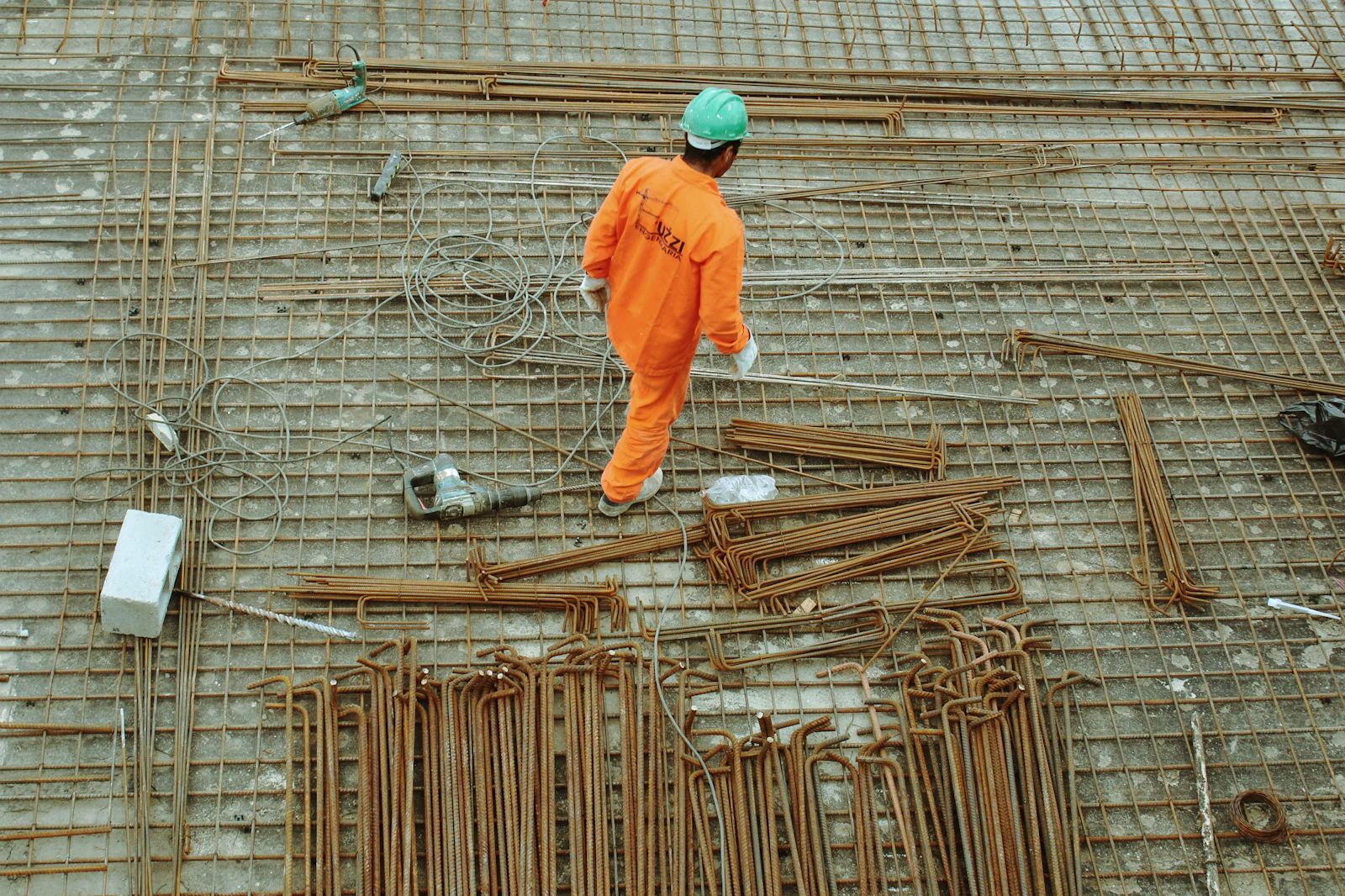
safety and netting in construction work

Example: 6-Week Downtown Colorado Springs Window Installation With Debris Netting

Scenario: 4-story mixed-use building near a busy pedestrian frontage. Window replacement runs 30 openings over 6 weeks. You need debris containment to control glass chips and hand-tool drop risk over a public sidewalk. Staging is tight: deliveries must land before 7:00 am or after 3:30 pm, and you have no laydown longer than 24 hours without blocking fire access.

  • Netting quantity assumption: facade run 120 lf × 35 ft effective working height ≈ 4,200 sq ft of coverage; add 15% overlap/waste → 4,830 sq ft.
  • Material approach: three rolls at ~1,500–1,800 sq ft each (depending on roll size) to cover the elevation with overlap and returns. A common roll size reference in the market is 10 ft × 150 ft.
  • Rental duration: 6 weeks frequently bills as two 28-day cycles if the supplier uses 28-day months, even if you “only” need ~42 calendar days. Carry a schedule float so you don’t pay a third cycle due to a week of weather or backordered glazing.

Planning cost build (illustrative, non-quote): netting-only hire (3 rolls) at $200–$325 per 28-day month each → $600–$975 per month netting rent. Over two 28-day cycles → $1,200–$1,950 netting rent. Then add realistic logistics and closeout costs: delivery/pickup $350–$900 (two trips), damage waiver 10%–15%, and a cleaning allowance of $150–$400 because window sealant and dust loading are common return-condition issues. If your work method involves grinders or cutting that loads the mesh with fine dust, also carry an “indoor dust-control” allowance for extra containment at window openings (often a separate line of poly and tape, but it can directly increase netting cleaning cost at return).

Coordinating Safety Netting Hire With Scaffold Or Swing-Stage Schedules

Where contractors get surprised is not the netting rent—it’s the interfaces:

  • If netting is tied to scaffold rent: netting may remain “on rent” until scaffold dismantle, not until your last window is set. Make sure your off-rent trigger is written as a call-off date/time, not “when removed.”
  • If netting is installed on swing-stage handrails: you may need additional net “skirts” or toe-board gaps covered; budget 10%–20% extra netting and hardware to avoid mid-job hotshots.
  • Wind plan: in exposed corridors, carry an allowance for at least one re-tension/reset event (typical labor ticket $250–$650) if a wind event loosens lashings or tears a section.

Also remember that local scaffold-service branches explicitly offer debris screens with scaffold services (Colorado Springs has a scaffold services location listing “Privacy & Debris Screens”). If the supplier is bundling design/engineering/erection/dismantle, insist on the netting being identified as its own line so you can track rental time separately.

Budget Worksheet (Safety Netting Equipment Hire – Colorado Springs, 2026)

  • Debris netting hire (netting-only): ____ rolls × ____ months @ $200–$325 per 28-day month per roll (allow $____)
  • Upgraded mesh / FR netting premium: add $50–$150 per roll per month when required (allow $____)
  • Hardware package hire: clips/ties/edge rope/cable allowance $75–$250 per mobilization (allow $____)
  • Delivery & pickup: $175–$450 each way × ____ trips (allow $____)
  • Time-window / after-hours logistics: $200–$500 if required (allow $____)
  • Damage waiver: 10%–15% of rental subtotal (allow $____)
  • Cleaning / decontamination: $75–$250 per roll (allow $____)
  • Wet return/drying handling: $40–$120 (allow $____)
  • Repair / patching contingency: $200–$800 (allow $____)
  • Late/off-rent slip contingency: 3–7 days at 1.0× daily, or 1.5× daily if missed cutoff (allow $____)
  • Documentation/admin: $50–$150 (photos, return tickets, inspection tags, closeout) (allow $____)

Rental Order Checklist (What To Lock Before You Issue The PO)

  • PO scope language: specify net type (debris vs personnel), mesh size, FR requirement (NFPA 701 if required), roll dimensions, and included hardware.
  • Billing unit: per roll, per sq ft installed, or per system bay—confirm one unit of measure and tie it to your takeoff.
  • Rental clock: confirm billing cycle (calendar month vs 28-day), and the exact off-rent call-in cutoff time (e.g., 2:00 pm or 4:00 pm).
  • Weekend/holiday policy: confirm whether Sat/Sun count as billable days for daily-rated rentals and whether holiday weekends trigger minimums.
  • Delivery requirements: delivery window, site contact, gate procedure, laydown area, forklift/telehandler availability, and any downtown access constraints.
  • Return requirements: bundling, banding, debris removal expectations, and whether netting must be returned dry and free of sealant/overspray.
  • Return documentation: require a signed pickup ticket, and take time-stamped photos showing condition and counts at pickup.
  • Loss/damage schedule: confirm replacement-value charges for cut mesh, torn borders, and missing hardware before mobilization.

Return-Condition Documentation That Protects Your Deposit (And Avoids Back-Charges)

Safety netting is easy to damage accidentally during window installation—especially when netting sits behind grinding, drilling, or sealant work. Protect your closeout with a simple documentation routine:

  • Before first use: photo the rolls/sections (labels visible), note any pre-existing tears, and confirm FR tags if required.
  • During use: keep a “netting repair log” so site teams don’t cut out damaged areas without telling estimating (common cause of surprise replacement charges).
  • At pickup: photograph bundles, show tie-off hardware returned, and document that glass chips and fasteners were shaken out. A $75–$250 per roll cleaning hit is avoidable if the return is staged correctly.

2026 Market Notes For Safety Netting Hire In Colorado Springs

In 2026, the most reliable lever you have is not negotiating the daily rate—it’s reducing “friction costs.” If you can (a) standardize on one roll size for multiple window installation phases, (b) consolidate deliveries into fewer trips, and (c) define a crisp off-rent call process that matches your glazing schedule, you usually save more than you would by pushing for a minor rate reduction. Finally, if you anticipate needing a more complex netting solution than basic debris mesh, talk to suppliers that provide complete netting rental systems with the required hardware (poles/clips/clamps/cables/brackets) so you don’t end up piecing together a non-standard setup mid-job.
