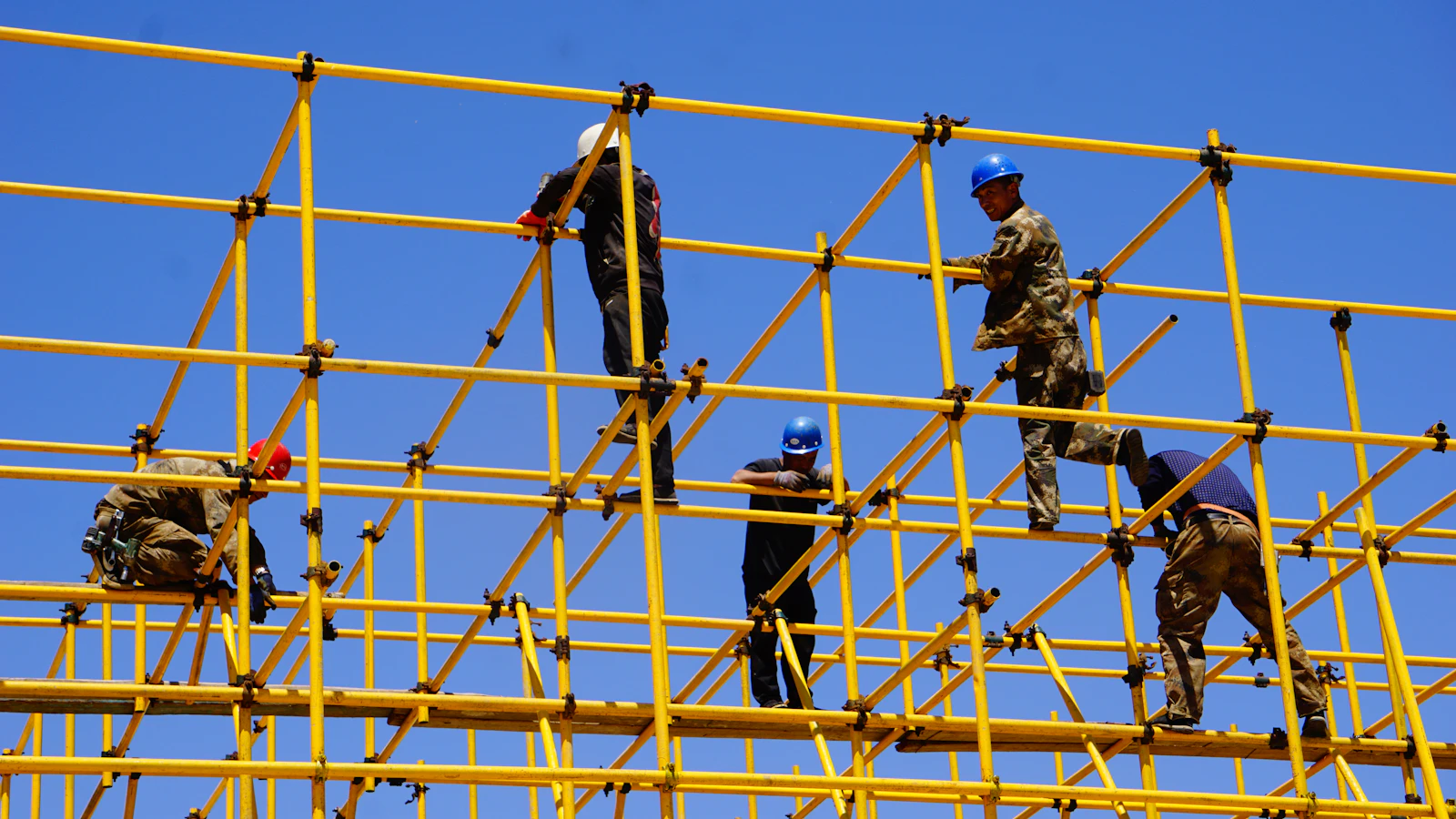
Safety Netting Rental Rates Detroit 2026
For Detroit-area window installation and façade work in 2026, budgetary safety netting equipment hire commonly falls in the range of $100–$200/day, $400–$800/week, and $1,200–$2,500 per 4-week month for small-to-mid kits (opening protection, short runs of debris netting, or limited personnel net coverage), assuming standard mesh, standard hardware, and a straightforward install/return cycle. Larger exterior perimeter and multi-elevation configurations (e.g., downtown mid-rise window replacement with pedestrian protection) are frequently quoted as a package that combines netting, engineered attachment/bracketing, and recurring 28-day billing—so your true cost is driven less by “netting roll price” and more by the installed system and logistics. Specialty fall-protection suppliers, scaffold providers, and national rental channels (via partner networks) can all be involved depending on whether you need debris containment, personnel fall-arrest net systems, or both.
| Vendor |
Daily Rate |
Weekly Rate |
Review Score |
Website |
| United Rentals (Temporary Fence / Privacy Windscreen) |
$12 |
$55 |
9 |
Visit |
| Sunbelt Rentals (Privacy & Debris Screens) |
$11 |
$50 |
8 |
Visit |
| National Construction Rentals / National Rent-A-Fence (Detroit Windscreen/Scrim) |
$10 |
$45 |
9 |
Visit |
| United Rent-A-Fence (Windscreen for Temporary Fence Rentals) |
$12 |
$55 |
10 |
Visit |
| BrandSafway (Debris Netting / Containment with Access Solutions) |
$15 |
$65 |
8 |
Visit |
What Drives Safety Netting Hire Cost on Detroit Window Installations?
For estimating, treat “safety netting” as a system rather than a single line item. Window installation crews typically need one or more of the following, each with different cost behaviors:
- Debris netting / containment netting to control glass fragments, sealant droppings, and small tools along scaffold lines or swing-stage edges (often priced by coverage area and hardware count, not just netting material).
- Personnel safety net systems where guardrails or PFAS are not practical at leading edges; these carry higher compliance/engineering overhead (drop testing/inspection expectations can affect labor and schedule).
- Localized opening protection (interior or exterior) for newly cut/removed window units or temporary openings—often a smaller “kit” rental, but still subject to minimum terms, cleaning, and loss/damage rules.
In Detroit specifically, the cost delta usually shows up in four places:
- Wind loading and winter exposure: Enclosure netting increases wind load; heavier mesh, tighter tie spacing, and more frequent inspections can add labor and hardware usage. (If you’re netting multiple elevations, assume more frequent re-tensioning after storms.)
- Downtown access constraints: Sites near active sidewalks and curb lanes often require controlled delivery windows, lift-gate/inside placement, and documented pedestrian protection—each a cost driver, not a rounding error.
- Attachment method and façade restrictions: Historic masonry, terra-cotta, or “no-penetration” façade rules push you toward parapet clamps, counterweights, or custom brackets (higher weekly equipment cost and higher loss/damage exposure).
- Program phasing: Window-by-window sequencing can keep netting “live” longer than planned. Your biggest risk is paying 4-week cycles while the crew loses days to inspection holds, glazing lead times, or weather delays.
How Rental Providers Actually Quote Safety Netting Equipment Hire
Most rental coordinators in commercial window installation see one of three quoting models:
- Kit-based rates (daily/weekly/4-week): Common for small runs, short-duration interior opening protection, or limited roof-edge/skylight-style nets. In practice, many suppliers still bill a 1-week minimum even if they publish a daily rate; build your estimate around the minimum term, not the day rate.
- System package (install + monthly rental): Common for pedestrian protection/scaffold-side debris netting where the provider supplies netting plus the “make it real” hardware (cables, clips, arms, clamps). A real-world example of a 28-day rental structure with debris netting included appears in a BrandSafway package where pricing is expressed as “rental per 28 days” with a defined daily rental thereafter—that structure is typical across the market for larger assemblies.
- Area-based (coverage) pricing: Used when the coverage square footage and elevation count dominate. Even if the provider uses area pricing internally, they may still present it to you as weekly/4-week billing on the quote.
For window installation takeoffs, you’ll get faster, cleaner quotes if you provide:
- Total netting coverage area (square feet) by elevation and façade line.
- Length of perimeter run (linear feet) where netting must be continuous (e.g., 220 LF along a sidewalk edge).
- Highest drop exposure and distance from working edge to net (drives bracket/arm selection and inspection plan).
- Whether the system must be flame retardant (hot work adjacency) or requires specific tagging/serialization for GC safety audits.
- Access plan: forklift/telehandler availability, hoist times, staging area, and whether the provider must furnish an on-site supervising technician.
Hidden-Fee Breakdown for Safety Netting Equipment Hire
To keep your safety netting hire cost in Detroit under control, carry explicit allowances for the items that are routinely omitted from “headline rates”:
- Delivery / pick-up: $175–$450 per trip inside typical Metro Detroit radii, plus $3.50–$6.00 per mile outside the standard service area (budget both legs; some vendors charge separate mobilization and demobilization).
- Minimum invoice / minimum term: $250–$600 minimum charge or a 1-week minimum, even if the netting is returned in 2–3 days.
- Lift-gate / jobsite placement: $75–$150 lift-gate fee; $125–$300 for “place on floor” or “inside delivery” when staging isn’t at the curb.
- After-hours delivery window: $250–$500 premium for deliveries constrained to 6:00–7:00 AM, nights, or weekends (common when downtown curb lanes must stay clear).
- Damage waiver / rental protection plan: commonly 10%–15% of the rental line, applied to the netting/hardware rental subtotal (confirm whether it covers cables, clips, arms, and custom brackets).
- Deposit / credit hold: $500–$2,500 refundable deposit for non-account customers or first-time rentals, especially when custom brackets or large hardware counts are included.
- Cleaning / decontamination: $75–$300 if returned with concrete dust, sealant, adhesive overspray, or wet/mildewed netting from rain/snow exposure.
- Wet-return / drying fee: $50–$150 when netting is packed wet (Detroit winter and rain make this common; avoid it by staging a drying plan).
- Consumables billed as “rental losses”: $3–$8 per missing clip/tie; $15–$40 per missing rope segment; $60–$180 per missing turnbuckle; $25–$90 per missing signage/tagging set.
- Cut/repair charges: $6–$12 per sq ft equivalent when panels are cut to clear anchors and returned unrepaired, or when glass damage creates tears that fail inspection on return.
- Late return / off-rent timing: many providers use a same-day off-rent cutoff (often 10:00 AM–2:00 PM). Miss it on Friday and you may carry an extra weekend charge even if the crew “finished Friday.”
- Engineering/submittals: $350–$1,200 for drawings/calcs when required for sidewalk protection or engineered tie patterns (sometimes included in larger packages, but not always).
- On-site supervising technician: $85–$140/hour (portal-to-portal) if you require the netting supplier to supervise installation or reconfiguration (also impacts schedule).
Detroit Operational Constraints That Change Real Rental Cost
In Detroit window installation work, the difference between a “good rate” and a “good total cost” is usually operational:
- Delivery cutoffs and site security: If your building security only allows deliveries 7:00–9:00 AM, expect premium mobilization or an extra standby day. Carry a $200–$400 “missed delivery window” allowance if the receiving plan isn’t locked.
- Off-rent rules: Treat off-rent as a process: written off-rent notice, pickup appointment, and documentation. If your provider bills in 28-day cycles (common on larger systems), missing the pickup can roll you into the next cycle.
- Weekend/holiday billing: Even when netting is “not being used,” it is often “on rent.” If the project is downtown and pickups can’t happen on weekends, plan that the final week may effectively become 8–10 billable days.
- Return condition documentation: Without return photos and a signed count sheet, it’s difficult to dispute missing hardware or torn panels.
- Indoor dust-control interface: For occupied renovations, debris netting may be paired with interior containment (poly, zipper walls, negative air). That doesn’t always come from the same supplier—so confirm who owns what and avoid double-renting “containment netting” and “dust mesh” for the same control objective.
Example: Downtown Detroit Window Installation With Pedestrian Protection Netting
Example: 10-story office renovation with phased window replacement along a 180 LF sidewalk frontage. The GC requires continuous pedestrian protection and debris control during tear-out and setting. The team chooses scaffold-side debris netting plus localized opening protection nets at active bays.
- Debris netting system rental (coverage + hardware): budget $2,200–$4,800 per 4-week cycle for the frontage segment in active use (netting, cables, clips, tensioning). If the project keeps the same run installed for two cycles, negotiate a step-down on the second 28 days (even a 10% reduction is material at this scale).
- Opening protection net kits (2 kits rotating): $100–$200/day each, but assume 1-week minimum if the supplier bills weekly—so plan $800–$1,600/week for both kits if you can’t guarantee rapid return.
- Delivery/pickup (downtown constraints): $350 per trip x 2 = $700, plus a $300 after-hours window because the curb lane is restricted during business hours.
- Damage waiver: 12% of rental subtotal (carry it as an explicit line item rather than hiding it in contingency).
- Cleaning allowance: $150 per month because glass dust and sealant debris frequently come back with the netting.
Operational constraint: The crew finishes removal Friday at 3:00 PM but the rental provider’s off-rent cutoff is noon and pickups are Monday. If you don’t pre-schedule pickup, you risk paying an extra week or rolling into another 28-day cycle depending on the contract. This is where disciplined off-rent administration saves more than rate shopping.
Budget Worksheet
Use this no-table worksheet to build a realistic construction safety netting rental for window installation budget in Detroit:
- Safety netting equipment hire (base): $1,200–$2,500 per 4-week month for small-to-mid kits (allow 1-week minimum where applicable).
- Large façade debris netting system allowance (coverage + hardware): $2,200–$4,800 per 4-week cycle (adjust to your LF/SF takeoff and elevations).
- Delivery (mobilization): $175–$450
- Pickup (demobilization): $175–$450
- Downtown access / after-hours premium: $250–$500
- Damage waiver: 10%–15% of rental subtotal
- Deposit/credit hold (if required): $500–$2,500
- Engineering/submittals allowance: $350–$1,200
- On-site supervising technician (if required): 6 hours @ $85–$140/hour
- Cleaning/drying allowance: $75–$300
- Loss/damage allowance (small hardware): $150–$400 per month (clips, ties, ropes, tags)
- Contingency for reconfiguration events: 1–2 events @ $300–$900 each (storm retensioning, swing-stage move, tie pattern changes)
Rental Order Checklist
Before you release a PO for safety netting equipment hire in Detroit, confirm these details (this prevents the most common backcharges):
- PO includes: rental term definition (daily/weekly/28-day), minimum term, and off-rent cutoff time.
- Named jobsite contact for delivery + a backup contact (security delays are a top cost driver downtown).
- Delivery requirements: dock/curb location, lift-gate need, floor placement, and acceptable delivery window (e.g., must arrive by 7:30 AM).
- Return requirements: who schedules pickup, required lead time (24–48 hours), and packaging expectations (bundled, palletized, tagged).
- Documentation: inbound condition photos, outbound condition photos, serial/tag list, and signed count sheet at pickup.
- Damage waiver/insurance: confirm what is covered and what is excluded (cuts/tears are often excluded unless explicitly stated).
- Compliance: confirm netting tags/labels and inspection requirements; identify the competent person responsible for acceptance after installation.
Safety And Compliance Notes That Affect Cost
Safety net systems are not just “hang and go.” Where workers are exposed to drops of 6 ft or more, OSHA requires fall protection via guardrails, safety nets, or personal fall arrest systems, and safety net systems must be installed and used per specific provisions. If you’re using personnel safety nets as the primary fall protection method, OSHA criteria include jobsite drop-testing after installation/relocation/repair and at intervals if left in place; the standard references a 400 lb bag drop test with defined dimensions and drop conditions.
Cost impact: when drop testing, documented inspections, or engineered tie patterns are required, your “netting rental” becomes a blend of equipment hire, specialty labor, scheduling, and administrative control. Budget accordingly—especially on high-visibility Detroit sites where GC safety teams will require submittals and inspection records before allowing work to proceed.
Rate Strategy for Multi-Phase Window Installation Programs
If your Detroit window installation scope is phased (floor-by-floor, elevation-by-elevation), you can usually lower the total safety netting equipment hire cost more by improving utilization than by negotiating a lower published rate. Practical strategies rental coordinators use:
- Match rental term to your production rhythm: If crews average 12–18 windows/week but weather and glazing deliveries create idle days, consider rotating smaller opening-protection kits rather than keeping a larger inventory on rent “just in case.”
- Negotiate step-downs on the second 28-day cycle: For larger systems billed monthly, request a reduced second-month rate when the configuration is stable and the supplier’s handling labor drops.
- Lock hardware counts in writing: Most backcharges occur on clips, ropes, and specialty brackets. A signed issue list reduces disputes at closeout.
- Plan reconfiguration events: Every swing-stage move or scaffold tie change can trigger labor, re-tensioning, and sometimes re-inspection. Pre-approve a not-to-exceed (NTE) allowance to avoid change-order gridlock while the crew is waiting.
Short-Term vs. 4-Week Billing: Off-Rent Rules And Weekend Treatment
Even when a supplier quotes daily and weekly rates, many commercial safety netting hire agreements behave like this in the field:
- Week = 7 consecutive days once delivered, not “five workdays.” If you receive on Thursday, you can easily burn two “nonproductive” days unless you plan the install sequence.
- Month = 28 days (common in scaffold/pedestrian protection packages). A BrandSafway example shows explicit “rental per 28 days” with a daily rate thereafter—structures like this are common for installed protection where the provider expects multiple-month durations.
- Off-rent is not automatic: you typically need documented notice plus a scheduled pickup. Missing the pickup window can extend billing.
- Weekend pickups: many providers won’t pick up on weekends (or will charge premiums). If your site can’t support weekday pickups due to curb lane restrictions, carry a $250–$500 weekend/after-hours premium and confirm it up front.
Practical control: assign one person (often the estimator, PM, or rental coordinator) to own off-rent administration, including the cutoff time and “ready for pickup” confirmation. This single process change can eliminate accidental extra weeks/months.
Accessories And Adders Commonly Needed With Safety Netting Hire
Window installation risk profiles often require add-ons beyond the net itself. Keep these accessories in your equipment-hire budget so safety doesn’t become an unplanned cost transfer:
- SRLs (self-retracting lifelines) for leading-edge transitions: If your plan uses both netting and PFAS, SRLs can be rented weekly/monthly. MSA’s 2026 rental guide shows weekly SRL rentals (examples include $56.75/week for a 23' web SRL and $109/week for a 50' cable SRL, with monthly pricing also listed).
- Alternative SRL rental pricing source (benchmarking): Malta Dynamics publishes SRL daily/weekly/monthly pricing (examples include $75/week and $175/month for certain models; longer units are higher).
- Parapet clamps / non-penetrating anchorage: Where façade restrictions limit drilling, clamps or counterweight anchors may be needed. Published examples exist for weekly rentals (e.g., $20 per 8' weekly rental for parapet clamps in one program), but verify applicability to your site and whether that pricing includes setup/removal.
- Supplier hardware inventories: Specialty netting rental providers often supply complete hardware kits (poles, clips, clamps, cables, brackets) and may ship nationwide; if you source netting from a specialty supplier, confirm you are not separately renting redundant hardware from a scaffold provider.
Estimator note: accessories are where “small losses” become meaningful: if you’re short 40 clips at $5 each plus restocking/admin, that’s not huge; if you’re short custom brackets, you can be into four figures quickly. Put a small but explicit “loss/damage” allowance in the budget and require a signed count at pickup.
When Buying Can Beat Hiring (And When It Doesn’t)
For trade-focused planning: buying netting can be cost-effective for repetitive, standardized scopes (e.g., a long-term program where the same mesh and panel sizes repeat). Hiring tends to win when any of these are true:
- Configuration changes frequently (phased window installation, multiple façades, changing tie points).
- Compliance and inspection burden is high (personnel nets, engineered attachments, documented drop testing).
- Storage, drying, and damage management are constraints (Detroit winter makes wet storage and mildew risk real; rental suppliers often have inspection/recert processes on return).
Rule of thumb for 2026 planning: if you expect to keep the same safety netting system continuously deployed for 3+ consecutive 28-day cycles on similar buildings, it can be worth pricing a buy option in parallel—but only after you’ve priced the hidden costs (inspection, repair, replacement panels, and the admin load of tracking hardware).
Closeout: Return Condition Documentation To Avoid Backcharges
Closeout discipline is one of the highest-ROI activities for controlling safety netting equipment hire costs:
- Pre-return inspection (jobsite): photograph each net panel, highlight any tears, and record panel IDs/tags. If tears exist, decide whether to repair on site or accept a repair charge on return (often cheaper to address before pickup if you have the materials/skills).
- Dry before packing: avoid $50–$150 drying fees and mildew disputes by staging a drying area (even a covered, ventilated laydown zone) when weather permits.
- Hardware reconciliation: count clips, turnbuckles, ropes, and specialty brackets against the issue list; have the driver sign the count sheet at pickup.
- Off-rent confirmation: get written confirmation that the equipment is off rent as of a specific date/time. This is your defense against accidental extra billing cycles.
- Dispute window: ask your supplier what the dispute window is for loss/damage claims (some contracts require disputes within a short period after invoice).
Example: Small Interior Window Opening Protection (Occupied Renovation)
Example: Hospital-adjacent occupied renovation where 6 windows/day are replaced over 3 weeks and the GC wants interior opening protection and debris control at the active bay only.
- Rent 2 opening-protection safety net kits to leapfrog the crew: budget $400–$800/week per kit if billed weekly, or $1,200–$2,500/4-week if you get pushed to monthly minimums.
- Add $150 for cleaning at return due to dust and sealant debris.
- Carry $300 for delivery/pickup because the facility restricts dock times to a narrow morning window.
- Include 12% damage waiver if required by the rental agreement.
Operational constraint: because the space is occupied, the netting must be removed and reinstalled daily to reopen corridors. That can make a “cheap kit” expensive if you need a supplier tech on-site. In that case, reassess whether a different containment approach reduces labor and total hire cost.
Bottom line for Detroit: the best outcomes come from treating safety netting rental pricing as a controlled system cost—coverage takeoff, attachment method, delivery/off-rent logistics, and return documentation—rather than focusing only on day/week/month numbers.