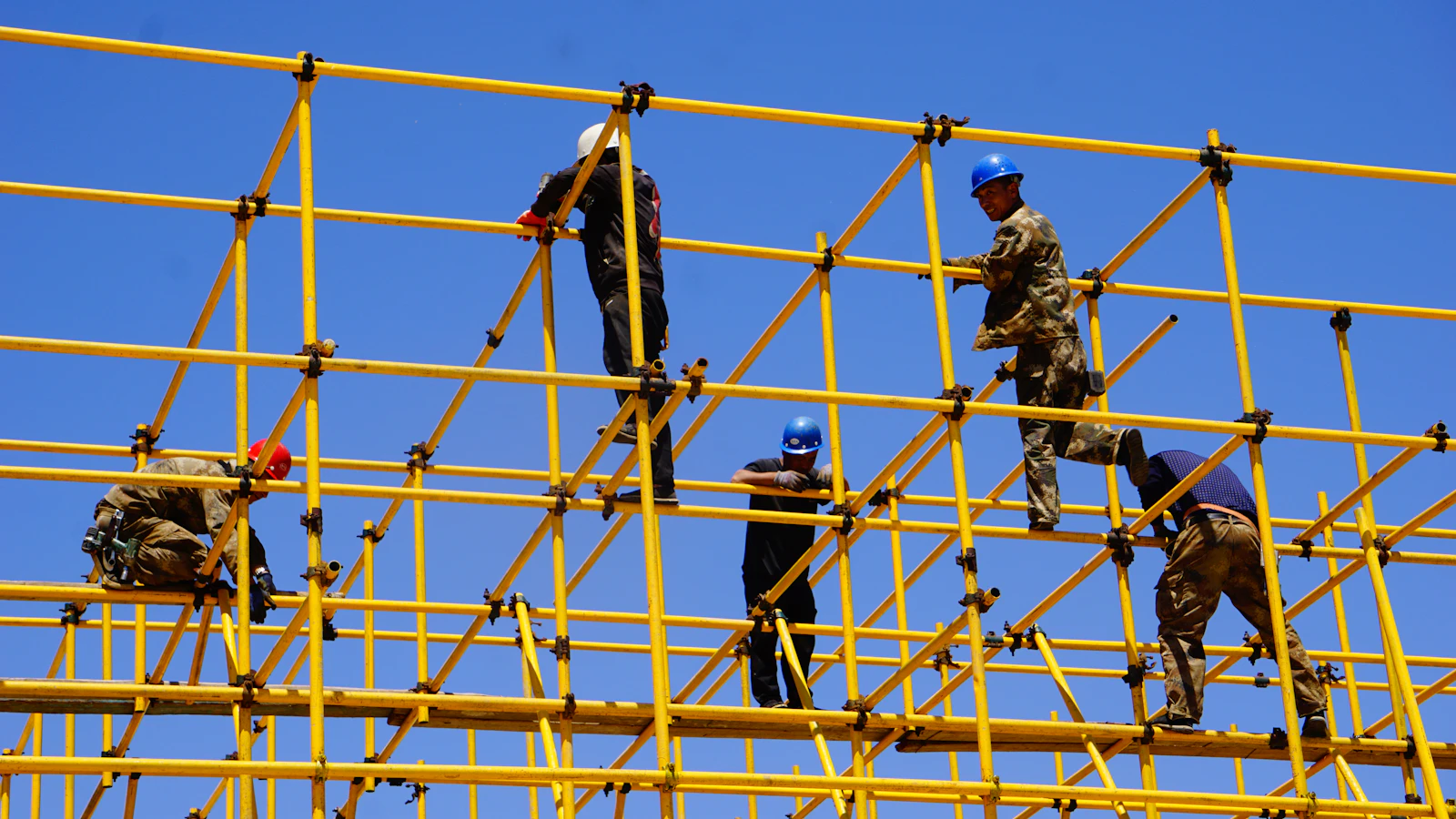
For Houston window installation work in 2026, budgeting for safety netting equipment hire typically lands in two tiers: (1) debris/containment netting used to wrap scaffold or protect pedestrians, and (2) personnel fall-protection safety nets (perimeter or interior catch nets) that are engineered and installed as a system. As 2026 planning ranges in Houston, expect debris netting hire to run about $120–$320/day, $360–$950/week, and $1,100–$2,900 per 28-day month for a typical small-to-mid façade setup (netting + basic rigging). For perimeter personnel safety net system hire, plan closer to $300–$900/day equivalent, $900–$2,700/week, and $2,500–$7,500 per 28-day month, usually with separate install/move labor. Houston teams commonly source these through national rental channels and scaffold/access providers, plus fall-protection specialists that can ship configured net systems to site.
| Vendor |
Daily Rate |
Weekly Rate |
Review Score |
Website |
| Sunbelt Rentals (Scaffold Services) |
$160 |
$640 |
8 |
Visit |
| Big City Access by BrandSafway (Houston) |
$170 |
$680 |
8 |
Visit |
| BrandSafway (Houston) |
$180 |
$720 |
8 |
Visit |
| National Construction Rentals (National Rent-A-Fence) — Houston |
$120 |
$480 |
8 |
Visit |
Safety Netting Rental Rates Houston 2026
Assumptions for the 2026 ranges below: Houston metro delivery, standard weekday billing, one elevation for window installation, and netting sized for typical drop-zone control and/or OSHA-aligned catch-net geometry (which can materially increase net area). Many providers bill installed access and netting in 28-day cycles (not true calendar months), and some access providers treat 28 days as a minimum rental period on jobsite equipment.
Tier A: Debris/Containment Netting (Common for Glazing and Window Replacement)
This tier is used to contain small debris, tools, and glazing fragments and to reduce nuisance dust/particles leaving the work face. It is often line-itemed as “debris netting,” “scaffold netting,” or “containment mesh,” and may be required by GC means-and-methods even when it is not acting as a fall-arrest device.
- Typical 2026 Houston hire range (netting + basic ties/fasteners): $120–$320/day; $360–$950/week; $1,100–$2,900 per 28-day month.
- Fire-retardant (FR) or higher-spec containment netting adder: add 15%–30% to the netting hire line when the GC or site safety plan requires FR-rated materials.
- Heavy-duty “dust control” containment (tighter weave) adder: add $0.10–$0.25 per sq ft per 28-day cycle equivalent when the project requires higher capture (common on occupied buildings during window installation).
Tier B: Personnel Fall-Protection Safety Nets (Perimeter/Interior Catch Nets)
This tier is used when a catch-net system is part of the fall-protection plan (or when the site requires redundant measures beneath work areas). Under OSHA, safety nets have defined placement and performance requirements (for example, extension beyond the edge and mesh/impact criteria), which changes quantity and hardware selection.
- Typical 2026 Houston hire range (net panels + engineered brackets/arms + cables): $300–$900/day equivalent; $900–$2,700/week; $2,500–$7,500 per 28-day month.
- Engineering / stamped layout allowance: $600–$2,000 (project-dependent) when required for perimeter arms, façade constraints, or anchor verification.
- Installed-system reality check: even older published studies show that rental + supporting hardware + labor can be a major cost component on multi-story structures (scale varies heavily by geometry and sequence).
What Drives Safety Netting Hire Cost for Houston Window Installation?
When you’re estimating safety netting equipment hire cost in Houston, most overruns come from scope that is not “the net” itself: access constraints, billing cycles, jobsite logistics, and return-condition requirements. For window installation, the work face is often vertical, in public view, and near pedestrian routes—so containment and drop-zone controls tend to expand beyond the initial takeoff.
1) Netting Quantity Is Not Just “Facade Length”
For glazing and window replacement, you’ll usually carry netting to cover (a) the active opening(s), (b) the path where fragments could fall or bounce, and (c) overlaps at seams and corners. If the netting is performing fall-protection duty, OSHA placement requirements can drive a larger footprint than many first-pass takeoffs (for example, nets extending beyond the edge and installed as close under the work surface as practical).
- Overlap/waste allowance: carry 10%–20% extra net area for overlaps, corners, and tie-off points.
- Multi-elevation sequencing: if the crew leapfrogs floors, budget at least 1–2 extra net “moves” per month (each move can trigger labor, lift time, and downtime).
2) Billing Structure and Minimum Terms (Houston Reality)
Houston access/scaffold providers frequently quote on a 28-day rental cycle, and some terms treat the first 28 days as a minimum payable period on jobsite equipment. That matters for window installation packages that “should be two weeks” but turn into three due to material lead times, inspection holds, or weather.
- Budget rule: if the schedule risk is moderate, estimate 2 x 28-day cycles for any netting package planned longer than ~18–21 working days.
- Off-rent rule allowance: carry 2–5 extra billable days for pickup scheduling, inspection, and demobilization sequencing (especially downtown).
3) Delivery, Pickup, and Houston Access Constraints
In Houston, equipment hire cost is often shaped by jobsite access (downtown lane restrictions, loading dock hours, or Galleria-area congestion). Netting typically ships as bundles plus hardware crates; perimeter arms may require a boom truck or staged laydown. Plan for these common cost items:
- Standard delivery/pickup (each way) within a typical metro radius: $150–$450 each way, per drop, depending on truck size and dock/hand-unload needs.
- Outside-radius mileage: $6–$10 per mile beyond the quoted radius (commonly triggered on far-north or far-south sites).
- Downtown restricted delivery window surcharge: $150–$300 when the carrier must hit a narrow time window (e.g., building rules or street closure windows).
- After-hours / weekend mobilization surcharge: $250–$600 when you need same-day or after-cutoff delivery to keep glazing on schedule.
4) Installation, Moves, and De-Install Labor (Often the Biggest Line)
For window installation, many safety netting deployments are provided as an installed solution (especially perimeter catch nets). The netting itself may be a minority of the total “hire” spend once you include rigging, competent-person supervision, and repositioning.
- Mobilization / setup labor allowance: $750–$2,500 for small containment netting setups; $2,000–$8,000 for perimeter catch-net systems with arms/brackets and cable runs.
- Relocation / “move” allowance: $450–$1,800 per move depending on access, tie-off complexity, and how much hardware must be reconfigured.
- Specialty safety tech rate: $85–$140/hour (and $125–$225/hour after-hours) for qualified installation/supervision where required by site plan.
Hidden-Fee Breakdown (What Commonly Appears After the Base Hire Rate)
To keep your safety netting equipment hire estimate honest, carry explicit allowances for the charges that frequently land on the final invoice—especially when window installation occurs on occupied buildings where contamination control and documentation are strict.
- Damage waiver / rental protection: often 10%–15% of the rental subtotal (coverage varies; confirm what “netting damage” means in the contract).
- Deposit / credit hold: commonly $500–$5,000 depending on system size and credit terms.
- Cleaning fee (mud/concrete dust/glass fines): $75–$250 per bundle when returned dirty or not shaken out.
- Mildew/wet-net remediation (Houston humidity + rain exposure): $200–$600 if returned wet, mildewed, or stored improperly (avoid by drying before bagging).
- Repair or replacement for torn net panels: budget $250–$900 per panel (or $4–$9 per sq ft where charged by area) when cuts/tears exceed repair limits.
- Lost hardware (clips, shackles, clamps) allowance: $75–$300 per incident is common once small parts go missing on multi-trade sites.
- Late return / standby billing: plan for 1.5x the daily equivalent when equipment is ready but not released for pickup due to site access or paperwork delays.
Example: Houston Mid-Rise Window Replacement With Sidewalk Exposure
Scenario: 8-story medical office building near a high-traffic corridor. Window installation occurs on two elevations, with public sidewalk exposure and occupied tenant floors. You decide to hire containment netting plus a limited perimeter catch-net zone below the active workface.
- Containment netting hire (28-day cycle): $1,600 (planning number within the $1,100–$2,900 range) for netting + basic ties.
- Perimeter catch-net system hire (28-day cycle equivalent): $4,900 (planning number within the $2,500–$7,500 range) for net panels + arms/cables.
- Setup + de-install labor: $5,200 (two mobilizations due to sequencing, plus one mid-month move).
- Delivery/pickup: $350 each way = $700 (restricted dock hours).
- Damage waiver: 12% of rental lines = $780 (carry as allowance unless excluded).
- Dust-control upgrade: add $600 (tighter mesh in occupied areas and additional overlap).
Operational constraints that change cost: (1) building only accepts deliveries 7:00–9:00 AM, so missed windows cause next-day delays and potential $250 re-delivery attempts; (2) the GC requires photo-documented condition reports at off-rent; (3) hurricane-season wind forecasts can force net folding/removal and re-install labor, so you carry a $1,000 weather contingency for one unplanned reconfiguration.
Budget Worksheet (Safety Netting Equipment Hire Allowances)
- Debris/containment netting hire for window installation: allowance based on net area and duration (28-day cycles).
- Personnel catch-net system hire (if required): allowance based on perimeter length, projection, and hardware set.
- FR netting upgrade (if required): add 15%–30% of netting hire.
- Engineering/stamped layout (if required): $600–$2,000.
- Mobilization/setup labor: $750–$2,500 (containment) or $2,000–$8,000 (catch-net system).
- Relocation/moves: $450–$1,800 per move (carry at least 1 move if the schedule spans multiple floors/elevations).
- Delivery/pickup: $150–$450 each way + $6–$10/mile beyond radius.
- Restricted window / after-hours logistics: $150–$300 (restricted) and $250–$600 (after-hours) as needed.
- Damage waiver: 10%–15% of rental subtotal.
- Cleaning/wet-net remediation: $75–$250 cleaning and $200–$600 wet/mildew contingency.
- Repair/replacement allowance: $250–$900 per damaged panel (or $4–$9 per sq ft).
- Documentation/admin: $150–$400 for condition photos, tagging logs, and closeout.
Rental Order Checklist (For Rental Coordinators and Site Supers)
- Confirm whether the scope is containment-only or personnel fall-protection safety netting (changes hardware, engineering, and inspection needs).
- PO must state billing cycle (daily/weekly/28-day) and minimum term expectations; confirm off-rent notice requirements.
- Delivery location, delivery window, and receiving signatory identified in writing; reject “drop without signature” on controlled sites.
- Confirm whether netting must be FR-rated and whether tighter mesh is required for indoor dust-control.
- Request packing list for all small hardware; plan a controlled storage tote to reduce missing-parts backcharges.
- Define return condition: nets shaken out, dry, bagged, labeled; photo documentation required at pickup and at yard return.
- Confirm who provides daily inspections and tagging logs; align with GC safety plan and competent-person requirements.
- Confirm storm plan (folding/removal criteria and who performs it) for Gulf Coast wind events.
Note on compliance scope: if safety nets are being used as a fall-protection method, OSHA requirements around placement and performance apply and should be reflected in your takeoff and installed configuration.
Netting rental availability: some fall-protection specialists maintain netting and hardware inventory and ship configured rental systems nationwide, which can be useful when a Houston project needs a very specific configuration on a short lead time.
How Houston Conditions Change Safety Netting Equipment Hire Cost
Houston is not a “flat-rate” environment for safety netting hire. Practical, city-specific constraints change the all-in cost even when base rental rates look similar across quotes.
Heat, Humidity, and Rain Exposure (Return Condition Costs)
High humidity and sudden rain events increase the chance nets are returned wet. Wet storage drives mildew odor and fiber degradation risk, and suppliers often treat this as a clean/repair event. If your window installation plan includes night work or quick demobilization, include a controlled drying step (or carry the remediation allowance explicitly).
- Drying/handling labor allowance: 2–4 labor-hours per demob for bundling, drying, and labeling on mid-size packages.
- Wet-net remediation contingency (repeat): $200–$600 is a realistic planning allowance if weather is uncertain.
Wind and Storm Planning (Reconfiguration and Standby)
Because Gulf Coast wind forecasts can change quickly, some sites require a documented plan for when containment netting must be tightened, folded, or temporarily removed. That is not “free” if you’re paying an installed-access crew or a specialty netting installer to respond on short notice.
- Emergency re-tensioning / tie-down kit hire: $40–$120/week when quoted separately (straps, additional ties, edge padding).
- Rapid-response labor (if required by site plan): $125–$225/hour after-hours rate planning is safer than assuming straight time.
- Standby billing risk: if the netting system is ready for pickup but a storm delay prevents access, carry 2–3 extra billable days (often charged at daily equivalent or a prorated 28-day basis).
Cost Control Levers Rental Managers Actually Use
If you’re managing multiple Houston window installation elevations, the best savings rarely come from negotiating a slightly lower daily rate. The meaningful savings come from reducing billed cycles, consolidating mobilizations, and preventing backcharges.
Consolidate Deliveries and Pickups (Fewer Drops, Fewer Fees)
- Combine netting, hardware crates, and any perimeter arms into a single coordinated drop when possible to avoid paying $150–$450 multiple times for separate deliveries.
- Align the off-rent release with lift or scaffold demobilization so you don’t pay a “netting-only” pickup run.
Write the Off-Rent Rules Into the PO Notes
Common dispute areas are (a) when rent stops, (b) whether the equipment is considered “returned” at gate pickup vs yard check-in, and (c) what constitutes “ready for pickup.” Avoid ambiguity by stating your expectations in PO notes and email confirmations.
- Cutoff time risk allowance: carry $250–$600 for a missed pickup window that forces a reschedule (especially on restricted-access buildings).
- Condition-report admin allowance: $150–$400 for photos, counts, and sign-offs to prevent “missing hardware” claims.
Prevent Backcharges: Control the Small Parts
Netting jobs fail closeout when clips, clamps, ties, and edge protection go missing. Put a single foreman (or warehouse tech) in charge of hardware custody. Use a check-in tote with counts and photos.
- Lost hardware allowance (repeat): $75–$300 per incident is common on busy multi-trade sites—carry at least 2 incidents on longer jobs.
- Inspection/tag kit allowance: $35–$90 for labeling, tagging, and log supplies when required by the GC safety program.
When Safety Netting Hire Is (and Is Not) the Right Spend for Window Installation
From an estimating perspective, safety netting equipment hire is most cost-effective when it prevents expensive shutdowns and protects the public interface. It may be less efficient when the building geometry makes net deployment overly complex and you end up paying repeated move labor. This is where a short pre-bid site walk (even a 30-minute “netting feasibility” call with your access provider) can eliminate a month of unplanned rental.
- Feasibility/survey visit allowance: $0–$500 depending on provider and whether it is credited to the rental.
- “Design assist” allowance: $600–$2,000 when a formal engineered layout is needed for perimeter arms or anchor constraints.
Ownership Vs. Equipment Hire (2026 Planning View)
For most glazing contractors and window installers, buying netting and hardware rarely pencils unless you repeat the same configuration across many projects and can control storage and maintenance. Hire is usually preferred because (1) configurations vary by façade, (2) inventory must be inspected and maintained, and (3) damage/repair logistics can erase the perceived savings. For one-off or short-duration Houston elevations, hire also avoids tying up capital and reduces the risk of owning netting that does not match future job geometries.
Practical Closeout: Return-Condition and Documentation Requirements
To protect margin on safety netting rental, closeout discipline matters as much as the initial estimate.
- Return nets dry and segregated: avoid the $200–$600 wet-net remediation exposure.
- Shake out glass fines and dust: avoid $75–$250 cleaning fees per bundle.
- Photo every bundle and crate at pickup: reduces “missing hardware” backcharges that often fall in the $75–$300 range per incident.
- Document any pre-existing damage within 48 hours: some rental terms require prompt notification for damage/defect claims on delivered equipment.
- Confirm who signs: restrict receiving/return signatures to authorized roles so deliveries and pickups do not occur without site acknowledgment.
2026 Houston Estimating Takeaways
- Budget safety netting equipment hire in Houston using 28-day cycles unless your supplier explicitly bills true daily/weekly without minimums.
- Carry explicit allowances for delivery logistics, damage waiver, cleaning, wet-net remediation, and repair/replacement.
- For window installation, the biggest cost drivers are typically moves, restricted access, and return condition, not the base net rental line.