

For New York (NYC) window installation scopes in 2026, safety netting equipment hire is usually priced either (a) as “debris/containment netting” billed by coverage area and rental term, or (b) as a packaged netting system rented with the access method (supported scaffold, sidewalk shed, or swing stage). For budgeting, plan $150–$450/day, $600–$1,800/week, and $1,800–$5,500 per 28-day month for a typical small-to-mid façade window install where netting is required to control falling debris and/or protect lower levels. Larger perimeter containment packages (high-wind edges, multiple elevations, heavier FR mesh) commonly run $3,800–$9,500 per 28-day month once you include the accessories that make the netting “job-ready” in NYC (ties, hardware, flame certificates, and periodic retensioning/repair). In NYC, rental coordinators frequently source these packages through national rental houses plus specialty scaffold/swing-stage access providers and netting integrators rather than treating netting as a stand-alone commodity.
| Vendor | Daily Rate | Weekly Rate | Review Score | Website |
|---|---|---|---|---|
| BrandSafway | $180 | $540 | 9 | Visit |
| Sunbelt Rentals (Scaffold Services) | $165 | $495 | 9 | Visit |
| SkyTrac Access Group LLC | $140 | $420 | 6 | Visit |
| New York Ladder & Scaffolding Corporation | $125 | $375 | 8 | Visit |
| Downtown Scaffolding | $130 | $390 | 10 | Visit |
Assumptions used for 2026 planning ranges: “Monthly” is treated as a 28-day billing cycle; a 1-week minimum is common for smaller orders; and many NYC façade protection packages carry a 4-week minimum once mobilized. Final pricing depends on engineered requirements, coverage area, fire-retardant compliance, and the access platform you’re wrapping.
On window installation, “safety netting” can mean several different deliverables that rent differently:
In NYC, the code and DOB expectations often drive the specification: debris netting and vertical/horizontal safety netting used for perimeter protection must be flame retardant in accordance with NFPA 701 in specified situations. This tends to push projects toward certified fire-retardant (“FR”) netting rather than the cheapest commodity mesh.
1) Coverage area is the primary cost engine (and it’s rarely measured the way field crews think). Rental quotes are typically built from netting square footage (or linear feet by height) plus connection density. A common estimator pitfall is quoting only the “window line” and missing returns at corners, parapets, and stair/hoist zones. As a 2026 rule of thumb for NYC: if you think you need 2,000 sq ft of netting, carry an allowance to 2,600–3,200 sq ft once overlaps, corners, and damage replacement stock are included.
2) Fire-retardant (FR) certification and mesh spec. FR netting typically commands a premium versus general debris mesh. For planning, carry a line-item adder of $0.10–$0.25 per sq ft per 28-day month (or $80–$250/month on a small package) when FR documentation, labeling, and compliance handling are explicitly required by the GC or safety manager. NYC debris netting requirements frequently call for flame retardancy consistent with NFPA 701 and tight opening sizes, which influences what vendors will supply and how they price it.
3) Wind exposure and anchorage detail. Manhattan waterfront corridors, upper-story work, and corner exposures can require heavier netting, closer tie spacing, edge reinforcement, or additional bracing. Budget an NYC “high-wind” accessory allowance of $150–$500/week for extra hardware, and don’t be surprised by a one-time mobilization adder of $300–$1,200 when engineered tie-ins and documented inspections are part of the deliverable.
4) Access method (supported scaffold vs. swing stage vs. interior protection). Netting that installs onto a supported scaffold or sidewalk shed is typically cheaper per square foot than netting configured for swing-stage work because the connection hardware and labor/handling are more intensive. For budgeting netting as a stand-alone equipment hire (excluding the scaffold itself), typical 2026 NYC planning ranges are:
Note: many NYC suppliers will not price netting on a true day-rate once mobilized; they’ll use a weekly or 28-day hire structure even if the field scope is “only 2–3 days.” Carry a minimum hire assumption of $600–$1,500 on small jobs to avoid a blown budget.
Safety netting equipment hire costs in New York are frequently “reasonable” until the operational add-ons hit. For estimating and rental coordination, these are the common cost mechanics to carry:
NYC-specific reality: even if the netting comes down on a Friday, some suppliers require off-rent notice by 12:00 PM Thursday to avoid weekend billing. Confirm cutoffs in writing and align them with the superintendent’s pull plan.
Off-rent rules and “ready for pickup” standards. Many suppliers won’t stop billing until the netting is (1) safely bundled, (2) staged at an agreed pickup point, and (3) documented as counted/complete. If the building requires elevator time, coordinate a booked freight slot; otherwise, you may pay another $200–$500 in re-delivery/re-pick attempts or an extra rental week.
Weekend and holiday billing. In NYC, weekend work is common for window installation to reduce tenant disruption. If you need Saturday handling, plan a weekend service premium of 10%–25% or a straight service call minimum of $250–$600 depending on supplier policy and union constraints.
Indoor dust-control expectations. In occupied buildings, netting is often bundled with containment measures (zip walls, negative air, sticky mats). Even when you’re only hiring netting, you’ll get charged when netting returns contaminated. Carry $200 as a minimum “return-condition” allowance if your glazing work involves grinding, lead-safe work, or masonry disturbance near the openings.
Compliance documentation as a deliverable. NYC projects frequently require that FR certifications and inspection notes are job-filed. This doesn’t always appear as a separate line item, but when it does, carry $75–$200 admin/document handling per mobilization—especially if multiple drops are staged across buildings or elevations.
Scenario: You’re replacing windows on a 10-story residential building with an occupied sidewalk frontage. The GC requires FR debris netting around the supported scaffold at the work face and additional netting at returns to protect adjacent roofs. The building allows material moves only 7:00–9:00 AM weekdays; no staging on the sidewalk after 3:00 PM.
Operational constraint that changes cost: if the scaffold comes down but netting bundles can’t be staged for pickup until the next freight elevator slot, you can unintentionally accrue another week. In Manhattan, a “missed pickup” often costs more than the netting itself.
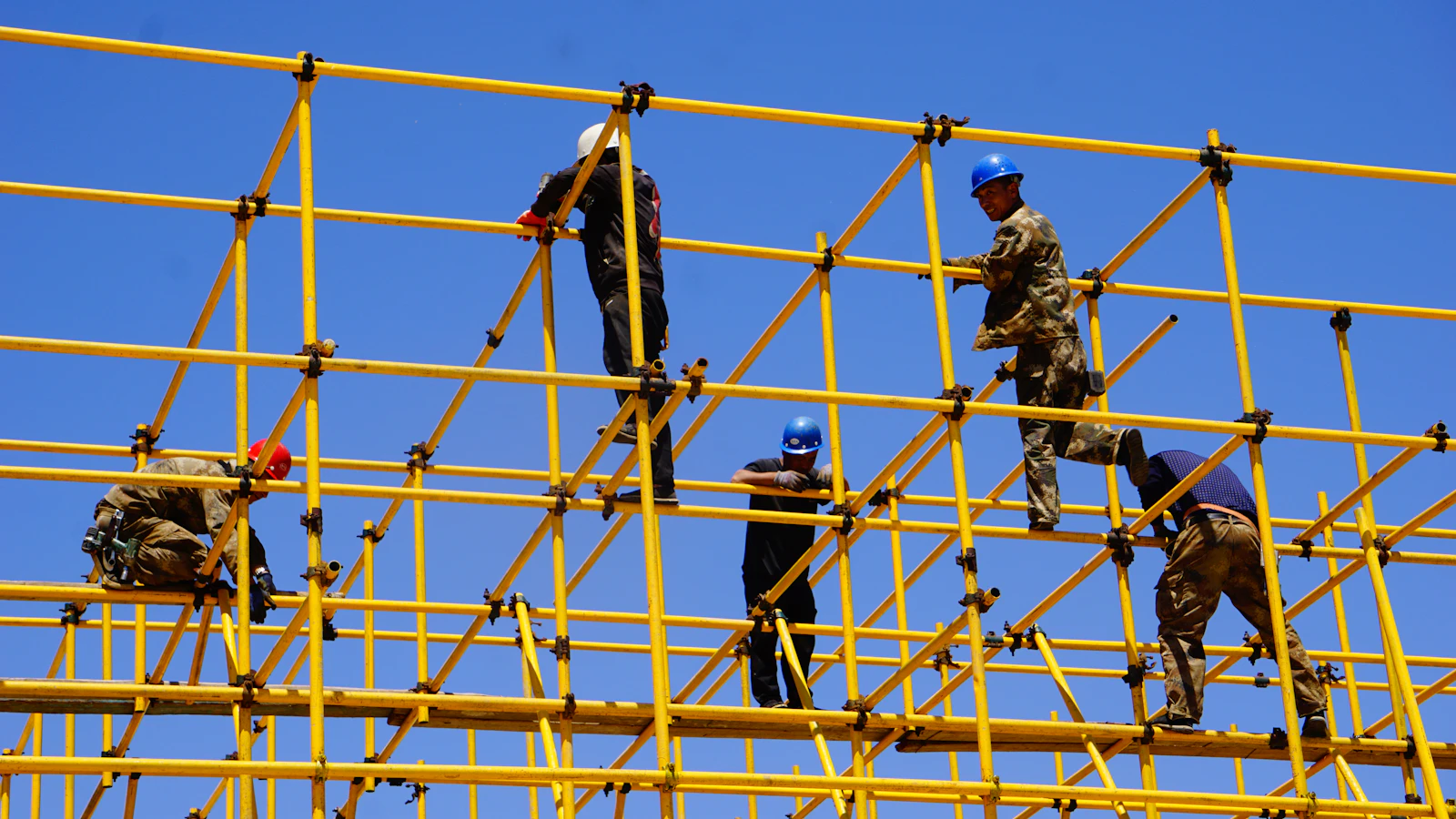
For equipment hire cost control, the key is translating a window installation plan into netting “rental units” the supplier recognizes. Use these steps:
1) Sidewalk shed and containment netting policy changes influence procurement. NYC has been actively pushing reforms around sidewalk sheds and has discussed expanded use of containment/safety netting in certain contexts; as rules evolve, some projects may shift from traditional shed-heavy approaches to netting-heavy pedestrian protection approaches, which can increase demand for compliant netting systems and qualified installers.
2) Delivery radius norms are tighter than most metros. Many suppliers price “local” delivery within a set mileage radius, then add mileage/time. For NYC planning, assume “included radius” might be roughly 10–30 miles depending on yard location, and anything beyond that is billable at the per-mile rate plus tolls.
3) Heat, wind, and waterfront exposure add real cost. Summer heat can soften some plastics and increase retensioning needs; high-wind days can halt façade work and delay demobilization, creating unplanned rental extensions. Carry a schedule contingency of 2–5 calendar days per month in high-wind seasons for upper-story window lines.
For very small, short-duration interior containment tasks, purchasing netting can look attractive. However, for NYC window installation where compliance documentation, FR requirements, and repeated mobilizations matter, equipment hire (or a supplied-and-installed package) often reduces total risk cost. The “cheapest mesh” is not the cheapest outcome if you pay $150–$450 in cleaning, lose schedule control due to noncompliant materials, or trigger replacement charges at $3–$7 per sq ft after a tear. If you do choose to purchase for a micro-scope, still budget the NYC logistics lines (delivery windows, tolls, handling, and documentation) because those costs do not disappear.
