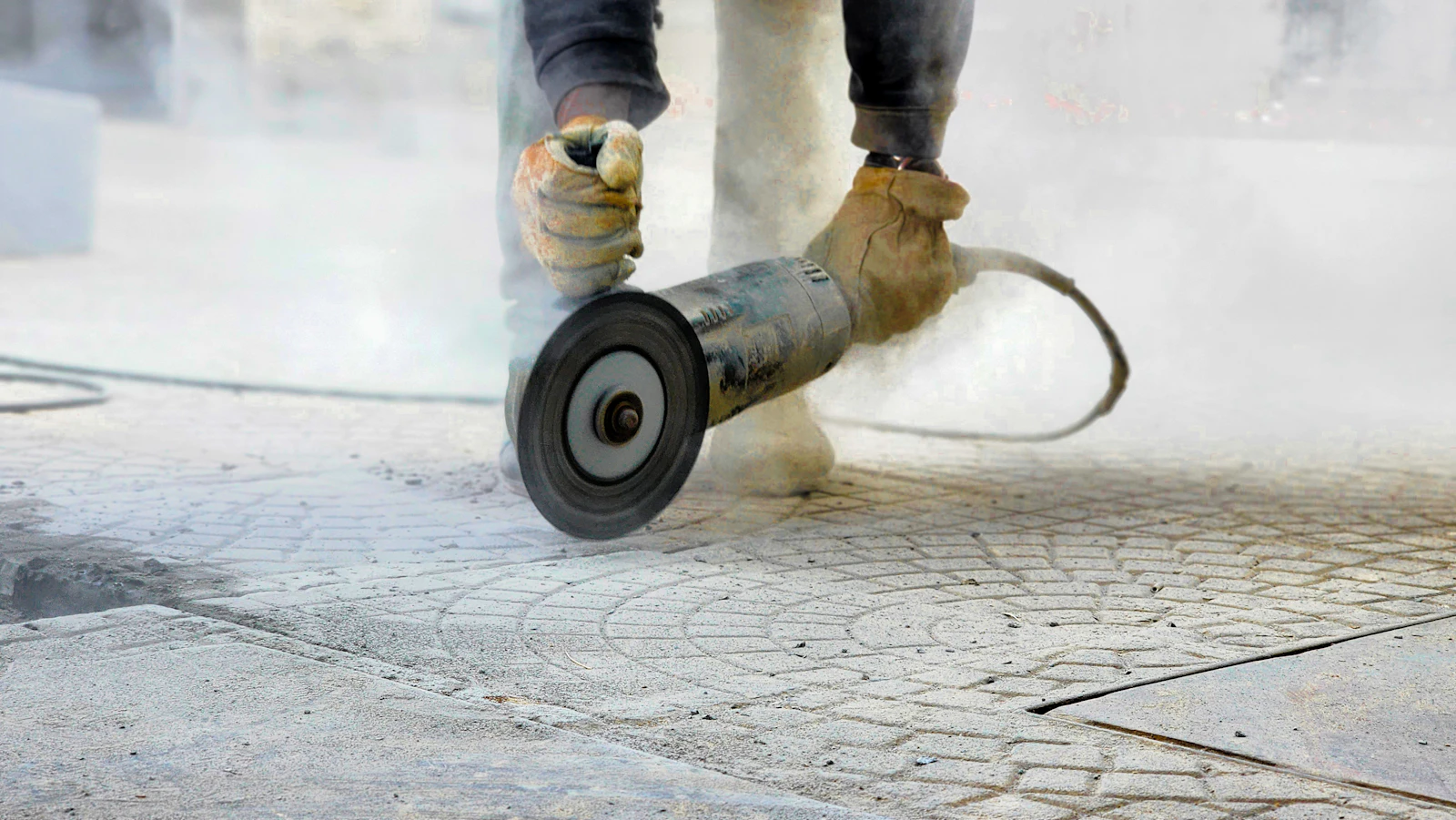
Sanding Vacuum Rental Rates Jacksonville 2026
For drywall taping and finishing in Jacksonville, a professional sanding vacuum (HEPA dust extractor / drywall dust vacuum) typically budgets in 2026 at $60–$140 per day, $220–$520 per week, and $650–$1,350 per 4-week month per unit, assuming a 120V corded unit in the 8–10 gallon class with standard hose and normal interior drywall dust loading. Published benchmarks show why the range is wide: a Florida public fee schedule lists an 8-gallon HEPA vacuum at $53/day, $199/week, and $505/month with separate delivery and pick-up fees, while other markets post $84/day, $400/week, $800/month for a 150 CFM dust extractor and $100/day, $380/week, $1,068/month for a 7-gallon HEPA vacuum. Use the lower end for short-duration, smaller canister HEPA vacs and the upper end for higher-CFM extractors, auto filter-cleaning models, or units that must remain on-site across weekends to maintain dust-control compliance.
| Vendor |
Daily Rate |
Weekly Rate |
Review Score |
Website |
| Sunbelt Rentals |
$75 |
$300 |
9 |
Visit |
| United Rentals |
$80 |
$320 |
9 |
Visit |
| Herc Rentals |
$70 |
$280 |
8 |
Visit |
| The Home Depot Tool Rental |
$55 |
$220 |
8 |
Visit |
| Rentalex |
$65 |
$260 |
8 |
Visit |
Jacksonville rental coordinators will usually see these units dispatched through the same professional counters that support surface-prep and interior build-outs (for example, Sunbelt, Herc, United Rentals, and pro tool-rental desks) when a site requires controlled sanding, documented housekeeping, and predictable off-rent timing. The key cost-control move is to scope the sanding vacuum equipment hire as a dust-control system (vac + correct hose + correct bags/filters + return-condition requirements), not as a simple “shop vac,” because most overages in drywall finishing come from consumables, cleaning, and billing-cycle mistakes rather than the base day rate.
What Drives Sanding Vacuum Equipment Hire Cost In Jacksonville?
When you request a “sanding vacuum,” branches may quote anything from a small HEPA canister to a higher-CFM dust extractor intended to pair with grinders or large sanding heads. Your effective equipment hire cost in Jacksonville will move mainly with the factors below.
1) Capacity, CFM, and Whether It Is A True Dust Extractor
Drywall sanding is low-density but high-volume dust. If the crew is sanding aggressively (machine sanding or multiple finishers), the vacuum’s usable capacity and airflow matter more than the nominal gallon rating.
- Entry HEPA canister (8–10 gal, ~120–150 CFM class): commonly suitable for one finisher or intermittent sanding; expect fewer specialty adders but more frequent bag changes.
- Mid-range extractor (150–200 CFM): better for continuous sanding, multi-room punch, or when you need steadier suction as filters load; published examples include a 150 CFM dust extractor at $84/day and a 200 CFM floor-grinder vacuum at $100/day (different duty class, but same “dust extraction vacuum” category families).
- Higher-CFM / auto-filter-cleaning HEPA extractors (200+ CFM, heavy-duty): higher base rates, more expensive filters, and more scrutiny on return condition.
Planning note (2026): If your drywall taping and finishing scope requires continuous sanding in corridors/units, budget toward the mid-range extractor, even if the counter can provide a cheaper canister. The premium is often offset by fewer labor interruptions and less rework from dust settling in finish coats.
2) Tool Activation, Hose Diameter, and Adapters
Costs move when the vacuum must physically connect to your sanding head(s) and maintain capture at the source.
- Hose diameter adders: allowance $10–$25/day if you need a specific hose size, reducer set, or anti-static hose.
- Extra hose length: allowance $8–$20/day (or $25–$60/week) when you need to reach multiple rooms without moving the unit—common in multi-tenant interiors where moving equipment triggers additional protection/reset time.
- Specialty adapters: allowance $5–$15/day for proprietary sanding-hose fittings. Missing adapters on return are commonly billed as replacement parts (often $20–$75 each depending on brand).
3) Consumables: Bags, Pre-Filters, and HEPA Filters
Consumables are the most underestimated part of sanding vacuum equipment hire cost for drywall finishing.
- Dust bags (disposable): allowance $8–$18 each. A two-finisher crew can easily burn 4–10 bags/week depending on sanding intensity and whether the crew also vacuums floors at end of shift.
- Pre-filter / fleece filter bags: allowance $15–$35 each when specified by the machine type.
- HEPA filter damage / replacement exposure: allowance $150–$350 if a filter is returned torn, wet, or excessively caked (especially if the unit was used without bags or the bag ruptured).
If your job has strict indoor air requirements (healthcare, schools, occupied office TI), confirm whether the branch requires new filters at dispatch or bills a “filter refresh” line item at return. Even when not mandatory, budgeting $25–$75 for an end-of-rental filter cleaning/inspection charge is prudent on high-dust drywall punch phases.
4) Delivery Logistics Across Jacksonville (Duval County) And Site Access
Jacksonville is geographically large, and delivery time can be a real cost driver when your site is outside a branch’s typical radius, requires timed delivery, or has tight downtown access rules.
- Round-trip delivery/pick-up as separate fees: one Florida fee schedule shows $125 delivery and $125 pick-up for a HEPA vacuum line item.
- After-hours or “call-ahead” delivery window: allowance $75–$175 when the site only accepts equipment during specific tenant hours or requires security escort.
- Downtown / limited loading zones: allowance 30–60 minutes of driver wait time; if billed, some providers convert this into a service minimum (commonly $50–$120).
Jacksonville-specific operational reality: if your drywall taping and finishing schedule is humidity-sensitive (common in coastal Florida), you may keep the vacuum on rent an extra day simply because sanding shifts by 24 hours—so align off-rent notices with your production forecast, not with the original baseline schedule.
Hidden-Fee Breakdown For Sanding Vacuum Equipment Hire
Below are the common “gotchas” that change the true hire cost for a sanding vacuum on interior finishing work. These are not universal, but they are common enough that estimators should carry allowances.
Delivery / Pick-Up Charges
- Delivery and pick-up billed separately: carry $80–$250 each way depending on distance, access constraints, and whether you need liftgate service (even for small units, some branches treat all deliveries as a minimum service run).
- Minimum delivery charge: carry a $100 minimum if the supplier applies a “minimum trip” rule (a common structure in equipment logistics).
Overtime Hours, Extra Shifts, and Weekend Billing
- Extra hours beyond one shift: Herc publishes a common overtime structure where use beyond one shift is payable at 1/8 of the daily charge per hour (daily rentals), 1/40 of the weekly charge per hour (weekly rentals), or 1/160 of the 4-week charge per hour (4-week rentals).
- Weekend carry: if the unit stays on-site Saturday/Sunday to maintain dust-control compliance, confirm whether weekend days are billed (some contracts bill calendar days; others bill working days). Budget a potential 1–2 extra day equivalents per month when returns cannot be processed before cutoff.
- Late return / missed cutoff: carry $40–$140 risk (one extra day) if returns after the local branch receiving cutoff roll into the next billing day.
Damage Waiver / Rental Protection / Damage Surcharge
- Damage waiver / rental protection plan: common allowance 10%–15% of rental charges (varies by provider and account). One published rental page notes a 10% damage surcharge on rentals (example policy).
- Loss/damage exposure without waiver: common exposure items include crushed casters ($45–$120), damaged hose ($60–$180), missing wand/nozzles ($15–$60 each), and power cord damage ($50–$120).
Cleaning Fees And Return-Condition Disputes
- Drywall dust cleaning fee: allowance $45–$150 if the unit is returned with caked dust, ruptured bags, or internal dust bypass.
- “Wet pickup” misuse: many HEPA dust extractors are dry-pickup only; if returned wet or with slurry residue, carry $100–$300 for remediation and downtime billing risk.
- Return documentation: allocate 10–15 minutes of foreman time to photograph serial number, hose, and filter/bag condition at pickup and return. This often prevents a full extra billing day if the branch must “inspect before off-rent.”
How To Quote The Right Sanding Vacuum For Drywall Taping And Finishing
To keep sanding vacuum equipment hire cost predictable, write the request like a scope, not a product name. Include:
- Use case: “drywall sanding / joint compound dust, interior occupied/near-occupied space.”
- Electrical: 120V, 15A circuit available (or note generator power if rough-in only).
- Required filtration: HEPA required (if the GC’s dust-control plan demands it).
- Hose/adapters: confirm hose diameter and required adapters for your sanding head.
- Quantity: one vacuum per sanding crew is typical; two vacuums if you have parallel sanding in separate floors or units.
As a reality check, published rates for HEPA dust extractor equipment hire vary widely: one public fee schedule lists an 8-gallon HEPA vacuum at $53/day, while other posted market rates show $100/day for a 7-gallon HEPA unit and $110/day for a higher-duty HEPA dust extractor class machine.
Example: Jacksonville Drywall Finishing Phase With Two Sanding Crews (Real-World Cost)
Scenario: 18,000 SF tenant build-out in Jacksonville. Two finish crews sanding in parallel for 15 working days across 3 weeks. Building rules require dust-control during all sanding and end-of-day housekeeping. Site only accepts deliveries 7:00–9:00 AM and returns must be checked in by 3:30 PM to avoid a next-day billing rollover.
Equipment hire plan (budget level):
- (2) sanding vacuums (HEPA class): budget $85/day each for 15 days = $2,550 base rental.
- Damage waiver: assume 12% of rental = $306.
- Delivery and pick-up: assume $125 delivery + $125 pick-up per unit (conservative allowance aligned to a published fee schedule) = $500.
- Bags: assume 8 bags/week per vacuum × 3 weeks × $12/bag = $576.
- Cleaning/inspection at return: allowance $75 per vacuum = $150.
Budget outcome: total planned sanding vacuum equipment hire cost ≈ $4,082 for the sanding phase. The biggest overrun risks are (1) a missed receiving cutoff that adds 1 extra day per unit (another $170 at the budget day rate), and (2) filter damage from bag rupture (carry up to $250 per unit exposure). This is why coordination on off-rent timing and return condition is just as important as negotiating the base rate.
Budget Worksheet (Sanding Vacuum Equipment Hire)
- Sanding vacuum (HEPA) base hire: $60–$140/day per unit allowance
- Weekly conversion check: $220–$520/week per unit allowance
- 4-week conversion check: $650–$1,350/4-weeks per unit allowance
- Delivery fee allowance: $80–$250 per trip (or $125 benchmark)
- Pick-up fee allowance: $80–$250 per trip (or $125 benchmark)
- Damage waiver / rental protection: 10%–15% of rental charges (carry 12% if unknown)
- Consumables—bags: $8–$18 each (carry 20–60 bags/month per active crew depending on production)
- Consumables—pre-filter: $15–$35 each (as required)
- Return cleaning allowance: $45–$150 per unit
- Missing/damaged hose exposure: $60–$180
- HEPA filter damage exposure: $150–$350
- After-hours / timed delivery premium: $75–$175 (if building access requires it)
Rental Order Checklist (For Rental Coordinators)
- PO includes: “sanding vacuum (HEPA dust extractor) for drywall taping and finishing,” voltage, and required hose/adapters
- Confirm billing basis: daily vs weekly vs 4-week and what defines a “shift” (hours/day)
- Confirm overtime rule for extra hours (if crews may run extended shifts)
- Confirm damage waiver / rental protection line item (percent and what it covers)
- Schedule delivery window and note site receiving cutoff (avoid “one extra day” billing)
- Delivery instructions: loading dock location, security contact, badge requirements, elevator access (if applicable)
- On delivery: photo document serial number, hose length, adapters, and filter/bag condition
- During use: require bag changes before “overfill,” keep unit dry, and keep intake clear
- Off-rent process: call/email off-rent with timestamp; confirm branch acknowledgment
- Return condition: empty tank, remove bag per supplier instructions, wipe exterior, coil cord/hose, and attach return photos to closeout package
How Jacksonville Job Conditions Change Sanding Vacuum Hire Costs
Jacksonville drywall finishing work has a few recurring operational constraints that can quietly add cost to sanding vacuum equipment hire if they are not managed in the field.
Humidity-Driven Schedule Shifts
In coastal Florida, cure times and finish schedules can drift, and sanding might slide by 24–48 hours. If your vacuum is on a weekly structure, a slip that crosses into an additional billing week can add $220–$520 per unit (your weekly range) even when the crew only needed “one more day.” The practical mitigation is to align your off-rent notice with the actual sanding sequence (primer-ready dates) and confirm the branch’s cutoff time for same-day check-in.
Large Footprint Delivery Miles And Bridge/Traffic Time
Jacksonville’s footprint means a “simple pickup” can miss the receiving cutoff due to traffic, bridge constraints, or site escort delays. Carry $50–$120 of dispatch/wait-time exposure if the driver cannot access the unit at the scheduled time, and include a hard internal rule: equipment staged for pick-up must be in a designated, accessible location by 2:00 PM (or whatever time your vendor requires) to avoid an extra day.
Indoor Dust-Control Rules In Commercial TI Work
Many commercial interiors require documented dust control. If your sanding vacuum is undersized, the GC may require additional equipment (air scrubbers, containment carts, extra vacs) to stay compliant. Even if that added equipment is outside this sanding vacuum line item, it is still driven by the vacuum selection. The safer estimating posture is to avoid the smallest “HEPA vacuum” class when sanding will be continuous in corridors or near operating tenants; the rate difference between a low-end HEPA canister and a true dust extractor is often less than the labor lost to resets and re-cleaning.
Rate Benchmarks You Can Use To Sanity-Check A Quote (Not A Guarantee)
If a counter quote looks out of family, compare it to these published benchmarks from other posted schedules (use them as reasonableness checks, not as guaranteed Jacksonville pricing):
- 8-gallon HEPA vacuum benchmark: $53/day, $199/week, $505/month with $125 delivery and $125 pick-up shown in a Florida fee schedule.
- 7-gallon HEPA vacuum benchmark: $100/day minimum/day, $380/week, $1,068/month on a posted rental rate card.
- 150 CFM dust extractor benchmark: $84/day, $400/week, $800/month on a posted online rental catalog page.
- Higher-duty HEPA dust extractor benchmark: $110/day, $330/week, $826 per 4-weeks on a posted rental product page (different geography, but useful for class-based comparison).
In practice, a Jacksonville quote that lands within these families is usually reasonable once you adjust for delivery distance, account pricing, and whether the unit includes auto-filter cleaning, anti-static hose, or proprietary adapters.
Negotiation Notes That Actually Reduce Total Hire Cost
Most savings come from removing billable friction, not squeezing $5/day off the base rate.
- Ask for a weekly-to-4-week conversion up front: if the job might run long, confirm the “auto-conversion” rule (some vendors convert to the cheapest applicable rate class; others require you to request it).
- Lock in delivery/pick-up expectations: confirm whether each trip is billed separately and whether a minimum service charge applies. Use the $125 + $125 benchmark as a planning reference when you do not yet have a local quote.
- Control overtime exposure: if crews may run extended shifts, document the overtime formula. One published structure charges additional hours at 1/8 of daily, 1/40 of weekly, or 1/160 of 4-week rates (as applicable).
- Define return condition in writing: specify “returned dry, bag removed/disposed per supplier instruction, exterior wiped, hose/cord coiled.” This reduces cleaning charges and protects against disputed off-rent timing.
Field Practices That Prevent Extra Billing Days
- Stage for return early: stage the unit in a ground-level return area by 1:00–2:00 PM on pickup day (before the building gets busy and before the branch cutoff).
- Off-rent notice discipline: submit off-rent in writing (email/text per your vendor process) and request confirmation; do not assume that “someone told the counter” stops billing.
- Photograph everything: capture serial number, hose, adapters, and tank condition at return. This is your fastest defense against a “missing accessory” bill of $20–$180.
- Keep the unit dry: drywall dust extractors are often dry-pickup tools; wet use can trigger a service event and downtime charge (carry $100–$300 exposure if misuse occurs).
When managed this way, sanding vacuum equipment hire for drywall taping and finishing becomes a predictable, low-drama cost line—typically far less volatile than lifts or generators—while still delivering outsized value by reducing re-cleaning and protecting finish quality.