

Create an itemized estimate for your project, with materials, labor, and quantities you can review and edit.
Create my estimateStart a 7-day free trial. Sign up, then enter your project details.
For drywall taping and finishing in Las Vegas, 2026 planning ranges for sanding vacuum equipment hire typically land at $45–$110/day, $135–$325/week, and $400–$900 per 28-day month for a contractor-grade HEPA dust extractor sized for one drywall sanding crew (commonly 9–16 gal class with auto filter cleaning). If you are hiring a combined package (power drywall sander with integrated vacuum), local rate sheets can be higher on day rate but more efficient operationally; for example, one Las Vegas-area rental house shows $60/day, $210/week, and $630/month for a drywall sander with vacuum, with pricing noted as effective May 1, 2026. National providers with North Las Vegas coverage (e.g., United Rentals and similar) may display daily/weekly/monthly (28-day) rates online, but final cost is driven by accessories, consumables, delivery windows, and off-rent rules as much as the base hire.
| Vendor | Daily Rate | Weekly Rate | Review Score | Website |
|---|---|---|---|---|
| United Rentals | $65 | $260 | 8 | Visit |
| Sunbelt Rentals | $70 | $280 | 8 | Visit |
| Herc Rentals | $60 | $240 | 7 | Visit |
| Ahern Rentals | $75 | $300 | 8 | Visit |
| The Home Depot Tool Rental | $55 | $220 | 7 | Visit |
In trade rental terms, a “sanding vacuum” for drywall is usually priced and dispatched as a HEPA dust extractor (sometimes listed as a dust-control vacuum) rather than a general wet/dry vac. For estimating, separate your requirement into two cost buckets: (1) source capture at the sander (hose + adapters + anti-static hose + bag), and (2) area containment (pre-separator, air scrubber/negative air, floor protection). For occupied interiors—common in Las Vegas TI work—source capture is typically non-negotiable because cleanup labor and rework risk can exceed the hire rate within one shift.
Planning assumption used for the ranges in this post: one crew, one shift, normal wear, standard hose, and no hazardous/regulated contaminants (no lead/asbestos). If your scope includes silica-bearing finishes, concrete skim grinding, or older renovation unknowns, you should price a higher-spec extractor and higher filter/cleaning exposure.
Two machines can be labeled “HEPA,” yet have very different total cost of hire because they behave differently on fine drywall dust. Units with automatic filter cleaning and better bagging often reduce downtime and prevent “filter-blindness” that leads to poor capture (and then more cleanup labor). Home Depot’s dust-control vacuum category highlights tool-connection use and adapters (good for planning the setup), but your cost exposure comes from wear items and return condition more than the base rental line.
Estimator note: If the GC or facility requires “HEPA documentation,” build time for the rental coordinator to capture the model, serial, and filter condition photos at pickup and again at return. On Strip properties, this documentation step can easily add 0.5–1.0 labor-hour per off-rent event, especially when security access is controlled.
If you hire only the sanding vacuum, you may still need to supply (or hire) a compatible power sander with correct hose diameter and adapters. Local published pricing shows that a combined drywall sander with vacuum can be hired at $60/day, with a 4-hour minimum of $40 noted on the same rate sheet. For short-duration punch sanding (e.g., a few rooms), the 4-hour minimum can be a material difference versus a full day rate, but only if your delivery/pickup plan supports it.
Drywall dust is a filter and bag killer. Most rental returns fail inspection on one of three points: (a) full bags, (b) caked pre-filters/HEPA, (c) dust packed into hose/canister. Even if the base rate looks competitive, your all-in sanding vacuum hire cost is often dictated by what the rental house charges (or what you must replace) to return the unit ready for the next dispatch.
For 2026 budgeting in Las Vegas, typical adders to carry as allowances (confirm with your branch at order time):
Use this section as a checklist when you request quotes for drywall sanding vacuum equipment hire in Las Vegas. These are the line-items that commonly shift the final invoice on dust-control rentals:
Las Vegas interiors—especially hospitality, gaming, and high-traffic TI—tend to have zero tolerance for airborne dust migration. This drives add-on costs: pre-separators, additional hoses to keep the extractor outside the room, and sometimes supplemental air scrubbers. Even if your scope is only drywall taping and finishing, the GC may require HEPA-labeled dust control equipment and documented daily housekeeping.
From late spring through early fall, high ambient temperatures affect staging and operations. Crews often stage equipment at docks, in exterior corridors, or in partially conditioned shells. Budget for more frequent bag changes (dust is drier and more airborne) and more time on tool cleaning at return. Also, delivery logistics around the Strip can force you into narrow dock windows; if the branch misses the dock appointment, you may lose a shift and still pay day-rate unless you coordinate “will call” pickup.
Most deliveries are priced around a “metro radius,” but your job may not be: Summerlin, Henderson, North Las Vegas industrial parks, and outlying project sites can trigger mileage adders. If your drywall finish scope includes multiple addresses in one week, it can be cheaper to keep the extractor on rent and self-haul between sites than to off-rent and re-deliver.
Scenario: You’re finishing drywall in a corridor TI with work restricted to 10:00 p.m.–6:00 a.m. (occupied building). You need 2 HEPA sanding vacuums (one per finisher) and you decide to hire the combined drywall sander/vac package locally published at $210/week each to reduce compatibility issues.
Base hire: 2 units × 2 weeks × $210/week = $840.
Likely job-driven adders (budget, not a quote): delivery/pickup with dock appointment ($150 each way × 2 = $300), damage waiver at 12% of rental line (12% × $840 = $100.80), consumables (bags and pre-filters) at $120 total, and one cleaning fee risk allowance at $75 (if the crew returns it with full bags). Planned all-in: $840 + $300 + $100.80 + $120 + $75 = $1,435.80, before tax.
Operational constraint that changes cost: if the branch cutoff is 3:00 p.m. and your unit can’t be returned until late afternoon because the dock won’t accept it earlier, you can absorb 1 extra day per unit (add $120 if day rate is $60). That single coordination miss can be a 8%–10% swing on the ticket for small-tool dust control.
Use these line items when building a drywall finishing dust-control budget for sanding vacuum equipment hire in Las Vegas:
If you need the rental coordinator to maintain predictable cost for Las Vegas drywall schedules, the most effective control is not negotiating $5 off day rate—it’s eliminating “extra day” events and cleaning disputes with documented return condition.
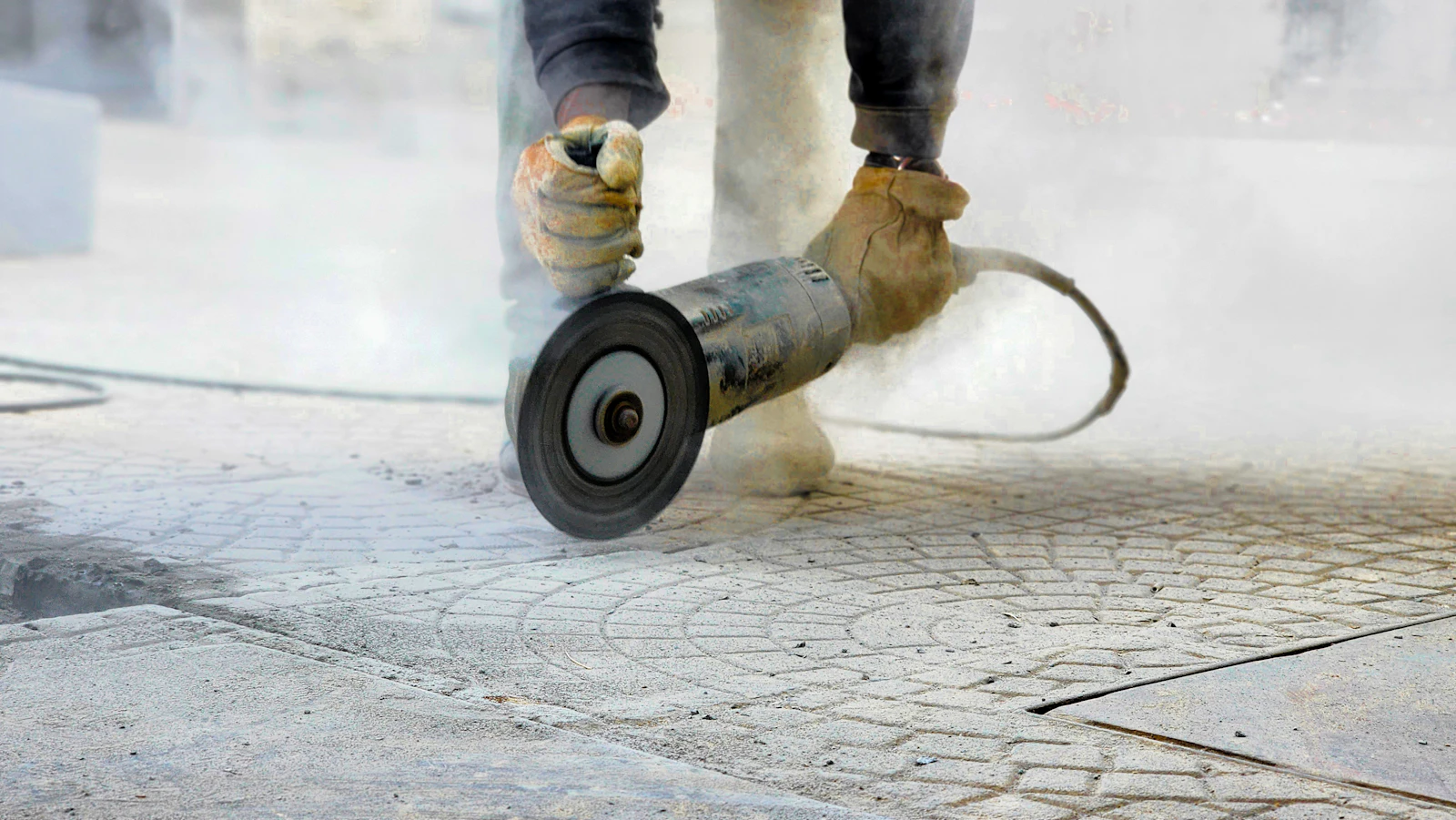
Most cost overruns on sanding vacuum equipment hire happen when the machine class doesn’t match the dust load. For straightforward drywall taping and finishing, you generally want a contractor-grade HEPA dust extractor that supports continuous sanding without rapid clogging. If your scope shifts into heavier surface prep (e.g., skim coat removal or blended substrates), stepping up to a larger industrial HEPA vacuum can be cheaper in total cost even if the day rate is higher, because it reduces stoppage and filter burn.
As a real market reference outside Las Vegas, published equipment catalogs show industrial HEPA vacuum day rates in the $160–$205/day band with weekly and monthly pricing scaled accordingly (useful as an upper bound when estimating “premium” extraction). Use those higher numbers when the spec calls for higher airflow, larger pre-separation, or when the GC is strict on dust migration and you need belt-and-suspenders containment.
When comparing quotes across branches, align the billing basis. Many national marketplaces explicitly show daily, weekly, and monthly rates, and commonly define “monthly” as 28 days rather than a calendar month. If your superintendent schedules a 30–31 day duration, plan for prorated days beyond 28, and confirm whether the branch prorates at a 1/28 rate or flips you into another full week.
Practical estimator rule: If your drywall finish duration is uncertain, compare these two structures before you choose:
These items commonly appear on invoices for HEPA sanding vacuum rentals and are worth pre-authorizing on the PO to avoid field delays:
Even when your scope is “only drywall,” some GCs treat dust control as a compliance item and will back-charge if corridors or air returns show dusting. That is a cost risk tied to equipment selection: if you under-hire the extractor (or skip bags), you may save $20–$40/day and then lose $300–$1,000 in cleanup labor on one corrective night. This is why rental coordinators often prefer a known HEPA extractor class and standardized consumables across crews.
For Las Vegas drywall taping and finishing contractors running multiple crews year-round, ownership can beat hire when you have predictable storage, maintenance discipline, and standardized consumables. But hiring remains cost-effective when:
A quick 2026 break-even heuristic (vacuum-only): if you regularly pay $135–$325/week and keep a unit on rent more than 12–16 weeks per year, ownership analysis becomes worthwhile—but only if you can control bag/filter practices well enough to prevent premature HEPA replacement.
If you share one cost control message with the field, make it this: a sanding vacuum is a production tool and a compliance tool. Treating it like a shop vac is the fastest path to cleaning fees, parts charges, and extra-day billing in Las Vegas interior work.
