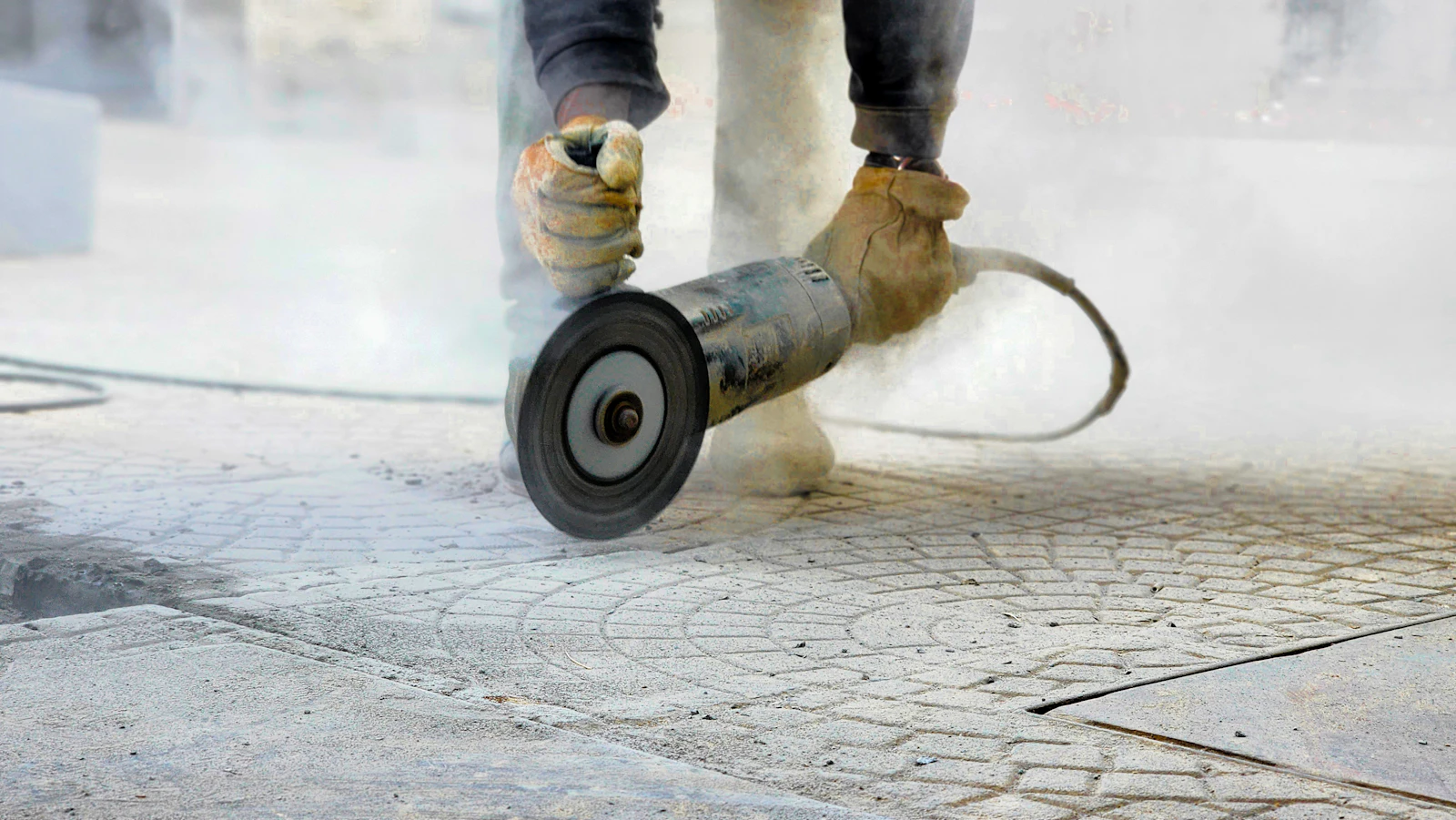
Sanding Vacuum Rental Rates in Los Angeles (Daily/Weekly) — 2026 Costs
Construction Cost Hub – Los Angeles
Price source: Costs shown are derived from our proprietary U.S. construction cost database (updated continuously from contractor/bid/pricing inputs and normalization rules).
Eva Steinmetzer-Shaw
Head of Marketing
Sanding Vacuum Rental Rates Los Angeles 2026
For Los Angeles drywall taping and finishing in 2026, budget HEPA sanding vacuum (dust extractor) equipment hire in practical tiers: $85–$140/day for compact tool-activated units, $140–$220/day for mid-size continuous sanding extractors, and $220–$375/day for higher-output units used on multi-sander or heavy surface-prep scopes. Weekly and 4-week pricing typically tracks at roughly 3x and 9–10x the day rate, depending on branch utilization and whether you’re bundling hoses, pre-separators, and bags. In LA, availability and price often track inventory at national renters (for example, Sunbelt Rentals, United Rentals, and Herc Rentals) plus surface-prep specialists that stock HEPA-rated dust-control packages geared for production crews and occupied spaces.
| Vendor |
Daily Rate |
Weekly Rate |
Review Score |
Website |
| United Rentals |
$165 |
$505 |
9 |
Visit |
| Sunbelt Rentals |
$160 |
$495 |
8 |
Visit |
| Herc Rentals |
$165 |
$505 |
8 |
Visit |
| The Home Depot Tool Rental |
$85 |
$255 |
8 |
Visit |
| PDQ Rentals (Southern California) |
$155 |
$465 |
9 |
Visit |
2026 planning assumption: Rates below are expressed as estimator-friendly budget ranges. Your quoted rate will move based on HEPA certification requirements, auto-filter-clean, amperage/cord constraints, accessories, delivery windows, and whether the job is treated as a “tool rental” or a “surface-prep package.” Where possible, the ranges are anchored to published rate schedules (examples include a 10-gallon HEPA vacuum at $105/day, $315/week, $945 per 4-weeks; and an S26-class vacuum commonly published at $100/day, $300/week, $900 per 4-weeks).
- Compact drywall sanding vacuum hire (tool-activated, smaller tanks): budget $70–$140/day, $250–$420/week, $750–$1,250/4-weeks (best for punch-list sanding, single-room containment, and low-linear-foot joint work).
- Mid-size HEPA dust extractor equipment hire (10-gallon class / continuous sanding): budget $95–$175/day, $300–$525/week, $900–$1,575/4-weeks (typical for Level 4/5 finish runs with pole sanders and consistent bag changes).
- Industrial/high-output HEPA sanding vacuum hire (S26/S36 class and up): budget $150–$275/day, $450–$820/week, $1,260–$2,460/4-weeks (use when you need longer hose runs, higher CFM, higher dust loading, or you’re supporting multiple operators). Published schedules commonly show S26-class units at about $100/day / $300/week / $900 per 4-weeks, and S36-class at about $140/day / $420/week / $1,260 per 4-weeks.
What Drives Sanding Vacuum Equipment Hire Costs on Drywall Jobs?
On drywall taping and finishing scopes, the lowest “headline day rate” is rarely the lowest total cost. Your sanding vacuum rental Los Angeles total is typically determined by how well the vacuum matches the dust load and how many “extra days” you buy due to poor fit, clogged filters, or missing accessories.
- HEPA requirement and documentation: If the GC/spec explicitly calls out HEPA, plan for higher base rates and stricter return-condition expectations (filter condition, bagging, and sealed transport).
- Auto-filter-clean vs. manual clean: Auto-clean features often reduce downtime and rework on high-production sanding, which can save 1–2 rental days on large punch or multi-unit schedules even if the day rate is higher.
- Amperage and power availability: Many production-grade vacuums want a dedicated 120V / 20A circuit. If you’re in an older LA building with shared circuits (or temp power that trips), the “real” cost becomes labor downtime plus the contingency of swapping units or adding power distribution.
- Hose length and static control: If the crew needs 50 ft of reach instead of 15–17 ft, you can end up adding extra hose sections and fittings (and creating suction losses that drive more filter loading and bag consumption).
- Tank/bag strategy: Drywall dust is “bag-cost heavy.” A vacuum that burns through more bags (or requires more frequent filter service) can easily add $100–$300/week in consumables and cleaning charges on a multi-operator finish push.
Los Angeles-Specific Cost Considerations For Drywall Taping And Finishing
In Los Angeles, rental coordination details can materially change sanding vacuum equipment hire costs even when the base rate looks competitive:
- Delivery reality (traffic + access): LA traffic and jobsite access often drives higher “all-in” logistics costs. For budgeting, carry a $95–$175 delivery allowance each way for smaller equipment when you cannot pick up (and higher if the site is time-restricted, has no staging, or requires a liftgate and inside placement). A published contract schedule (non-LA) shows typical smaller-equipment delivery/pickup fees around $125 each way, which is a useful baseline when building LA allowances.
- Receiving windows and cutoffs: If your site only receives between 7:00–9:00 AM or prohibits mid-day deliveries, you may pay for a dedicated truck, redelivery, or additional handling. Build a contingency of $75–$150 for a failed delivery attempt when access rules are uncertain.
- High-rise / multi-family constraints: Elevator reservations, COI requirements, and “no dust in common areas” rules can force after-hours moves. Even if the vacuum is small, after-hours building access can create 2–4 hours of standby labor that turns into extended rental duration.
- Occupied-space dust control expectations: In dense LA remodel and TI work, you may be required to use sealed HEPA units, bagged disposal, and protected transport paths. That typically means you should avoid “basic shop vac” rentals and price true dust-extractor equipment hire with bags and sealed disposal.
Hidden-Fee Breakdown
When estimating HEPA sanding vacuum rental Los Angeles, the following line-items are where costs usually move. (The goal is not to “avoid fees” but to budget them and control the conditions that trigger them.)
- Minimum rental charge: Commonly 1-day minimum even if the unit is used for only a couple hours. Some programs price daily rentals around an 8-hour day concept for metered/shift equipment; clarify whether your vacuum is treated similarly when used for extended shifts.
- Damage waiver / rental protection: Budget 10%–17% of the base rental as a typical planning range (varies by account and category). Confirm what it covers (theft often excluded) and whether hoses/power cords are included.
- Environmental / admin fees: Budget 2%–5% of rental as a planning allowance if your vendor applies these.
- Cleaning fee (drywall dust): Budget $45–$150 if the unit is returned with excessive drywall compound dust in the tank area, filter area, or exterior vents (especially when vacuums are used without bags or pre-separators).
- Filter damage / replacement: HEPA filter replacement can be a major hit; carry a contingency of $180–$350 if your scope risks wet pickup, torn filters, or heavy gypsum loading.
- Bag and fleece liner consumption: Budget $12–$25 per bag depending on size/type, or $55–$90 per small box. On a large punch or multi-unit sanding schedule, bag burn can exceed the base week rate if uncontrolled.
- Late return / extra day charges: If you miss a return cutoff (often around 3:00–4:30 PM for same-day check-in), assume at least 1 extra day billed even when the vacuum is no longer needed.
- Weekend and holiday billing behavior: Some branches offer weekend deals; others bill straight through. Budget a weekend exposure of 2 extra days unless your account terms clearly allow a “Friday PM to Monday AM” structure for one day.
Accessories And Add-Ons That Change Your Sanding Vacuum Hire Total
For drywall taping and finishing, the vacuum rarely rents “alone.” The accessories below are where the dust extractor equipment hire number gets real:
- Pre-separator / cyclone: Budget $25–$60/day to add a pre-separator on high dust-loading work. This can reduce filter loading and lower cleaning/filter replacement risk.
- Extra hose length: Budget $8–$18/day for additional anti-static hose sections or specialty hose, plus fittings. If you need to maintain suction at long runs, it may be cheaper to move the vacuum more frequently than to extend hose indefinitely.
- Tool adapter kits and shrouds: Budget $10–$35/day (or a one-time kit charge) when crews need specific adapters to connect to pole sanders, hand sanders, or vacuum-assisted sanding heads.
- Extension cords / power distribution: Budget $6–$15/day if supplied as a rental accessory (or plan to provide your own commercial cords). If the circuit trips repeatedly and you end up bringing a small generator, that can add $85–$175/day plus fuel and handling.
Example: 5-Day Drywall Finish Push In West Los Angeles (Occupied Multi-Family)
Scenario: A 3-person finishing crew is running pole sanding and detail sanding across 12 units in an occupied building. The GC requires HEPA dust control and clean common areas. You choose a mid-size HEPA dust extractor rather than a basic wet/dry vacuum.
- Base equipment hire (mid-size HEPA dust extractor): budget $140–$220/day and assume it will roll to a weekly structure if kept the full week.
- Delivery/pickup (inside placement): carry $150 delivery and $150 pickup due to limited parking/loading and a narrow receiving window.
- Consumables (bags): assume 10 bags at $18 each = $180 (drywall dust is high-volume, and occupied work typically demands frequent bag changes).
- Damage waiver: carry 12% of the base rental as an allowance.
- Potential cleaning fee risk: carry $75 if the unit is returned with excessive exterior dust (mitigate by bagging, wiping down, and documenting condition at off-rent).
Operational constraint that affects cost: If the crew finishes Thursday but the building only allows move-out during business hours and your pickup is scheduled Monday, you may be billed through the weekend unless you coordinate off-rent rules and return logistics in advance.
Budget Worksheet (No Tables)
Use this as a fast estimator worksheet for sanding vacuum equipment hire costs in Los Angeles:
- HEPA sanding vacuum / dust extractor rental: $____/day or $____/week (select tier and plan duration).
- Accessories allowance (hose + adapters + cord): $25–$85/day depending on reach and tool connections.
- Pre-separator allowance: $25–$60/day (recommended for heavy gypsum dust loading).
- Bag/consumables allowance: $60–$250/week (project-dependent; validate with superintendent based on sanding scope).
- Delivery and pickup allowance: $95–$175 each way (increase for inside placement or tight windows).
- Damage waiver / RPP: 10%–17% of base rental.
- Environmental/admin fees: 2%–5% of base rental.
- Cleaning/return condition contingency: $45–$150.
- Filter replacement contingency (only if risk is real): $180–$350.
- Schedule risk (weekend exposure): assume +2 days if you cannot reliably off-rent and return before cutoff.
Rental Order Checklist (PO + Delivery + Return Requirements)
- PO details: correct job name, site address, requested pickup/delivery dates, and approved daily/weekly/4-week structure (confirm how it converts if duration changes).
- Equipment spec: HEPA-required (yes/no), target class (10-gal vs S26/S36), tool-activated outlet (yes/no), and required hose diameter (typically 2 in for many surface-prep units).
- Accessories: hose length required, adapter kit, floor tool, extra bags, and whether a pre-separator is included.
- Delivery instructions: receiving contact, gate code, floor/unit, elevator rules, and a hard delivery window (avoid “anytime” in LA if the site is access-constrained).
- Condition documentation: photos at delivery and at off-rent showing filters seated, tank/bag condition, cords, and hose condition.
- Off-rent procedure: who calls off-rent, what time must it be called (e.g., before 2:00 PM to avoid another day), and where the unit will be staged for pickup.
- Return expectations: dry pickup only (no slurry), bagged disposal, wipe-down requirement, and confirmation of cutoff time to avoid an extra day.
Choosing The Right Sanding Vacuum Hire Tier For Drywall Taping And Finishing
On drywall jobs, the “right” sanding vacuum equipment hire is the unit that keeps the sanding head capturing dust without choking filters, while still fitting your access and power constraints. Over-buying increases day rate; under-buying increases days (and consumables). Use these rules of thumb when planning HEPA dust extractor equipment hire in Los Angeles:
- Choose compact units when sanding is intermittent (punch work, small patches) and you can keep hose runs short. These are also easier to move in occupied spaces where you’re trying to reduce contact with common areas.
- Choose mid-size 10-gallon class units for continuous sanding across multiple rooms where the crew is cycling between pole sanding and detail sanding throughout the day. Published schedules commonly show 10-gallon HEPA vacuums around $105/day, $315/week, $945/4-weeks, which is a strong “sanity check” for your Los Angeles budget before local premiums.
- Choose S26/S36-class industrial units when you need higher airflow, longer hose runs, or you’re supporting multiple operators. Published schedules commonly show S26-class units around $100/day, $300/week, $900/4-weeks (and S36-class around $140/day, $420/week, $1,260/4-weeks).
Why Your “Monthly” Sanding Vacuum Hire Might Not Be A Calendar Month
Many rental schedules price a “month” as a 4-week (28-day) period rather than a calendar month. That matters if you mobilize mid-month or if a drywall finish schedule slides by a few days and pushes you into a second billing period. When you quote owners/GCs, consider writing equipment as “per 4-week rental period” and carry a 3–5 day schedule float if the project is sensitive to inspections, punch, or rework.
Estimator tactic: If your plan is 5–6 weeks, it may be cheaper to book 2 full 4-week periods only if the vendor prorates, otherwise you may be better off as 1× 4-week plus 1× weekly plus a few daily charges. Confirm this in the quote language before release.
Controlling Total Cost With Off-Rent Rules, Cutoffs, And Staging
In Los Angeles, the biggest avoidable cost is “days billed after work is done.” Put controls in place:
- Off-rent early in the day: Treat 12:00 PM as your internal deadline to call off-rent so you don’t miss branch cutoffs and get billed another day.
- Stage the unit for pickup: If the vacuum is on the 4th floor behind locked doors, it can sit for days waiting for access—while you’re billed. Set a staging plan (ground-level lockable cage or a designated loading zone window).
- Photograph return condition: A quick set of 6 photos (unit ID plate, hose, cord ends, filter housing closed, tank area, exterior condition) reduces disputes about missing parts and cleaning.
Reducing Consumables Spend (Bags, Filters, And Cleaning)
Drywall sanding dust is fine and voluminous. Your consumables strategy is part of your equipment hire cost control.
- Bag changes: If you wait until suction drops, you’re often already loading the filters and increasing cleanup. Plan bag swaps by production quantity (for example, schedule a change after each major zone or at lunch on high-production days).
- Pre-separator ROI: A pre-separator at $25–$60/day can be cheaper than (a) a $75–$150 cleaning fee, (b) a $180–$350 filter replacement event, or (c) losing 2–3 hours of sanding productivity due to reduced suction.
- Dry pickup only discipline: Keep compounds, wet mop water, and slurry away from the vacuum. A single wet pickup event is one of the most common triggers for filter damage and “returned unusable” charges.
Delivery Strategy In Los Angeles: Pickup Vs. Delivered Hire
If you have a foreman truck and can pick up, you may save $190–$350 round-trip versus delivered hire (based on typical LA planning allowances). If you cannot pick up, treat delivery like a scope item:
- Standard curbside drop: carry $95–$175 each way.
- Inside placement / upper floors: carry an additional $65–$175 for handling (varies by access and whether the vendor provides labor beyond the driver).
- Redelivery risk: carry $75–$150 if the site is not ready or cannot receive when the truck arrives.
A published contract schedule (outside CA) shows delivery and pickup fees commonly listed around $125 for smaller equipment categories, which is a useful baseline when you’re building your LA worksheet.
When A Lower Day Rate Is Not The Cheapest Equipment Hire
It’s common to see wide dispersion in published “day rate” schedules for similar vacuums. For example, one published schedule lists an S26 120V class unit at $122/day, $358/week, and $1,005/month (month rate shown as a separate schedule line).
That difference doesn’t automatically mean one vendor is “more expensive.” In drywall finishing, what matters is whether the quote includes:
- Correct hose diameter and sufficient hose length (to avoid field improvisation and suction losses).
- Enough bags to start the job (to avoid emergency runs that burn foreman time).
- Clear cleaning expectations (to avoid surprise $45–$150 charges).
- Clear off-rent and pickup terms (to avoid weekend billing creep).
Bid Notes For Rental Coordinators (Language That Prevents Cost Creep)
If you’re writing equipment hire into a drywall finishing proposal, consider adding clarifying notes (adapt to your contract):
- Rates: “HEPA sanding vacuum equipment hire is priced as a day/week/4-week structure; rental converts to the most economical rate schedule available per vendor terms.”
- Consumables: “Vacuum bags and filters are billed as consumables at cost plus handling (or included as an allowance of $___).”
- Standby days: “Rental billed only for active use days; equipment will be off-rented immediately upon completion and staged for pickup.”
- Return condition: “Equipment returned dry, wiped down, bag removed and sealed; photos taken at off-rent to document condition.”
Quick Reference: Local Signals You Might Be Under-Scoped
Consider moving up one tier (or adding a pre-separator) if any of the following are true on your Los Angeles drywall taping and finishing scope:
- You’re sanding more than 6,000–10,000 sq ft of wall/ceiling surface in a week (production sanding load).
- You have more than 1 sanding operator active at the same time.
- Hose runs exceed 25–35 ft due to access restrictions.
- The building is occupied and requires frequent moves, sealed transport, and strict housekeeping (which increases the cost of missed cutoffs and delays).
For Los Angeles estimates, align the vacuum class and accessories to the production plan, then protect the cost with logistics discipline (delivery windows, off-rent timing, staging, and return documentation). That is typically where the biggest “hidden savings” lives for sanding vacuum equipment hire.