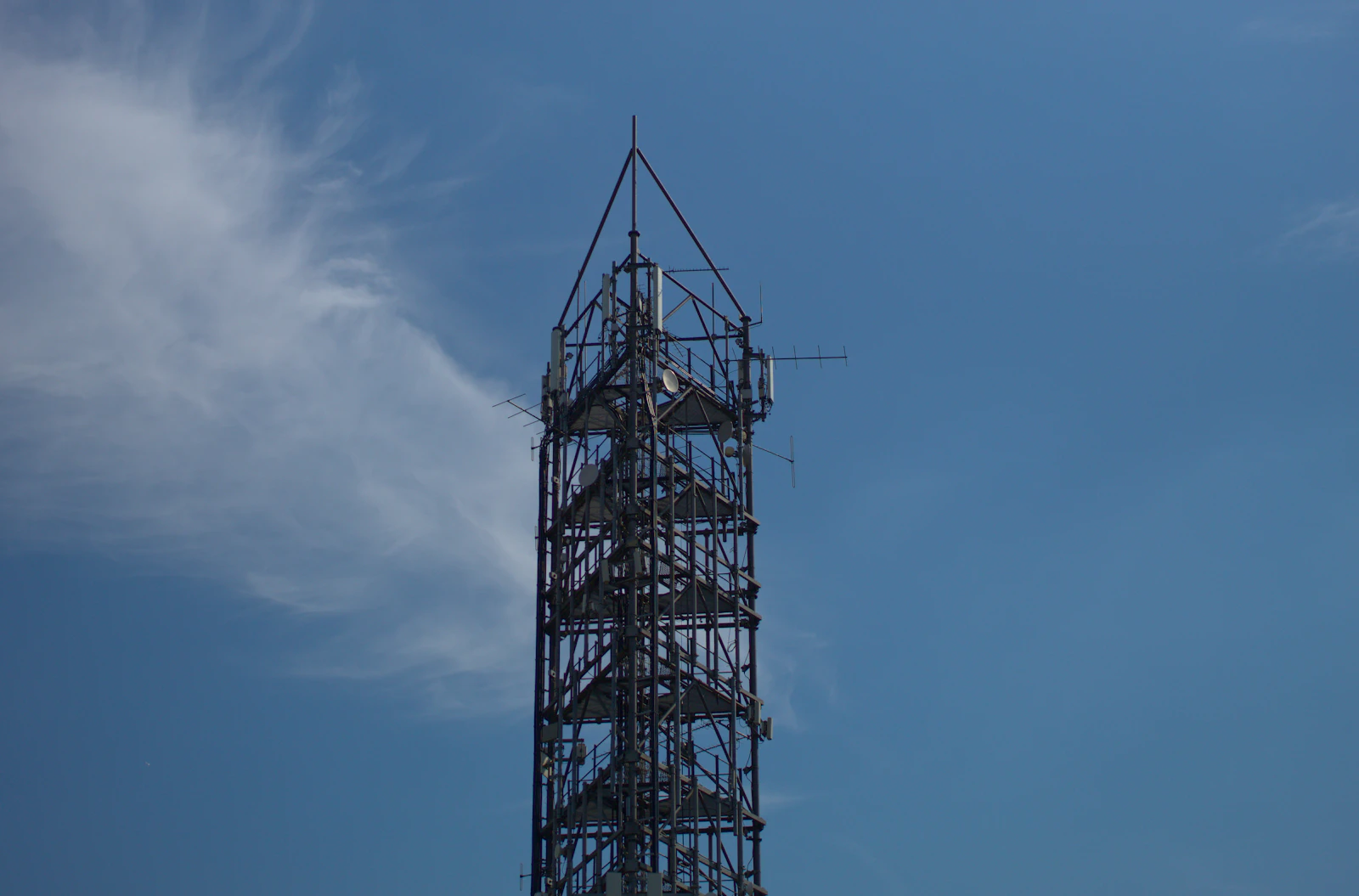
Scaffold Tower Rental Rates Chicago 2026
For Chicago drywall taping and finishing crews, 2026 scaffold tower equipment hire typically pencils out in three practical tiers: (1) compact indoor baker-style scaffold sections for 8–12 ft working height, (2) 12–15 ft rolling scaffold tower kits for corridors and open floors, and (3) 18–20+ ft rolling towers for lobbies and high-ceiling commercial interiors. As a planning range (assuming clean indoor use, normal weekday billing, and a standard rolling kit with platform and basic guardrails), expect roughly $30–$70/day, $90–$210/week, and $260–$520/month for smaller baker-style scaffold; $95–$160/day, $210–$360/week, and $480–$780/month for 12–15 ft rolling tower kits; and $140–$210/day, $300–$450/week, and $600–$950/month for 18–20 ft rolling towers (height, deck width, outriggers, and delivery constraints are the biggest cost levers). In Chicago, most rental coordinators will source these from a mix of national rental houses (for fleet availability and contract pricing) and Chicago-area tool and scaffold yards (for faster turns, smaller kits, and flexible pickups).
| Vendor |
Daily Rate |
Weekly Rate |
Review Score |
Website |
| Rent Rite Equipment |
$102 |
$158 |
10 |
Visit |
| Buttrey Rental |
$140 |
$265 |
9 |
Visit |
| House of Rental (Skokie / Chicago Metro) |
$123 |
$123 |
9 |
Visit |
| Sunbelt Rentals (Chicago Metro) |
$55 |
$165 |
8 |
Visit |
| United Rentals (Chicago Metro) |
$110 |
$220 |
9 |
Visit |
What Drives Scaffold Tower Hire Costs on Chicago Drywall Jobs?
Drywall taping and finishing is a high-mobility, high-surface-protection scope: you move the tower frequently, you work close to finished flooring, and you generate fine dust that can contaminate wheels, locking pins, and plank interfaces. Those realities affect equipment hire costs in Chicago more than the published day/week/month rate. The biggest cost drivers we see on interior finish projects are (a) the right kit (narrow vs wide, platform length, guardrails, toe boards, outriggers), (b) logistics (downtown delivery windows and dock scheduling), and (c) return condition (compound on frames/wheels, missing pins, and bent braces).
Chicago-specific considerations that move your total rental cost: loading-dock reservations and freight-elevator access (Loop high-rises often require scheduled deliveries and COIs), street/curb constraints that can force smaller drop vehicles or split deliveries, and winter conditions that increase slip control requirements and can extend move time (salt and moisture tracked into lobbies can drive stricter floor protection and wheel cleaning).
2026 Planning Benchmarks Using Published Rate Examples
If you need defensible estimating anchors for scaffold tower hire pricing, use published examples as a “sanity check” and then adjust for your Chicago jobsite constraints and contract discounts. For example, a Chicago-area yard listing for a 20 ft rolling scaffold tower shows $170/day, $325/week, and $610/month (noting pricing can change). A separate Midwest rental listing shows indoor baker-style scaffold sections around $25/day and $75/week for a 12 ft working height configuration, and $45/day and $135/week for an 18 ft working height configuration; it also shows a sectional scaffold tower package at $52/day and $156/week.
On the “contract pricing” side, a published contract schedule includes a 12 ft rolling scaffold tower at $106/day, $224/week, and $518/month, and it also breaks out common components such as a 6 ft x 30 in rolling scaffold at $28/day, $74/week, and $170/month. These references are useful because they show how some suppliers price towers as complete kits versus “frame-and-parts” assemblies, which can change the bill materially if you add stabilizers, toe boards, and extra platforms.
Choosing the Right Scaffold Tower Kit for Taping and Finishing
For drywall taping and finishing, the goal is stable access to the seam line with minimal repositioning and minimal floor impact. In Chicago commercial interiors, the most cost-effective scaffold tower hire setup is often two smaller rolling towers (or one tower plus one baker section) rather than one large tower that becomes a bottleneck at doors and corridor turns.
- Narrow indoor baker scaffold (approx. 30 in wide): typically cheapest to hire and easiest to move through doorways; best for punch and corridor work. Risk: crews skip outriggers/rails to “go faster,” which increases incident risk and can violate site safety requirements.
- 12–15 ft rolling tower kit (5 ft x 7 ft or similar footprints): a strong fit for open-plan tenant improvements; commonly requires outriggers and guardrails to meet site rules; more parts to lose if you do not control pin kits.
- 18–20 ft rolling tower: useful for atriums, tall lobbies, and 14–18 ft ceilings where stilts are not allowed; higher delivery and handling friction; frequently triggers “special handling” on returns if coated with joint compound.
Hidden-Fee Breakdown (What Typically Adds 15%–45% to Scaffold Tower Hire)
Published base rates are only part of scaffold tower equipment hire cost. For Chicago drywall finishing scopes, most of the overages come from logistics and condition-based charges rather than the platform height itself.
- Delivery and pickup: some published delivery schedules show charges like $120 each way plus $3.25 per loaded mile (your actual Chicago pricing will vary by contract and distance). For planning, many coordinators carry $95–$175 each way inside a 10–20 mile radius, then switch to hourly or mileage outside that zone.
- Minimum rental period: many yards effectively enforce a 1-day minimum even when you “only need it for a few hours,” particularly if delivery is required.
- Damage waiver / rental protection: commonly 10%–15% of rental charges as a line item (confirm whether it covers theft, dents/bends, and wheel damage). If you are under a master agreement, verify caps and exclusions before relying on it.
- Downtown access and after-hours: if the job requires a 6:00–7:00 AM dock slot or a night drop to avoid tenant traffic, carry an after-hours allowance of $150–$300 per trip (or a 2–4 hour minimum on a driver/runner depending on vendor policy).
- Cleaning fees (drywall compound): plan $75–$250 if frames, casters, or deck surfaces return with set compound or excessive dust; most yards will charge more if parts must be disassembled for cleaning.
- Missing parts: lost pins, braces, guardrail components, and caster locks are common. Carry a loss allowance such as $10–$25 per missing small component plus labor, unless your site tool-control program is strong.
- Late return / off-rent timing: many suppliers bill by calendar day once “due out” time passes. If your off-rent call misses the vendor cutoff (often early-to-mid afternoon), assume one extra day may hit the ticket.
Overtime, Weekend, and Billing Rules That Change Your Total
Even when you are not renting powered access, scaffolding can still trigger overtime billing rules in large rental agreements. One published rate guide illustrates overtime logic where an 8-hour day maps to a daily rate and a 40-hour week maps to a weekly rate, with additional tiers beyond that (e.g., 41–80 hours at 1.5x a weekly rate). In Chicago tenant improvements, the practical takeaway is that an “extra Saturday” or extended shift work can push you into a higher billing tier if your contract treats scaffold access as time-based rather than calendar-based.
Estimator note for Chicago: confirm whether your supplier bills scaffold tower hire as (a) calendar days, (b) shift hours, or (c) 4-week cycles. In the Loop, delayed freight-elevator access can keep equipment on-rent even when crews are not actively using it.
Accessory Adders You Should Budget (Because Drywall Crews Actually Need Them)
Drywall taping and finishing safety plans frequently require guardrails, toe boards, and stabilizers even indoors. If your vendor prices by component, published contract schedules show the magnitude of adders you can expect (rates vary by market and agreement): for example outriggers around $7/day, $10/week, and $20/month; a 19 in x 10 ft plank around $8/day, $15/week, and $36/month; and a walk-through scaffold frame around $7/day, $10/week, and $23/month.
Even if your Chicago supplier bundles these into a kit, you still pay for them implicitly—either in the tower rate, in a “kit upcharge,” or as replacement charges if they come back missing.
Example: Chicago Loop Tenant Improvement (Drywall Taping and Finishing)
Scenario: 14 ft ceilings, 22,000 SF buildout, work restricted to 6:00 AM–3:00 PM, freight-elevator booking required, no stilts allowed by GC, finished LVT already installed in corridors. You need scaffold tower equipment hire for 10 working days (two weeks on calendar).
- Equipment: (1) 12–15 ft rolling scaffold tower kit; (1) baker-style indoor scaffold (for tight rooms)
- Planned rental term: book weekly rates rather than stacking day rates (2 weeks)
- Planning rates (2026): tower kit $240–$360/week and baker scaffold $90–$160/week
- Freight / delivery: assume downtown delivery/pickup $150 each way (2 trips = $300) plus a $200 allowance for “missed dock window / redelivery” risk
- Damage waiver: carry 12% of base rent
- Floor protection: allow $120 for non-marking caster covers, ram board, and tape (or bill to jobsite general conditions if provided by GC)
- Cleaning contingency: allow $150 if compound contaminates casters or deck surfaces
Order-of-magnitude budget: base rent for two weeks roughly $660–$1,040, logistics and risk allowances roughly $570, and waiver roughly $80–$125, putting the planned scaffold tower hire cost in the neighborhood of $1,310–$1,735 before tax and any special site requirements. The point is not a “perfect” number—it is to make sure your estimate covers delivery friction, off-rent timing, and return-condition exposure that frequently get missed on drywall finishing scopes.
Budget Worksheet (No-Tables Estimating Lines)
- Rolling scaffold tower kit (12–15 ft): ____ weeks at $____/week (allow $210–$360/week)
- Indoor baker scaffold section (8–12 ft working height): ____ weeks at $____/week (allow $90–$160/week)
- Height add-on / extra platform (if needed for stairwells or soffits): allow $25–$60/week
- Outriggers / stabilizers: allow $10–$35/week (or included in kit)
- Guardrail / toe board package: allow $15–$55/week (or included in kit)
- Non-marking casters (if not included): allow $10–$30/week
- Delivery + pickup (Chicago metro): allow $190–$350 total for suburban jobs; $300–$650 total for Loop / constrained access
- After-hours / scheduled dock window premium: allow $150–$300 per event if required
- Damage waiver / rental protection: allow 10%–15% of rental charges
- Cleaning fee contingency (drywall mud/dust): allow $75–$250
- Lost-part allowance (pins/braces/clips): allow $50–$150 per tower per month for high-mobility interiors
Rental Order Checklist (For the Rental Coordinator)
- Confirm platform height needed (ceiling height minus 2–3 ft working clearance) and verify kit selection (narrow vs wide base).
- Specify indoor use requirements: non-marking casters, wheel locks, and floor protection expectations.
- Confirm accessory scope in writing: guardrails, toe boards, outriggers, stair units, extra platforms, and pin kits.
- Set delivery and pickup windows (Chicago dock scheduling): include building address, dock height limits, contact, and freight-elevator reservation time.
- Clarify off-rent rules and cutoff time; document who is authorized to call off-rent.
- Confirm billing basis (calendar vs shift-hour) and weekend/holiday charges.
- Request COI requirements from GC/property manager and confirm insurance/damage waiver selections.
- Return condition documentation: require photos at pickup/return showing casters, deck surface, guardrails, and pin kit count.
- PO and cost code: include job number, phase (taping/finishing), and internal equipment hire GL coding.
Delivery, Handling, and Off-Rent Controls (Where Chicago Costs Escalate)
In Chicago, the scaffold tower equipment hire “rate” is rarely what blows up the job—uncontrolled time on-rent does. Drywall finishing is especially vulnerable because sequencing changes (inspection failures, paint schedule shifts, delayed punch) can strand towers on site for days. Tighten these controls on every rental ticket:
- Delivery cutoffs: if your supplier requires next-day notice for pickup, treat that as a hard constraint and bake it into your phase planning.
- Off-rent authorization: limit who can request pickup so you don’t get “phantom pickups” that fail and re-trigger delivery charges.
- Partial returns: if you have two towers, off-rent one as soon as ceilings are complete; don’t let the entire kit sit until final punch.
- Elevator constraints: Loop high-rises often force you to break down towers into smaller frames; that can increase part count and loss exposure unless you kit-tag components.
Return-Condition Requirements That Affect Your Final Invoice
Most rental yards will accept normal jobsite wear, but drywall mud changes the conversation. Establish a written “return ready” standard for scaffold tower hire on taping and finishing scopes:
- Compound control: prohibit setting mud pans on decks without a liner; plan a dedicated “tool tray” and tape it down.
- Caster and lock cleanliness: if wheel locks are jammed with compound, many yards treat it as repair labor plus parts.
- Pin kit accountability: keep a labeled pin bag per tower; missing pins are one of the most common back-charges on scaffold kits.
- Photo documentation: take pre-return photos of each tower side, deck, outriggers, and the pin kit; attach to the return ticket.
Planning allowance: even on well-run sites, carry $75–$250 per rental event for cleaning/repair risk when drywall finishing is involved (higher if the tower is used during sanding without dust control).
When to Book Daily vs Weekly vs Monthly for Scaffold Tower Hire
For drywall taping and finishing, you rarely want consecutive daily charges. The moment you pass 3–4 days, it is usually cheaper (and administratively cleaner) to convert to weekly pricing—especially if elevator scheduling makes pickup uncertain. Use these heuristics:
- 1–2 days (daily): small punch work where you can pick up and return the same day; carry a 1-day minimum assumption unless you have written half-day terms.
- 3–13 days (weekly): most taping and finishing phase work. As published examples show, weekly rates can be roughly 2x daily on a 12 ft rolling tower ($224/week vs $106/day in a contract schedule), which quickly beats stacking day rates.
- 3+ weeks (monthly / 4-week): base-building interiors, phased tenant improvements, or repetitive corridor work. A Chicago-area listing shows a 20 ft rolling scaffold at $610/month, which is often less than two weekly cycles.
Risk-Allowance Checklist for Chicago Drywall Scaffold Tower Rentals
- Downtown delivery friction: allow an extra $200–$400 if you anticipate dock delays, re-delivery, or split loads.
- Weekend hold: if the tower will sit unused Saturday/Sunday but remain on-rent, decide whether to (a) keep it and pay, or (b) off-rent Friday and re-deliver Monday (often costs more once delivery is included).
- Holiday billing: confirm whether observed holidays are billed as rental days when equipment remains on site.
- Insurance and liability: carry 10%–15% damage waiver unless your corporate policy requires full coverage by certificate.
- Security: for ground-floor jobs, carry theft/loss exposure; for high-rise interiors, loss is more often “part migration” between subs.
Scaffold Tower Hire vs Purchase (Cost-Only Decision Guide)
Some drywall contractors consider buying towers because utilization is predictable. For cost-only comparison, treat purchase as attractive when you have:
- High utilization: more than 12–16 rental weeks per year per tower (especially if you can store and maintain it).
- Low loss risk: strong tool control so you don’t constantly replace pins, braces, and casters.
- Standardized kit: repeated ceiling heights so one configuration covers most work.
Planning numbers for 2026: a contractor-grade rolling scaffold tower package can easily run $1,500–$3,500+ to purchase depending on height, deck width, and guardrail package, while a month of hire for a 12 ft rolling tower is commonly in the $480–$780 planning range (and published contract examples show $518/month for a 12 ft rolling tower). If you are buying only to avoid cleaning back-charges, you may be optimizing the wrong variable—tightening return-condition controls often saves more than ownership.
Procurement Notes for Writing a Cleaner Scaffold Tower Rental PO
To reduce change orders and back-charges, your PO language should make the equipment hire scope explicit. Consider including:
- Exact kit definition: “rolling scaffold tower kit including platforms, guardrail set, toe boards, outriggers/stabilizers, and full pin kit.”
- Billing term: “weekly rate applies; do not stack daily rates without written approval.”
- Delivery instructions: include dock contact, elevator reservation time, and “call 30 minutes prior.”
- Return standard: “equipment will be returned broom-clean; cleaning charges require photo evidence.”
Bottom Line for Chicago Drywall Taping and Finishing
Scaffold tower equipment hire costs in Chicago are manageable when you treat the tower like a controlled kit (parts accountability), manage logistics like a downtown delivery (scheduled windows), and manage time-on-rent like a critical path item (off-rent rules and phase planning). For 2026 estimating, a solid baseline is to budget a 12–15 ft rolling tower at roughly $210–$360/week plus logistics, with accessories and condition-based costs treated as real (not “misc.”). When you do that, scaffold tower rental becomes a predictable, auditable cost line on drywall finishing work instead of an end-of-job invoice surprise.