

Scaffold Tower Rental Rates in Los Angeles (Daily/Weekly) — 2026 Costs

Price source: Costs shown are derived from our proprietary U.S. construction cost database (updated continuously from contractor/bid/pricing inputs and normalization rules).
Profile image of author
Eva Steinmetzer-Shaw
Head of Marketing

Scaffold Tower Equipment Hire Costs Los Angeles 2026

For Los Angeles scaffold tower equipment hire on commercial drywall taping and finishing scopes in 2026, planning budgets typically land in the $80–$200/day, $250–$650/week, and $330–$950 per 4-week (28-day) period per rolling scaffold tower, depending on tower height (5' to 20'), single- vs double-width frames, platform length, and whether you need non-marking casters, guardrail packages, and outriggers. These are planning ranges assuming contractor-grade mobile scaffold tower kits, no erection/dismantle labor included, and standard weekday yard hours; your real cost will move with delivery radius, jobsite access, weekend billing rules, and return-condition requirements. Many LA crews source through national accounts (e.g., United Rentals, Sunbelt Rentals, Herc Rentals) or regional scaffold/tool yards depending on site logistics and compliance documentation needs.

Vendor Daily Rate Weekly Rate Review Score Website
United Rentals $150 $600 9 Visit
Sunbelt Rentals $150 $600 9 Visit
Herc Rentals $160 $650 8 Visit
Hometown Rentals (San Dimas / Pomona) $98 $196 8 Visit
City Rentals (Ontario, CA) $44 $132 8 Visit

How Much Does A Scaffold Tower Cost To Hire For Drywall Taping And Finishing?

Drywall taping and finishing tends to drive indoor rolling scaffold tower rental pricing toward “clean,” maneuverable kits: smaller footprints for corridors, non-marking wheels for finished slabs, and guardrail/toeboard configurations to satisfy site safety plans. A practical way to sanity-check your 2026 planning range is to compare against posted catalog examples from Southern California yards and similar US rental catalogs:

Southern California posted rate examples (use as checkpoints, not guarantees): One regional SoCal rental catalog shows scaffold tower pricing that scales with height—e.g., 5' scaffold tower (28" wide) at about $84/day and $336 per 4-week, 10' tower at about $120/day and $480 per 4-week, 15' tower at about $168/day and $672 per 4-week, and 20' tower (5' wide) at about $192/day and $768 per 4-week. Treat these as posted checkpoints that help validate your quote, especially when you’re adding multiple towers across floors.

Indoor “short tower” pricing can be materially lower: Some California tool yards list an indoor 6' tower around $40/day, $120/week, and $240 per 4-week. For finishing crews, these short towers can cover 9'–12' ceilings effectively (depending on platform height and worker reach), and they often reduce delivery and assembly time versus taller builds.

Section-based weekly pricing exists too: Some suppliers quote rolling scaffold towers by “sections” (stacked frame sets), for example around $175/week for 1 section, $200/week for 2 sections, $225/week for 3 sections, and $250/week for 4 sections, with a deposit required. This style of pricing shows up when the vendor is effectively renting you a configurable tower “build” rather than a fixed-height kit.

Minimum terms and short-term billing matter: If you’re planning to pick up locally for a 1–2 day punch-list, confirm whether the vendor has a minimum rental window. Some catalogs list a 4-hour minimum and a minimum rent amount around $28.50 for a small rolling scaffold tower, with an hourly rate around $7 and daily rate around $38.25 (non-SoCal example, but useful for understanding how short-duration rentals can be billed).

Estimator’s takeaway for LA drywall scopes: If you’re doing taping/finishing across multiple rooms, your “true” cost is rarely the base weekly rate alone. The cost movers are (1) how many times you need to relocate towers (delivery vs pickup vs internal handling), (2) whether you can off-rent cleanly before a weekend, and (3) how strictly the GC enforces guardrails/toeboards and floor protection for occupied interiors.

What Drives Scaffold Tower Hire Pricing In Los Angeles?

For scaffold tower hire costs in Los Angeles, the biggest drivers usually fall into a few buckets that directly tie to drywall taping and finishing production:

  • Tower height and stability package: Taller towers typically require outriggers/leveling gear and more bracing. Some rental listings explicitly note that higher towers (e.g., 15' and 20') require outriggers and may be rented as a complete set. If your crew wants to “swap” components between towers, many vendors will not allow substitutions because it complicates inspection and missing-parts reconciliation.
  • Casters (wheels) and floor-safety requirements: In interior finishing, non-marking casters (and sometimes floor protection) can be a real cost adder. At least one California yard notes an extra charge for casters, which is common when the base kit is priced as a tower and wheels are optional.
  • Guardrails, toe boards, and “complete tower” rules: Drywall finishing often happens over finished flooring and near completed MEP; GCs are more likely to require full edge protection to avoid fall exposure and dropped tools. Even small add-ons can increase the bill if they push you into a different kit class or require additional delivery space.
  • Platform size and load class: Wider/longer platforms improve productivity (mud pans, hawk/tools, corner tools, tape boxes staged on deck), but they can move the rental into a more expensive “tower” category. Also confirm your rated capacity requirements if you’re staging compound buckets on deck.
  • Month definition (4-week vs calendar month): Many rental operations price “monthly” as 4 weeks (28 days), not a calendar month. That matters in Los Angeles when your drywall finish schedule spans holidays, inspection holds, or elevator constraints that stretch durations.

Delivery, Pickup, And On-Site Access Costs (Los Angeles)

LA logistics can swing mobile scaffold tower rental pricing more than the day rate—especially in Downtown, West Hollywood, Hollywood, Koreatown, and campus-style projects with controlled docks.

  • Baseline delivery/pickup checkpoints: Some SoCal equipment providers publicly post delivery/pickup charges such as $75 delivery and $75 pickup (example shown for access equipment). That is not scaffold-specific, but it’s a useful local checkpoint when you’re validating a tower delivery quote.
  • Mileage-based delivery outside a service area: Another equipment rental operator publishes a mileage approach such as $0.70 per mile outside its service area. If your drywall jobsite is outside a yard’s normal radius (or if you’re trying to consolidate deliveries across multiple jobs), per-mile billing can be the deciding factor.
  • LA-specific access adders to plan for: (1) dock appointment windows that require AM-only or 1-hour delivery slots, (2) street-use constraints and parking control (often requiring a spotter or arranged staging), and (3) elevator reservations that force towers to arrive in smaller batches (more trips).

Practical allowance guidance (2026 planning): For a single scaffold tower delivery inside core LA, it’s reasonable to carry a $150–$350 round-trip logistics allowance (delivery + pickup) when you can’t self-haul. If the site requires timed delivery, limited access, or waiting, add a $75–$200 “site delay / redelivery / appointment” contingency so your PO doesn’t get hit with change tickets later.

Hidden-Fee Breakdown

Drywall taping and finishing crews get burned by the same hidden-cost categories repeatedly—not because the vendor is “overcharging,” but because the jobsite reality (dust, damage, schedule slips) collides with rental terms.

  • Damage waiver / rental protection: Often priced as a percentage of rental charges rather than a flat fee. One published industry example references a damage waiver addendum charging 12.9% of the gross rental amount. Confirm whether your account is providing proof of insurance or buying the protection product on the ticket.
  • Late return / holdover billing: Many rental contracts treat time strictly; if equipment is held beyond the due-in time, the daily rate can apply for additional time. Operationally, this means “missed off-rent” can cost you a whole extra day even if the tower is idle on site.
  • Cleaning fees (drywall compound and jobsite dust): Plan an allowance of $35–$150 per tower if returned with compound splatter, tape mud in caster bearings, or excessive dust (especially on hospital/occupied TI work where vendors may require detailed wipe-down).
  • Missing components: Pins, braces, guardrail pieces, and toe boards routinely go missing during floor-to-floor moves. Carry a $25–$200 per PO allowance for “missing parts / restock” unless you’re barcode-tracking each component.
  • Redelivery / failed delivery: If the truck can’t access the site (no dock reservation, gate locked, no onsite receiver), plan $95–$250 for a reattempt.
  • Weekend/holiday billing rule: If you off-rent Friday after cutoff, you may still be billed through Monday depending on yard hours and contract terms. Treat the weekend as a cost exposure and schedule your “due in” accordingly.
  • Overdue accounts carrying charges: Some rental terms publish carrying charges such as 1.5% per month (18% annual) on overdue balances. Keep receiving and ticket matching tight to avoid finance noise on closeout.

Budget Worksheet (Scaffold Tower Equipment Hire)

Use this as a non-table worksheet for a drywall taping and finishing estimator or rental coordinator building a 2026 Los Angeles scaffold tower equipment hire budget.

  • Base scaffold tower hire (per tower): Allow $80–$200/day, $250–$650/week, or $330–$950 per 4-week depending on height/width and kit class.
  • Height class adder (if stepping up from ~10' to 15'–20'): Carry +$40–$90/day per tower equivalent when the scope forces a taller build for stairwells, lobbies, or open ceilings.
  • Non-marking casters / wheel kit: Allow $8–$18/day or $25–$60/week per tower if not included in the base package (confirm per vendor).
  • Guardrail set / toe boards: Allow $10–$25/week for guardrails and $8–$20/week for toe boards when mandated by site rules.
  • Outriggers / leveling jacks (if not included): Allow $12–$30/week per tower for stability accessories on taller or uneven surfaces.
  • Delivery + pickup (round trip): Allow $150–$350 baseline, plus $75–$200 contingency for timed windows, waiting, or redelivery exposure.
  • Damage waiver / protection: Allow 10%–13% of rental charges if you’re not providing proof of insurance (use 12.9% as a checkpoint where applicable).
  • Cleaning allowance: $35–$150 per tower at return (compound, dust, caster contamination).
  • Missing parts allowance: $25–$200 per PO (pins/braces/rails) unless you’re doing component-level check-in/out.
  • Parking / receiving coordination: Carry $75–$250 for downtown curb constraints, temp parking control, or a dedicated receiver/spotter time block.

Rental Order Checklist

  • PO basics: Job name, cost code (drywall finish), requested dates (start + planned off-rent), billing term (day/week/4-week), and approved not-to-exceed (NTE).
  • Equipment spec: Tower height (e.g., 10' vs 15'), width (28" single vs 5' wide), platform length (e.g., 5'–10'), load class, and indoor-use requirement (non-marking casters).
  • Safety accessories: Guardrails, toe boards, outriggers/leveling jacks, and any site-required tagging/inspection documentation.
  • Delivery plan: Dock address, on-site contact, delivery cutoff time, elevator reservation details, and whether the driver needs a call-ahead.
  • Receiving and condition documentation: Require photos at delivery (all components) and at pickup (clean, undamaged) to reduce missing/damage disputes.
  • Off-rent procedure: Who is authorized to call off-rent, what time of day cutoff applies, and where the equipment must be staged for pickup.

Example: 12-Foot Interior Drywall Finish In A Mid-Rise Corridor (Los Angeles)

Scenario: A TI project near DTLA requires finishing above corridor soffits and bulkheads; ceiling height varies 10'–12'. The GC restricts deliveries to 7:00–9:00 AM dock windows and requires non-marking wheels due to finished flooring.

Plan: Rent 2 rolling scaffold towers for 3 weeks with guardrails/toe boards. Use weekly pricing (not stacked day rates). Carry a $250 round-trip delivery/pickup allowance (timed window risk) plus $125 contingency for waiting/redelivery. Add damage waiver at 12.9% of rental charges if you are not flowing property coverage. Add a $75 cleaning allowance per tower because finishing mud inevitably finds casters and braces.

Why the numbers matter operationally: If you miss the off-rent call before the vendor’s cutoff on a Friday, you can easily eat an extra billed day or weekend cycle. Also, if the corridor staging area is not ready at pickup, the driver may leave and you’ll pay a redelivery/re-pickup charge. On LA mid-rise work, receiving discipline and photo documentation is often the cheapest “cost control” tool you have.

Note: The example above is intentionally written as a planning build-up (not a quote). Your final equipment hire cost depends on the exact tower kit, accessory list, yard rules, and negotiated account rates.
Draft costed estimates with AI assistance, then review before sharing.

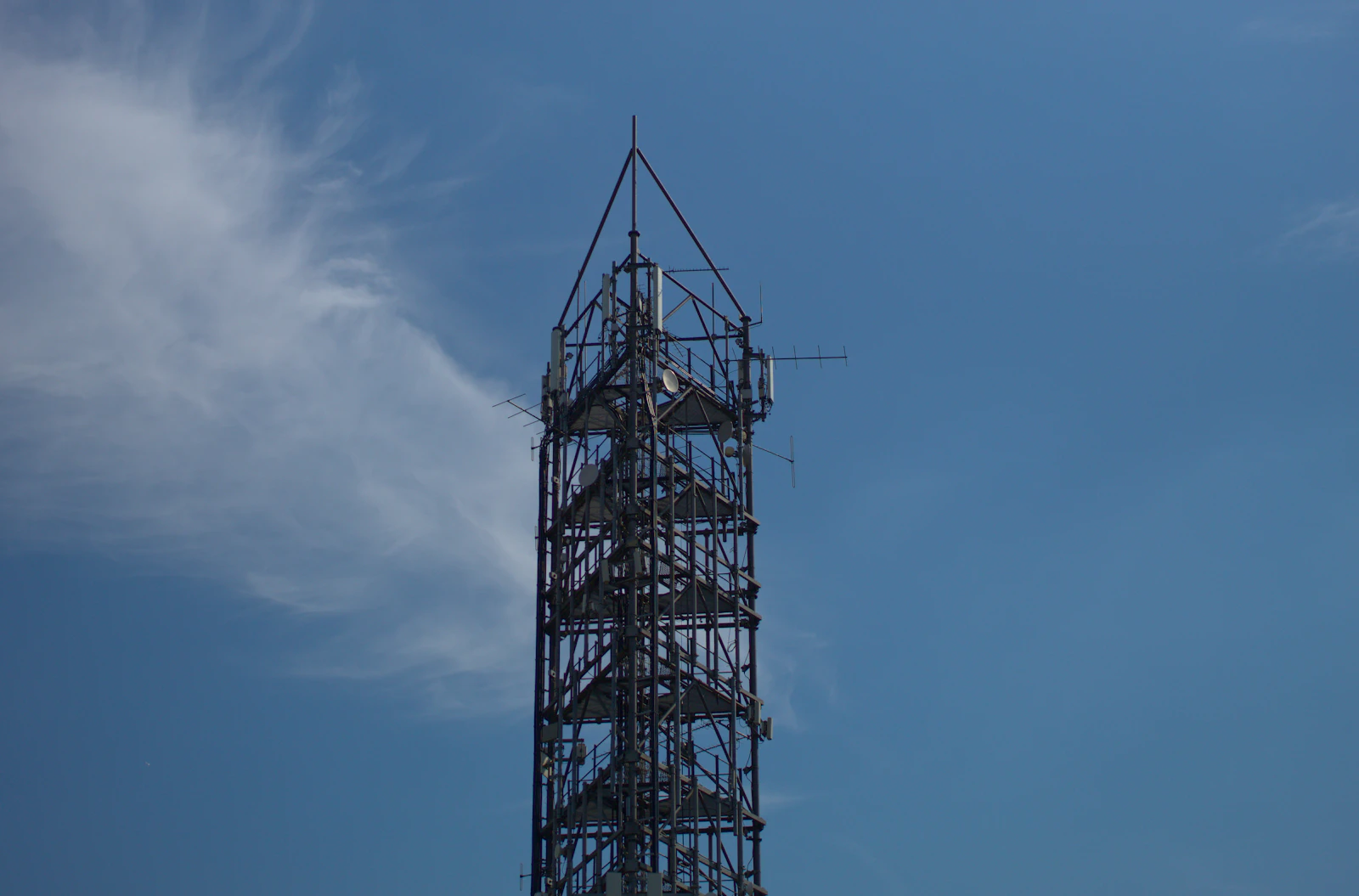
scaffold and tower in construction work

Off-Rent Rules, Weekend Billing, And Return Condition Documentation

On drywall taping and finishing work, scaffold towers tend to “linger” because they’re convenient for punch, touch-up, and final detail. That convenience is exactly how rental costs inflate in Los Angeles.

  • Off-rent timing: Confirm the vendor’s same-day off-rent cutoff (often early afternoon). If your superintendent calls after cutoff, assume the tower bills another day.
  • Weekend exposure: Many yards have reduced weekend hours; if you can’t physically return or get picked up, you may carry charges through Monday even if the tower is unused Saturday/Sunday.
  • Return condition: For drywall scopes, document (photos) that the tower is clean and complete at pickup. Missing braces/rails are the most common back-charge category when towers move between floors and trades.
  • “Held beyond due-in” risk: Some rental terms emphasize that keeping goods beyond the due-in time triggers additional daily-rate billing. Operationally, stage equipment for pickup early, not at the end of shift.

When A Scaffold Tower Becomes More Expensive Than A Small Scissor Lift

For certain LA interiors, a small scissor lift can be cheaper overall once you factor in delivery, relocation time, and compliance friction—especially if your crew needs frequent vertical repositioning rather than horizontal rolling. As a local checkpoint, some SoCal providers advertise small access equipment rates such as $100/day, $350/week, and $650/month for a 19' scissor lift, with $75 delivery and $75 pickup. That pricing is not scaffold tower pricing, but it is a realistic benchmark to compare against if you’re renting multiple towers for multiple weeks and still fighting corridor maneuverability and guardrail requirements.

Use-case rule of thumb: If you need (1) frequent height changes, (2) long pushes across rough slabs, or (3) strict fall-protection compliance with minimal assembly labor, evaluate whether one lift replaces two towers. If your scope is tight corridors, finished flooring, or occupied space where powered equipment is restricted, the rolling scaffold tower often remains the best fit—just budget for casters, cleaning, and careful returns.

Insurance, Damage Waivers, And Contract Notes For Los Angeles Projects

Most large GCs and national rental accounts will require you to address responsibility for theft/damage. If you’re using a national provider, they may require either proof of property insurance per their terms or purchase of a rental protection product (terminology varies by provider). Align this early with your risk manager so your scaffold tower equipment hire PO doesn’t get stalled in approvals.

For budgeting, if you do elect an optional damage waiver/protection plan, carry a percentage-of-rent allowance (often around the low teens). A published industry example references 12.9% of gross rental as a checkpoint, but your negotiated national account rate and coverage structure can differ.

Ways To Reduce Scaffold Tower Equipment Hire Cost Without Reducing Productivity

  • Standardize tower kits across the project: Pick one width and one platform length whenever possible so components don’t get mixed and “lost.” This reduces missing-parts charges (often the biggest surprise cost line).
  • Schedule off-rent around LA logistics: Plan pickup for mid-week when docks are more predictable; avoid Friday cutoff risk unless you’re confident the tower can be staged early and the receiver is confirmed.
  • Consolidate deliveries: If you need 3 towers, ship all 3 in one run rather than piecemeal. A single timed-window delivery is usually cheaper than three separate appointment deliveries in LA traffic.
  • Control drywall mud exposure: Assign one laborer to wipe down platforms/braces at shift end. Spending 10 minutes/day can be cheaper than a $75–$150 cleaning fee at return.
  • Use photo check-in/out: Photos at delivery and pickup reduce disputes and speed closeout, especially on multi-floor TI where the tower changes hands between crews.

Example: Multi-Floor Drywall Punch With Two Towers And One “Float” Week

Scenario: You finish Level 3 and Level 4, then hold one tower for a “float week” pending inspection rework while the other off-rents immediately.

Cost-control approach: Off-rent the first tower before the weekend and keep the second tower only if you have confirmed punch tasks scheduled. If you keep a tower “just in case,” budget at least 1 extra week of hire plus one additional delivery/pickup touch if the GC changes staging rules. In LA, that float week can quietly exceed the cost of simply re-renting later—especially when the site starts restricting access during closeout.

Estimator note: When you price scaffold tower equipment hire for drywall taping and finishing, treat the rental as a managed asset with a planned off-rent date, not a passive tool. Your cost outcome is driven as much by off-rent discipline and delivery coordination as by the posted weekly rate.
