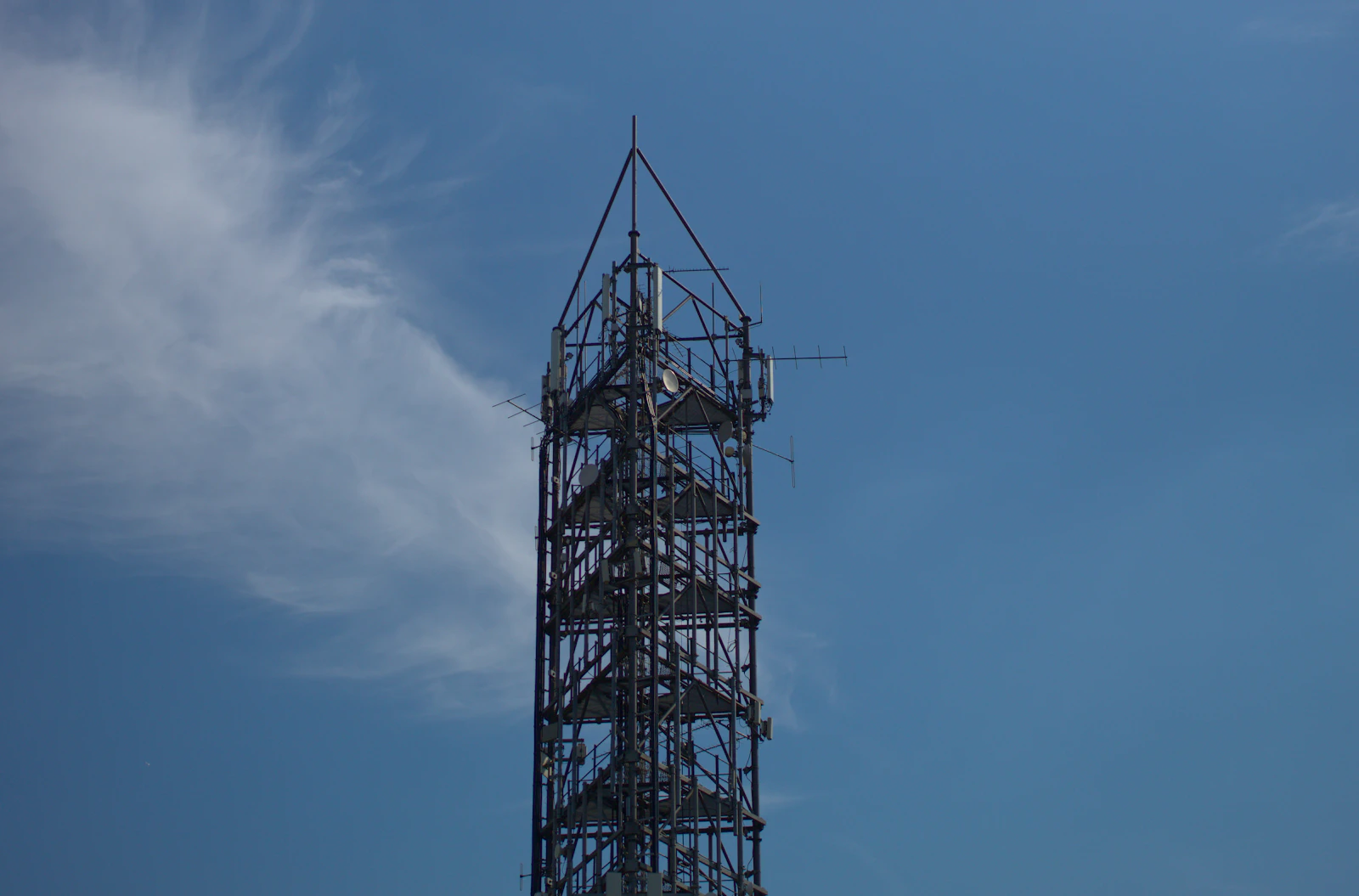
Scaffold Tower Rental Rates Los Angeles 2026
For Los Angeles security system wiring work in 2026, budget scaffold tower equipment hire using (a) the tower type (single-width indoor rolling “baker” scaffold vs. multi-section rolling tower vs. larger exterior tower kits), (b) whether you pick up or require delivery into a congested access zone, and (c) the accessory package needed to meet Cal/OSHA expectations (guardrails, toeboards, outriggers, non-marking casters, and leveling). As a planning range (not a guaranteed quote), many LA-area rental coordinators carry $45–$95/day, $140–$320/week, and $380–$950 per 4-week (28-day) “month” for a basic indoor rolling scaffold tower section (pickup), and $90–$200/day, $300–$650/week, and $900–$2,500 per 4-week period for multi-section rolling towers or bundled kits once you include the commonly-required accessories and urban delivery constraints. National rental houses and local scaffold suppliers (for example, branch networks that display daily/weekly/28-day pricing online) may quote differently by availability and spec, so treat these as 2026 budgeting bands pending RFQ.
| Vendor |
Daily Rate |
Weekly Rate |
Review Score |
Website |
| American Rentals |
$168 |
$168 |
9 |
Visit |
| Sunbelt Rentals |
$150 |
$450 |
8 |
Visit |
| Herc Rentals |
$150 |
$450 |
8 |
Visit |
| United Rentals |
$160 |
$480 |
4 |
Visit |
| The Home Depot Tool Rental |
$70 |
$210 |
9 |
Visit |
What Drives Scaffold Tower Equipment Hire Cost in Los Angeles?
Scaffold tower hire cost in Los Angeles moves more with configuration and logistics than with the bare frames. A “scaffold tower” might mean a single 6 ft rolling baker-style unit that fits through doorways, or it might mean a 12–20 ft rolling tower kit with a wider base, multiple decks, guardrail sets, and stabilizers. That distinction matters because many suppliers price tower kits as packages and require you to take “everything for that tower kit,” which increases both the rental line and the loss/damage exposure when you’re working in occupied buildings.
Key cost drivers rental managers should model up front:
- Working height and number of “sections”: weekly pricing frequently steps up per added section. (Example market signal: a published rolling tower rental schedule showing $175/week for 1 section increasing to $250/week for 4 sections.)
- Indoor vs. exterior kit: larger exterior tower kits can price like small access systems. One published California tower kit rate shows $125/day, $375/week, and $700 per four weeks for a 20 ft kit (base 10 ft x 5 ft) that includes outriggers and safety rails, with separate adders for wheels/jacks.
- Pickup vs. delivery: LA delivery is rarely “free.” Even when the tower rent is modest, delivery/pick-up can dominate the invoice due to truck roll, gate time, and site constraints (loading dock booking, traffic, and parking enforcement). (For budgeting, it’s common to carry a two-way delivery allowance in the low hundreds for small loads and higher for larger loads; public bid documentation in the Los Angeles port environment has shown small-load delivery/pick-up and large-load delivery/pick-up line items at $150 and $275, respectively, as examples of the type of adders that show up in real procurements.) (g
- Accessory package requirements: outriggers/stabilizers, guardrail panels, toeboards, additional platforms, stair units, and leveling jacks can be required by the site safety plan and may be charged as separate SKUs.
- Risk transfer (waiver/RPP) and deposit: depending on account terms, you may see a damage waiver percentage (commonly budgeted at 10%–15% of rental) and/or a refundable deposit for smaller accounts. As one example from a published rate card outside LA, a $500 deposit and separate delivery rules are stated upfront.
Los Angeles-Specific Cost Drivers for Security System Wiring
Security system wiring in Los Angeles skews “inside/occupied” more often than many scaffold applications: corridors, lobbies, retail floors, parking structures, and multi-tenant office spaces. That changes equipment hire costs because the cheapest tower on paper is not always the lowest-cost tower operationally.
- Access windows and overtime delivery: many LA properties only accept deliveries before a morning cutoff (often around 7:00–9:00 a.m.) or after-hours to avoid lobby congestion. If you can’t receive during normal business hours, plan an after-hours receiving premium (often budgeted at $125–$250) plus additional standby time.
- Floor protection and non-marking requirements: terrazzo/lobby tile means you may need non-marking casters, corner guards, and additional time to protect finishes; if the vendor supplies these, treat as adders.
- Elevator dimensions and path-of-travel: in high-rises (DTLA, Century City, Westwood), tower components often need to fit standard elevator cabs; that can force single-width towers and more “rebuilds” (labor time) as you leapfrog between floors.
- Dust control and occupied-space constraints: above-ceiling wiring can trigger containment requirements in healthcare, education, and Class A office—budget for additional cleaning and a stricter return-condition standard to avoid chargebacks.
- Coastal wind/marine exposure (Westside/South Bay): even for “short” towers, roof and exterior camera runs can face gust exposure; sites may require wider bases, outriggers, or tie-offs, which changes the tower package and cost.
Typical Add-Ons and Accessories That Move the Hire Price
For equipment managers, the most reliable way to reduce surprises is to build the scaffold tower as a billable “kit” in your estimate: base tower + compliance accessories + productivity accessories. Published rate catalogs show how quickly small accessories accumulate. For example, one published scaffold accessory section lists items such as casters ($6–$12/day), screw jacks ($4–$7/day), guard rails ($2–$4/day), and toe boards ($2–$4/day).
Common accessories to price explicitly (with example market signals):
- Casters and leveling jacks: an example California kit notes extra charges of $3/day, $10/week, and $15 per four weeks for each caster or leveling jack added to the kit.
- Guardrails and toeboards: accessory rate cards commonly list guardrail and toeboard components as separate daily-rate items (for example, $2–$4/day per rail/toeboard SKU in a published catalog).
- Additional platforms/deck boards: add decks when your wiring scope needs a staging level for parts bins, cable reels, or to allow two techs to work without overreaching. (Example published accessory pricing: a 7 ft x 28 in aluminum platform listed at $16–$30/day.)
- Outriggers/stabilizers: many rental descriptions explicitly call out that outriggers are required when stacking beyond one section.
- Stair access components: if your team must carry equipment up and down frequently (e.g., headend equipment, PoE switches, or conduit), stair units can improve safety and throughput but should be carried as adders (example published accessory: “access stairway pair” at $10–$20/day).
Hidden-Fee Breakdown
Scaffold tower equipment hire in Los Angeles can look inexpensive until the “non-rent” line items are added. Below are the hidden-fee categories that most often change the final cost on security system wiring projects (especially in occupied buildings and tight delivery windows). Carry these as allowances unless your MSA fixes them.
- Delivery / pick-up: budget $150–$275+ each way depending on small vs. larger loads and jobsite constraints (dock booking, elevator access, and truck route limits). (g
- Minimum rental charges: some rate sheets show a minimum rent amount even when hourly billing exists (example: minimum rent amount $28.50 on a rolling tower listing).
- Deposit / credit requirements: smaller or first-time accounts may see refundable deposits (example published deposit: $500).
- Damage waiver / RPP: budget 10%–15% of rental unless your contract waives it; confirm whether it is optional and what it actually covers (loss/theft rules can differ by provider).
- Cleaning fees: carry $75–$250 if the tower comes back with concrete dust, adhesive, spray foam, or ceiling tile debris; indoor “white glove” returns are a real requirement on Class A sites.
- Missing component chargebacks: pins, braces, and guardrail parts are commonly lost during floor-to-floor moves. Carry $25–$200 per missing component depending on the part class and whether it is serialized.
- Late return / holdover: many rental terms convert you back to the daily rate if equipment is held past the due-in time; this can erase the advantage of a weekly or 4-week rate if returns slip.
- Weekend/holiday billing rules: some suppliers publish a distinct weekend rate (example: weekend $44 on a baker scaffold set listing).
Budget Worksheet (Scaffold Tower Equipment Hire)
Use this bullet worksheet to build an LA security wiring estimate that survives procurement review. Adjust quantities by number of floors/zones and whether towers must be duplicated to maintain access while one is relocated.
- Base scaffold tower rental (indoor rolling unit): $45–$95/day or $140–$320/week (pickup); quantity: ____ towers; duration: ____ weeks
- Multi-section / higher reach tower package (if needed): $90–$200/day or $300–$650/week; quantity: ____; duration: ____
- Delivery + pick-up allowance (LA): $300–$900 total (two-way), depending on load size and receiving windows (g
- After-hours receiving premium: $125–$250 (if building requires nights/weekends)
- Accessory kit allowance (guardrails, toeboards, extra decks): $25–$90/week per tower (confirm required SKUs; published catalogs show small per-day charges that add up)
- Outriggers/stabilizers: $15–$60/week per tower when stacking above one section (site/safety-plan driven)
- Damage waiver/RPP: 10%–15% of rental subtotal (or per contract)
- Cleaning/return-condition allowance: $125 (Class A office) to $250 (parking structure dust)
- Loss/damage contingency: 3%–8% of scaffold package value (pins/braces/rails)
Example: Security System Wiring on a 6-Story Office Retrofit in Downtown Los Angeles
Scenario constraints: Work is after-hours (6:00 p.m.–2:00 a.m.) in occupied tenant spaces; building requires protected floors and no rolling on tile without mats; loading dock is available only 7:00–8:00 a.m. for returns. Scope needs two towers to keep crews productive on two floors simultaneously.
One workable equipment hire budget (illustrative):
- Two rolling tower rentals at $175/week each for 3 weeks = $1,050 (rate signal consistent with published per-section weekly pricing, but confirm local quote).
- Accessory/compliance package allowance (guardrails/toeboards/extra deck) at $35/week per tower for 3 weeks = $210 (based on typical adders visible in published accessory rate cards).
- Delivery + pick-up (two-way) carried at $550 (assume a “larger load” scenario due to two towers and accessories, plus LA receiving constraints). (g
- After-hours coordination/receiving premium carried at $175
- Damage waiver at 12% of rental lines ($1,260 x 0.12) = $151
- Cleaning/return allowance = $125
Illustrative equipment hire total: $1,050 + $210 + $550 + $175 + $151 + $125 = $2,261 (before tax), plus any documented loss/damage charges if components go missing. This is why scaffold tower hire cost control in Los Angeles is mainly about delivery timing, return discipline, and accessory scope control—not just the base day rate.
Estimator note: If the project requires a larger bundled kit (e.g., a full 20 ft exterior tower package), published California rates show $125/day, $375/week, and $700 per four weeks for one kit; if you need two kits to maintain progress, duplicate those lines and re-evaluate delivery/loading logistics.
How Rental Periods, Off-Rent, and Weekend Billing Change Total Cost
On LA security system wiring, the most common scaffold tower cost overrun is not “rate too high,” it is “time counted wrong.” Align your internal schedule with how rental houses bill:
- 28-day months: many national branches publish “monthly” as a 28-day rate rather than a calendar month; build your schedule around four-week blocks when possible.
- Due-in time matters: if the contract says “due in” 9:00 a.m. and you return at 11:00 a.m., you can trigger an extra day or a reversion to daily billing (depending on terms). One published rental catalog’s late-return language states that when goods are held beyond the due-in date/time, the daily rate can apply for the entire period notwithstanding any lesser periodic rate—an expensive outcome if your team assumed the weekly rate would hold.
- Weekend structures differ: some suppliers publish a separate weekend rate (e.g., weekend $44 for a baker scaffold set) rather than simply “2 extra days free,” so confirm whether a Friday delivery locks you into a weekend product code.
- Off-rent notice: in LA, you often need a pickup request by an afternoon cutoff (commonly 2:00–4:00 p.m.) for next-day pickup; otherwise, you may buy an extra day. Build this into your field lead’s closeout routine.
Compliance, Site Rules, and Documentation That Affect Hire Cost
Safety requirements are not just compliance—they directly change your scaffold tower equipment hire cost because they drive what accessories are “required” vs. “nice to have,” and they can drive site-mandated inspections or rebuild labor.
- Guardrails/railings thresholds: Cal/OSHA rules for railings and toeboards can apply at elevations of 7 1/2 ft or more for certain conditions (including rolling scaffolds and elevated platforms), which can force a guardrail kit even on what the field thinks is a “short” tower.
- Federal OSHA fall protection reference: OSHA guidance commonly references fall protection for workers on scaffolds more than 10 ft above a lower level, which is why many national scaffold packages are standardized around guardrail availability and why your vendor may insist on specific configurations.
- Outriggers and stability: multiple rental descriptions state outriggers are required above one section high; if the site safety plan mirrors this, treat outriggers as non-optional and scope them from day one.
Practical LA documentation that prevents chargebacks:
- Pre-delivery photo log of components (frames, braces, decks, rails, pins) and a receiving signature
- Return-condition photos (clean, dry, labeled bundles) to dispute cleaning or missing-part charges
- Floor protection plan (who supplies mats; where rolling is allowed)
- “Competent person” inspection expectation (confirm whether your company or the rental provider is responsible)
Operational Constraints That Change Real Rental Cost in Los Angeles
These jobsite realities commonly change scaffold tower hire totals on security system wiring projects:
- Delivery windows/cutoffs: if your building only allows delivery/pickup inside a one-hour dock window, budget standby time and potential re-delivery fees if the truck is turned away.
- Off-rent rules and staged returns: when moving floor-to-floor, return partial kits as soon as a zone is complete; otherwise, you’re paying rent on idle components.
- Weekend/holiday billing: if you work Fri–Mon nights in retail, confirm whether “weekend” is billed as a bundle; published weekend-rate examples show it can be distinct from day rate.
- Indoor dust-control requirements: ceiling tile debris and concrete dust can trigger cleaning fees; build cleaning time into demob so the equipment returns “rent-ready.”
- Return-condition documentation: missing pins/braces are the #1 small-loss; bag and count them at pickup and return.
Rental Order Checklist
Use this to reduce back-and-forth with the rental counter and to keep your scaffold tower equipment hire aligned to the security system wiring schedule.
- PO and commercial terms: PO number; tax-exempt status (if applicable); agreed rental period (daily vs. weekly vs. 4-week/28-day); damage waiver accepted/rejected; deposit requirement (if any).
- Equipment specification: tower type (single-width vs. multi-section); desired platform heights; indoor non-marking casters; required guardrails/toeboards; outriggers/stabilizers; extra decks/tool trays; stair access components if required.
- Delivery instructions: address + jobsite contact; dock hours; COI requirements; elevator reservation; parking/loading notes; delivery cutoff time; any badging needs for driver/crew.
- Receiving and inventory control: count sheet at drop; photo log; tag/label bundles by floor/zone to prevent mixed returns.
- Off-rent and pickup: pickup request deadline; staged pickup plan by floor; who signs the pickup ticket; return-condition expectations (wipe-down, bundled, pins accounted for).
- Closeout: return photos; dispute window for missing/damage/cleaning fees; confirm stop-bill date/time in writing to prevent holdover billing.
Cost-Control Tactics for Scaffold Tower Hire on Wiring Projects
- Use weekly/4-week rates intentionally: stacking day rates is rarely optimal; published guidance for scaffolding rental notes that booking weekly or monthly rates instead of stacking days can reduce cost, and that comparing quotes can save 15%–30% in many markets.
- Right-size the tower to the pathway, not the max reach: if the tower cannot legally roll through doorways/elevators, you’ll pay in rebuild time (and potentially in extra rental duration).
- Duplicate only what drives productivity: two towers can be cheaper than one if it reduces idle labor (especially on after-hours shifts), but only if you control delivery/pickup and return on time.
- Make accessories explicit in the RFQ: prevent “surprise adders” by listing guardrails, toeboards, outriggers, extra decks, and non-marking casters as required line items from the start.
If you want tighter 2026 budget bands for your exact LA submarket (DTLA vs. Westside vs. South Bay vs. Valley), the fastest method is to request a two-option quote: (1) pickup pricing and (2) delivered-to-floor pricing with a defined receiving window—then compare the delivered delta against your internal labor/vehicle cost to self-pickup.