

For Chicago foundation repair scopes in 2026, shotcrete pump equipment hire typically budgets in two distinct lanes: (1) bare equipment hire (pump only, crew-operated) and (2) operated hire (pump + operator, often billed portal-to-portal with minimum hours plus yardage). For bare hire, small rotor/stator material pumps (used for fine-aggregate repair mortars and some shotcrete-adjacent mixes) commonly land around $350/day, $895/week, and $2,600 per 4-week period (tax/fees extra). For larger skid-mounted shotcrete/concrete spraying machines, published rate books may quote ~$500/week and ~$1,450/month (often quoted weekly/monthly rather than day-rate). For operated wet-mix shotcrete line pump hire (the most common approach for structural foundation shotcrete in Chicagoland), planning ranges typically work out to $2,400–$5,800 per pumping day, $11,000–$26,000 per pumping week, and $40,000–$95,000 per 4-week month once you carry minimums, travel time, hose length, washout/cleanup requirements, fuel surcharges, and weekend/overtime provisions. These totals vary heavily by access and schedule constraints; rental coordinators should treat them as 2026 budgeting allowances rather than quote substitutes. In Chicago, contractors often source the pump package through regional concrete pumping specialists (for the operated shotcrete pump) while using national equipment houses for supporting rentals like compressors, generators, lifts, and dust-control accessories.
| Vendor | Daily Rate | Weekly Rate | Review Score | Website |
|---|---|---|---|---|
| PJ’s Concrete Pumping Service | $1500 | $6 000 | 8 | Visit |
| Original Concrete Pumping Service | $1450 | $5 800 | 9 | Visit |
| Concrete Strategies (Equipment Rentals) | $2400 | $10 500 | 7 | Visit |
| Concrete By Wagner (Conveying & Pumping) | $1600 | $6 500 | 7 | Visit |
Shotcrete pump hire cost for foundation repair in Chicago is rarely driven by the “headline rate” alone. The real swing factors are (a) site logistics (alley access, courtyard carry, basement egress, street staging), (b) time rules (minimums, portal-to-portal billing, off-rent cutoffs), and (c) return condition (washout, hose cleaning, and documentation). Chicago-specific friction points that regularly move the final invoice include: tight delivery windows due to traffic and building management, public way/sidewalk obstruction needs for hose runs or truck staging (especially inside the Central Business District), and winter operations (freeze protection for water supply and line cleaning, plus heated staging for materials). Chicago’s public way obstruction fees can be material when a foundation repair shotcrete setup requires a lane/sidewalk occupancy beyond a simple curbside stop; city code sets monthly minimums and per-foot monthly fees and notes CPI-based increases beginning in January 2027 (up to 2.5% per year).
For foundation repair shotcrete placement, your equipment hire cost starts with selecting the pump class that matches aggregate size, hose diameter, and access. Three practical categories show up in Chicago repair work:
From an estimating standpoint, the highest-risk mistake is budgeting bare equipment hire for a scope that will actually be procured as operated hire. For shotcrete pumping in particular, many providers will not release the pump without an operator, and the invoice structure shifts toward minimum hours, travel time (portal-to-portal), yardage, and washout constraints.
For Chicago foundation repair, normalize competing shotcrete pump hire quotes into the same accounting unit before you compare. A workable normalization is: one 8-hour shift on-site + travel time billed portal-to-portal + a yardage band (e.g., 10–25 yd) + a hose band (e.g., 150–250 ft) + one cleanup plan. Market rate sheets show structures such as:
Practical note for rental coordinators: if your foundation repair shotcrete is only 6–10 yd, you can still burn a full minimum + travel + cleanup cycle. The job may be “small” in cubic yards but “big” in paid hours. That’s why many contractors carry shotcrete pump hire as a standalone line item rather than burying it in a concrete/shotcrete unit rate—so it can be managed and scheduled as its own cost driver.
Below are common line items that change the effective shotcrete pump equipment hire cost in Chicago. Use this as an estimator’s checklist to prevent scope gaps between the field plan and the rental agreement:
Chicago-specific operational constraint to call out: many downtown and near-downtown foundation repair sites will not allow slurry discharge or washout on the property. If you do not pre-plan washout containment and disposal, you should assume at least one “no washout / containment” fee plus additional labor hours for controlled hose cleaning.
Scenario: Interior basement wall stabilization overlay (foundation repair) requiring 9 yd of wet-mix shotcrete placed through a 2 in hose, with 200 ft of line required due to truck staging at the curb and hose routing down a stairwell. Work is scheduled on a Saturday to avoid weekday staging conflicts.
Planning build-up (illustrative, not a quote): Use a published shotcrete line pump structure of $295/hr with a 2-hour minimum ($590), 7% fuel surcharge, $25 primer fee, and a line-length adder beyond 150 ft of $1/ft. Add a $195 prime-out bag (disposal by others) and assume no washout on-site, triggering a $100 fee. If portal-to-portal results in 6 billed hours total (travel + on-site pump time + cleanup), time charges = $1,770. Fuel surcharge at 7% adds $124. Hose adder is 50 ft × $1 = $50. Saturday overtime at $25/hr for 2 hours adds $50. Add primer ($25) + bag ($195) + no-washout fee ($100). Illustrative total ≈ $2,364 before any yardage charges, access delays, public way fees, or additional laborers for hose handling. If the provider also bills yardage (example: $4.50/yd), add $40.50.
Operational constraints that can increase this number in Chicago: (1) building management only allows deliveries between 9:00–11:00, creating paid standby if the ready-mix truck misses the window; (2) elevator-out-of-service forces stair carry, increasing hose handling time; (3) cold weather requires longer line warm-up and more controlled washout to prevent freeze-up of residue in discharge and hoses.
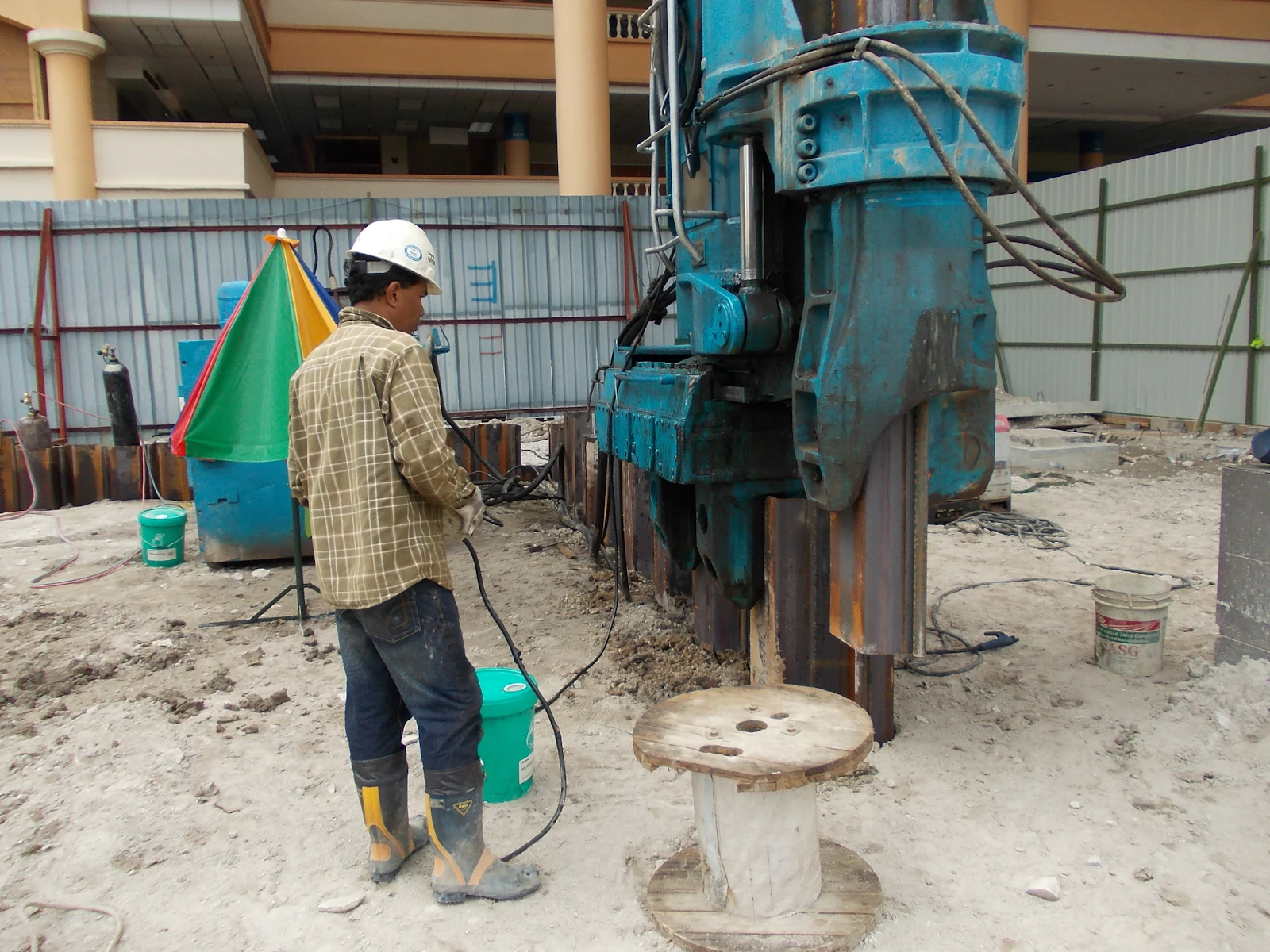
For foundation repair shotcrete work, the pump itself is only part of the equipment hire cost picture. In Chicago, staging often dictates whether you can keep the pump package on a clean “in-and-out” cycle or whether you accumulate paid time and permitting friction. If you need to occupy a sidewalk, alley, or traffic lane for hose routing, pump setup, or truck positioning beyond a normal curb stop, you may fall into public way obstruction permitting and fee structures. Chicago code sets monthly minimum fees and per-foot monthly fee schedules inside the Central Business District and notes that listed permit fees were current as of January 1, 2026, with CPI-based increases starting in January 2027 (capped at 2.5% in a year).
Estimator takeaway: for downtown/near-downtown foundation repair, carry an allowance for permit application time and potential public way fees even if the pump provider’s quote does not mention them. Also confirm whether your GC will secure the permit (and back-charge) or whether the shotcrete subcontractor/rental coordinator is responsible.
Two cost buckets routinely surprise teams new to shotcrete pump hire: (1) damage waiver / rental protection plan charges and (2) cleaning/return-condition charges. Published rental FAQs and policies commonly show damage waiver structures around ~10% of the rental price (exclusive of taxes and other fees), and most agreements still hold the renter responsible for excluded damage and for cleaning. Cleaning fees can be assessed when equipment is returned with excess material or requires additional shop time; some published policies show cleaning fees such as $100 for equipment needing extra cleaning time.
For shotcrete pump equipment hire specifically, you should assume additional “consumable exposure” items that may be billed if the kit returns in poor condition or is damaged: hose wear, clamps/gaskets, nozzle assemblies, and (for rotor/stator pumps) rotor/stator wear from running dry or from oversized aggregate.
Use the following as a no-table budgeting artifact for a Chicago foundation repair shotcrete day. Adjust quantities based on your hose length, access, and expected on-site hours.
For Chicago foundation repair, the lowest-risk cost reductions are schedule and logistics decisions, not rate shopping. Consider: (1) bundling all shotcrete placement into a single pumping day to avoid paying multiple minimums, (2) keeping hose length within the included package to avoid per-foot adders, (3) pre-staging materials so the pump is not on paid standby, and (4) securing an approved washout/containment plan to avoid cleanup surcharges. If the job is downtown, coordinate public way needs early so you are not forced into last-minute staging that increases portal-to-portal time and weekend work.
