

Shotcrete Pump Rental Rates in San Diego (Daily/Weekly) — 2026 Costs

Price source: Costs shown are derived from our proprietary U.S. construction cost database (updated continuously from contractor/bid/pricing inputs and normalization rules).
Profile image of author
Eva Steinmetzer-Shaw
Head of Marketing

Shotcrete Pump Rental Rates San Diego 2026

For shotcrete pump equipment hire in San Diego for foundation repair, plan 2026 budgets using (1) a service-with-operator model for wet-mix shotcrete/structural concrete placement and (2) a smaller equipment-only rotor/stator pump model for repair mortars and lower-output placement. In San Diego County, published local pumping guidance commonly shows $200–$320/hour for line pumps with a 3–4 hour minimum and $3–$7 per cubic yard adders, which often translates to an “effective day” (minimum call-out plus yardage) of roughly $900–$2,400/day depending on access, hose, and washout plan. For multi-day foundation stabilization sequences, a planning equivalent is $3,800–$9,500/week and $14,000–$32,000/month when you have frequent pours or recurring mobilizations (not a true “yard rental” month). Sources for hire in San Diego typically include specialty concrete pumping contractors for the pump + operator and national rental houses for supporting equipment (compressors, generators, dust control, telehandlers) needed to keep shotcrete placement productive and compliant.

Vendor Daily Rate Weekly Rate Review Score Website
Brundage-Bone Concrete Pumping (San Diego Branch) $650 $3 250 8 Visit
A-1 Pumpcrete (A-1 Concrete Pumping Inc.) $600 $3 000 8 Visit
San Diego Concrete Pumping (SDCP Inc.) $550 $2 750 7 Visit
Bigfoot Shotcrete & Concrete Pumping Inc. $500 $2 500 10 Visit
Bullet Concrete Pumping Inc. $575 $2 900 8 Visit

How Shotcrete Pump Equipment Hire Is Usually Contracted for Foundation Repair

In San Diego, what many teams call “shotcrete pump rental” is frequently contracted as a pumping service (pump + operator, sometimes including basic hose package and cleanout), with costs structured around a minimum time window and then billed hourly, plus a yardage or material-through-pump charge. Local published guidance for the area commonly references 3–4 hour minimums, then hourly billing, and $3–$7 per cubic yard adders depending on the job.

For foundation repair shotcrete—grade beams, underpinning pockets, stem wall rebuilds, crawlspace shear elements—the real cost driver is less “how many days” and more: (a) how many mobilizations, (b) whether you’re billed port-to-port (yard-to-yard time) vs. “pump-time only,” (c) hose routing and access, and (d) the cleanup and washout plan.

There is also an equipment-only hire pattern (less common for true shotcrete volumes) where a contractor rents a rotor/stator grout/shotcrete-style pump and provides labor, hoses, and compliance controls. That path can reduce invoice line items but increases your operational risk: plugging, wear parts, prime/cleanout mistakes, and schedule exposure when a pump goes down mid-placement.

2026 Planning Ranges for Shotcrete Pump Equipment Hire in San Diego

The ranges below are intended for 2026 estimating in San Diego and assume foundation repair work with constrained access and higher coordination requirements than slab pours. Do not treat these as exact pricing; your actual hire will depend on pump class, output, crew, and whether the provider is quoting a service minimum, a shift rate, or an hourly + yardage blend.

Wet-Mix Line Pump Used for Shotcrete Placement (Service With Operator)

  • Daily (minimum call-out equivalent): $900–$2,400/day (typical 3–4 hour minimum plus yardage, plus local travel and setup allowances).
  • Weekly (5 workdays, recurring mobilization): $3,800–$9,500/week (assumes frequent pours or staged repair sections).
  • Monthly (20 workdays, recurring mobilization): $14,000–$32,000/month (assumes repeated usage; not a single continuous “yard rental” month).

Shotcrete-specific premium: some providers explicitly price “line pump – shotcrete” above standard line pump work. For example, a published price sheet shows $180/hour and $6.00 per yard for “Line Pump – Shotcrete,” plus a 3 hour minimum, a 12% fuel surcharge, $250 “no wash out area” fee for line pumps, and $1.50/ft for extra hose beyond 150 ft. Use this as a cost-structure benchmark when evaluating San Diego shotcrete pump hire quotes (even if your chosen provider’s numbers differ).

Small Rotor/Stator Pump (Equipment-Only) for Repair Mortars and Low-Volume Shotcrete-Style Placement

  • Daily: $350–$850/day (pump only; excludes operator, hoses beyond base kit, power, and cleaning/consumables).
  • Weekly: $1,200–$2,900/week.
  • Monthly: $3,600–$7,800/month.

Important San Diego note: if your foundation repair scope truly requires shotcrete velocity and continuous placement, the “pump-only” pathway often becomes more expensive after you add a nozzle setup, air supply, downtime contingency, and a realistic cleanout plan.

What Affects Shotcrete Pump Hire Pricing in San Diego?

Shotcrete pump equipment hire costs move quickly when any of the following conditions change. For foundation repair, these are the items that typically swing a quote by four figures—without changing the base hourly number.

1) Minimums, Billing Clock, and Standby

  • Minimum hours: San Diego line pump guidance commonly references a 3–4 hour minimum.
  • Port-to-port billing: some pump providers charge from leaving the yard to returning (a published shotcrete line pump sheet explicitly notes “pumps are charged port to port”).
  • Standby time: if the pump is on site and the crew is waiting on excavation, inspection, rebar, or ready-mix trucks, you may pay the same hourly rate (or a standby rate) until placement resumes.

Estimator tip: if your underpinning sequence requires multiple inspections, treat “pump idle” as a real cost. Put a standby allowance in your equipment hire budget rather than hoping it disappears in the field.

2) Mix Design and Throughput (Why Shotcrete Behaves Differently Than a Typical Pour)

Foundation repair shotcrete mixes (including fiber, higher cement content, accelerators, or low-slump placement needs) can reduce pumping efficiency and increase plugging risk. Slower throughput increases total billable hours and raises the probability you’ll trigger overtime/after-hours.

3) Hose Length, Routing, and Elevation Changes

Hose is where “simple” becomes “expensive.” Published examples show extra hose pricing like $1.50/ft over 150 ft for shotcrete line pump work, or $3/ft over a base included length on some line pump service structures.

San Diego-specific constraints that commonly add hose time and labor:

  • Narrow lots and steep driveways in neighborhoods like Mission Hills, Bankers Hill, and parts of La Jolla where the pump cannot always stage close to the work.
  • Alley access and parking control (flaggers, cones, or reserved curb space) for pump staging and ready-mix truck rotation.
  • Coastal corrosion exposure: for longer rentals, expect tighter checks on hose condition, clamps, and fittings; damaged couplers are often billed back at replacement cost.

4) Cleanup, Washout, and Environmental Controls

Washout planning is not optional in San Diego—especially on occupied sites and near storm drains. Published examples include $250 “no wash out area” fees for line pumps and $300 washout fees on other line pump structures.

If you cannot provide a compliant washout area, your equipment hire cost usually increases due to (a) added labor time, (b) hauling or containment, and (c) risk pricing. Build this into your foundation repair budget early.

5) Schedule Windows and Weekend/Holiday Billing

San Diego delivery windows matter: many pump and accessory suppliers run tighter dispatch cutoffs, and missed windows often become paid standby. For public-works style billing references, California equipment guidance commonly treats overtime as occurring after 8 hours/day and weekend/holiday work as overtime-rate contexts, which aligns with how many field service providers structure premium time—even if your contract is not force-account.

Planning allowances that commonly show up in San Diego shotcrete pump hire:

  • Weekend premium: 10%–25% on the service portion (dispatch dependent).
  • After-hours mobilization: add $250–$750 when you need nighttime staging for traffic control or noise windows.
  • Cancellation / late reschedule: allow $250–$650 if you move the job inside a short notice window.

Hidden-Fee Breakdown (Build These Into the Hire Budget)

Shotcrete pump equipment hire is frequently won or lost on “small” line items. For foundation repair in San Diego, the items below are the most common budget busters.

  • Fuel surcharge: published examples include a 12% fuel surcharge on pumping.
  • Extra labor: an additional crew member can be billed separately (example published fee: $85/hour “extra man”).
  • Extra hose beyond included package: example published fee $1.50/ft after 150 ft.
  • No washout / containment fee: published example $250 each for line pumps; other structures show $300 washout fees.
  • Out-of-area per diem: published example $75/day out-of-town per diem (useful if you’re pulling a provider from outside San Diego County due to availability).
  • Overtime ramp: one published line-pump structure shows $145/hour up to 8 hours, then an additional $35/hour up to 12 hours (illustrative of overtime step-ups you may see).
  • Cleaning fees on accessory equipment: for supporting rentals (compressors, dryers, vacuum pumps), published terms can include a $100 cleaning fee if returned dirty.

Supporting Equipment Hire That Commonly Gets Forgotten (But Impacts Total Cost)

On foundation repair shotcrete, the pump is only one component of the equipment hire stack. The following supporting rentals can be required to keep placement continuous and to meet site constraints.

Air Supply and Delivery Logistics

Even when the “pump” is contracted as a service, you may still need separate equipment hire for air management, dust control, or onsite power. San Diego-area compressed air rental terms can include delivery/pickup charges like $295 per trip (under 30 HP) or $540 per trip (40–75 HP) within San Diego County, and shift multipliers such as double shift = price × 1.5 and triple shift = price × 2.

Foundation repair takeaway: if you are planning a Saturday shotcrete placement or a second-shift pour to meet inspection timing, apply shift multipliers to the supporting equipment as well—not just the pump service.

Power, Lighting, and Indoor Dust Control

For crawlspace work or interior foundation elements, equipment hire often expands to include:

  • Generator / power distribution: allow $75–$250/day depending on kW and whether you need 240V.
  • Negative air / dust extraction for silica control: allow $180–$450/day when specified by site safety plan or GC requirements.
  • Temporary lighting: allow $35–$90/day for portable LED tower or string lighting kits in crawlspaces.

San Diego-specific note: occupied properties and tight urban lots increase the likelihood you’ll need enhanced dust and noise controls. That usually raises equipment hire costs more than the base pump hourly rate.

Example: Foundation Repair Shotcrete Placement With Tight Access in San Diego

Scenario: You’re stabilizing a hillside foundation in San Diego with (a) one-day excavation, (b) inspection hold, and (c) shotcrete placement into a formwork pocket. Access is a narrow driveway; pump stages on the street; hose runs around the house.

  • Shotcrete line pump service (operator included): assume 4-hour minimum at $260/hour = $1,040 (planning midpoint based on local published $200–$320/hour range).
  • Yardage adder: 14 cubic yards at $6/yard = $84 (illustrative; some structures publish $3–$7/yard and shotcrete-specific $6/yard).
  • Extra hose: base includes 150 ft; you need 220 ft total, so 70 ft extra at $1.50/ft = $105.
  • No washout area fee: $250 because the site cannot host washout.
  • Fuel surcharge: 12% applied to pumping portion (assume applied to $1,040) = $124.80.
  • Standby: inspection delays the pour by 1.5 hours at $260/hour = $390 (common real-world issue on foundation repair sequencing).

Planning total for pump-related hire items: approximately $1,954 before tax and any after-hours premium. The same scope can move above $2,500 if you add a second laborer, overtime ramp, or weekend premium. This is why rental coordinators should manage the inspection and delivery schedule as aggressively as they manage the pump booking.

Budget Worksheet (San Diego Shotcrete Pump Equipment Hire)

Use this as a no-table worksheet for equipment hire budgeting on foundation repair shotcrete packages (adjust quantities to your job plan).
  • Shotcrete pump / line pump service minimum: allowance $900–$2,400 per placement day (select a number based on access and minimum).
  • Additional pumping hours: allowance 2–6 hours at $200–$320/hour (use midpoint for budget, cap with a not-to-exceed).
  • Yardage-through-pump adder: allowance $3–$7/yd (enter expected yards).
  • Extra hose: allowance $100–$350 (long routing, elevation changes).
  • Washout / containment: allowance $250–$600 (no washout area fee, containment bin, haul-off).
  • Fuel surcharge: allowance 8%–15% depending on supplier terms (example published 12%).
  • Cancellation / reschedule risk: allowance $250–$650 (inspection slips, rain, access blocked).
  • Support equipment hire (if separated): compressor delivery/pickup allowance $295–$540 per trip plus rental weeks/months as required.
  • Cleaning fee contingency (support rentals): allowance $100.
  • Traffic/parking control equipment: allowance $150–$600/day if staging requires cones, signage, or flagger coordination.

Rental Order Checklist (PO, Delivery, Return, Off-Rent)

  • PO scope: confirm whether you are hiring (a) pump only, (b) pump + operator, (c) pump + operator + hose package, and whether the quote includes primer, cleanout, and washout handling.
  • Billing definition: confirm minimum hours, port-to-port vs. on-site pump time, and how standby is tracked (start/stop rules).
  • Included hose: confirm included length (often 150 ft in published examples) and the overage charge per foot.
  • Washout plan: identify the washout location, containment method, and who supplies it; document if a “no washout area” fee applies (published example $250).
  • Delivery window: book a time with a buffer; confirm dispatch cutoff time for next-day scheduling and whether missed windows trigger charges.
  • Weekend/after-hours: confirm premium rates and whether supporting equipment uses shift multipliers (example: ×1.5 double shift; ×2 triple shift on some rental terms).
  • Return condition documentation: require hose condition photos, clamp counts, and a cleanout sign-off to avoid damage/cleaning back-charges.
  • Off-rent rule: confirm how much notice is required to stop billing (common in rentals: next-business-day processing; avoid Friday off-rent surprises).

Cost-Control Moves That Actually Work in San Diego Foundation Repair

  • Lock inspection timing before you dispatch the pump; a single 1–2 hour delay can wipe out savings from negotiating the hourly rate.
  • Pre-stage hose routing (walk the path, protect corners, plan clamp points) so setup does not eat into your minimum window.
  • Control ready-mix arrival spacing so the pump stays moving; avoid paying standby at the pump rate.
  • Provide a compliant washout plan to avoid $250–$300 “no washout” style fees and reduce cleanup time.
  • Use a not-to-exceed structure for adders (hose, fuel surcharge, extra labor) and require approval before overruns.

Draft costed estimates with AI assistance, then review before sharing.

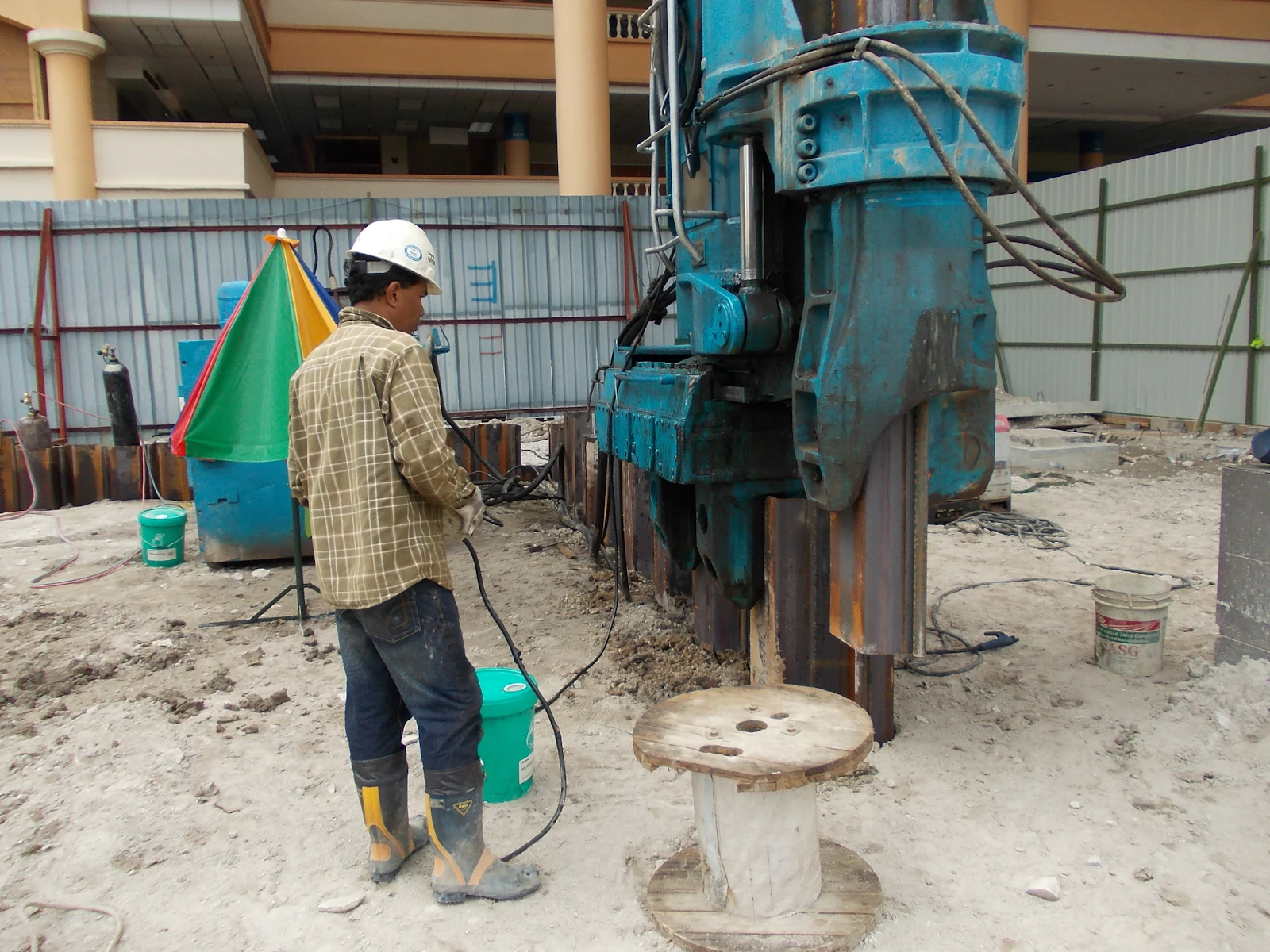
shotcrete and pump in construction work

San Diego Shotcrete Pump Hire Terms That Change the Final Invoice

Once you have a workable daily/weekly/monthly planning range, the next step for a rental coordinator is confirming the commercial terms that control what you actually pay. Two providers can quote the same hourly number and still land 30% apart on the final invoice due to travel clock rules, washout handling, and weekend billing.

Port-to-Port vs. Onsite Start/Stop

A published shotcrete line pump sheet explicitly states pumps are charged port to port, which is a reminder to confirm whether your San Diego provider starts billing at yard departure or at arrival on site.

San Diego operational factor: peak traffic on I-5 / I-805 corridors, downtown access restrictions, and long runs to North County can materially increase “travel clock” time. If your job is in coastal neighborhoods with limited staging, add a buffer for slow positioning and tight turnarounds.

Off-Rent Rules and Weekend Billing

For foundation repair sequences, you may have short, repeat placements across multiple days. Treat each mobilization as a cost event. Clarify these points in writing:

  • Off-rent notice: how much notice stops billing (same-day vs next-business-day).
  • Weekend counting: whether Saturday/Sunday count as billable days on weekly/monthly structures, even if idle.
  • Holiday dispatch: whether you pay a minimum even if the pour is canceled due to inspection/permit delays.

Where you are hiring additional supporting equipment (compressors, dryers, vac pumps), published rental terms can apply shift multipliers like double shift = price × 1.5 and triple shift = price × 2. If you are placing shotcrete outside standard hours to meet a schedule, apply these multipliers to your entire equipment hire stack.

Insurance, Damage Waiver, and Deposits (Budget the Risk Portion)

Shotcrete pump hire risk is usually concentrated in hose damage, clamp loss, plugged lines, and cleanup disputes. Your budget should include a line for risk/admin costs even when the pump is hired as a service.

  • Damage waiver / rental protection: allow 8%–15% of equipment-only hire value if offered/required (terms vary by supplier; confirm what is excluded such as hoses and wear parts).
  • Deposit / credit hold (equipment-only): allow $1,000–$5,000 depending on pump class and accessories.
  • Back-charge exposure: missing hose sections or damaged couplers can be billed at replacement cost; require return-condition photos and count sheets.

Refuel, Recharge, and Cleaning: The “End of Day” Costs

Foundation repair projects often end with a time crunch: forms are stripped, access is restored, neighbors want the street cleared, and the crew is tired. That is exactly when cleaning and return-condition mistakes happen.

Build these allowances into your shotcrete pump equipment hire plan:

  • Washout fees: published structures include $250 “no wash out area” for line pumps or $300 washout fees in other line pump programs.
  • Support equipment cleaning: published terms can include a $100 cleaning fee if equipment is returned dirty.
  • Consumables: allow $45–$120 for primer/cleanout materials per mobilization (varies by line length and mix).
  • Water supply: if no onsite hose bib is available, allow $150–$450/day for water sourcing (or a small water trailer hire).

San Diego-specific note: many jobs occur on improved residential lots where washout is constrained and stormwater controls are strict. When the washout plan is weak, the pump time extends, and you pay for it twice—hours plus fees.

Scheduling Constraints That Impact Real Hire Cost

Delivery Windows and Dispatch Cutoffs

Many San Diego operations run early dispatch. If you miss a cutoff, you may lose the placement window and trigger a costly reschedule. For supporting equipment rentals, published terms show fixed delivery/pickup charges per trip (e.g., $295 per trip under 30 HP and $540 per trip for 40–75 HP within San Diego County), which means every re-delivery is a real cash hit—not just an inconvenience.

Access Control and Staging

Foundation repair shotcrete often occurs where access is hardest: tight side yards, hillside lots, rear-yard crawlspaces. In San Diego, plan for:

  • Staging time: allow 30–90 minutes for safe positioning when streets are narrow or driveways are steep.
  • Protection materials: allow $75–$250 for plywood/ram board and corner guards to prevent hose abrasion damage and property claims.
  • Parking control: allow $150–$600/day for cones, signage, and labor coordination when you must hold curb space for a pump truck and ready-mix rotation.

Compliance Notes for San Diego Foundation Repair Shotcrete (Cost Impacts)

Compliance doesn’t just add paperwork; it adds equipment hire and labor time. Common compliance-driven cost items include:

  • Silica/dust control when cutting or surface prep precedes shotcrete: allow $180–$450/day for dust extraction or negative air depending on the space volume.
  • Stormwater protection: allow $75–$250/day for inlet protection and containment supplies that protect you from washout violations.
  • Noise constraints: if local restrictions limit hours, you may be forced into a compressed schedule that triggers overtime premiums.

RFQ Data Pack: What to Send So You Get a Tight Equipment Hire Quote

To reduce “unknown” adders and avoid change-order pricing, include the following in your shotcrete pump hire RFQ for San Diego foundation repair:

  • Address, closest cross streets, and a note on street width / staging limits.
  • Scope description: underpinning pockets, stem wall rebuild, grade beam, crawlspace shear wall, etc.
  • Estimated yards and placement rate target (yards/hour), plus expected total pump hours.
  • Hose routing sketch with estimated length; call out whether you exceed 150 ft base hose.
  • Washout plan and whether a compliant washout area exists (avoid $250–$300 no-washout fees).
  • Schedule constraints: inspection time, neighbor restrictions, after-hours needs.
  • Billing preference: port-to-port vs onsite; confirm minimum hours and overtime premiums.
  • Required support equipment: compressor, generator, lighting, dust control; note if you need delivery and pickup.

Practical Guidance on Daily vs Weekly vs Monthly Hire Decisions

For San Diego foundation repair, most shotcrete pump “rental” behaves like a series of daily mobilizations rather than a true weekly/monthly yard rental. Use these decision rules:

  • Choose daily (minimum call-out) when pours are discrete and you can lock schedule/inspection so you avoid standby.
  • Choose weekly-equivalent budgeting when you will place shotcrete on 3+ days in a week and the provider can keep the same pump assigned (reduces remobilization friction).
  • Choose monthly-equivalent budgeting only when your plan is repeated placements over a long stabilization sequence (e.g., multiple underpinning runs) and you can secure consistent dispatch priority.

As a final check, compare your planned cost against published local benchmarks: San Diego-area guidance shows line pump pricing commonly in the $200–$320/hour band with 3–4 hour minimums and $3–$7/yard adders. If your quote is materially outside those structures, the driver is usually access, hose routing, washout constraints, or schedule premium—not “market rate.”
