Build your next estimate with CountBricks
Create an itemized estimate for your project, with materials, labor, and quantities you can review and edit.
Create my estimateStart a 7-day free trial. Sign up, then enter your project details.
For Albuquerque skid steer loader equipment hire in 2026 (typical 8-hour shift pricing), plan on $170–$400/day, $510–$1,200/week, and $1,530–$3,600 per 4-week period depending on frame size, wheeled vs. compact track loader (CTL), cab configuration, and whether you need high-flow hydraulics for footing-related attachments. Local advertised rates in the Albuquerque market show examples like a wheeled mid-frame unit around $210/day and a larger CTL as high as $400/day, with corresponding weekly/monthly ladders. For budgeting, assume base rates exclude delivery, attachments, damage waiver/RPP, environmental fees, refuel/cleaning, and gross receipts tax (Albuquerque location code pricing commonly budgets around 7.625% GRT for the city). (g
| Vendor |
Daily Rate |
Weekly Rate |
Review Score |
Website |
| United Rentals |
$275 |
$825 |
8 |
Visit |
| Sunbelt Rentals |
$225 |
$660 |
8 |
Visit |
| Herc Rentals |
$210 |
$600 |
7 |
Visit |
| H&E Equipment Services (H&E Rentals) |
$260 |
$780 |
7 |
Visit |
| Total Equipment & Rental (Bobcat of Albuquerque) |
$300 |
$900 |
8 |
Visit |
Skid Steer Loader Rental Rates Albuquerque 2026
Use the ranges below as 2026 planning allowances for skid steer loader equipment hire costs in Albuquerque when the work scope is digging footings (often short-cycle excavation, spoils management, and backfill/rough grade). The biggest pricing split is wheeled skid steer vs. compact track loader (CTL), then horsepower/lift capacity, then whether you need enclosed cab + A/C for summer production and dust control.
- Small / mini skid steer (tight access, lighter spoils): budget $170–$225/day, $510–$675/week, $1,530–$2,025/4-weeks (good when access constraints force small machines, but cycle times can increase).
- Mid-frame wheeled skid steer (common footing support unit): budget $200–$300/day, $600–$900/week, $1,800–$2,700/4-weeks.
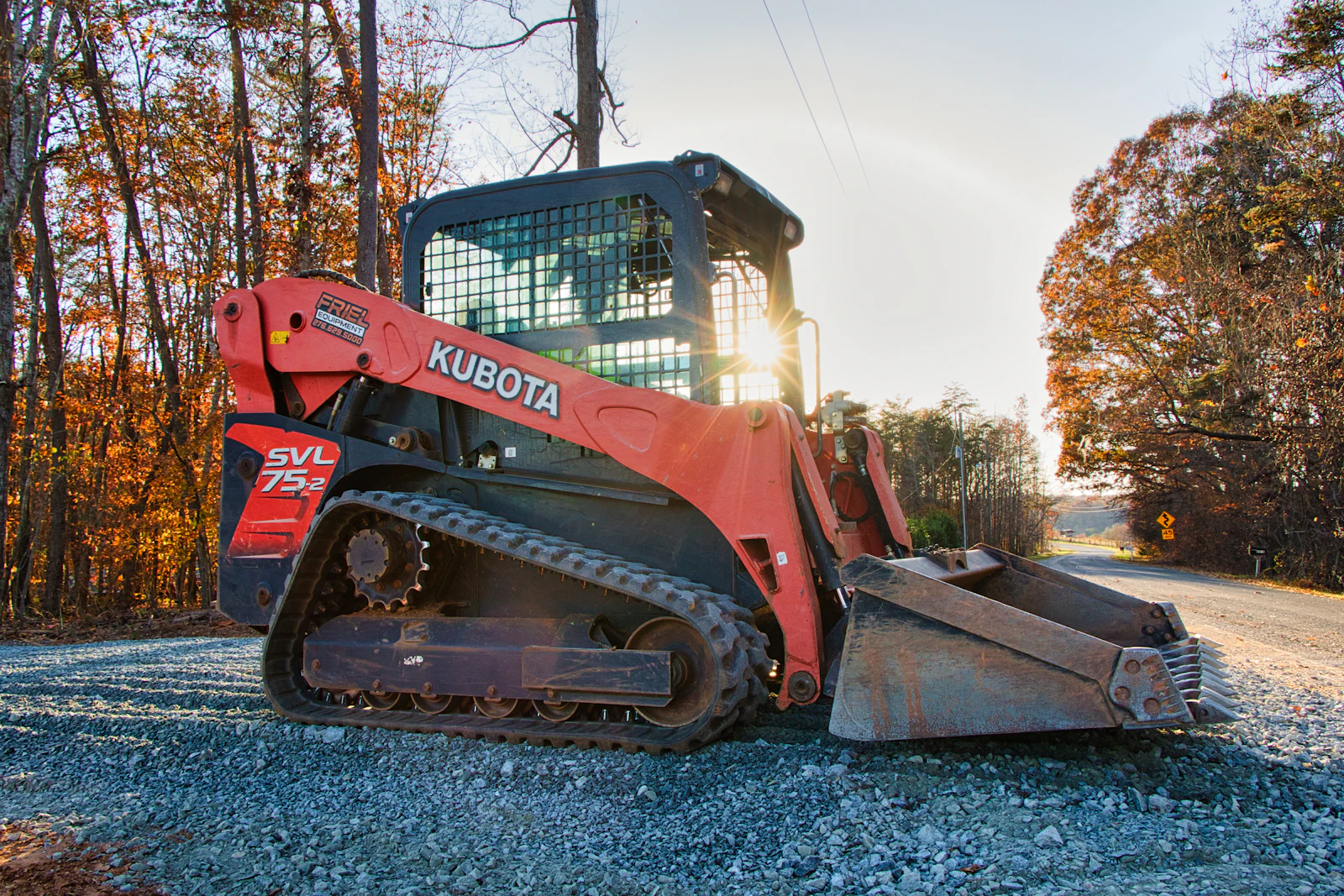
- CTL / track skid steer (soft subgrade, better traction in loose fill): budget $275–$400/day, $825–$1,200/week, $2,475–$3,600/4-weeks.
Local advertised examples in Albuquerque show rate ladders such as $210/day, $630/week, $1,890/month for a wheeled Bobcat S62-class unit and $400/day, $1,200/week, $3,600/month for a larger CTL class unit. Use these as market signals, not guaranteed branch quotes—your negotiated account rates, availability, and attachment package will change the all-in number.
What Actually Drives Skid Steer Equipment Hire Costs for Digging Footings?
Footing work tends to look “simple” on paper, but the equipment hire cost moves when any of the following is true:
- Soil is caliche / hardpan: you may need a higher-horsepower machine, a toothed bucket, or even a hydraulic breaker attachment (and your production plan needs to account for slower trench/footing cuts).
- You’re hauling spoils on-site: adding a second attachment (bucket + forks, or bucket + grapple) increases attachment rent and swap time.
- Grade tolerance is tight: laser/grade accessories can add cost but reduce rework (common on continuous footings and stem wall prep).
- Access and restoration are constrained: smaller frames may be required, but longer duration can cost more than simply hiring the “right size” machine for fewer days.
Wheeled Vs. CTL for Footings in Albuquerque: The Cost-Productivity Trade
For digging footings, a wheeled skid steer is often the lowest equipment hire cost option when you’re operating on compacted base, pavement, or firm subgrade. A CTL usually costs more per day, but can win on schedule (and reduce stuck-time) in loose fill, sandy areas, or after irrigation/monsoon moisture events. Local advertised Albuquerque CTL rates commonly sit above wheeled rates in the same dealer yard.
Planning note: if your footing excavation crosses a weekend, confirm whether the yard bills 2 additional days (Sat/Sun) or offers a weekend package. Weekend rules are one of the most common reasons actual invoices beat estimates.
Attachment Hire Pricing That Moves the Footing Budget
Attachment pricing is where many footing budgets miss. For Albuquerque skid steer loader equipment hire in 2026, use these planning adders (confirm availability by coupler type, width, and flow requirement):
- General-purpose bucket: commonly included; budget $0–$25/day if itemized.
- Toothed bucket or tooth bar (better bite in caliche): budget $15–$45/day.
- 4-in-1 bucket (cleanup, clamping, shaping): budget $60–$140/day.
- Pallet forks (handling rebar bundles/forms): budget $25–$60/day.
- Trencher attachment (for continuous footing cuts in softer ground): budget $150–$250/day plus tooth wear allowances.
- Auger drive: budget $120–$220/day plus $25–$60/day per bit (e.g., 12 in., 18 in., 24 in.).
- Hydraulic breaker (when caliche/rock is likely): budget $250–$450/day and verify whether your machine requires high-flow.
If you need high-flow hydraulics for a breaker/trencher, budget a machine class step-up of roughly $25–$75/day versus standard-flow in many fleets (varies by yard and model year). For short footing scopes, that “small” daily delta can be the difference between a profitable and unprofitable package.
Hidden-Fee Breakdown for Skid Steer Loader Equipment Hire
Below are the main “invoice expanders” to carry in Albuquerque 2026 estimates for skid steer loader equipment hire costs. These are not always negotiable, but you can usually make them predictable if you ask the right questions at PO time.
- Delivery / pickup: budget $150–$275 each way inside a typical metro radius, and $6–$10 per mile beyond the included zone. Some published government/contract schedules in the rental market show transportation examples like $250 each way per item within 30 miles, which is a useful benchmark when you are validating quoted freight.
- Same-day or timed delivery windows: budget a dispatch premium of $75–$150 if you require a hard delivery appointment (common when concrete trucks and inspections are booked).
- Environmental/service charges: many national contracts include an environmental fee concept (not a tax). Budget 2%–5% of base rent unless your master agreement says otherwise.
- Damage waiver / RPP (optional in many programs): in the broader equipment rental market, published programs show examples around 10% of gross rental charges in some terms and 15% of the rental fee in others. Carry 10%–15% as a planning allowance if your insurance certificate doesn’t waive it.
- Overtime / extra-hour billing: many rental programs define a “standard shift” as 8 hours/day, 40 hours/week, 160 hours per 4 weeks; additional shift use can generate extra-hour charges. A market example shows $100/hour beyond included hours on some day-rate packages.
- Refueling: if returned not full, some market terms show refuel charges as high as $15/gallon. (Even if your yard is lower, a “service + fuel” refuel bill can surprise budgets.)
- Cleaning / excessive dirt and concrete: carry a $100 cleaning deposit or a $100–$250 cleaning fee risk if the unit comes back with caked mud/concrete; some published cleaning policies show a $100 cleaning deposit approach.
- Minimum rental: commonly 1-day minimum even if used 2–3 hours (confirm whether a 4-hour rate exists for your account).
Albuquerque-Specific Considerations That Change Real Hire Cost
Local operating realities affect true equipment hire costs in Albuquerque more than many estimators expect:
- Caliche and mixed cobble: if your geotech notes hard layers, you may need to budget the breaker attachment ($250–$450/day) or step up to CTL traction and higher horsepower to keep production on schedule.
- Dust control expectations: windy days and dry soils can trigger dust-control requirements. If you’re working near occupied facilities, budget additional watering/labor time or add wet-saw/containment controls for adjacent work. Operationally, this can extend rental duration more than it adds direct fees.
- Elevation and heat: Albuquerque’s elevation can reduce engine performance and cooling margin; enclosed cab + A/C (often $25–$60/day premium) may pay back in operator productivity and fewer stoppages.
Budget Worksheet (Skid Steer Loader Equipment Hire for Footings)
Use this as a no-table estimator checklist (adjust to your duration and the footing method):
- Base skid steer hire (mid-frame wheeled): allowance $600–$900/week.
- Alternate base skid steer hire (CTL): allowance $825–$1,200/week.
- Delivery + pickup: allowance $300–$550 total (or use $250 each way within 30 miles as a benchmark check).
- Toothed bucket / tooth bar: allowance $75–$225/week.
- Pallet forks: allowance $25–$60/week (or bundle).
- Trencher (if specified): allowance $150–$250/day.
- Breaker (if caliche/rock risk): allowance $250–$450/day plus possible high-flow premium $25–$75/day.
- Damage waiver / RPP: allowance 10%–15% of base rent if not waived.
- Environmental/service charge: allowance 2%–5% of base rent (confirm per agreement).
- Fuel/refuel exposure: allowance $75–$200 (market examples can be $15/gal if returned short).
- Cleaning exposure: allowance $100 deposit or $100–$250 fee risk if returned dirty.
- Tax: apply Albuquerque GRT allowance 7.625% to taxable lines. (g
Example: 5-Day Footing Dig With Tight Access and Caliche Risk
Scenario: You’re digging and trimming continuous footings for a small commercial addition. Access is through an 8 ft gate, spoils stay on-site for later haul-off, and the geotech flags possible caliche lenses. You want to avoid schedule slip into a weekend because weekend billing can add 2 days if the yard doesn’t offer a weekend package.
- CTL base hire: assume $900/week (5 working days) as a planning midpoint within the Albuquerque CTL range.
- Delivery + pickup: $450 total allowance (metro jobsite, timed delivery requested).
- Toothed bucket adder: $35/day × 5 = $175.
- Breaker standby (only if caliche confirmed after first day): carry a contingent $350/day × 2 days = $700 allowance.
- Damage waiver/RPP: assume 12% of base rent = $108 (if not waived by your insurance).
- Environmental/service: assume 3% of base rent = $27.
- Cleaning/refuel exposure: $150 combined allowance.
- Tax (7.625%): apply to taxable subtotal per your yard invoice structure. (g
Operational constraint: To avoid extra-hour billing, keep usage within the standard shift definition (8 hrs/day) and document hour meter at delivery and daily closeout.
Rental Order Checklist (PO, Delivery, Off-Rent, Return)
- PO scope clarity: “Skid steer loader equipment hire for digging footings,” include machine class (wheeled vs. CTL), operating capacity, and whether high-flow is required.
- Rate structure: confirm day/week/4-week ladder, included hours per period (8/40/160 standard shift is common), and the extra-hour rate method.
- Attachments: list each attachment with coupler type, width, and wear-item terms (trencher teeth, auger bits, breaker points).
- Delivery requirements: delivery window, site contact, gate width, ground bearing/access route, and whether a tilt-deck/rollback can reach the set point.
- Off-rent rules: confirm how to “call off,” cutoff times (e.g., before 2:00 p.m.), and what condition the machine must be in to stop billing.
- Return condition documentation: require photos of bucket/undercarriage, hour meter, fuel level, and any pre-existing dents/scrapes at both delivery and pickup.
- Fuel/cleaning expectations: confirm “return full” and what triggers cleaning fees/deposits (mud, concrete, trash in cab).
- Insurance: provide COI (GL + equipment as required) or explicitly accept/decline damage waiver/RPP at PO time.
Shift Limits, Overtime, and How Hour-Meter Billing Hits Footing Work
Most professional rental programs treat “daily/weekly/monthly” as shift-based, not unlimited runtime. A common published standard is 8 hours per day, 40 hours per week, and 160 hours per 4 weeks; exceeding those thresholds can trigger extra-hour charges. For digging footings, overtime risk shows up when:
- you lose daylight waiting on inspections/locates and then run longer shifts to recover schedule;
- you have one machine serving multiple crews (forms, rebar, excavation, backfill) and it stays on meter all day;
- you keep the unit running while crews hand-trim (idle time still counts on many hour meters).
Planning allowance: carry an overtime exposure line such as $50–$150/day when you suspect you’ll exceed shift hours, or negotiate a weekly rate with favorable hour caps. Market examples for additional hours can be as high as $100/hour beyond included hours on some day-rate structures.
Delivery Windows, Cutoffs, and Off-Rent Rules (Where Schedules Leak Money)
On footing scopes, “equipment ready” rarely aligns with dispatcher availability. Protect the equipment hire cost by confirming:
- Delivery cutoff: if you need delivery before 10:00 a.m. to start excavation same day, expect a dispatch premium (budget $75–$150) or order the prior day.
- Off-rent timing: ask whether billing stops when you call off (and the unit is staged for pickup) or only when it is physically checked-in.
- Weekend/holiday billing: if you call off Friday after cutoff, you may carry 2 extra billed days before Monday pickup—build this into the plan if concrete placement is Monday/Tuesday.
Damage Waiver, RPP, and Insurance: Cost Controls With Real Dollars
From a rental coordinator standpoint, the question is not “do we want waiver,” but “what is the cheapest compliant risk position for this PO?” Published market programs show damage waiver/RPP pricing examples such as 10% of gross rental charges in some terms and 15% of the rental fee in others.
- If you have a strong internal insurance program: provide COI early and request the waiver be removed where allowed (or confirm it is optional).
- If you don’t have equipment coverage (or the jobsite risk is high): carry the waiver line; it often costs less than one minor repair invoice.
- Remember exclusions: misuse, unsecured theft, and “acts of God” exclusions commonly exist; treat waiver as a budgeting tool, not a substitute for controls.
Environmental Fees, Refuel, and Cleaning: Small Lines That Add Up
Many national rental terms include an environmental/service charge concept for certain rentals. Because the percentage can vary by agreement, a practical Albuquerque planning approach is to carry 2%–5% of base rent unless your master agreement states a fixed percent.
For fuel, set expectations with the field: return the skid steer full and documented. Market examples for refuel charges can reach $15 per gallon if returned short. For cleaning, set a “return ready” standard (cab swept, tracks/tires free of heavy mud, bucket reasonably clean). Some published cleaning policies show a $100 cleaning deposit approach.
Cost-Control Tactics Specific to Footing Work
- Bundle the right attachment on day one: adding a toothed bucket ($15–$45/day) can reduce breaker days ($250–$450/day).
- Avoid “stranded weekend” billing: schedule delivery Monday AM and call off Thursday PM when possible, keeping Friday as a buffer day.
- Document hour meter daily: if a dispute occurs, a photo log is the fastest resolution path.
- Pre-plan spoils: if spoils relocation is underestimated, the skid steer stays on rent longer than the excavation itself.
- Confirm coupler compatibility: a mismatched coupler can create a same-day swap, generating a second freight charge (another $150–$275 each way in many metro scenarios).
Ownership Vs. Equipment Hire (Footing-Driven Decision Rule)
If you routinely support multiple small footing projects across Albuquerque, ownership can beat hire—but only if utilization is consistent. As a rough planning rule: if you are renting a mid-frame unit at $600–$900/week for 20+ weeks/year, you’re effectively spending $12,000–$18,000/year before delivery, fees, attachments, and tax. Compare that with your owned cost stack (depreciation, maintenance, insurance, transport) to decide whether to keep renting or move to fleet. If you stay in the hire model, negotiate a 4-week rate early and verify the included hours (often 160 hours per 4 weeks in published programs).
Closeout: What to Capture at Return to Prevent Back-Charges
- Return photos: all four sides, bucket cutting edge, undercarriage/track condition, cab interior, and hour meter.
- Fuel level proof: photo of gauge plus receipt if you refueled offsite.
- Damage notes: if anything occurred, report same day—late reporting often complicates waiver/RPP handling.
- Accessories count: keys, attachments, hoses, bits/teeth inventory (missing items can trigger replacement cost plus admin charges).
For Albuquerque skid steer loader equipment hire costs tied to digging footings, the winning approach is to estimate on the all-in invoice structure (base rent + freight + attachments + waiver + environmental + fuel/cleaning + tax), then manage schedule and off-rent timing so you don’t accidentally buy a weekend or a second delivery.