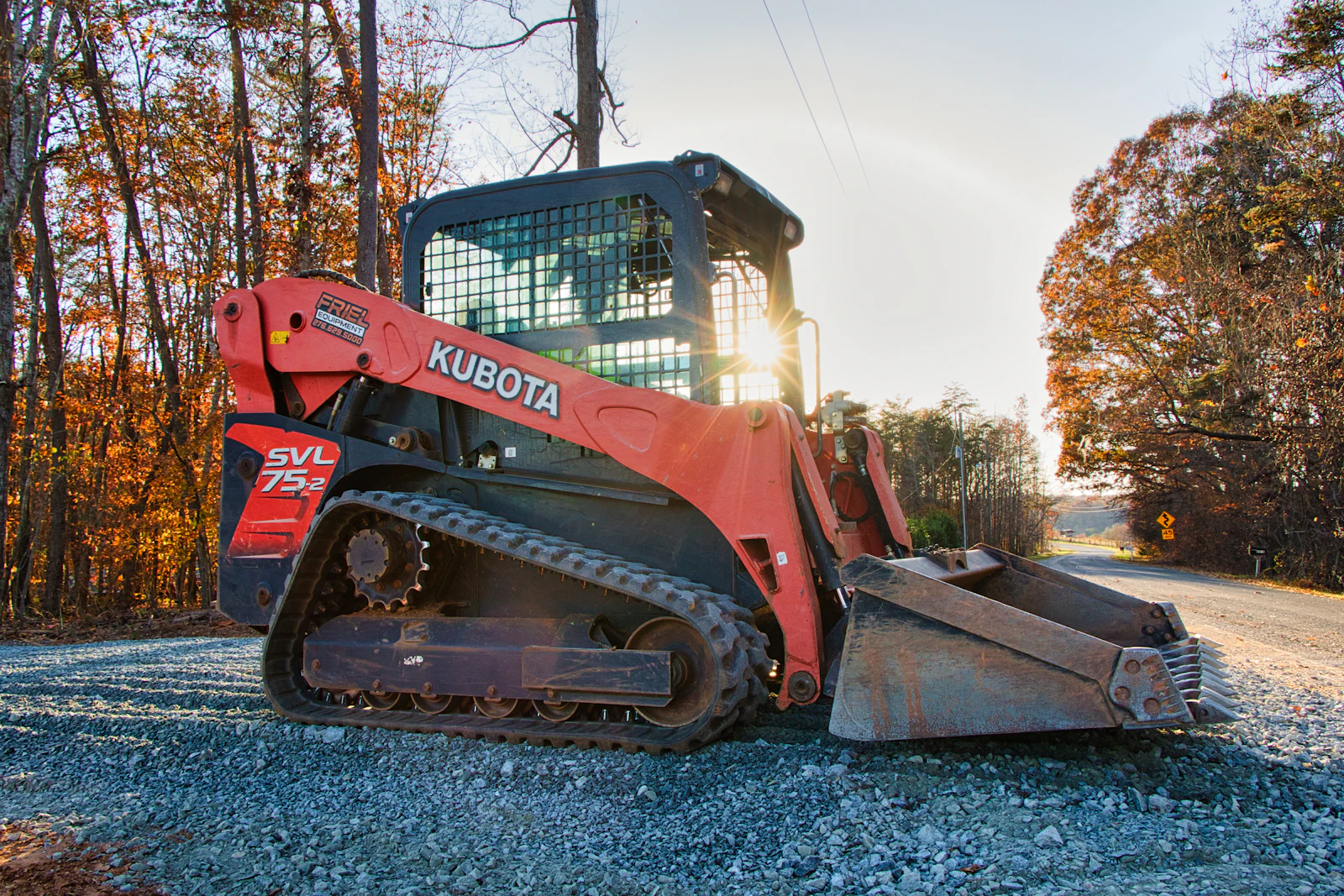
Skid Steer Loader Rental Rates Atlanta 2026
For Atlanta skid steer loader equipment hire in 2026 (planning ranges for contractor-grade units used on digging footings and material handling), budget $240–$420/day, $850–$1,450/week, and $2,200–$4,100 per 4-week for a mid-size wheeled skid steer with a standard bucket, assuming standard duty hours and clean return condition. For a compact track loader (CTL) / track skid steer (often preferred in Metro Atlanta’s clay and wet shoulder seasons), budget $300–$520/day, $1,050–$1,800/week, and $2,700–$4,900 per 4-week. Higher-spec, high-flow track machines used for heavier attachment work can plan higher (publicly posted rate sheets show examples like $650/day, $1,925/week, $5,750/month for a high-flow track skid steer class).
| Vendor |
Daily Rate |
Weekly Rate |
Review Score |
Website |
| United Rentals |
$317 |
$895 |
8 |
Visit |
| Sunbelt Rentals |
$257 |
$675 |
9 |
Visit |
| Herc Rentals |
$243 |
$601 |
8 |
Visit |
| EquipmentShare |
$230 |
$561 |
8 |
Visit |
| Yancey Rents (Yancey Bros.) |
$350 |
$1 100 |
9 |
Visit |
These are equipment-only hire ranges; your “out-the-door” cost in Atlanta is usually driven by delivery/pickup, waiver/insurance, attachments, fuel and cleaning. National providers with Atlanta coverage (for example, United Rentals’ Atlanta location and other large fleets such as Herc Rentals) typically price consistently by class but vary by delivery logistics and damage waiver elections; dealers such as Bobcat of Atlanta and regional independents often have clear hour-basis terms that matter when your footing work stretches past an 8-hour day.
What Drives Skid Steer Loader Hire Cost When Digging Footings?
For footing packages, a skid steer loader is usually hired to (1) strip topsoil, (2) move spoil, (3) bring in stone or form material, and (4) backfill and rough-grade. Those tasks sound simple, but rental cost swings quickly based on a few production-driven specs that estimators should treat as line-item drivers rather than “nice-to-haves.”
1) Wheeled skid steer vs. compact track loader (CTL)
In Metro Atlanta, track machines commonly justify their higher hire cost when you have: saturated subgrades after storms, limited laydown area where rut repair is expensive, or access paths that cannot be torn up (occupied retail, schools, medical, HOA-controlled sites). If the jobsite is stable gravel with good access and you are cycling pallets, wheeled skid steers can be the better-cost choice because they are typically cheaper to hire and simpler to clean at return.
2) Rated operating capacity and breakout force
Footing work often involves dense red clay and mixed demolition debris. Undersizing causes longer cycle times and higher “hidden” costs: extra days, weekend billing, and overtime-hour proration. When you expect loading into 10–14-yard trucks, verify bucket size and ROC, not just “skid steer” on the PO.
3) Cab configuration, HVAC, and jobsite rules
Enclosed cab units (especially in Atlanta summer heat) can reduce operator fatigue and increase production, but they can also carry a rate premium and stricter damage/cleaning expectations. If your site requires dust suppression, consider whether you’ll run a broom, water, or vacuum controls (and how that impacts cleaning fees and filter service at return).
Daily, Weekly, And 4-Week Billing Assumptions You Should Confirm Before Issuing a PO
Most disputes on skid steer loader hire bills come from time and usage assumptions. In Atlanta, you will routinely see “standard duty” language such as:
- Usage caps: up to 8 hours operation per 24-hour day, 40 hours per 7-day week, and 160 hours per 28-day (4-week) period; overtime hours are prorated.
- One-day minimum (no hourly rentals) and billing from time out to time back (not “engine hours only”).
- Overtime mechanics: some local Metro Atlanta narratives describe overtime being billed at 1/8 of the daily rate per additional hour beyond the allowance; verify your supplier’s written policy before you plan second-shift footing digs.
- Off-rent and pickup timing: many fleets stop rent when you request pickup (not when the truck arrives), but policies vary—get the off-rent rule on the contract and document the request date/time in email. (This is a frequent cost lever when projects slip.)
Estimator’s note: for planning, assume the hire week will be cheaper than stacking five single days, and the 4-week period will be cheaper than stacking four 1-week hires. Also note some dealer programs describe “fourth week free after third week” on a 4-week basis; treat that as vendor- and availability-dependent, not guaranteed.
Attachments And Setup Costs That Commonly Hit Footing Budgets
For digging footings with a skid steer, attachments determine both productivity and cost exposure. If the estimate only carries “skid steer with bucket,” the field often adds attachments ad hoc—at retail day rates—because the trenching/cleanup scope expands once excavation starts.
Use these 2026 planning adders as a sanity check (your actual Atlanta rate card may differ):
- Pallet forks: published rate sheets show examples around $47.50/day, $123.50/week, $285/month for large-skid forks.
- Auger attachment: examples around $95.00/day, $228/week, $513/month for a skid steer / mini-ex auger drive (bits often priced separately).
- Sweeper/broom: examples around $90.25/day, $180.50/week, $536.75/month—useful when Atlanta sites require street/sidewalk housekeeping to satisfy GC closeout or municipal ROW cleanliness expectations.
- Brush cutter: examples range widely; one published sheet shows $142.50/day, $332.50/week, $831.25/month for a 4-inch cut class.
- Premium bucket configurations: example pricing shows $145/day, $440/week, $900/month for an 80-inch 4-in-1 bucket on a larger track skid steer class.
When the scope is specifically digging footings, consider whether you need: a toothed bucket (often included, sometimes not), a narrow trenching bucket (availability varies), or simply a second machine (mini excavator) to keep your skid steer productive on haul and backfill instead of trying to “do it all” with one unit.
Hidden-Fee Breakdown For Skid Steer Loader Equipment Hire in Atlanta
Below are the cost items that most frequently move the final invoice above the headline daily/weekly/monthly rate. Build them into your equipment hire cost estimate as explicit allowances so you can control them with contract language and field process.
Delivery and pickup (mobilization)
- Per-trip + mileage models: an example published structure is $120 each way + $3.25 per loaded mile.
- Metro flat-rate norms: some industry commentary cites national-chain delivery and pickup commonly totaling $400–$600 depending on radius and access.
- Wait time / site delays: plan an internal allowance of $95–$150/hour if your site routinely misses delivery windows (Atlanta traffic, gate access, escort requirements). Even if the supplier doesn’t label it “wait time,” it shows up as re-delivery or extra trip fees.
Damage waiver, rental protection plan, and insurance
- Damage waiver ranges: often 10%–15% of the rental rate, depending on fleet and class.
- Dealer protection fees if you do not provide liability coverage: one Atlanta-area dealer document specifies a 15% rental protection plan fee when liability insurance is not provided (and requires proof of insurance for full value of the rented equipment).
Environmental, admin, and “shop” fees
- Environmental / prep fee: industry commentary commonly cites 1%–2% environmental fees, and examples of $15–$40 prep-style fees.
Fuel, cleaning, and return-condition costs
- Fuel make-up: “return full” is common; if not returned full, you can be billed per gallon at the supplier’s posted pump rate.
- Cleaning fees: some published rate sheets show $75/hour for excessive cleaning beyond an included threshold; Atlanta red clay plus wet footing spoils can trigger this quickly if you don’t wash the undercarriage and bucket before return.
- Undercarriage / tire exposure: track damage and excessive undercarriage wear are commonly renter-responsible on many contracts; treat this as a contingency line (especially on demo-heavy sites).
Atlanta-Specific Considerations That Change Real Skid Steer Hire Cost
Even when the base rate is comparable to other large U.S. metros, Atlanta conditions can change your “all-in” equipment hire cost:
- Traffic and delivery windows: if your project is inside/near I-285 or constrained urban corridors, require a defined delivery window and a written “missed window” process. A missed morning delivery can cost you a full crew day plus force a weekend extension (two extra days billed when you only needed one more shift).
- Red clay and wet-weather access: Atlanta soils often stick to tracks, buckets, and trailer decks. That increases both cleaning labor and the probability of chargeable cleaning at return; plan a washout process and return photos.
- Stormwater and housekeeping: many GCs enforce stringent track-out prevention (rock pads, sweeping). If you don’t carry a broom attachment, you may end up hiring one midstream at day rates; published examples for skid steer brooms are around $90/day class.
Example: Digging Footings With a Track Skid Steer in Atlanta (Real Numbers)
Scenario: 6-day footing package for a small commercial addition in the Atlanta metro, with rain risk and a tight laydown area. You choose a track skid steer (CTL) to reduce rutting and keep production up on soft subgrade.
- Base machine: plan $360/day x 6 days = $2,160 (within the 2026 planning range; verify your class and cab spec).
- Pallet forks: plan $50/day x 6 = $300 (published examples show ~$47.50/day class).
- Delivery/pickup: plan $500 total (industry commentary often cites $400–$600), or compute by structure if your supplier uses $120 each way + $3.25/loaded mile.
- Damage waiver: plan 12% of rental charges (common 10%–15%).
- Fuel & fluids: plan $75–$140 (depends on idle time, travel on site, and whether you return full).
- Cleaning contingency: plan $150–$300; if the supplier bills at an hourly shop rate, published examples include $75/hour for excessive cleaning.
- Schedule risk note: if the job slips into a weekend and your supplier bills calendar days “time out to time back,” two extra billed days can exceed the cost of negotiating a weekly rate from day one—confirm the billing basis in writing.
Result: Even with a “$360/day” mental model, a realistic all-in equipment hire cost can land around $3,300–$3,900 once delivery, waiver, fuel, and cleaning are included—before you add any specialty attachments (auger, broom) or overtime usage.
Budget Worksheet
Use the following budget worksheet to build a defensible skid steer loader equipment hire cost for digging footings in Atlanta. These are not vendor quotes—use them as estimating allowances that you later reconcile to your supplier’s written rate sheet and contract terms.
- Skid steer loader hire (wheeled): $240–$420/day (select class + cab spec)
- Compact track loader hire (track skid steer): $300–$520/day (select undercarriage condition expectations)
- Weekly conversion allowance: assume 1 week ≈ 3–4 billable days (confirm with supplier)
- 4-week / 28-day conversion allowance: carry 160-hour basis where applicable (confirm hour caps).
- Delivery + pickup: $400–$600 metro allowance, or calculate $120 each way + $3.25/loaded mile where that structure applies.
- Damage waiver: 10%–15% of equipment rent (if not covered by your policy).
- Rental protection plan if insurance not provided: carry 15% when required by dealer terms.
- Environmental / admin fees: 1%–2% and/or $15–$40 prep fee allowance.
- Fuel make-up: $50–$175 (depends on return-full compliance and idle time)
- Cleaning: $150–$350; if billed hourly, carry $75/hour as a benchmark for “excessive cleaning.”
- Attachment adders (only as needed): forks ~$47.50/day; auger drive ~$95/day; broom ~$90/day; brush cutter ~$142.50/day (benchmarks from published sheets).
- Schedule contingency: 1–2 extra days at day rate to cover weather + inspection delays (common on footings)
Rental Order Checklist
Use this rental order checklist to keep skid steer loader hire costs controlled from PO through off-rent.
- PO scope: specify “skid steer loader” plus class (ROC range), tire/track type, cab requirement, and whether a standard bucket is included.
- Attachments: list each attachment by name (forks, auger drive, broom) and confirm whether couplers/hoses are included; attach the approved adder rates to the PO.
- Billing basis: confirm day/week/28-day basis, hour caps (8/40/160), and overtime proration method in writing.
- Delivery requirements: jobsite contact, gate codes, delivery window, truck access constraints, and a documented “failed delivery” process to avoid re-delivery charges.
- Insurance: provide certificate for full value and required liability; confirm whether a 10%–15% damage waiver or a 15% protection plan fee will be applied if not provided.
- Pre-existing condition documentation: photos/video of bucket edge, tires/tracks, decals, cab glass, hours meter, and any leaks at delivery.
- Fuel policy: “return full” confirmation; assign responsibility to refuel before pickup to avoid per-gallon markups.
- Cleaning plan: require end-of-shift knockdown of clay and a final wash; carry “excessive cleaning” approval workflow to prevent surprise shop charges (benchmarks include $75/hour).
- Off-rent process: define who is authorized to call off-rent; require email proof of pickup request time/date and photos of final condition.
Ways To Reduce Skid Steer Loader Equipment Hire Cost Without Losing Production
- Pick weekly early: if you are likely to cross 4 billable days, negotiate a weekly from the start so a weather slip doesn’t force expensive day extensions.
- Bundle attachments up front: adding forks or a broom mid-rental often triggers extra delivery and admin fees; plan the full attachment set on day one.
- Control weekends/holidays: if your supplier bills calendar time “out to back,” aim to off-rent before weekends or negotiate a weekend grace policy in writing.
- Return-ready condition: the cheapest cleaning is the cleaning you do in the field. Build 30 minutes/day of operator cleanup into the plan to avoid chargeable “excessive cleaning.”
When Another Machine Beats a Skid Steer for Footings (Cost Perspective Only)
Some footing scopes are genuinely better served by a mini excavator plus a smaller skid steer for spoil handling. This is not a recommendation to change your plan—only a cost/production check. Published rate sheets show mini excavator day rates in the same range as skid steers (for example, around $218.50/day for a 3,500 lb class), which can be competitive when trench quality and depth control reduce rework.
If you keep the skid steer as the only machine, be realistic about trenching method (bucket vs. attachment), spoil placement, and the impact of rework on hire days.
Contract Notes for Atlanta Skid Steer Hire (Insurance, Time, and Documentation)
Finally, treat the rental agreement as a cost-control document, not “paperwork.” Atlanta-area dealer terms commonly emphasize: proof of insurance for full value, rental protection plan fee application (example: 15% if liability isn’t provided), one-day minimum, and billing from time out to time back.
For digging footings, where weather delays and inspection holds are common, that time-basis language is exactly why disciplined off-rent documentation and early rate conversion (day-to-week) are the two biggest levers you control.