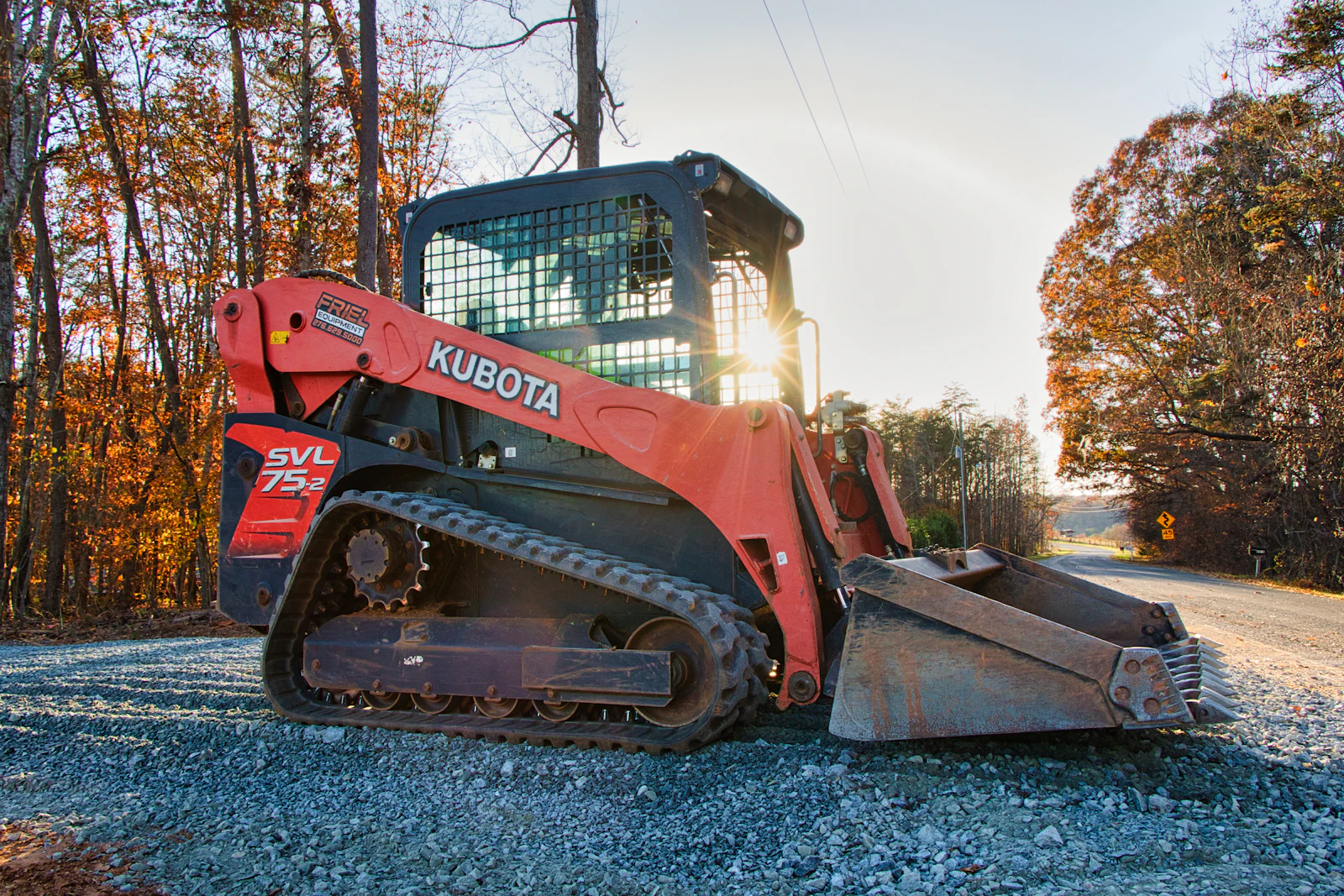
Skid Steer Loader Rental Rates Atlanta 2026
For 2026 planning in Atlanta, a skid steer loader hire package typically budgets in the following ranges (excluding delivery, attachments, fuel/cleaning, and damage waiver): $225–$375/day, $850–$1,350/week, and $2,200–$3,400 per 28-day “month” for a mid-size wheeled skid steer (roughly 1,800–2,200 lb rated operating capacity). Compact track loaders (CTLs) and high-flow units usually price higher at $325–$550/day, $1,200–$2,000/week, and $3,200–$5,200 per 28 days. In Atlanta, fleet availability and delivery scheduling commonly runs through national providers (for example United Rentals, Sunbelt Rentals, and Herc) plus local independents—so rate outcomes are often driven more by spec, term, and logistics than by headline advertised numbers.
| Vendor |
Daily Rate |
Weekly Rate |
Review Score |
Website |
| Bobcat of Atlanta |
$390 |
$1 210 |
8 |
Visit |
| Talisman Rentals |
$275 |
$900 |
7 |
Visit |
| GTE Rentals |
$425 |
$1 300 |
7 |
Visit |
| United Rentals |
$415 |
$1 200 |
8 |
Visit |
| Sunbelt Rentals |
$400 |
$1 150 |
8 |
Visit |
Assumptions behind these 2026 planning ranges: standard hours (8 hrs/day, 40 hrs/week), normal-wear use on soil/gravel, basic bucket included, no specialty attachments, billing month defined as 28 days, and the unit is returned reasonably clean and fueled. If your work term is “skid steer loader rental” for multiple sites in metro Atlanta, expect logistics and off-rent rules to move the total hire cost as much as (or more than) the base day rate.
What Drives Skid Steer Hire Pricing in Atlanta?
Skid steer loader equipment hire cost in Atlanta is most sensitive to (1) machine class, (2) undercarriage type (wheels vs. tracks), (3) hydraulic flow and electrical controls, and (4) the probability of needing a “hot swap” replacement mid-job. A 2,200 lb ROC wheeled unit used for backfill will usually rent lower than a high-flow CTL running a mulcher. Atlanta-specific operating realities also matter: downtown delivery windows can be tight due to traffic and site access restrictions; clay soils mean more frequent track cleaning and higher washout exposure; and summer heat/humidity can increase cooling-system vigilance—some vendors will push stricter daily pre-start checks and can bill service callouts if an avoidable overheating shutdown occurs.
Machine Type and Spec: Wheeled Skid Steer vs. Compact Track Loader
From a rental coordinator’s perspective, the fastest way to control hire spend is to match the unit to ground conditions and attachments.
- Wheeled skid steer (general construction): Usually the lowest base equipment hire cost. Plan around $225–$325/day for smaller/older fleets and $275–$375/day for newer units with ride control. If your work stays on pavement, base stone, or well-drained soils, wheels typically win on cost.
- CTL / tracked skid steer (soft ground, grading, wet sites): Higher rent and higher “return-condition” risk. Plan $325–$450/day for standard-flow CTLs and $425–$550/day for high-flow/forestry-prep variants, especially when demand spikes after heavy rain.
- High-flow hydraulics: Expect a premium of roughly +$50–$125/day versus standard-flow when the vendor has true high-flow (not just auxiliary plumbing). This is often justified only if you are running a planer, heavy-duty brush cutter, or cold planer that actually needs the flow.
Atlanta consideration: tracked machines are frequently selected to manage slick red-clay cuts and wet subgrades. The cost trade is that tracks increase cleaning exposure (mud-packed undercarriage) and can trigger higher post-rent wash charges if returned caked.
Attachments and Options That Commonly Add to Hire Cost
Base skid steer loader rental rates in Atlanta usually include a general-purpose bucket, but most production scopes require at least one attachment. Budget adders are often where “skid steer loader rental” totals drift.
- Pallet forks: commonly $35–$75/day or $120–$250/week. Confirm fork frame width and whether a backrest/guard is included.
- 4-in-1 bucket: often $75–$140/day. Useful for light grading and material handling, but can be overkill if your operator just needs a standard bucket.
- Hydraulic auger drive + bit: frequently $150–$250/day for the drive plus $25–$60/day per bit. Verify bit diameters and wear billing (some vendors charge if teeth are missing).
- Hydraulic breaker/hammer: typically $200–$350/day. Many agreements require a chisel inspection at return; excessive wear can be backcharged.
- Brush cutter: often $175–$325/day depending on duty class. If you are near ROW work in metro Atlanta, confirm debris-control expectations and whether a cab door poly shield is required.
- Grapple bucket: typically $125–$250/day. Factor additional damage waiver if working demolition or scrap handling.
Common options that affect equipment hire cost include solid tires or foam fill (reduced flats but higher rate), enclosed cab and A/C (operator productivity), and telematics requirements for larger GCs. If your project requires a tracked machine plus forks plus a breaker, your “all-in” day cost can easily be $700–$1,050/day once fees, attachments, and logistics are included.
Hidden-Fee Breakdown for Skid Steer Loader Hire
Professional equipment hire pricing is rarely just “day/week/month.” The line items below are typical in Atlanta-area rental agreements; confirm your vendor’s exact schedule and whether they cap charges.
- Delivery / pick-up (local): commonly $150–$350 each way inside metro Atlanta, with after-hours or restricted-access jobs sometimes +$75–$150. Some providers switch to mileage beyond a radius (e.g., $6–$9/mile outside their standard service area).
- Minimum haul charges: even short moves may carry a 1-hour minimum or a flat minimum like $175.
- Damage waiver / rental protection: often 10%–15% of rental charges (machine + attachments). Read exclusions: tires/tracks, glass, or misuse are commonly excluded.
- Environmental / shop fees: frequently 2%–5% of rental revenue (or a small flat fee). These are easy to miss in early estimates.
- Fuel / refuel surcharge: if returned short, budget $6–$9 per gallon equivalent or a flat $25–$75 service fee plus fuel. For diesel units, confirm whether they require ULSD only (they will).
- Battery/recharge expectations (if hybrid/electric in fleet): some yards charge a recharge/service fee like $35–$95 if returned below an agreed state of charge.
- Cleaning fees: light wash is sometimes absorbed; mud/concrete cleanup can be $75–$250, and hardened concrete removal can exceed $300 if it becomes shop labor.
- Weekend/holiday billing: common structure is “1 day minimum” for Saturday pickup or Monday return; some contracts bill Saturday as 0.5 day only if off-rented by a cutoff time.
- Late return penalties: many agreements convert time into fractions such as 1/8 day per hour past the due time, or a flat $75–$150 dispatch/admin fee if the unit misses a scheduled backhaul.
- Service call / field mechanic: if the issue is operator-avoidable (low DEF, out of fuel, improper restart), field dispatch can be $175–$295 plus travel.
Atlanta consideration: for tight urban sites (Midtown, Buckhead, Downtown), delivery is often constrained by staging space. If your job requires a specific 30-minute window or escort, budget higher delivery costs or plan for early drop with standby time.
How Rental Term, Off-Rent Rules, and Cutoff Times Change Your Total
Two Atlanta rentals with the same weekly rate can land very different total hire costs based on administrative rules:
- Off-rent notice: many providers require off-rent by a daily cutoff (commonly around 10:00 a.m. or noon) to stop billing that day. Missing cutoff can add a full extra day even if the machine is idle.
- “Week” definition: some contracts treat a week as 7 consecutive days; others as 5 working days with weekend policies layered in. For job sites working Saturdays, confirm whether Saturday is billed as day rate, discounted, or included.
- Month definition: “monthly” is commonly 28 days, not calendar-month. If your project is 6 weeks, you may be better with “4-week + 2-week” rather than “2 x weekly,” depending on the yard’s structure.
- Metered hours / overtime: contracts often include 8 hours/day and 40 hours/week. Additional hours may bill at $15–$35 per hour or a fractional day. For double-shift work, negotiate an overtime cap before the unit mobilizes.
Example: 3-Week Atlanta Site Package with Attachments (Realistic All-In Numbers)
Scenario: You’re running a grading and material-handling scope on a perimeter commercial site near I-285 with intermittent rain. You choose a CTL to avoid getting stuck and add forks for unloading pallets.
- CTL base rate: assume $1,650/week x 3 weeks = $4,950
- Pallet forks: assume $180/week x 3 = $540
- Delivery + pick-up: assume $275 each way = $550
- Damage waiver: assume 12% of rental charges (machine + forks = $5,490) → $659
- Environmental/shop fees: assume 3% of rental charges (same base) → $165
- Cleaning allowance: budget $150 because red-clay mud packs undercarriage after rain
- Overtime allowance: budget 10 extra hours across the term at $25/hr = $250 (if your contract applies metered overtime)
Estimated all-in hire cost: about $7,264 for the 3-week package (excluding fuel burned on site). Operational constraint: if your superintendent forgets to off-rent by the cutoff and the pickup slides one day, add roughly $325–$550 (one extra day rate) plus potential rescheduling fees.
How to Keep Skid Steer Equipment Hire Costs Predictable
For equipment managers and estimators, predictability comes from eliminating “unknowns” that trigger backcharges:
- Confirm what is included: bucket type, coupler type, forks availability, and whether the vendor includes a standard set of spare teeth/pins.
- Document condition at delivery and return: capture 10–15 photos (tires/tracks, bucket edge, cab glass, hour meter, any existing dents). This directly reduces dispute risk on damage waiver exclusions.
- Align delivery windows: schedule delivery before peak Atlanta traffic when possible; missed windows can result in redelivery charges.
- Plan for mud management: if you expect wet conditions, decide upfront whether you’ll wash on site. On some projects, washout must comply with BMPs—budget a wash pad or wash service rather than risking a higher cleaning backcharge.
- Right-size the unit: a larger ROC unit can reduce cycle time, but if it forces a heavier trailer and higher delivery cost, the “bigger is better” logic can fail on short-duration scopes.
Ownership vs. Hire for Atlanta Utilization Profiles
If your Atlanta utilization is sporadic, rental is usually the correct financial posture because it converts maintenance, storage, and undercarriage risk into a known hire rate. Ownership becomes more attractive when you can keep a unit working near-continuously and standardize attachments. A practical rule for bid teams: if you can realistically forecast 140–180 billed days/year on one specific skid steer configuration (same coupler, same attachment set), then ownership analysis is worth revisiting; otherwise, equipment hire keeps your risk lower—especially when you factor downtime exposure and the cost of maintaining tracks/tires in clay-heavy conditions.
Atlanta Market Factors That Affect Skid Steer Loader Rental Availability and Cost
Atlanta’s rental market can tighten around storm cleanup, major roadwork pushes, and peak commercial cycles. When availability tightens, the biggest cost impact is not always the day rate—it’s the inability to secure the exact spec (high-flow, enclosed cab, or CTL) and the resulting productivity loss. If you must substitute from wheels to tracks (or vice versa), revisit your ground-pressure assumptions and your cleaning allowance immediately.
Contract Clauses That Commonly Move the Final Hire Total
Before you approve a PO for skid steer loader equipment hire in Atlanta, review these clauses as “cost multipliers”:
- Standby time for delivery: if a driver waits for gate access or escort, some contracts bill standby at $75–$125 per hour.
- Relocation between sites: moving the same machine from a job in Marietta to a job in Decatur is often billed as a new haul. Budget $175–$450 depending on distance, timing, and equipment weight/class.
- After-hours emergency swap: if the unit fails and you require next-morning replacement, some providers bill an expedite fee like $100–$250 on top of standard delivery.
- Consumables and wear items: bucket edges, teeth, cutting edges, and fork tines may be inspected. A missing set of bucket teeth can become a backcharge of $12–$25 per tooth, and a damaged cutting edge can trigger shop labor.
- Track damage exclusions: CTL track tears from rebar, demolition, or curbing can be excluded from damage waiver. Treat this as a potential “high severity” risk in demolition scopes.
Dust-Control, Indoor Work, and Return-Condition Documentation
For interior slabs, warehouse TI, or occupied facilities, the equipment hire cost can be influenced by non-negotiable site controls:
- Non-marking tires / floor protection: if required, plan a premium of +$25–$60/day or confirm whether the yard can supply the correct tire type.
- HEPA dust extraction attachments: if your scope includes grinding/planing, the attachment package can exceed $250–$500/day depending on spec. Confirm compatibility with the skid steer’s auxiliary hydraulics.
- Return documentation: require a signed off-rent confirmation, pickup ticket, and condition report at return. Missing paperwork is a common cause of “extra days” appearing on invoices.
Budget Worksheet (Skid Steer Loader Hire – Atlanta)
Use this bullet-based worksheet to build an estimator-ready allowance structure without hiding costs in a single line item.
- Base machine hire (wheeled or CTL): allowance $________ (use day/week/28-day structure)
- Attachment package: forks $________; auger $________; breaker $________; grapple $________
- Delivery and pick-up: $________ (include potential redelivery or standby time)
- Damage waiver/rental protection: ________% of rental ($________)
- Environmental/shop fees: ________% ($________)
- Fuel/refuel and fluids: $________ (include potential DEF/service call exposure)
- Cleaning/return condition: $________ (Atlanta clay/mud allowance)
- Metered overtime: ________ hours at $________/hr
- Weekend/holiday billing risk: $________ (if pickup/return touches weekend)
- Contingency (availability/substitution): 5%–10% of the above ($________)
Rental Order Checklist (PO, Delivery, and Return Requirements)
- PO details: job name, address, cost code, requested machine class (ROC), wheels vs. tracks, standard vs. high-flow, enclosed cab requirement
- Attachments: list each attachment and required coupler type; confirm hoses, pins, and safety shields included
- Delivery contact: superintendent name/number, site hours, gate/lockbox info, and required delivery window
- Delivery constraints: confirm turning radius, trailer access, and whether a spotter/escort is required
- At-delivery inspection: photos of tires/tracks, cutting edge, cab glass, hour meter, and any existing damage; note it on delivery ticket
- Operating rules: fuel type, daily greasing points, no-go activities (demolition, rebar exposure) unless specifically approved
- Off-rent process: who calls off-rent, required notice time, cutoff hour (e.g., 10:00 a.m./noon), and written confirmation method
- Return condition: fuel level expectations, cleaning expectations, and required documentation (pickup ticket + return condition report)
- Invoice review: verify billed dates vs. pickup ticket; confirm damage waiver %, fees %, delivery, and attachment days match the PO
Practical Tactics for Lowering Equipment Hire Cost Without Losing Productivity
For Atlanta-area projects, the most reliable savings usually come from logistics and scope discipline rather than pushing the vendor on headline rate:
- Bundle deliveries: if you’re mobilizing multiple pieces, consolidate to reduce the number of hauls (even one avoided haul can save $150–$350).
- Choose the right term: if the job is trending to 10–12 days, weekly pricing usually beats daily; if it’s trending 5–6 weeks, ask for a structured 28-day + weekly extension instead of rolling week-to-week.
- Limit attachment days: rent the breaker for only the days you need it. Dropping a $250/day attachment for 6 idle days saves $1,500 instantly.
- Protect tracks/tires: set a designated travel path and keep rebar and sharp demolition debris segregated. One excluded undercarriage event can outweigh all negotiated rate savings.
Summary for 2026 Atlanta Skid Steer Loader Hire
As a 2026 budget baseline in Atlanta, plan skid steer loader rental rates around $225–$375/day for wheeled units and $325–$550/day for CTLs/high-flow units, then build an all-in estimate by explicitly carrying delivery, damage waiver, attachments, cleaning, and overtime. When you manage off-rent cutoffs, weekend billing, and return-condition documentation tightly, skid steer equipment hire costs become predictable—and your project avoids the avoidable backcharges that typically erode the estimate.