Build your next estimate with CountBricks
Create an itemized estimate for your project, with materials, labor, and quantities you can review and edit.
Create my estimateStart a 7-day free trial. Sign up, then enter your project details.
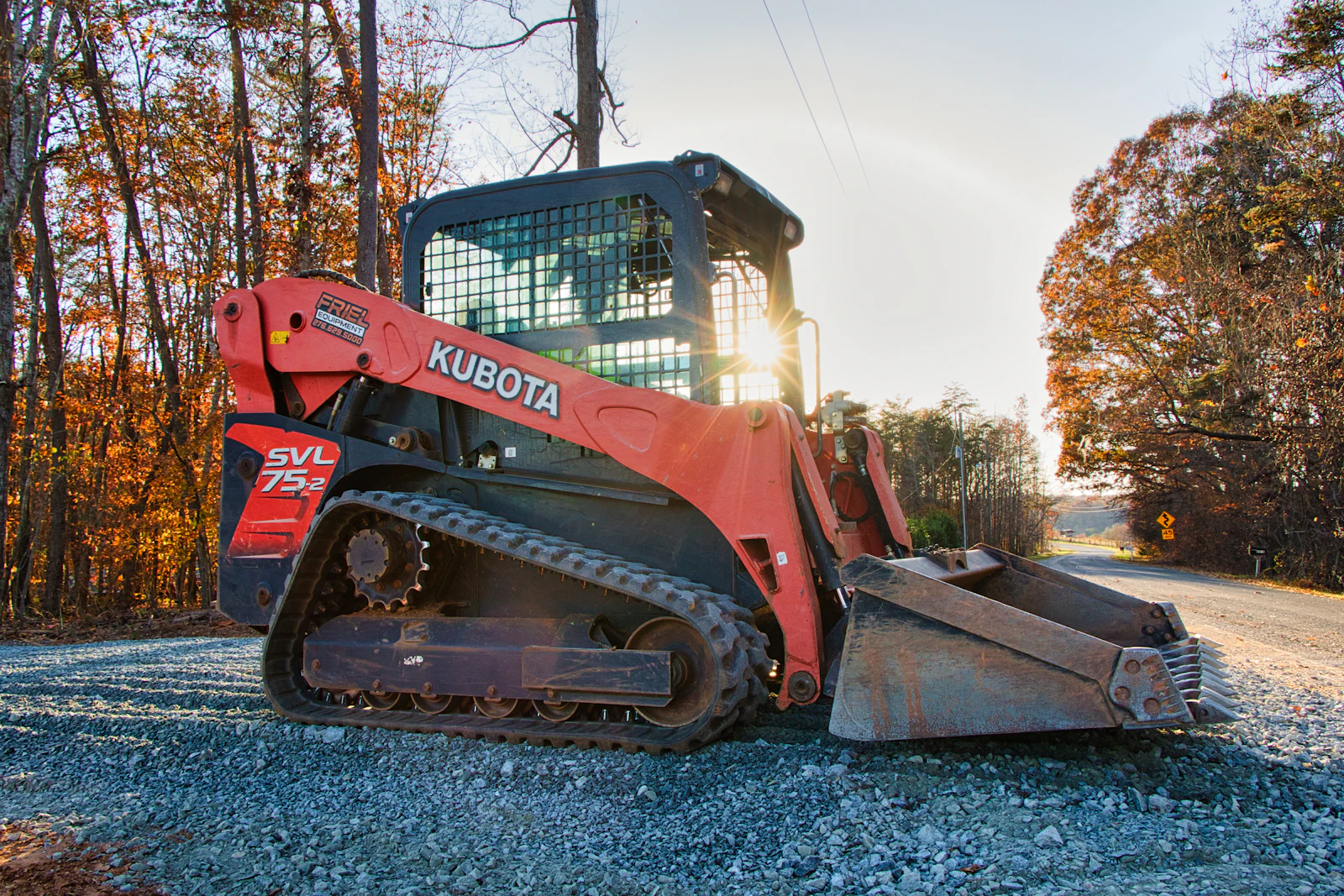
Skid Steer Loader Rental Rates Boston 2026
For Boston-area skid steer loader equipment hire in 2026 planning terms, most rental coordinators should budget $300–$450/day, $1,000–$1,450/week, and $3,000–$3,900/4-week for a mid-size wheeled skid steer (roughly the “S64/S66” class), with compact track loader (CTL) equivalents often running higher when ground conditions or flotation are driving the spec. Published Boston-region rate sheets show day rates around $300–$400 and month/4-week rates around $3,000–$3,800 for common skid steer classes, with larger tracked units priced higher. Assumptions that move total cost (and must be confirmed on the PO): most suppliers quote by an 8-hour shift, bill “weekly” as a capped hour window rather than 7 calendar days, and treat “monthly” as a 28-day or 4-week cycle. In Boston, the rental invoice total is usually driven as much by delivery windows, traffic, off-rent cutoffs, and attachments as it is by the base machine rate, especially for digging footings on constrained urban sites.
| Vendor |
Daily Rate |
Weekly Rate |
Review Score |
Website |
| United Rentals |
$450 |
$1 600 |
8 |
Visit |
| Sunbelt Rentals |
$435 |
$1 525 |
9 |
Visit |
| Herc Rentals |
$420 |
$1 470 |
8 |
Visit |
| BigRentz |
$410 |
$1 435 |
8 |
Visit |
| The Home Depot Tool Rental |
$360 |
$1 260 |
8 |
Visit |
Why Digging Footings in Boston Often Pushes You Toward Track or Higher Spec
“Digging footings” with a skid steer is typically feasible for shallow strip footings, small additions, and foundation prep where you can stage spoils and maintain safe setbacks. In the Boston metro, cost control starts with choosing the right undercarriage and bucket setup for soil and access. If you expect wet clay, disturbed fill, or shoulder-season mud, a CTL can be cheaper overall even at a higher day rate because it reduces stuck time, rut repair, and re-handling of spoils. If you’re on paved access, tight alleyways, or need frequent road crossings inside a campus, a wheeled skid steer can win on maneuvering and ground protection cost—provided you plan for tire damage exposure and surface protection (mats) where required.
When estimating skid steer hire cost for footings, treat machine size as a productivity lever: a larger ROC machine may reduce dig cycles and spoil handling, but it can also trigger higher transport cost, tighter access constraints, and potentially more stringent site protection requirements. Boston infill jobs commonly require: (1) scheduled delivery slots (often 7:00–9:00 AM only on certain streets), (2) strict housekeeping/dust controls if you’re working adjacent to occupied spaces, and (3) careful spoil management (limited laydown) which can increase run time and push you into overtime charges if your hire agreement is hour-capped.
Rate Structure Assumptions You Should Lock Down Before Issuing the PO
Skid steer equipment hire is rarely “calendar simple.” Before you accept a quote, confirm these cost levers in writing:
- Shift hours: Many rate sheets are based on an 8-hour day, with weekly and monthly hour caps (commonly 40–44 hours/week and 160–176 hours/4-week), and overtime billed per hour beyond the cap.
- Weekend billing rules: A “weekend rate” may exist, but many suppliers still bill Saturday/Sunday as additional days unless you meet their pick-up/return windows.
- Off-rent cutoffs: Common off-rent notifications are due by 12:00 PM or 3:00 PM to stop billing the next day; miss the cutoff and you can buy another day.
- Minimum term: Dense Boston delivery routes can trigger a 1-day minimum even if the machine is on site for a partial shift.
- Meter reading and documentation: Require a delivery ticket with starting hour meter and a return ticket with ending hour meter plus photos to prevent disputes.
For internal budgeting, a practical rule is to assume 10%–20% of your skid steer hire spend may land in “rate structure friction” (overtime, late off-rent, weekend/holiday billing) if the site is schedule-constrained or you’re coordinating multiple trades.
Attachment and Accessory Hire Adders for Footing Work
Footing excavation with a skid steer is as much about attachments as it is about the base loader. Published regional rate sheets show meaningful adders for common skid steer attachments, so plan them explicitly rather than hoping they’re “thrown in.” Typical Boston-area planning allowances for 2026:
- General-purpose bucket: commonly included; confirm tooth condition at delivery (missing teeth reduce digging rate and can create change-order exposure).
- Toothed bucket or heavy-duty bucket: allow $25–$60/day if not included (especially if you need rock penetration or frozen crust).
- 4-in-1 bucket: allow $75–$140/day if you need grab/backdrag capability for forming and cleanup.
- Hydraulic auger (post-hole auger): published day rates can be around $250/day, with weekly around $500–$660/week depending on provider. (For footings, augers are often used for pier footings or to predrill in compacted material.)
- Auger bits: if priced separately, allow $60–$100/day per bit for common diameters (you may need two diameters on one PO if engineering changes).
- Pallet forks: published day rates can range from roughly $75/day to $100/day depending on the rate sheet. Forks are often needed to handle footing forms, rebar bundles, or trench boxes on tight sites.
- Breaker/hammer: if you expect ledge or old concrete, allow $250–$300/day and confirm required auxiliary flow.
- Trencher attachment: allow $300–$500/day (useful for shallow strip footings in uniform soils, but less effective in mixed fill and cobble).
- Laser receiver/mast or grade control accessories: allow $75–$150/day if you need controlled subgrade elevations for footing forms.
Operational note: if you’re renting a CTL instead of a wheeled skid steer, confirm track width and whether steel curbs/edges require matting. A single avoided curb strike can offset the delta between wheel and track hire rates.
Hidden-Fee Breakdown
To keep the skid steer loader hire cost accurate for Boston footing work, carry explicit allowances for “non-rate” charges that frequently appear on invoices:
- Delivery and pickup: budget $175–$325 each way inside a typical metro radius, with a common “beyond radius” adder of $6–$12/mile. If the site requires a smaller truck due to access, add $75–$150.
- After-hours / scheduled delivery windows: if you need a fixed time slot (common on tight Boston streets), budget an extra $150–$250 for dispatch premium or redelivery risk.
- Damage waiver (rental protection plan): commonly 10%–15% of the rental subtotal (machine + attachments). If you waive it, ensure your insurance certificate matches the supplier’s requirements.
- Environmental/administrative fees: often 3%–5% of rental charges or a flat $10–$25 per contract.
- Fuel/charge policy: many units go out full and must return full; if not, plan $6–$8/gal for diesel chargebacks plus a service fee. For emissions-equipped machines, include idle control expectations to avoid excess regen downtime (productivity cost, not invoice cost).
- Cleaning: mud/cementitious contamination drives real charges. A published example cleaning fee is $75/hour beyond an allowed threshold. For budgeting, allow $150–$450 if you’re working in wet clay, concrete slurry, or stone dust.
- Undercarriage/tire wear: track damage and tire damage are commonly renter-responsible; carry a contingency of $250–$750 for a short job where the route includes demo debris, sharp granite, or scrap rebar.
- Lost time from documentation gaps: if your field team can’t produce delivery condition photos, you’re exposed to back-charges. Budget 15 minutes of foreman time at delivery and return for photo and meter capture—it’s usually the cheapest “cost reducer” on the job.
Boston-specific note: if the machine is staged on a street or sidewalk zone, the cost of traffic control, cones, and permitting can exceed the delivery line item. While those are usually outside the rental supplier invoice, they are still part of the all-in equipment hire cost for footing excavation logistics.
Boston-Specific Logistics That Change the Invoice Total
Three Boston realities that routinely change the net hire cost (even when the day rate looks competitive):
- Congestion and narrow access: A “simple” pickup can fail if cars block the staging area. Plan a contingency for one redelivery event at $150–$300 or an extra billed day if the truck cannot load out.
- Limited laydown for spoils: If you can’t stockpile spoils, you may run the skid steer longer to load trucks continuously—pushing you into overtime at $45–$80/hour beyond the included hours (confirm the supplier’s overage rate).
- Dust and slurry control on occupied sites: When working near hospitals, labs, or retail, you may need a bucket broom or sweeper. Published sweeper attachment rates can be in the $250/day class. Add a cleanup allowance and confirm indoor/near-building restrictions (spark arrestor, tire/track cleanliness) to avoid delays and chargeable cleaning.
Example: 3-Day Skid Steer Hire Plan for Digging Footings in Boston
Scenario: Urban addition with 60 linear feet of strip footing excavation, average trench section 18 in wide by 24 in deep (about 5.0 cubic yards in-place), limited laydown (spoils must be loaded into a truck twice daily). Access is a 7 ft gate, so you select a mid-size skid steer/CTL class that fits and can handle spoils efficiently.
- Machine: mid-size skid steer loader equipment hire at $350/day planned (3 days = $1,050).
- Attachment: pallet forks for forms and rebar at $100/day (3 days = $300).
- Attachment contingency: add $250/day for auger only if pier pads are added by RFI (1 day = $250).
- Delivery/pickup: budget $250 each way = $500.
- Damage waiver: assume 12% of rental lines (machine + attachments), roughly $192 on a $1,600 subtotal.
- Fuel chargeback avoidance: include 15 gallons of diesel on-site at $6.75/gal = $101 (cheaper than supplier chargeback with service fees).
- Cleaning allowance: carry $225 (3 hours at $75/hr) if the site is muddy.
Planned all-in (rental invoice only) budget: approximately $2,368 with auger contingency held separately. Key operational constraint: schedule the off-rent call by midday on Day 3 and ensure the load-out area is kept clear to avoid a redelivery fee or an extra day of billing.
Budget Worksheet
Use this bullet worksheet as a quick estimator artifact for skid steer loader equipment hire costs in Boston (digging footings scope):
- Base skid steer hire: $300–$450/day × ____ days (allow 8-hour shift basis)
- Weekly conversion check: if duration ≥ 4 days, request weekly rate and compare to daily
- Delivery + pickup: $350–$650 total typical metro allowance (add $150–$250 if fixed time window required)
- Damage waiver / rental protection: 10%–15% of equipment subtotal
- Environmental/admin fees: 3%–5% or $10–$25 flat
- Fuel plan: ____ gallons @ $6–$8/gal (avoid chargeback)
- Cleaning allowance: $150–$450 (mud/clay/stone dust conditions)
- Attachment adders (as needed): forks $75–$100/day; auger $250/day; breaker $250–$300/day; sweeper $250/day; grade control $75–$150/day
- Track/tire damage contingency: $250–$750 (demo debris, rebar, ledge)
- Overtime/hour overage: $45–$80/hour beyond included hours (confirm cap)
Rental Order Checklist
Issue this with the PO so the supplier and field team align on the equipment hire cost drivers that cause change orders:
- PO includes: machine class (wheeled vs track), ROC/HP range, cab type (open vs enclosed), auxiliary hydraulics required (standard vs high-flow)
- Rate basis stated: 8-hour day, weekly hour cap, monthly/4-week cycle definition, overtime billing rate and trigger
- Delivery instructions: exact address, contact name, gate width, offload location, delivery time window, site access restrictions, required COI before dispatch
- Condition documentation: delivery photos (all four sides), bucket/teeth condition, track/tire condition, hour meter at delivery
- Jobsite requirements: mats/plywood needed, dust control expectations, refuel plan, overnight security responsibility
- Off-rent process: cutoff time for off-rent notice, who is authorized to off-rent, pickup window expectations
- Return condition: “broom clean” standard defined, concrete/mud removal expectations, fuel level requirement, attachments accounted for and photographed
- Closeout: pickup ticket with hour meter, photos at load-out, note any pre-existing damage on the return document before signing
When a Skid Steer Is the Right Choice (and When It’s Not) for Footings Cost Control
From a rental coordinator’s viewpoint, skid steer equipment hire for footings is cost-effective when the work includes meaningful material handling (spoil loading, stone placement, moving forms/rebar) in addition to excavation. If the scope is primarily trench excavation with tight tolerance bottoms, a mini excavator can reduce rework and potentially reduce total billed hours—even if its day rate is similar—because it is purpose-built for trenching and can dig without constantly repositioning. The “wrong machine” cost shows up as (1) extra billed days due to slow production, (2) overtime charges from hour caps, and (3) higher cleaning/undercarriage back-charges because the machine had to fight conditions it wasn’t suited for.
A practical estimating approach for Boston: if your footing excavation is more than about 80% digging and less than 20% handling, price a mini excavator alternative in parallel (as a sanity check) and keep the skid steer as the material-handling companion or as a shorter-term hire just for backfill and site restoration. This reduces the risk of paying for the skid steer to do “excavator work” inefficiently.
Insurance, Damage Waiver, and Contract Terms That Affect Hire Cost
Boston-area suppliers will typically require a certificate of insurance (COI) and may specify limits and additional insured requirements. If your internal program meets those requirements, you can often decline the damage waiver; if not, the waiver becomes part of the true cost. Budget-wise, treat coverage decisions as a line item, not a rounding error:
- Damage waiver: commonly 10%–15% of rental lines; verify whether it covers theft, tire/track damage, glass, and attachments.
- Deposit/credit hold: allow $500–$2,000 depending on machine class and whether your account is established.
- Loss/damage exposure: for dense Boston sites, theft risk can be higher; if the supplier charges a lock or GPS option, carry $25–$60/week if available.
- Downtime allocation: confirm whether you are billed during breakdown/repair. If the supplier swaps the unit, confirm whether transport is on them or you (avoid surprise re-delivery at $150–$300).
Off-Rent, Extensions, and Weekend/Holiday Billing Controls
Most preventable overages happen at the end of the rental. For footing work, you’re often juggling inspections, rebar placement, and concrete placement sequencing—so the skid steer can sit idle while still billing. Controls that actually reduce total hire cost in Boston:
- Plan a “meter cap” day: if your weekly cap is 40–44 hours, schedule heavy loading/digging earlier in the week and keep the final day for light grading and demob to avoid overtime overages.
- Weekend strategy: if concrete is Monday, don’t automatically keep the machine through the weekend “just in case.” If the supplier’s weekend pickup is limited, you may buy 2 extra days unintentionally.
- Off-rent timing: set an internal rule that the superintendent requests off-rent as soon as the last planned task is completed and confirms the laydown area is clear for pickup.
- Standby negotiation: for inspection-driven delays, ask for a standby rate (often around 50% of the daily rate) rather than paying full freight for idle days—suppliers vary, but it’s a standard ask on managed accounts.
2026 Planning Ranges for Boston Skid Steer Equipment Hire (What to Carry in Budgets)
If you need a single “budget band” for Boston in 2026 (not a guaranteed quote), use these planning ranges derived from published regional rate sheets and typical metro jobsite adders:
- Wheeled skid steer (mid-size): $300–$450/day, $1,000–$1,450/week, $3,000–$3,900/4-week
- Tracked skid steer / CTL class on rate sheets: commonly $400–$550/day, $1,200–$1,700/week, $3,150–$3,950/4-week depending on size and provider
- Attachments (common): forks $75–$100/day; auger $250/day; breaker $250–$300/day; sweeper $250/day
- Typical “non-rate” adders to carry: delivery/pickup $350–$650 total; damage waiver 10%–15%; cleaning $150–$450; fuel $6–$8/gal; admin/environmental 3%–5%
For Boston footing excavation, the most defensible equipment hire estimate is the one that explicitly prices the constraints: delivery window risk, off-rent rules, and return condition. That’s where invoices blow budgets—far more often than because the day rate moved by $25.
Closeout Documentation to Prevent Back-Charges
On the final day, close out like it’s a disputed change order (because it can become one):
- Take return-condition photos (bucket, coupler face, aux hoses, tires/tracks, cab glass, backup alarm)
- Record hour meter at load-out and confirm it matches the pickup ticket
- Confirm all attachments are physically on the truck and listed on the pickup ticket
- Note mud/concrete condition before the machine leaves the site (if it’s dirty, decide whether you’ll wash it or accept a cleaning line)
- Send tickets and photos to AP the same day so invoice review has evidence