Build your next estimate with CountBricks
Create an itemized estimate for your project, with materials, labor, and quantities you can review and edit.
Create my estimateStart a 7-day free trial. Sign up, then enter your project details.
For Boston-area projects budgeting skid steer loader equipment hire in 2026, plan (before delivery, damage waiver, fuel, and attachments) on $300–$600/day, $1,000–$1,500/week, and $3,000–$4,000/month for common wheeled skid steers, with compact track loaders (CTLs) typically landing higher at roughly $400–$700/day, $1,200–$1,400/week, and $3,500–$3,950/month depending on ROC, cab/heat/AC, and hydraulic flow. These are planning ranges aligned to published New England rate sheets and typical national benchmarks; final quotes will change by ZIP code, availability, and shift definition (24-hour day vs. 8-hour shift). In Boston you will also see meaningful spread by delivery access constraints (downtown, Seaport, Back Bay) and winter cleanup expectations.
| Vendor |
Daily Rate |
Weekly Rate |
Review Score |
Website |
| 48 Peaks Equipment (Bobcat of Boston – North Reading, MA) |
$350 |
$1 150 |
9 |
Visit |
| Ahearn Rents |
$375 |
$1 200 |
9 |
Visit |
| Grant's Rental (Bridgewater, MA) |
$425 |
$1 700 |
9 |
Visit |
Skid Steer Loader Rental
This guide is written for rental coordinators, estimators, and equipment managers building a clean skid steer loader hire cost carry in the Boston, MA market. The emphasis is on total landed cost (machine + attachments + freight + waiver + return condition), not just the daily headline number. National providers (e.g., United Rentals, Sunbelt, Herc Rentals) and strong regional yards can all support Boston work, but the cost outcome is usually driven by logistics and contract terms more than brand.
Boston 2026 Rental Rate Ranges by Machine Class (Wheeled vs. CTL)
Use the bands below for 2026 planning when you need a defensible baseline for skid steer loader equipment hire costs in Boston. When the scope includes soft ground, winter mud, demolition debris, or tight schedules, the premium for a CTL frequently pays back in production and reduced rut repair.
- Wheeled skid steer (common urban/site support class): budget $300–$450/day, $1,000–$1,300/week, $3,000–$3,800/month (30-day). Weekend “Fri drop / Mon pick” packages are commonly priced in the $450–$600 range for this class.
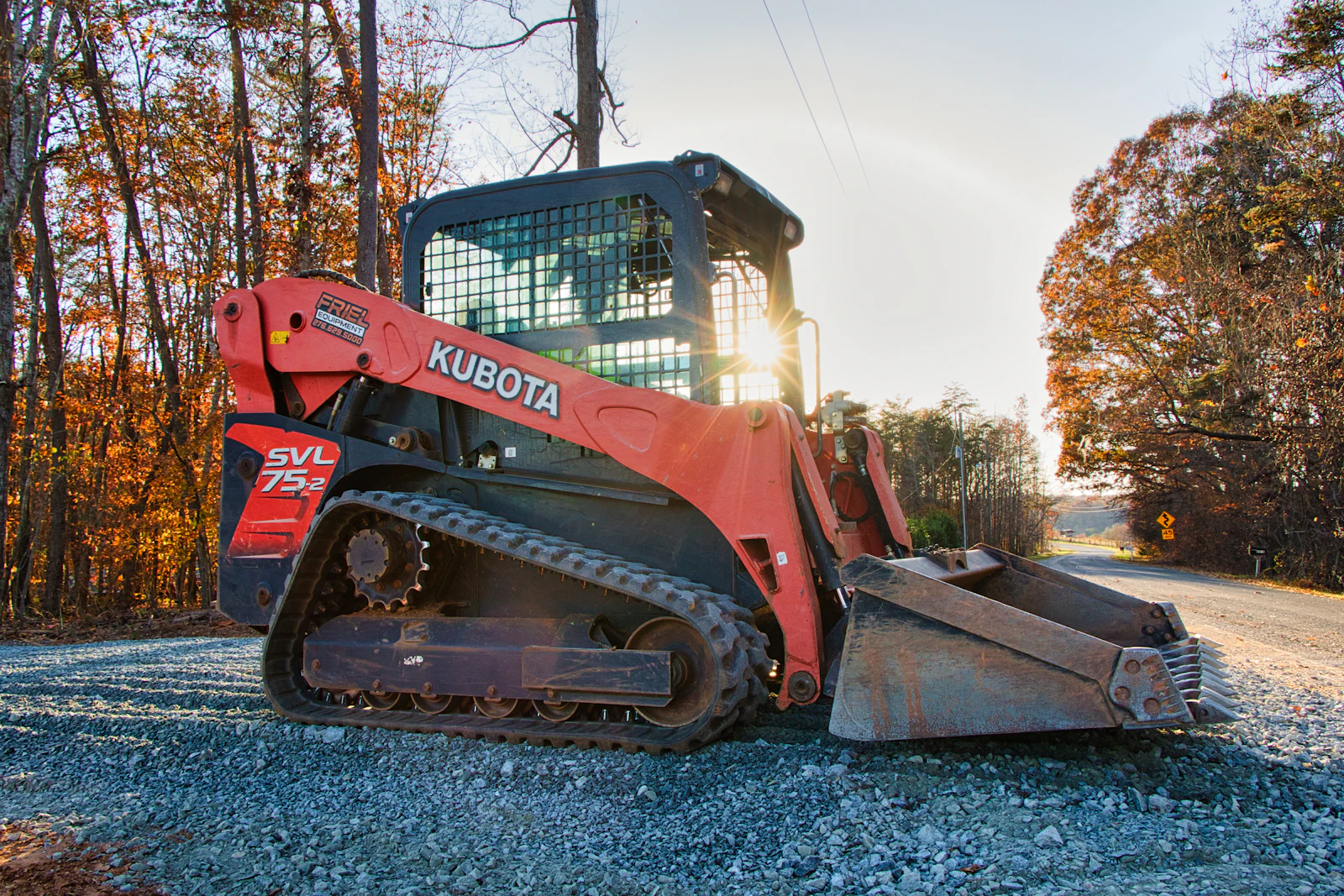
- CTL / compact track loader (traction + lower ground pressure): budget $400–$475/day, $1,200–$1,400/week, $3,500–$3,950/month. Weekend packages commonly land around $575–$700 depending on model.
- Higher-capacity wheeled skid steer (production / heavier ROC): budget $450–$600/day, $1,300–$1,500/week, $3,400–$4,000/month where available and spec’d (2-speed, enclosed cab, heat/AC, higher flow).
Assumptions you should state in the estimate: published machine rates often include one bucket, define a daily rental as a 24-hour period, and define weekend rental as drop Friday (daytime) and pick Monday (daytime). Many rate sheets also explicitly exclude tax, physical damage coverage, and delivery/pickup charges—so your estimate should too, then add them back as line items.
Attachment and Accessory Adders That Move the Hire Number
In Boston, the “right” attachment is often the difference between one machine for 3 days versus two machines and an extra week. Attachments also drive insurance/waiver exposure and cleaning/repair back-charges, so carry them explicitly.
- Pallet forks: plan $100/day, $300/week, $900/month when required for material handling inside fenced urban sites.
- Hydraulic breaker / hammer: plan $250/day and up; weekly can land near $1,000–$1,200; monthly commonly $2,450–$2,600 depending on spec.
- Auger with bit: plan $250/day, ~$660/week, ~$2,250/month (bit-only often priced separately).
- Root grapple: plan $250/day, $750/week, $2,250/month for land clearing, storm cleanup, or bulky demo sorting.
- Grading bucket: plan $65/day, $250/week, ~$600/month for fine grade and landscape restoration.
- Rock bucket: plan $100/day, $300/week, $900/month for screening and site cleanup.
- Sweeper / pickup broom: plan $250/day up to $400/day depending on style; weekly commonly $660–$1,800; monthly $2,600–$3,950. (Street/sidewalk cleanliness is a real enforcement issue in dense Boston neighborhoods—budget accordingly.)
- Soil conditioner: plan $250/day, ~$950/week, ~$2,800/month for finish-grade and turf restoration scopes.
Estimator note: if the attachment requires high-flow hydraulics, the base machine class can change. Budget a $50–$125/day premium for a high-flow-capable skid steer/CTL when your scope includes mulchers, planers, or certain brooms (carry as an allowance unless your quote confirms the spec).
Hidden-Fee Breakdown That Often Doubles the “Daily Rate”
Skid steer loader equipment hire in Boston is rarely “just the day rate.” The recurring cost misses are freight, waiver/coverage, refuel/recharge, and return condition. Use the following planning allowances (and adjust once the vendor quote arrives).
- Delivery and pickup: carry $100–$300 per movement as a starting point for a skid steer/CTL, then add an urban access premium if the site requires liftgate/rollback constraints, off-hour windows, or a second-person spotter.
- Boston urban-access premium (allowance): add $75–$200 when the drop requires tight curb space, cones/barricades, or coordination with building management (Back Bay, Seaport, Financial District). If the site only accepts deliveries before 7:00 AM or after 3:00 PM, carry an after-hours dispatch fee of $125–$250.
- Minimum rental charges: many yards effectively enforce a 1-day minimum even if the machine is used for 3 hours. If your work is truly short duration, price a weekend package instead of two separate day charges (especially for Fri/Sat/Sun work).
- Physical damage waiver / rental protection: carry 10%–15% of rental charges as a budget number if you are not rolling your own insurance. Example: some rental protection plans are published at 15% of the rental fee, with deductibles/limits defined by the provider.
- Cleaning and return condition: carry $150–$400 for concrete slurry, clay, or winter mud cleanup risk (higher if tracks are packed). Dust-control violations (drycut demo) can push cleaning higher if filters/engine bay are impacted; carry an additional $75–$150 “filters and detailing” allowance for interior work.
- Fuel (diesel): assume “full out / full in.” If returned short, budget a refuel service charge such as $25–$50 plus a marked-up per-gallon cost. If your project is in an area with strict spill control, add $40–$90 for absorbents and drip protection.
- Damages and wear items: track/tire cuts, broken lights, bent steps, and hydraulic coupler damage are common back-charges. Carry a contingency of $100–$250 for short rentals or 2%–4% of the machine rental subtotal for longer rentals where multiple operators touch the unit.
- Late return / extra day exposure: if your contract charges by 24-hour periods, missing the pickup cutoff can trigger a full extra day. Carry a “schedule slip” allowance equal to 1 additional day (e.g., $350–$475) when access or inspections are uncertain.
Meter Hours, Shift Definitions, and Overage Rules
Boston estimates blow up when usage assumptions are not aligned to the vendor’s hour/meter policy. A common structure is that a “week” is priced as five 8-hour shifts within a 7-day period, and “month” pricing often includes a meter-hour cap (e.g., 240 allowable meter hours per month is a published example in industry commentary). Treat these caps seriously if your scope is snow response, overnight utility support, or a two-shift urban schedule. If you expect >8 hours/day of run time, carry an overage line such as $45–$90 per extra hour (or an extra day charge if the vendor bills that way) until your quote confirms the rule set.
Boston-Specific Constraints That Change Skid Steer Hire Costs
- Delivery routing constraints: Boston has routes and clearances where certain truck configurations are impractical (parkways/low-clearance corridors). Carry $50–$150 for re-dispatch risk if the site address changes, the gate is locked, or staging is not ready.
- Street occupancy and staging: if you must stage on public way, carry $0–$300/day for cones/barricades and traffic control support, plus building/security coordination time. (Your internal labor is often the bigger cost than the rental yard’s fee.)
- Winter operations: frozen ground and snowpack drive higher attachment needs. If the job spans December–March, carry a seasonal adder for a snow pusher/bucket swap and cleanup: $100–$250/day depending on attachment availability.
Budget Worksheet (No Tables)
Use this as a quick estimator/rental coordinator worksheet for a typical Boston skid steer loader equipment hire package (edit quantities for your duration and attachments).
- Base machine rental: 5-day week at $1,150 allowance (wheeled) or $1,200 allowance (CTL), depending on ground conditions.
- Bucket included: $0 (confirm “1 bucket included” in quote).
- Attachment 1 (forks): $300/week allowance.
- Attachment 2 (breaker OR auger): $1,000–$1,200/week allowance (breaker) or ~$660/week (auger).
- Delivery + pickup: $400 allowance total (2 movements at $200).
- Urban access premium: $150 allowance (tight downtown window / building coordination).
- Damage waiver / rental protection: 12%–15% of rental subtotal allowance (carry 15% if not otherwise specified).
- Cleaning/return condition: $250 allowance (winter mud/concrete risk).
- Fuel/refuel risk: $75 allowance.
- Schedule slip contingency: 1 extra day at $350–$475 allowance.
Example: 1-Week Boston Utility Trench Support With Tight Delivery Window
Scenario: A 7-day calendar window for a utility crew near the Seaport, billed as a 5-day work week, with one attachment and constrained delivery/pickup. You choose a CTL due to soft subgrade and frequent rain.
- CTL weekly hire: $1,200 allowance.
- Pallet forks weekly hire: $300 allowance.
- Delivery + pickup: $500 allowance (two movements at $250 each due to off-hour site window).
- Damage waiver: 15% of ($1,200 + $300) = $225 allowance.
- Cleaning/return condition: $250 allowance (mud and dewatering spoils).
Planned total (equipment hire package only): $1,200 + $300 + $500 + $225 + $250 = $2,475 for the week before tax and any meter-hour overage. If the pickup misses the cutoff and rolls to the next business day, carry exposure for an extra day (often another $400–$475 for a CTL-class unit).
What Actually Drives Boston Skid Steer Equipment Hire Prices
When comparing quotes for skid steer loader equipment hire in Boston, MA, the rate spread is usually explainable. Normalize these variables before you decide a quote is “high” or “low.”
- Machine spec: cab with heat/AC, 2-speed, high-flow hydraulics, and higher ROC typically price above base units. If your scope includes sweeping, milling, mulching, or heavy breaker work, spec creep is the most common reason the daily rate moves from the $300s into the $500s.
- Term definition (24-hour day vs. 8-hour shift): published New England rate sheets commonly define the daily rental as a 24-hour period and the week as a 7-day rental; weekend packages are defined by Friday-to-Monday timing. Align your planned working hours to the vendor’s definition so you don’t accidentally pay “two days” for one shift.
- Availability and seasonality: after major storms, attachments (brooms, grapples) can be the constraint—not the machine. Carry surge risk of 10%–25% on the attachment side for emergency work (allowance until confirmed).
- Freight complexity: downtown drop logistics can cost more than the distance suggests. If the driver cannot offload due to blocked curb space, you can get hit with re-delivery time or a second trip. Carry $75–$150 for failed-delivery risk on constrained sites.
Off-Rent Rules, Weekend Billing, and Pickup Cutoffs
Off-rent administration is a controllable cost. Standardize these internal controls on every skid steer loader rental in Boston:
- Off-rent call timing: set an internal deadline (example: 12:00 PM local) for the superintendent to confirm demob readiness to the rental desk. Missing a vendor cutoff can add a full extra bill day.
- Weekend exposure: if your work finishes Friday but pickup is scheduled Monday, you may still be billed a weekend package depending on the agreement. If you truly only need the machine for one day, negotiate a same-day pickup or shift the delivery to reduce dead days.
- Holdover day planning: carry 1 extra day on short-duration urban work where access gates, elevators, or street closure windows frequently slip.
Damage, Loss, and Documentation to Prevent Back-Charges
Because skid steers are compact, frequently operated by multiple crews, and often used in debris-heavy scopes, the back-charge risk is real. Build a simple documentation routine into your rental order so the financial closeout is clean.
- Protection plan allowance: if you take a rental protection plan, budget up to 15% of the rental fee, and confirm the deductible/limits in writing.
- Condition photos: require photos at delivery and at pickup (all four sides, cab interior, attachment couplers, tracks/tires). Add a time allowance of 10 minutes at delivery and 10 minutes at return so crews don’t skip it.
- Indoor use dust control: if the unit enters a building/garage, budget $50–$150 for extra cleanup and filter inspection to avoid “excessive dust” returns.
- Security and theft prevention: carry $35–$85 for a heavy-duty lock/chain allowance on unsecured sites; theft events can also trigger loss-of-use charges depending on contract language.
Rental Order Checklist (No Tables)
- PO and billing: PO number, job number, cost code (base machine vs. attachments vs. freight), and approved not-to-exceed (NTE) amount.
- Machine spec confirmation: wheeled vs. CTL; enclosed cab yes/no; heat/AC requirement; hydraulic flow (standard vs. high-flow); quick-attach type; bucket width.
- Attachments: list each attachment with term (day/week/month), and confirm whether a bucket is included at $0 or billed separately.
- Delivery requirements: exact address, onsite contact, delivery window, gate codes, required COI, and whether a forklift/telehandler is needed for attachment offload.
- Site constraints: curb space plan, street occupancy needs, cones/barricades, and whether off-hour delivery is required (carry $125–$250 allowance if so).
- Operating limits: confirm meter-hour caps (daily/weekly/monthly) and overage billing method before the machine arrives.
- Fuel/return: “full out/full in,” DEF requirement if applicable, and who supplies fueling onsite.
- Off-rent process: who is authorized to off-rent, cutoff times, and pickup SLA once off-rent is requested.
- Return documentation: pickup ticket, final meter reading, and signed condition acknowledgment if available.
When Monthly Skid Steer Equipment Hire Beats Weekly Rolling Rentals
Monthly (often 28- or 30-day) pricing can be materially cheaper per working day, but only if you avoid “idle hold” time and stay under meter-hour caps. As an illustration from industry commentary, a skid steer could be quoted around $450/day, $1,110/week, or $2,860/month with an example of 240 allowable meter hours per month. The monthly number wins if you truly need continuous availability; it loses if the machine sits waiting on inspections, access windows, or other trades. If your Boston schedule is stop/start (common in downtown renovations), consider a weekly rental plus disciplined off-rent calls rather than carrying a full month.
Public-Sector Reference Point (Useful for Sanity Checks)
For some Boston-area scopes that touch public agencies or require schedule-of-rates comparisons, Massachusetts publishes hourly equipment rental rate references that include a Skid Steer, with AWD line item at roughly $126/hour base rate (with additional columns/bonuses). This is not a direct substitute for commercial rental quotes, but it can help you sanity-check whether a proposed internal equipment rate or standby billing claim is directionally reasonable for certain contract structures.
Bottom Line for Boston Skid Steer Loader Hire Cost Planning
If you need one takeaway for 2026 budgeting: carry the base skid steer loader rental rate in the $300–$600/day band, then add (1) attachments, (2) two freight moves, (3) waiver/coverage, and (4) cleaning/return-condition risk. In Boston specifically, the delivery window and access plan are often the difference between a controlled hire cost and a surprise extra day.