

For Chicago skid steer loader equipment hire in 2026 (with a footing-excavation scope in mind), plan on $225–$375 per day, $675–$1,200 per week, and $1,925–$3,500 per month for a wheeled skid steer in the 70–90 HP class, assuming standard bucket and normal metered use. For a compact track loader (CTL) that contractors often prefer for digging footings in variable Chicago soils and shoulder-season mud, plan higher: $300–$500 per day, $900–$1,500 per week, and $2,700–$4,500 per month depending on lift class, hydraulics (standard vs high-flow), and how the supplier defines a “month” (often a 28-day, metered month). These are planning ranges built from published Chicago-area rate sheets and Midwest 2026 rate cards; your quoted price will still move with availability, delivery distance, damage waiver/insurance elections, and attachment package. In practice, rental coordinators in Chicago commonly source units from local dealers (including dedicated Bobcat dealers) as well as national providers such as United Rentals, Sunbelt, and Herc, depending on credit terms and fleet availability.
| Vendor | Daily Rate | Weekly Rate | Review Score | Website |
|---|---|---|---|---|
| United Rentals | $375 | $1 500 | 8 | Visit |
| Sunbelt Rentals | $360 | $1 440 | 9 | Visit |
| Herc Rentals | $350 | $1 400 | 8 | Visit |
| The Home Depot Tool Rental | $330 | $1 320 | 8 | Visit |
| Altorfer Cat Rental Store (Chicago metro) | $395 | $1 580 | 9 | Visit |
If you need “anchor numbers” for a bid or internal budget, these published rate sheets are the closest thing to a reality check before you request quotes. Use them as budget baselines, then apply Chicago-specific adders (delivery windows, street access, winter conditions) discussed later.
“Skid steer for digging footings” is often a shorthand scope that actually includes several operations: stripping topsoil, short-run excavation and stockpiling, moving spoil to a roll-off or dump truck, backfilling, and rough grading. Whether a skid steer is cost-effective (vs adding a mini excavator) is driven by footing depth, access constraints, and soil conditions.
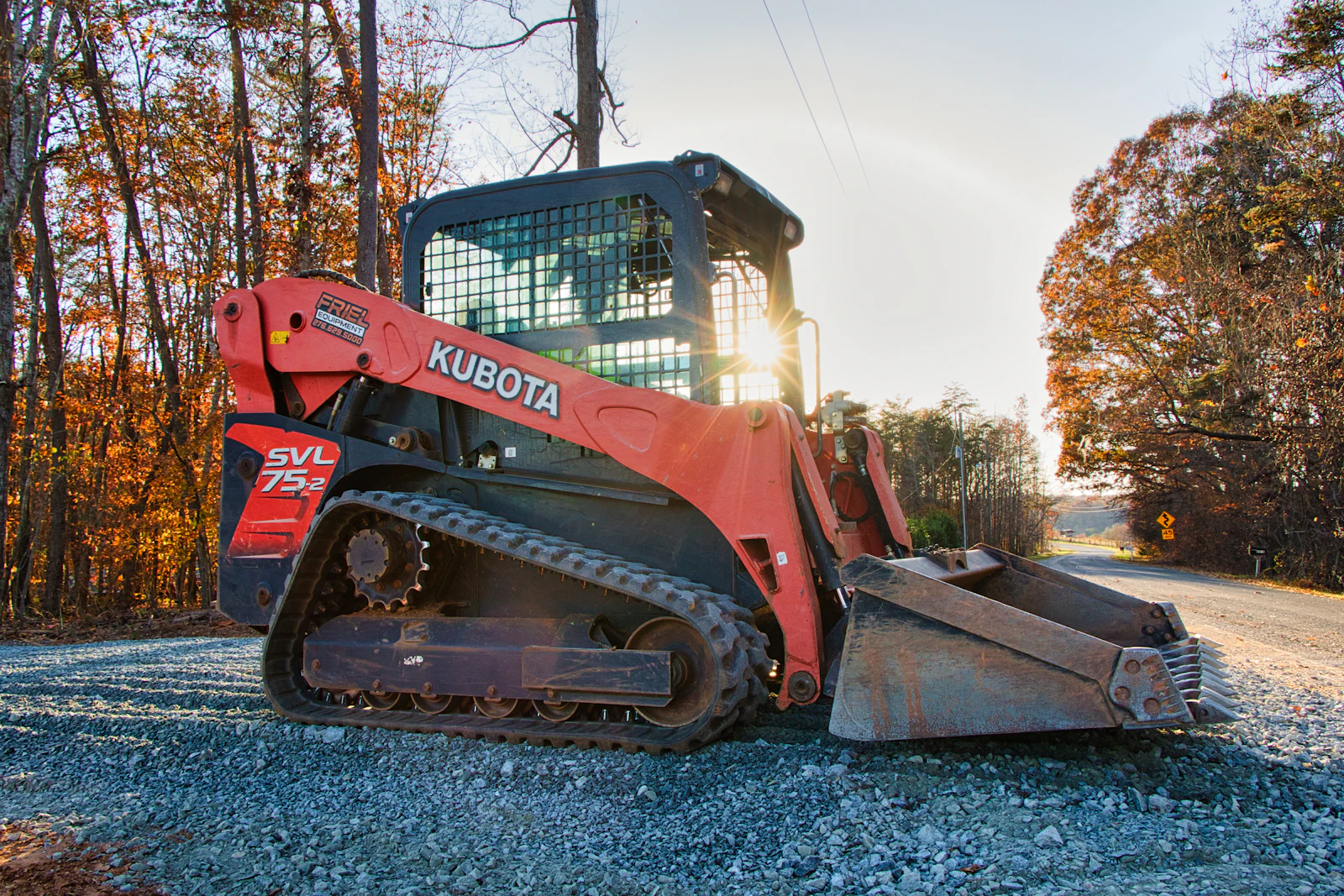
Key cost driver 1: tracks vs wheels. For many Chicago jobs, a CTL is selected not because it digs “better,” but because it stays productive when the site is soft, wet, or rutted, and because it reduces surface damage when you’re working over stone base or stabilized subgrade. That selection commonly moves you from a $250–$350/day wheeled budget into a $375–$500/day tracked budget (before delivery and attachments).
Key cost driver 2: hydraulic flow (standard vs high-flow). If your footing scope includes a cold planer, forestry cutter, or certain high-demand attachments, published Chicago rates show a large jump. One Chicago dealer publishes a bundled skid steer rate with a high-flow planer at $600/day, $2,400/week, $6,600/month, which can be a shock if you only carried “base machine” numbers.
Key cost driver 3: spoil handling and truck interface. If you are loading out spoils, productivity may depend on bucket size (66-in to 80-in class) and dump height. On tight Chicago residential lots, you may also need smaller-frame machines to clear gangways, alleys, and overhead obstructions—sometimes increasing total days on rent because a smaller machine cycles slower. That can push you to a weekly billing threshold quickly, so you want your rental coordinator to model day vs week early.
Key cost driver 4: frozen or very hard ground. In winter Chicago conditions, “digging footings” can quietly turn into “break, loosen, and remove.” A hydraulic breaker can be rented as a separate attachment (see below), but it also increases risk of wear, cleaning, and damage-waiver exposure if the tool is abused or the machine is undersized.
The fastest way to blow a skid steer equipment hire budget is not rate shopping—it is misunderstanding the supplier’s billing clock. Chicago-area suppliers commonly define chargeable time using a mix of time out and metered hours:
Chicago operating note: When you are working around downtown delivery cutoffs or tight staging, it is common to keep a machine an extra night “just in case,” which can convert a planned 2-day rent into a full week once daily caps accumulate. Your estimating team should pre-decide the weekly conversion point and secure delivery/pickup commitments in writing.
Footing work almost always needs more than a standard bucket. Below are published Chicago-area attachment rates you can use to build an equipment hire cost stack-up (and to sanity-check vendor quotes). These attachment adders often matter more than the base machine delta between suppliers.
Tip for estimators: If the job needs an auger, confirm flow requirement (standard vs high-flow) and coupler style early. Some national providers note that the auger bit may not be included and they will confirm couplers/bit sizing after the order is placed—this can create last-minute change orders and lost time on site.
Below are the most common “invoice movers” for skid steer loader hire in Chicago. Even if your base rate is competitive, these items can dominate total cost on short-duration footing scopes.
Scenario: 2-day residential addition in Chicago requiring machine support for strip footing excavation support work (spoil handling and staging), plus drilling for several piers. Access is through a narrow alley; delivery must be within a morning window to avoid blocking traffic. The crew expects light rain (soft ground risk).
Equipment selection: CTL (T595/T66 class) to reduce rutting risk at $375/day (published). Add hydraulic auger at $125/day (published) plus one extra bit at $50/day (published).
Base rental (2 days): CTL $750 + auger $250 + extra bit $100 = $1,100 (rental only, before fees). If the job runs long and crosses typical daily caps into a weekly conversion, that same package could quickly look like CTL $1,300/week plus auger $300/week plus bit $150/week = $1,750 for the week, which may actually be cheaper than stacking three or four daily charges.
Likely adders to carry: delivery and pickup (carry $150–$300 each way for budgeting, depending on distance and constraints), damage waiver/protection (10%–15% of rental), and a refuel/cleaning contingency. For downtown-adjacent or extremely tight time windows, also carry a “wait time” contingency (commonly billed in hourly increments by many haulers even if not published on rate cards). The operational lesson: on short footing scopes, attachments + delivery + waiver can rival the base machine rent, so estimate the full stack, not just the day rate.
Chicago logistics frequently matter more than the nominal skid steer hire rate. If the site is in the Loop, on a tight residential street, or behind an alley with limited turn radius, the delivery plan can add cost through redelivery risk and “kept on rent” days when pickup misses the cutoff.
City-specific considerations that change cost: (1) alley deliveries may require smaller rollback equipment (more trips); (2) winter snowbanks reduce staging footprint and increase “could not access” redelivery risk; (3) dust and mud control expectations are higher on infill sites, increasing cleaning exposure at return.
Most national and regional providers require you to either provide proof of insurance meeting their terms or purchase a protection product. For example, United Rentals describes its Rental Protection Plan as an optional addendum and notes customers must show proof of property insurance per its rental terms or purchase the plan.
Planning allowance for waiver/protection: if you cannot provide a certificate promptly, carry 10%–15% of rental charges as a protection-plan allowance. As one reference point, a Caterpillar dealer’s rental LDW example shows a 14% fee of the gross rental amount for loss/damage waiver.
Deposits and account status: some published 2026 rental procedures state that customers without an open account are required to leave a deposit on rentals. Build internal process time for credit setup, especially if your footing start date is close.
Two admin rules regularly create unexpected Chicago skid steer hire charges: (1) failing to “off-rent” correctly and (2) returning dirty or not full of fuel.
Cleaning exposure: some published price lists include a distinct cleaning/deposit line item (example shown at $75 on a 2026 skid steer listing). Even if your supplier does not show it up front, treat cleaning as a real cost risk on muddy Chicago sites and plan return-condition photos.
Use this non-table worksheet to build a bid-level allowance for skid steer loader equipment hire cost in Chicago when the scope is digging footings (or supporting footing excavation and backfill operations). Adjust quantities to your schedule.
Put this in your PO workflow so the invoiced cost tracks your estimate.
For many true footing excavations (depth, trenching accuracy, working near existing foundations), you may still need a mini excavator even if you keep a skid steer for spoil handling. The cost reality: published schedules show a 2-ton mini excavator at about $254/day and a 3.5-ton at about $278/day (with separate delivery fees in that schedule). If your crew is spending extra skid steer days trying to “make it work” for trench depth or reach, it can be more economical to add a mini excavator for one or two days and keep the skid steer for loading/backfill.
