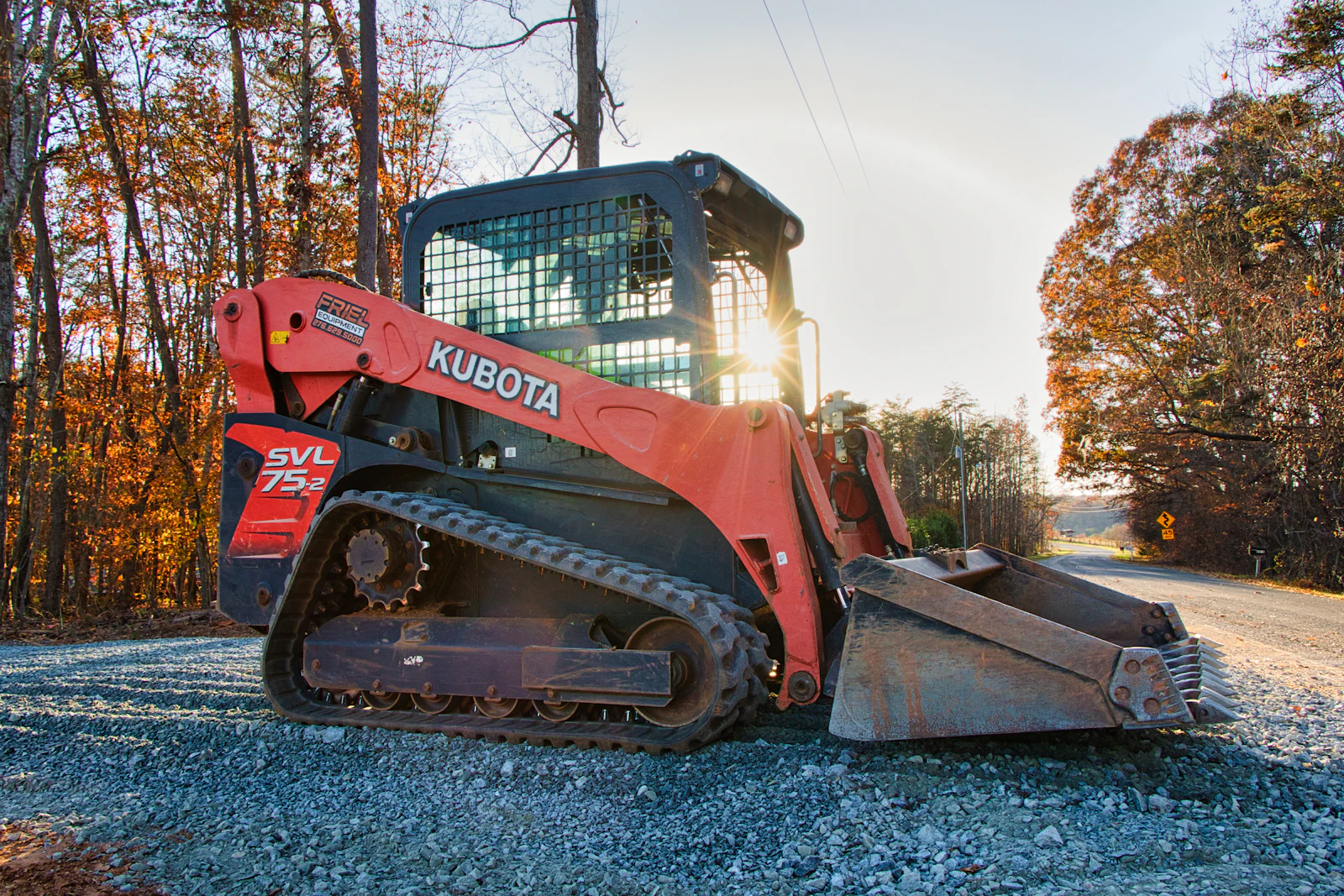
Skid Steer Loader Hire Costs Colorado Springs 2026
For Colorado Springs skid steer loader equipment hire in 2026, most rental coordinators should budget (machine-only, standard bucket, single-shift use) around $325–$600/day, $1,050–$1,900/week, and $2,550–$5,200/month. Those planning ranges are consistent with published national and regional rate cards for comparable wheeled skid steers (examples include $335/day, $1,075/week, $2,550 per 4 weeks and $300/day, $1,200/week, $3,600/month on other posted schedules), but your executed contract will govern billing intervals and availability. In Colorado Springs, the same machine can price differently depending on delivery radius, seasonal demand (spring/summer civil work), and whether you need high-flow hydraulics for trenching/auger work for footing excavation. National rental houses (including United Rentals, Sunbelt Rentals, and Herc Rentals) and local dealer rental yards all quote daily/weekly/monthly, but they don’t all define a week/month the same way.
| Vendor |
Daily Rate |
Weekly Rate |
Review Score |
Website |
| United Rentals |
$410 |
$1 150 |
9 |
Visit |
| Sunbelt Rentals |
$395 |
$1 100 |
8 |
Visit |
| Herc Rentals |
$390 |
$1 120 |
7 |
Visit |
| The Home Depot Rental |
$345 |
$995 |
9 |
Visit |
| Wagner Rents (Wagner Equipment Co.) |
$425 |
$1 200 |
9 |
Visit |
Assumptions to lock before you release a PO: Many contractor agreements define daily as an 8-hour day, weekly as a 5-day / 40-hour week, and monthly as 28 days (four whole weeks). Other providers use calendar-day billing (e.g., 7-day weeks). If you don’t confirm this in writing, the “cheap” weekly rate can become expensive if weekend holding time bills as additional days.
What Drives Skid Steer Equipment Hire Pricing For Digging Footings?
When the work term is digging footings, you’re not renting a skid steer “to have a skid steer”—you’re renting a production system made up of machine + attachment + logistics + return condition. The biggest cost drivers in Colorado Springs typically stack up in this order:
- Machine class and configuration: 750–1,200 lb ROC small-frame units usually land at the low end of the range, while 2,200–3,000+ lb ROC large-frame skid steers (and anything with a full cab) pull the high end. Budget +$40–$90/day when you must have an enclosed cab with heat for shoulder-season footing work.
- Traction choice: If footing access is across disturbed subgrade or wet spring conditions, a compact track loader (CTL) may be substituted; carry a contingency of +$70–$175/day versus a wheeled skid steer for similar capacity.
- Hydraulic spec: High-flow capability (needed for some trenchers, planers, mulchers, and heavy breakers) can add +$75–$200/day versus standard-flow, and it also constrains which attachments are available at a given branch.
- Shift and meter limits: If your agreement is “one shift” (8 hours/day, 40 hours/week), budget overtime as either (a) an extra shift charge of +50% to +100% of the daily rate or (b) hourly overages such as $4–$10 per meter hour over the included allotment (terms vary by provider/contract).
- Footing excavation method: A skid steer with a standard bucket is rarely the most cost-effective way to dig continuous footings in hard, rocky Front Range material. If you need a trencher or auger, the attachment can equal or exceed the base machine hire on a daily basis.
Size, Tires, And Options That Change The Real Hire Cost
Skid steer loader equipment hire costs in Colorado Springs tend to be most stable when you specify the machine correctly up front. If you under-spec, you pay twice (extra days + cleaning + wear + possible change-out). If you over-spec, you pay for capacity you never use. Use these practical pricing breakpoints for 2026 planning:
- Small-frame (tight access) skid steer: plan $325–$450/day. If access is through a 60 in. gate and you need a narrow machine, carry +$25–$60/day because “narrow and available” can be a premium in peak season.
- Mid-frame general construction skid steer: plan $400–$575/day. This is the most common class for footing backfill, moving spoils, and rough grading after forms.
- Large-frame / higher hp: plan $500–$600+/day, especially if you require a specific coupler type, auxiliary hydraulics, or a cab.
- Pneumatic tires vs. solid/non-marking: solid tires can be an upcharge of +$15–$40/day and can also influence cleaning/wear charges because they retain mud and aggregate differently.
Colorado Springs-specific operational note: at ~6,000+ ft elevation, naturally aspirated performance is less forgiving and even turbo machines can feel “soft” under heavy push/load. If your footing work includes long pushes of spoil piles or you’re climbing ramps into roll-offs, consider budgeting toward the upper end of the horsepower/capacity range to protect schedule (schedule risk is a real cost driver in equipment hire).
Attachment Adders For Footing Digging (Budget These Separately)
For footing excavation support, the attachment package often drives the true total. Below are 2026 planning adders commonly carried for skid steer rental for digging footings in Colorado Springs (confirm exact branch pricing and couplers):
- Tooth bucket upgrade (vs. smooth): $15–$35/day or $60–$140/week. In rocky soils, a tooth bucket can reduce spin and rework enough to pay for itself in a single day.
- 4-in-1 bucket: $60–$110/day, $200–$450/week. Useful when you must cut, carry, and backdrag around footing lines.
- Pallet forks (moving rebar bundles/forms): $20–$45/day, $75–$175/week. If you’re staging footing formwork and material deliveries, forks can reduce labor hours even if they’re not used for excavation.
- Trencher attachment (often the biggest adder): $175–$325/day, $600–$1,150/week. Verify soil type and required trench depth; some trenchers require high-flow.
- Auger drive: $85–$175/day plus bit rental at $25–$65/day per bit. If you need 18 in. and 24 in. bits to match pier/grade-beam details, budget both.
- Breaker (for buried rubble/ledge/pavement): $225–$450/day, $775–$1,650/week. If you hit rock during footing digging, a breaker can be cheaper than extending the skid steer and trucking spoils for multiple extra days.
- Dust-control / cleanup attachment (broom/bucket broom): $85–$175/day as a planning allowance if you’re working in developed areas with HOA or municipal dust expectations.
Also carry wear consumables when renting trenching or cutting attachments: it’s common to see “wear” line items such as $10–$30 per tooth (trencher chain/teeth) or a flat wear fee per rental, especially when you’re in abrasive decomposed granite or you’re trenching through base course.
Hidden-Fee Breakdown
This is where most equipment hire cost overruns happen. If you only compare day/week/month rates, you’ll miss the charges that show up on closeout. Build your Colorado Springs skid steer hire estimate with explicit allowances for:
- Delivery and pickup: budget $175–$325 each way within a typical metro radius. Some published public-sector rate sheets show transport charges such as $250 each way within 30 miles for certain equipment categories; use that as a reality check when a quote seems too low. Beyond the included radius, carry $4–$7 per loaded mile (or a higher flat fee for remote drops).
- Delivery scheduling constraints: common cutoffs are 1:00–3:00 PM for next-day delivery and 7:00–10:00 AM delivery windows for first-call jobs. Miss the window and you may burn half a day of rental waiting on a truck.
- Standby / site waiting time: if the driver is held at site beyond a free period (often 15–30 minutes), budget $95–$140/hour standby.
- Minimum rental term: many providers won’t do “half-day” rentals; carry a 1-day minimum on the machine and a possible 2-day minimum on specialty attachments in peak season.
- Damage waiver / rental protection: if you don’t provide acceptable insurance, budget a waiver fee often expressed as a percentage of rental charges (one major program example shows a $60 protection charge on a $400 rental and a $500 deductible cap per occurrence). Your contract may also exclude tires/tracks from coverage or charge separate tire damage caps.
- Fuel/return condition: assume “return full.” If returned short, carry a refuel allowance of $6–$9 per gallon plus a service fee such as $25–$60.
- Cleaning and mud/concrete removal: budget $95–$275 for standard washout if the machine comes back muddy, and $150–$400 if there is dried clay, concrete splatter, or excessive track/tire packing that requires extra labor.
- Late return / after-hours: common late fees are equivalent to 1/8 to 1/4 of the daily rate if you miss the agreed return time. If you require after-hours pickup, carry $150–$300 as an off-hours dispatch allowance.
- Environmental / admin fees: some invoices include a shop/environmental fee; carry 2%–5% of rental charges if your historical invoices show it.
Colorado Springs Considerations That Shift Hire Price (And Productivity)
Colorado Springs is not a flat, uniform soil market, and the local conditions change both what you rent and how long you keep it:
- Rocky material and caliche-like zones: for footing digging, plan for slower production and higher wear. If your geotech notes indicate cobbles or shallow rock, it can be cheaper to pre-authorize a breaker at $225–$450/day than to extend the skid steer hire by 2–3 days.
- Freeze/thaw and winter trenching: even in mild weeks, morning frost can harden surface layers. Carry a contingency of +1 additional rental day for footing digging when you’re working in colder months, unless you have pre-strip and staging complete.
- Dust control expectations: dry subgrade and wind can create dust issues near occupied facilities. If you’re on a developed site, add $85–$175/day for a broom attachment or budget extra cleaning at return.
- Base access / controlled sites: if the job is on a controlled facility (e.g., badging), build in 24–72 hours administrative lead time so you don’t start the rental clock before the operator can legally access the drop point.
Example: Footing Digging Package Estimate (Tight Access, 3-Day Use)
Scenario: A commercial TI addition requires a continuous footing trench totaling 120 linear feet, trench width 24 in., target depth 42 in., with spoils stockpiled on-site and later hauled by others. Access is through a 6 ft gate, so you select a small-to-mid frame wheeled skid steer with a tooth bucket and a trencher attachment. Work occurs mid-week with return scheduled for Friday.
Budget build (2026 planning allowances):
- Skid steer loader hire: 3 days at $400–$525/day = $1,200–$1,575
- Trencher attachment: 3 days at $200–$300/day = $600–$900
- Tooth bucket upgrade: $15–$35/day = $45–$105
- Delivery + pickup: $175–$325 each way = $350–$650
- Damage waiver / protection (if required): 10%–15% of rental charges = $185–$390 (use your provider’s program and caps)
- Fuel/return condition: $75–$180 allowance
- Cleaning contingency (rocky mud pack): $95–$275
Planning total: approximately $2,550–$4,075 before tax. The swing is driven primarily by (1) attachment availability, (2) delivery distance/timing, and (3) whether you can off-rent immediately after trenching instead of holding through the weekend.
Budget Worksheet (No Tables)
Use this bullet-format worksheet to build a clean, defensible internal estimate for skid steer loader equipment hire costs in Colorado Springs:
- Base skid steer loader hire (standard bucket): $_____ /day x _____ days (or week/month conversion confirmed in contract)
- Required configuration upcharge: enclosed cab/heat ($40–$90/day), high-flow ($75–$200/day), narrow machine premium ($25–$60/day)
- Footing digging attachment package: trencher ($175–$325/day) and/or auger drive ($85–$175/day) + bits ($25–$65/day each)
- Delivery and pickup: $175–$325 each way (carry mileage beyond included radius at $4–$7/loaded mile)
- Standby/site delay allowance: 1 hour at $95–$140/hour (only if access is constrained or jobsite is not ready)
- Damage waiver / rental protection: 10%–15% of rental charges (confirm caps/deductible)
- Fuel/DEF and service fees: $75–$180 (refuel rate $6–$9/gal + $25–$60 service fee if returned short)
- Cleaning/pressure wash contingency: $95–$275 (heavy clean $150–$400 if concrete/mud packed)
- Late return / after-hours dispatch contingency: $150–$300 (only if you anticipate off-hours pickup)
- Wear consumables (trencher/abrasive soils): $10–$30 per tooth or a flat wear fee (provider-dependent)
Rental Order Checklist (PO, Delivery, Off-Rent, Return)
- PO scope language: specify skid steer loader class (ROC range), tires vs tracks, cab requirement, hydraulic flow requirement, and coupler type.
- Attachment list: identify each attachment (trencher/auger/bucket/forks), required widths/bit diameters, and confirm compatibility (hydraulic couplers and flow).
- Billing intervals: confirm whether day = 8 hours or 24 hours; confirm weekly/monthly definition and whether weekend holding time bills as additional days.
- Delivery instructions: gate codes, drop point, overhead clearance, and a jobsite contact who can accept delivery within the scheduled window.
- Delivery window and cutoff: confirm the dispatch cutoff (often 1:00–3:00 PM) and any standby charges if the driver is delayed beyond 15–30 minutes.
- Pre-use documentation: take photos of all sides, the coupler, tires/tracks, and hour meter at drop. Log existing dents/hoses/leaks.
- Off-rent rules: confirm how to place equipment off rent (email vs portal vs phone) and what timestamp controls end-of-rent (notification time vs pickup time).
- Return condition: return full of fuel (or confirm refuel charge), remove excessive mud, and photograph condition at pickup to dispute cleaning/damage back-charges.
How To Control Total Skid Steer Hire Cost Over A Footing Schedule
Once the machine is on site, the fastest way to reduce skid steer loader equipment hire costs is to protect utilization. For footing digging, the skid steer often sits while layout, inspections, rebar, and formwork happen. If you keep the rental on the clock during those idle phases, you effectively turn the skid steer into a very expensive barricade.
- Plan “on-rent” to productive days: schedule delivery the morning you cut footings, not two days before. If your provider bills from time of delivery and ends when you notify off-rent (common in many contractor agreements), your superintendent’s off-rent discipline matters as much as the rental rate.
- Stage spoils handling: if the skid steer is needed only for spoils stockpiling and backfill, align those activities so you can off-rent the machine immediately after backfill rather than holding it through weekend downtime.
- Control attachment swaps: each swap costs labor and can create damage risk at the couplers. If you’re renting a trencher at $175–$325/day, schedule trenching in a single continuous push (same day if possible) so you can return the specialty attachment early even if you must keep the base skid steer one more day.
Weekend, Holiday, And Off-Rent Rules (Where Budget Gets Blown)
For Colorado Springs projects, weekend billing is a frequent surprise. Two common patterns drive cost variance:
- Calendar-day billing: if the provider treats Saturday/Sunday as billable days, a “Friday delivery” can convert to a 3-day charge even if your crew only runs 6 hours.
- Shift-based billing: if day = 8 hours and week = 40 hours, running 10–12 hour days can trigger extra shift or overage charges (carry +50% of daily as a conservative overtime allowance unless your contract clearly states otherwise).
Estimator tip: If you can’t avoid weekend possession, negotiate the rate structure before mobilization (for example: confirm whether Friday afternoon delivery through Monday morning counts as 1 day, 2 days, or 3 days under that branch’s policy). Put the agreed rule in the PO notes so AP can audit the invoice.
Insurance, Damage Waiver, And Liability Cost Controls
Most national providers require either acceptable insurance or purchase of a rental protection / damage waiver product. Don’t treat this as a rounding error. One widely used heavy equipment program example illustrates protection as a separate line item (e.g., $60 on a $400 rental) with a stated $500 deductible cap and customer responsibility described as a percentage/cap on damage costs, while also noting exclusions (such as tires). Translate that into estimating practice:
- If your insurance is compliant: you may avoid the waiver fee, but you still need internal rules for reporting, photos, and operator training to prevent claims that affect EMR/insurance costs later.
- If you must buy the waiver: budget 10%–15% of rental charges and confirm whether attachments are covered and whether tires/tracks are excluded.
- Security plan: theft risk is non-trivial; budget $25–$75 for basic chain/lock storage or include a fenced laydown requirement in your site logistics if you’ll keep the skid steer overnight.
Delivery Strategy In Colorado Springs: Small Choices, Real Dollars
Colorado Springs delivery economics can look “normal” until you add geography and access constraints. Use these localized cost controls:
- Keep deliveries inside standard radius: if the site is on the far north end (Monument corridor) or far southeast (away from typical yards), verify whether your quote assumes a standard radius or adds mileage. Carry $4–$7/loaded mile beyond included distance if you can’t confirm in writing.
- Avoid redelivery charges: if a driver arrives and cannot access the drop point (no gate code, no escort, obstructions), you can trigger a “dry run” charge. Budget $150–$300 risk if access is uncertain, and eliminate it with a required pre-drop call and a marked drop zone.
- Document drop condition: photos at delivery and pickup reduce back-and-forth on alleged new damage and can prevent $500+ disputes that consume PM and AP time.
When A Skid Steer Is The Wrong Tool (And How That Affects Hire Spend)
Staying focused on equipment hire costs sometimes means not hiring more of the same. For continuous footing trenches deeper than about 4 ft in rocky material, a mini excavator can outperform a skid steer + bucket and reduce total rental days. If you must stay with a skid steer (access constraints, slab-on-grade interior access, or you’re pairing with a trencher), you can still protect cost by:
- Choosing the right bucket edge: tooth bucket ($15–$35/day) vs smooth, based on whether you’re cutting native or handling spoils/backfill.
- Pre-ripping or breaking hard zones: breaker ($225–$450/day) for one day may avoid 2–3 extra skid steer days at $400–$575/day.
- Not over-holding attachments: return specialty attachments immediately when done; don’t let a $300/day trencher sit while you wait on inspection.
Closeout: Return Condition And Invoice Audit Items
Before you accept the final invoice for skid steer loader hire in Colorado Springs, audit the items that most often produce surprises:
- Off-rent timestamp: does billing end when you notified off-rent or when the truck physically picked up?
- Cleaning line items: check whether a $95–$275 standard clean (or $150–$400 heavy clean) is justified by return photos.
- Fuel charges: confirm gallons billed and the agreed refuel rate ($6–$9/gal) plus any service fee ($25–$60).
- Damage waiver fee basis: confirm the waiver percent (10%–15%) is applied only to eligible rental charges, per contract.
- Delivery charges: verify the quoted each-way amount ($175–$325 typical planning range) and mileage/standby if billed.
- Attachment billing: confirm the attachment was off-rented when returned (it’s common for base machine off-rent to be processed but the attachment to stay on rent by mistake).