Skid Steer Loader Rental Rates in Colorado Springs (Daily/Weekly) — 2026 Costs
Construction Costs Colorado Springs
Price source: Costs shown are derived from our proprietary U.S. construction cost database (updated continuously from contractor/bid/pricing inputs and normalization rules).
Eva Steinmetzer-Shaw
Head of Marketing
Skid Steer Loader Rental
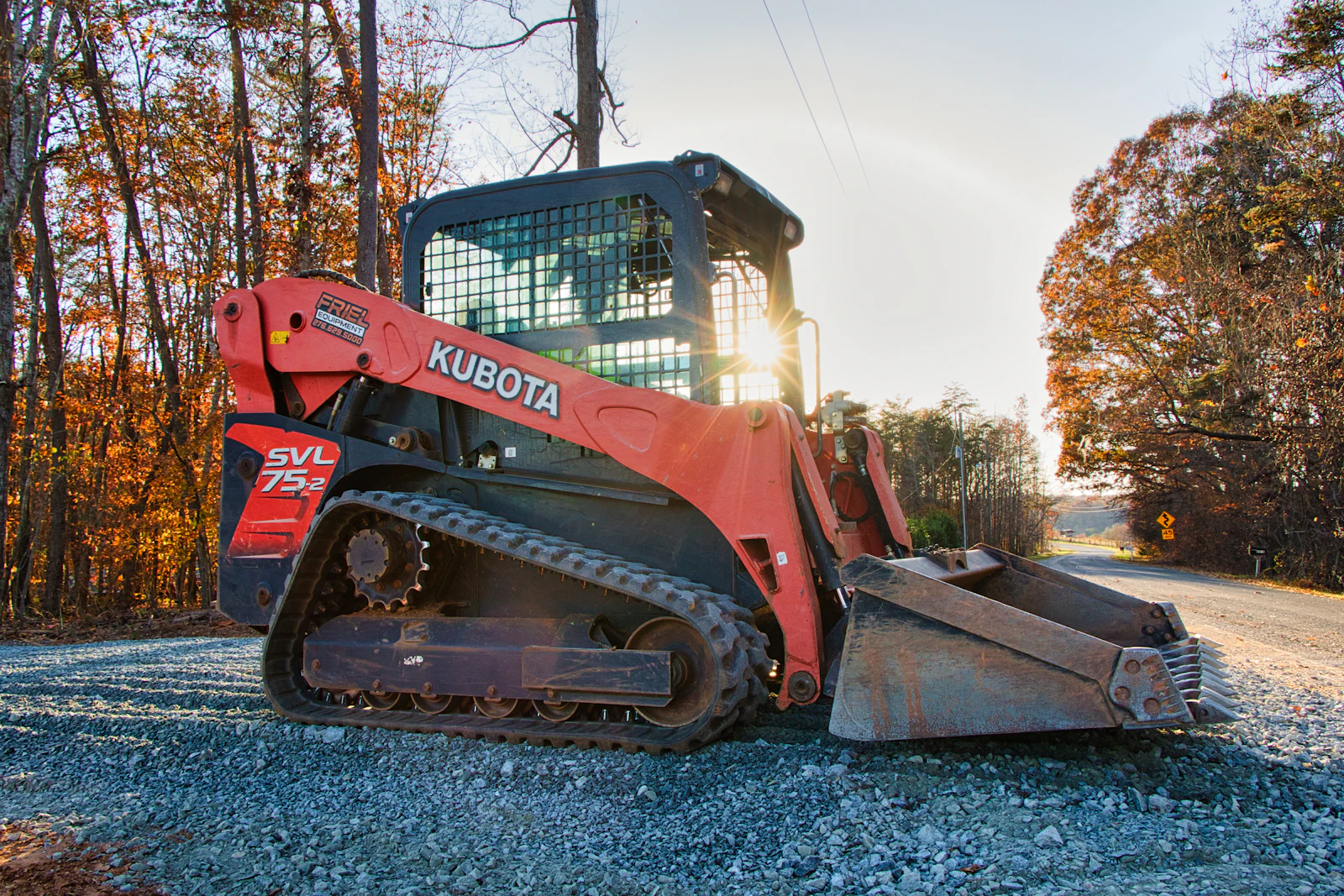
For Colorado Springs skid steer loader rental planning in 2026, budget $225–$475/day, $850–$1,650/week, and $2,450–$4,250/4-weeks for a standard bucketed machine, with compact track loader (CTL) configurations and high-flow packages typically landing in the upper half of those ranges. These are planning bands (not a quote) intended for rental coordinators building POs and job cost forecasts; your final equipment hire cost will shift based on meter-hour rules (commonly an 8-hour day), delivery radius into the Pikes Peak region, attachment mix (forks, broom, auger, trencher), and return-condition back-charges. In the Colorado Springs market, pricing generally clusters around national yards (United Rentals, Sunbelt) plus regional independents that deliver into Falcon/Peyton/Monument—often with different delivery minimums and off-rent cutoffs that materially affect the invoice.
| Vendor |
Daily Rate |
Weekly Rate |
Review Score |
Website |
| United Rentals |
$525 |
$1 620 |
9 |
Visit |
| Sunbelt Rentals |
$495 |
$1 525 |
8 |
Visit |
| Sunstate Equipment |
$485 |
$1 495 |
9 |
Visit |
| Wagner Cat Rentals |
$515 |
$1 595 |
9 |
Visit |
| Bobcat of the Rockies |
$475 |
$1 425 |
9 |
Visit |
Skid Steer Loader Rental Rates Colorado Springs 2026
Published rate cards vary by contract type and machine class, but they provide solid “sanity checks” for Colorado Springs equipment hire budgets. As examples from published sources: a government/contract price sheet shows a wheeled skid steer class at $256.50 (4–8 hours), $674.50 (24–48 hours), and $1,448.75 (monthly band), and a track skid steer class at $299.25, $788.50, and $1,781.25 respectively. A Front Range independent serving the Colorado Springs rural east area lists a CTL/skid steer at $325/day, $1,100/week, and $2,700/month. Another published retail schedule for a popular CTL shows $425 for day 1, $1,700 for 7 days, and $3,900 for 1 month, with overage billed at $100/hour. Use these as bookends when negotiating Colorado Springs skid steer loader hire costs (especially when availability tightens during peak grading and snow seasons).
What Drives Skid Steer Loader Hire Pricing in Colorado Springs?
Skid steer loader hire costs are rarely driven by the base day rate alone. In Colorado Springs, cost drivers typically fall into five buckets that estimators should model explicitly:
- Machine class and configuration: wheeled skid steer vs. CTL, rated operating capacity, and whether you need high-flow hydraulics for a cold planer, brush cutter, or heavy broom.
- Meter-hour definition: many rental terms define a “day” as 8 hours of seat time, with weekly and monthly hour caps (for example, published terms reference 8-hour day / 44-hour week / 176-hour month). If your crew is planning 10–12 hour shifts, assume overage.
- Attachments and wear items: forks, brooms, trenchers, augers, and brush cutters can add more cost than the loader on short-term hires (see attachment section below).
- Delivery radius and site access: deliveries into Black Forest, Monument/Palmer Lake, or tight Manitou Springs access can change truck choice, timing windows, and round-trip fees.
- Return condition and consumables: refuel/refill, undercarriage cleaning, and track/tire damage are the most common back-charges on skid steer rentals.
2026 Planning Bands By Common Skid Steer Classes (No Attachments)
Use the following budgeting bands for Colorado Springs equipment hire planning when you don’t yet have a final machine serial assigned. These ranges assume a standard general-purpose bucket and do not include delivery, fuel, damage waiver, or attachment rental.
- Small-frame wheeled skid steer (light ROC class): $225–$325/day; $850–$1,150/week; $2,450–$3,150/4-weeks.
- Mid-size wheeled skid steer (most common on urban sites): $275–$425/day; $1,050–$1,500/week; $3,050–$3,950/4-weeks.
- Compact track loader (CTL) standard-flow: $300–$475/day; $1,150–$1,650/week; $3,350–$4,250/4-weeks (published examples include $325/day to $425/day depending on yard and machine).
- CTL high-flow / cold-weather package: $375–$575/day; $1,400–$2,000/week; $3,950–$5,150/4-weeks (budget higher if the attachment mix requires high flow).
Delivery, Pickup, And Off-Rent Rules That Change Your Invoice
Colorado Springs skid steer loader rental invoices are sensitive to transport and “off-rent” timing. Build these into your internal estimate as separate line items so your field team understands what triggers extra cost:
- Round-trip delivery within the rural east service area: published local delivery ranges show $50–$100 round-trip for nearby areas and $100–$150 round-trip for farther rural communities. For Colorado Springs metro deliveries, many contractors carry a higher allowance (often $150–$350) due to truck availability and city traffic—even if your vendor quote later comes in lower.
- Per-mile transport models: an example of a common structure is $120 each way + $3.25 per loaded mile (published on a rate sheet). This is a useful planning construct if your jobsite is outside typical “free delivery” zones.
- Delivery timing windows: if your site requires a morning-only window (e.g., 7:00–9:00 AM) or same-day swap, expect a premium or at least reduced flexibility. Build a $75–$150 dispatch premium allowance for constrained windows when schedule risk is high.
- Weekend/holiday billing: many yards bill a “day” for each calendar day the unit is on rent, while others have a “weekend special” but require Friday PM pickup and Monday AM return. If you can’t return until Monday afternoon, model a potential +1 day charge in your budget.
- Off-rent cutoffs: if off-rent notifications must be placed by (typical) 2:00–3:00 PM to stop billing the next day, missing that cutoff can add an extra day—especially painful on short-term skid steer loader hire.
Attachments And Add-Ons: The Fastest Way Costs Escalate
Attachment pricing is where Colorado Springs skid steer equipment hire costs can balloon quickly. Use published attachment schedules as budgeting references and treat “included attachments” as a negotiated scope item (confirm on the PO).
- Pallet forks: published rates show $47.50 (short term), $123.50 (longer band), and $285.00 (monthly band).
- Sweeper/broom: published rates show $90.25, $180.50, and $536.75 across time bands. In Colorado Springs, sweeping is common after utility trenching due to decomposed granite and roadway dust—budget for it instead of hoping it’s “thrown in.”
- Auger attachment: published rates show $95.00, $228.00, and $513.00. A local yard also lists hydraulic augers at $100/day. If you need multiple bit sizes, assume additional adders per bit and confirm what’s included.
- Brush cutter: published rates show $142.50, $332.50, and $831.25. High-flow requirements can force a higher base machine class, so the “true cost” is machine upgrade + attachment.
- Tooth bucket / specialty bucket: one local listing shows heavy-duty tooth buckets at $50/day extra. This is a common Colorado Springs need for rocky subgrade and cobbles—budget it for any trench backfill, boulder handling, or rough grading in the foothills.
Operational note: confirm whether attachment changes mid-rental trigger a dispatch/delivery. If your crew swaps from forks to broom to auger on different days, you can burn an extra $120–$250 in logistics even if each attachment day rate looks reasonable.
Insurance, Damage Waiver, And Compliance Costs
Most professional rental agreements for skid steer loader hire will require either your own insurance certificate or acceptance of a damage waiver/LDW. For Colorado Springs estimating, carry these allowances unless your master agreement says otherwise:
- Damage waiver (LDW/CDW): commonly 10%–15% of the time-and-material rental (machine + attachments). This can add $35–$90/day on a $350–$600/day package.
- Environmental/recovery fees: often modeled at 2%–5% of rental charges (separate from sales tax).
- Cleaning and detailing: published terms show $75.00 per hour for excessive cleaning. In Colorado Springs, dust control and mud can be severe depending on site (monsoon storms, clay pockets, decomposed granite); assume at least a $150 allowance for cleanup risk unless your crew is disciplined on washdown and cab housekeeping.
- Overtime/overage hours: published retail scheduling shows additional seat time billed at $100/hour beyond the daily included hours. Even if your vendor uses a different overage rate, the point is to budget for overage when running extended shifts.
Colorado Springs-Specific Cost Factors (Pikes Peak Region)
- Elevation and performance derate: Colorado Springs sits around 6,000+ ft in many work areas; if you’re pushing dense aggregate, climbing ramps, or running hydraulic attachments, you may need to upsize class/horsepower to hit production. Budget a potential +$75–$150/day uplift for stepping up to a higher-capacity CTL when production is critical.
- Dust control expectations: downtown and occupied sites often require dust suppression and cleaner haul roads. If you need a broom on top of the loader, use the published broom rental benchmark (e.g., $90.25 in a short band) as a cost anchor.
- Winter access and traction: snow events and freeze-thaw can drive demand spikes. If you require chains or a winter kit, model $25–$45/day as an internal allowance (and confirm whether your vendor permits chains on tires/tracks without back-charges).
Hidden-Fee Breakdown
To keep Colorado Springs skid steer loader hire costs predictable, treat the following as “known unknowns” and either lock them down in the PO or carry explicit allowances. The goal is to avoid a base-rate-only estimate that collapses when the invoice arrives.
- Delivery / pickup charges: if you are outside the vendor’s core zone, pricing may follow a structure like $120 each way + $3.25 per loaded mile. For rural deliveries, published local ranges show $50–$100 round-trip nearby and $100–$150 round-trip farther out.
- Fuel/refuel and fluids: most yards deliver full and expect full return. If your crew returns it short, the “make-up” fuel rate is commonly higher than pump price. Carry $60–$175 as a refuel exposure on short jobs (more if you’re running high idle or extended shifts).
- Battery/DEF expectations: if the unit is Tier 4 diesel, assume DEF is your responsibility unless stated otherwise. Budget $25–$60 for DEF/top-off on multi-day rentals.
- Damage waiver vs. your own coverage: a 10%–15% waiver can be a rational choice for short-term rentals, but it adds up fast on monthly hires. If you have a blanket inland marine policy, confirm whether the rental house accepts it and what deductible applies.
- Cleaning fees: excessive cleaning can be billed at $75/hour on published terms. On Colorado Springs clay/mud days, one careless return can become a 2-hour clean plus filter service.
- Late return / extra day traps: missing the yard’s return cutoff can trigger another day. If your job is schedule-risky, carry a contingency of +1 day (or +$250–$500 depending on class and attachments).
- Overage hours: if your vendor includes an 8-hour day and charges overage similarly to the published $100/hour example, a crew running 12 hours can create 4 hours of overage in a single day.
Budget Worksheet
Use this checklist-style worksheet to build a Colorado Springs skid steer loader rental budget that survives real jobsite conditions (edit the allowances to match your internal historicals and the project schedule).
- Base skid steer loader hire: ____ days at $____/day (planning: $225–$475/day depending on class).
- Weekly conversion check: if rental crosses 5–7 calendar days, confirm whether vendor bills a “full week” or pro-rates (carry $850–$1,650/week planning).
- Monthly conversion check: if rental crosses 20 working days or 28 calendar days, price a 4-week/monthly term (carry $2,450–$4,250/4-weeks planning).
- Delivery & pickup: allowance $____ (planning: $150–$350 metro, or published rural ranges $50–$150 round-trip depending on distance).
- Transport outside core zone: allowance based on a model like $120 each way + $3.25/loaded mile.
- Damage waiver (if used): ____% (planning: 10%–15%) on rental subtotal.
- Environmental/recovery fees: ____% (planning: 2%–5%) on rental subtotal.
- Attachments:
- Pallet forks allowance: $____ (published benchmark includes $47.50 short band).
- Broom/sweeper allowance: $____ (published benchmark includes $90.25 short band).
- Auger allowance: $____ (published benchmark includes $95.00 short band; local example $100/day).
- Tooth bucket allowance: $____ (local example $50/day extra).
- Brush cutter allowance: $____ (published benchmark includes $142.50 short band).
- Fuel/DEF/top-off: allowance $____ (planning: $85–$250 depending on run hours and whether the crew refuels before return).
- Cleaning/return condition: allowance $____ (planning: $150; published cleaning benchmark $75/hour).
- Schedule contingency: +1 extra day allowance $____ to protect against weather, inspection, or off-rent cutoff misses.
Rental Order Checklist
These are the PO and field controls that prevent avoidable back-charges on skid steer loader hire (especially common on short rentals where the crew is moving fast).
- PO scope: specify skid steer class (wheeled/CTL), standard-flow vs high-flow, enclosed cab vs canopy, bucket type (smooth vs tooth), and whether forks are included.
- Meter-hour terms: confirm included hours per day/week/month (many terms reference an 8-hour day).
- Delivery requirements: address, contact, gate code, and on-site receiving window; confirm whether driver wait time becomes standby.
- Site constraints: note indoor work, dust-control expectations, and whether tracks are permitted on finished asphalt/concrete (to avoid surface-damage charges).
- Pre-use documentation: photos/video of bucket cutting edge, forks, tracks/tires, glass, lights, and hour meter at delivery.
- Return/off-rent process: who calls off-rent, what cutoff time applies, and where to stage the machine for pickup.
- Refuel/clean standard: return full (or at agreed level), remove mud from undercarriage, and blow out radiator pack if the unit ran in heavy dust (to reduce cleaning billed at rates like $75/hour).
- Attachment chain-of-custody: confirm each attachment serial (forks/broom/auger) at delivery and return to avoid “missing attachment” charges.
Example: 5-Day Site Prep In Black Forest With Overage Hours
Scenario: A grading subcontractor rents a CTL-style skid steer loader for a Black Forest lot prep, running extended days to beat weather. The team needs a tooth bucket and an auger for 2 days, plus delivery and pickup. This example is intentionally operational (not theoretical) to show where the real equipment hire cost comes from.
- Base machine: CTL at $375/day × 5 days = $1,875 (planning midpoint for a CTL class in Colorado Springs).
- Tooth bucket adder: $50/day × 5 = $250 (published local benchmark).
- Auger attachment: $100/day × 2 = $200 (published local benchmark).
- Delivery/pickup: $250 allowance (metro-to-Black Forest variability; could be lower/higher depending on yard location and schedule).
- Overage hours: crew runs 10 hours/day (2 hours/day over an 8-hour day) → 10 overage hours total. If billed similar to the published $100/hour overage example, that’s $1,000.
- Cleaning risk: 2 hours of excessive cleaning at $75/hour = $150 (if returned muddy/dust packed).
- Damage waiver + fees: assume 12% waiver on applicable rental items (machine + attachments) plus 3% recovery fees; on this scope that can add another $250–$400.
Result: a “$375/day skid steer rental” can land closer to $3,900–$4,125 all-in once you account for attachment mix, overage, delivery, and cleaning exposure—before sales tax. That’s why Colorado Springs skid steer loader hire costs must be estimated as a package, not a line-item day rate.
Documentation To Avoid Back-Charges At Return
Back-charges are usually preventable. Require your foreman or lead operator to close out the rental with a short “return pack”:
- Hour meter and fuel level photo at pickup staging.
- Photos of cutting edge, quick-attach plate, hoses/couplers, and bucket interior (wet concrete residue is a frequent cleaning trigger).
- Track/tire condition photos (sidewalls, lugs, embedded rebar/wire, missing pads).
- Attachment count verification (forks, broom, auger drive, bits) signed by both parties where possible.