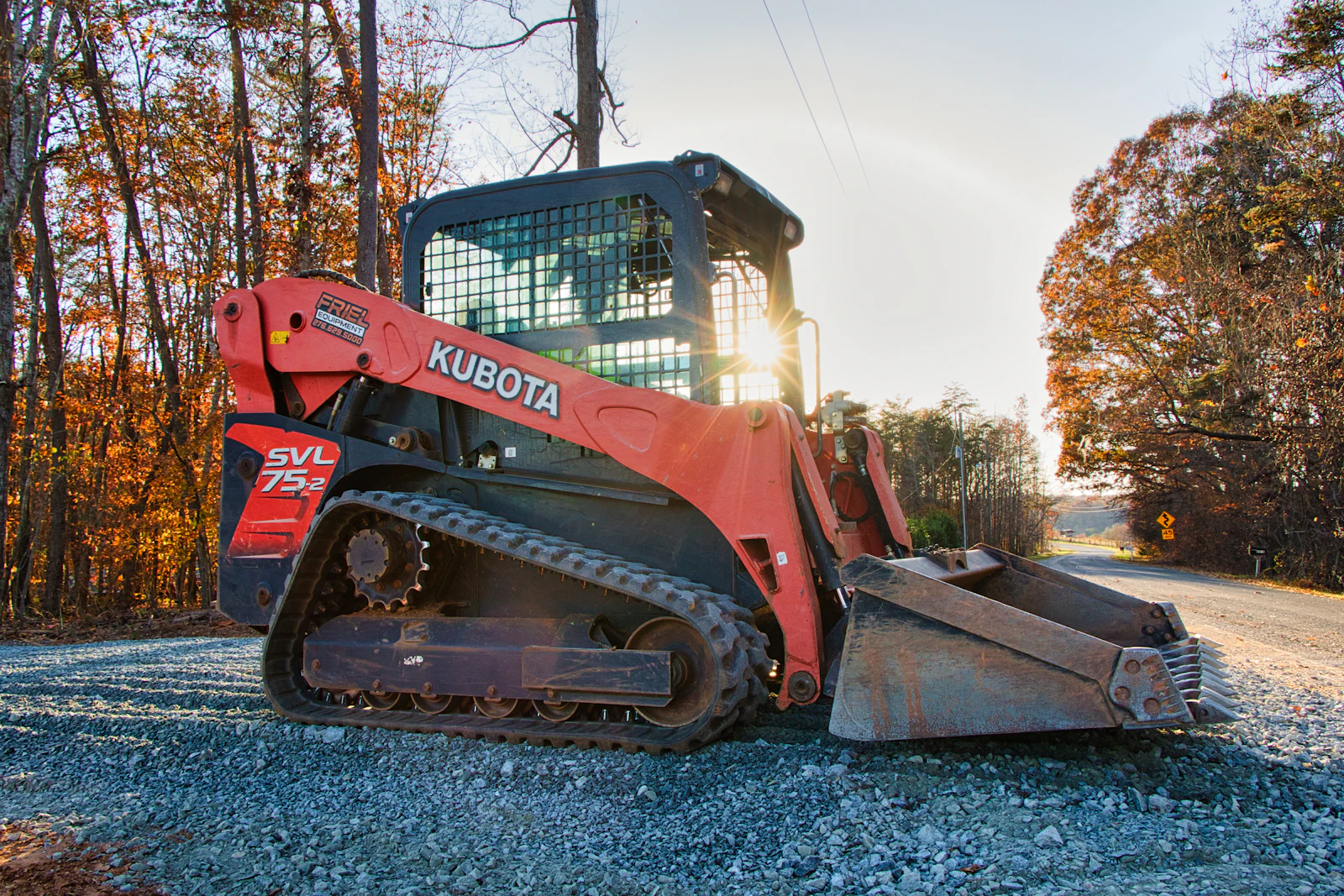
Skid Steer Loader Rental Rates Columbus 2026
For 2026 planning in Columbus, Ohio, skid steer loader equipment hire typically pencils out in two broad bands: wheeled skid steers (good for hard surfaces and tight turning) and compact track loaders/track skid steers (better flotation and traction in soft or muddy conditions). Based on published Columbus-area rental listings, wheeled machines commonly advertise around $400–$425/day, $1,250–$1,450/week, and $2,500–$2,800/month, while track machines advertise wider spreads from roughly $610/day up to $850/day, with weekly rates around $1,600–$1,965 and monthly around $3,750–$4,500 depending on class and configuration. Use these as budget anchors and expect account pricing, availability, and attachments to move the final quote; Columbus buyers commonly source from national fleets (United Rentals, Sunbelt Rentals, Herc Rentals) plus regional dealer-rental operations (e.g., Ohio CAT) depending on spec and lead time.
| Vendor |
Daily Rate |
Weekly Rate |
Review Score |
Website |
| United Rentals |
$420 |
$1 206 |
9 |
Visit |
| Sunbelt Rentals |
$225 |
$660 |
9 |
Visit |
| Herc Rentals |
$380 |
$895 |
9 |
Visit |
| Ohio Cat Rentals |
$400 |
$1 250 |
8 |
Visit |
| Columbus Equipment Rentals (Columbus Equipment Company) |
$400 |
$1 000 |
9 |
Visit |
What the above “rates” usually assume in Columbus: most rental houses price skid steer loader rental on an 8-hour day and a 40-hour week, and many monthly terms are pegged to either a 160-hour cap or a published month definition (often 28 days) with hour overages billed back at an implied hourly rate. Columbus Equipment’s published general notes are a good example of this structure (28-day month, max 160 hours, and a formula for hourly overage), even though the exact machine mix will vary by vendor and fleet.
Skid Steer Loader Rental
When a Columbus PM or rental coordinator says “skid steer loader equipment hire,” they’re typically buying a combination of (1) the carrier (wheeled skid steer or compact track loader), (2) at least one work tool (bucket, forks, broom, auger, breaker, etc.), (3) logistics (delivery/pick-up or customer haul), and (4) commercial terms (damage waiver/LDW, insurance/COI, fuel/cleaning, and off-rent rules). The carrier day-rate is only the starting point; the jobsite realities in Franklin County—tight downtown access, OSU campus restrictions, and seasonal mud/freeze-thaw—can shift the total cost materially if you don’t manage off-rent and return condition.
Columbus-Specific Cost Planning Assumptions (2026)
Use these assumptions to normalize competing quotes so you can compare “apples to apples” for skid steer loader hire costs in Columbus:
- Billing clock: day = 8 engine hours; week = 40 hours; month often capped at 160 hours (or a 176-hour structure in some fleets). One published rate sheet example states rates are based on 8hr day / 44hr week / 176hr month and includes an excessive cleaning fee of $75/hour (terms vary by vendor and market).
- Off-rent / on-rent: some suppliers define rent start when equipment leaves the yard and end when it is returned to the yard—meaning weekend transport and after-hours returns can cost you real money if you don’t pre-arrange a hard off-rent time.
- Seasonality: in Columbus, wet spring subgrades and winter freeze-thaw often push you toward tracks. Track machines cost more on rate but can reduce standby time and rework; that trade is frequently favorable on utility, sitework, and restoration scopes where access roads rut quickly.
- Delivery radius norms: many Columbus fleets treat the I-270 loop as the “standard service ring.” Quotes commonly step up outside that ring with mileage adders or a higher one-way minimum.
2026 Planning Ranges for Columbus Skid Steer Loader Equipment Hire
Wheeled skid steer loader rental (typical 1,600–2,200 lb ROC class): budget $375–$525/day, $1,150–$1,550/week, and $2,300–$3,100 per 28-day month. Published Columbus-area listings show examples around $400/day and $2,500/month for a wheel skid steer configuration, which supports the above planning band.
Compact track loader / track skid steer rental (CTL, enclosed cab common): budget $575–$950/day, $1,450–$2,250/week, and $3,350–$5,100 per 28-day month. Columbus listings include examples around $610/day and $3,750/month for mid-class track units and up to $850/day / $4,500/month for larger/high-spec units, which supports the wider range.
Important estimator note: treat “month” as a defined rental month (often 28 days) rather than a calendar month, and track hour caps. One Columbus-published set of notes spells out: monthly is a 28-day month with max 160 hours, with overages calculated as (monthly rate / 160) × hours over 160.
What Drives Skid Steer Hire Costs in Columbus?
1) Machine Class, Cab, And Hydraulics
For Columbus skid steer loader rental, the biggest pricing step-ups typically come from:
- Enclosed cab + heat: often a must for winter utility restoration and salt handling; budget an adder of $35–$85/day versus open ROPS canopy when both exist in fleet.
- High-flow hydraulics: required for many cold planers, forestry heads, and some brooms; budget $75–$175/day adder depending on attachment and flow requirement.
- Two-speed travel and ride control: may be bundled in certain spec packages; when priced à la carte, budget $20–$45/day equivalent in “feature value” if you’re comparing a base unit to a premium unit.
2) Tracks Versus Tires (And Surface Protection)
Tracks typically rent higher, but they can reduce total cost if they prevent site shutdowns from rutting and towing. Where Columbus jobs push hard on surface protection (warehouse slabs, finished asphalt, pavers), plan for:
- Non-marking track considerations: some suppliers will only provide standard rubber tracks; if your spec requires low-marking or special tread, lead time may force a higher-rate fleet or substitute.
- Ground protection mats: if required, budget $12–$18 per mat per day (or a weekly minimum), plus handling time.
3) Attachments And “Must-Rent-With-Carrier” Rules
Attachments are where skid steer loader equipment hire costs can quietly double. Common 2026 Columbus allowances (confirm actual availability and minimums):
- Pallet forks: $25–$55/day, $75–$165/week
- Skeleton bucket / rock bucket: $45–$110/day
- Hydraulic auger powerhead: $85–$140/day; auger bits often $20–$45/day each (6", 9", 12", 18")
- Hydraulic breaker: $175–$325/day depending on size and tool steel
- Pick-up broom / angle broom: $140–$260/day (dust control drives this on downtown and institutional sites)
- Snow pusher (seasonal): $65–$140/day with winter minimum terms common
Also watch contract language that ties attachments to the carrier. One published set of rental notes states: attachments must be rented with the carrier. Even if your vendor doesn’t use identical language, “no attachment-only rentals” is common practice and affects sourcing strategy.
Hidden-Fee Breakdown For Skid Steer Loader Equipment Hire
To avoid change orders on skid steer loader rental in Columbus, budget these line items explicitly (even if your preferred vendor usually waives one or two for account customers):
- Delivery / pick-up: $175–$325 each way inside a “standard” radius; outside radius, expect a mileage model such as $4.00–$6.50 per loaded mile with a $225 one-way minimum. Downtown Columbus deliveries (alley access, restricted laydown) can add a $75–$150 jobsite handling charge if a smaller truck or special scheduling is required.
- After-hours / weekend dispatch: budget a 10%–20% premium or a $150–$300 call-out when you need Saturday delivery or emergency swap-out.
- Damage waiver / LDW: commonly 10%–15% of the time-and-material rental charge (carrier + attachments). Clarify whether it covers glass, tires/tracks, and vandalism/theft (often excluded).
- Fuel / DEF: many vendors send machines out full and expect full return. A published Columbus rate sheet lists a fuel charge of $8.00/gallon (subject to change) as an example of how painful refuel back-charges can be if you return light.
- Cleaning: budget a $95–$275 wash/clean fee for typical mud and spoil; for excessive concrete slurry, clay pack in undercarriage, or interior cab contamination, plan $75/hour with a practical minimum of 2 hours if the vendor has to dig tracks out.
- Undercarriage wear (track units): some contracts back-charge abnormal wear; set an allowance of $150–$450 for high-abrasion work (rebar demolition, sharp limestone) unless you can specify sacrificial track pads or change your haul route.
- Hour overages: for a $3,750 monthly CTL, the implied hourly is about $23.44/hour over the 160-hour cap (plus LDW/taxes), so a 40-hour overrun can add roughly $938 before fees. (Use your vendor’s stated formula.)
- Late return / off-rent cutoff: common cutoffs are 2:00–4:00 PM local; miss cutoff and you can burn an extra day. Build a $400–$900 contingency for schedule volatility on track units.
Example: Three-Week CTL Hire For A Columbus Warehouse Pad (With Real Constraints)
Scenario: A GC is building a 30,000 sq. ft. distribution pad near the Rickenbacker area. Access road is aggregate over clay; rain is forecast 6 of 15 working days. Spec requires an enclosed cab, high-flow for a pick-up broom, and forks for unloading pipe bundles. Work happens Mon–Sat, and the site wants the machine offsite Sundays (security policy).
Cost build (planning level):
- Carrier: mid-class CTL at $1,600/week × 3 weeks = $4,800 (planning anchor supported by Columbus-area listings).
- Forks: $45/day × 15 days = $675
- Pick-up broom: $220/day × 6 days = $1,320 (used only during cleanup and sweeping windows)
- Delivery/pick-up: $275 each way = $550 (tight window scheduling; confirm cutoff)
- Damage waiver: 12% × ($4,800 + $675 + $1,320) ≈ $815
- Cleaning allowance: $250 (track undercarriage clay pack risk)
- Fuel back-charge contingency: $160 (assume ~20 gallons not topped off; some vendors post per-gallon charges—one Columbus example lists $8/gal).
Planning subtotal (pre-tax): approximately $8,770. The operational constraints driving cost here are (a) high-flow + broom requirement, (b) Saturday work (off-rent and billing clarity), and (c) repeated mobilization rules if the owner insists on Sunday removal—if your vendor bills “rent ends when returned to yard,” weekly pricing may beat day-rates even if the unit sits part-time.
Budget Worksheet (No Tables)
Use this bullet worksheet to build a Columbus skid steer loader equipment hire budget that survives real invoicing:
- Wheeled skid steer or CTL base rent (days/weeks/months) = $____
- Cab/heat spec adder allowance = $35–$85/day
- High-flow adder allowance = $75–$175/day
- Standard bucket (confirm included) = $0–$35/day
- Pallet forks = $25–$55/day
- Auger + bits = $105–$185/day
- Breaker (if needed) = $175–$325/day
- Broom/sweeper = $140–$260/day
- Delivery/pick-up = $350–$650 round trip
- Jobsite handling / restricted access allowance (downtown/OSU) = $75–$150
- LDW/damage waiver = 10%–15% of rental line items
- Fuel/DEF back-charge contingency = $75–$250 (or per posted gallon)
- Cleaning/undercarriage contingency = $150–$450 (track units higher)
- Late return / missed cutoff contingency = $400–$900 (one extra day on CTL)
Rental Order Checklist (PO, Delivery, Return)
- PO and billing: PO number, job number, delivery address (gate entrance), AP email, and tax status certificate if applicable.
- Spec confirmation: wheeled vs track, ROC class, enclosed cab/heat/AC, high-flow requirement (gpm/psi), coupler type, bucket width (e.g., 66" vs 74").
- Attachments: confirm each attachment serial or class; confirm “must rent with carrier” rules and minimum term for specialty tools.
- Insurance/COI: send COI listing the rental company as additional insured/loss payee if required; confirm deductible responsibility if you use LDW.
- Delivery window: confirm cutoff time (common 2:00–4:00 PM), rigging/escort needs, and site contact phone for driver.
- Acceptance: photograph hour meter, exterior condition, cab glass, tires/tracks, bucket cutting edge, and any existing leaks at drop-off.
- Operations controls: confirm refuel expectations (full-in/full-out), daily greasing points, and track cleaning requirement (shovel-out) for CTLs.
- Off-rent: document off-rent time in writing; confirm whether rent ends at jobsite pickup or yard check-in.
- Return condition: photos at loadout; note any damage immediately to avoid later disputes; keep scale tickets if you used the machine for salt/aggregate handling (helps explain wear/cleanup).
How To Compare Competing Columbus Skid Steer Hire Quotes
For skid steer loader equipment hire costs, the cleanest way to compare vendors is to normalize to the same assumptions: identical billing month definition, identical hour cap, identical delivery scope, and identical return expectations. If one quote is “$500/day” but includes forks and delivery, and another is “$425/day” without forks and with a separate haul charge, the second quote can easily invoice higher on a real job.
Normalize The Rate Structure (Day/Week/Month)
Before you release a PO, confirm these points in writing:
- Hour caps: day cap (usually 8), week cap (usually 40), month cap (often 160). One published Columbus note explicitly uses a 160-hour monthly cap and an overage formula; use that logic to compute your exposure.
- Definition of “month”: many fleets use a 28-day month, not a calendar month—this affects pro-rating and extensions.
- Overtime / overage pricing: ask for the implied hourly rate. Example: at $2,800/month, the implied hourly is $17.50/hr over 160; at $4,500/month, it’s $28.13/hr over 160 (plus LDW/tax).
- Weekly conversion: some suppliers explicitly define weekly as a percentage of monthly and daily as a percentage of weekly; this matters when you extend from 6 days to 9 days and expect “week pricing.”
Delivery, Access, And Jobsite Constraints That Change The Invoice
Columbus cost outcomes are heavily influenced by logistics. The same skid steer loader rental can invoice very differently depending on jobsite access and scheduling discipline:
- Downtown Columbus: alley deliveries and lane restrictions can force narrower trucks or timed windows. If your delivery window is 7:00–9:00 AM only, build a $75–$150 handling/scheduling allowance and expect fewer same-day swaps.
- OSU / institutional campuses: many sites require documented operator authorization, pedestrian controls, and sometimes low-noise windows. If you need a “quiet hour” plan, expect more idle time—track hour caps so you don’t eat overages.
- Rickenbacker / logistics parks: long haul lanes and aggregate yards increase tire cuts (wheeled) and undercarriage abrasion (tracked). Budget $150–$450 wear/cleanup contingency if the machine will live in limestone or crushed concrete.
- Heat and dust (summer): cab filters and radiator plugging drive overheating risk; if your scope is milling/sweeping, consider bundling a broom plus a water/dust suppression plan. If the vendor has to service a plugged cooler mid-rental, you may lose production even if you don’t see a direct invoice line.
Attachment Strategy: Reduce Total Hire Cost Without De-Spec’ing The Job
To manage skid steer loader equipment hire costs, treat attachments as part of a system rather than last-minute add-ons:
- Bundle attachments for the full term when possible: if forks are only “nice to have,” it can be cheaper to rent them for the first 2 days (unloading) rather than the full 4-week term.
- Right-size the bucket: upgrading from a standard GP bucket to a heavy-duty bucket might add only $15–$35/day but can prevent cutting-edge damage back-charges.
- Confirm hydraulic requirements: don’t rent a high-flow carrier “just in case.” If your broom requires standard flow, a high-flow premium of $75–$175/day is pure waste.
- Plan for consumables: breaker tool steel wear and auger teeth can become billable. Set a consumables allowance of $50–$200 for rock or demolition conditions.
Insurance, Damage Waiver, And Deposit Planning
Commercial skid steer hire typically comes with several risk-cost levers:
- LDW / damage waiver: plan 10%–15% of rental charges unless your corporate insurance is structured to waive it. Ask what is excluded (commonly tires/tracks, glass, theft, misuse).
- COI requirements: if the vendor requires them to be named as loss payee/additional insured, allow 1–2 business days for certificate processing (more if endorsements are needed).
- Deposits for non-account customers: budget $500–$2,000 depending on machine class and term.
- Deductible exposure: even with LDW, you may have a deductible (often $500–$2,500). Put that in the risk register for the job.
Return Condition And Off-Rent Discipline (Where Costs Leak)
Two controllable behaviors drive a disproportionate share of rental overruns: (1) sloppy off-rent timing and (2) dirty returns.
- Off-rent timing: if rent ends at yard return, a “Friday 4:30 PM done” can become a “Monday check-in” and cost an extra day. Align your trucking schedule with the supplier’s cutoff (often 2:00–4:00 PM), and get written confirmation of the off-rent timestamp.
- Track cleaning: Columbus clay can pack undercarriages. Budget labor on your side to shovel tracks out; it is almost always cheaper than vendor shop rates.
- Fuel top-off: send the machine back full. A published Columbus sheet lists $8.00/gal as a fuel charge example; regardless of the exact posted number at your vendor, refuel back-charges are rarely competitive with your own on-site fueling.
- Photo documentation: capture hour meter and condition at pickup. This is your best defense against disputed “new damage” claims.
Practical 2026 Cost-Control Tips For Columbus Equipment Managers
- Lock the spec early: a last-minute switch from tires to tracks can move your weekly rate by $300–$900 in Columbus depending on class and availability.
- Watch minimum terms: some specialty tools require a 1-week minimum or “must-rent-with-carrier” policies; validate before your superintendent assumes a one-day add-on.
- Set an overage alert: if the machine is trending toward 160 hours by day 20, either (a) swap to a second unit to keep each under cap, or (b) negotiate a blended monthly-plus-hourly deal.
- Prefer weekly over daily for uncertain schedules: if weather can stall work, the weekly rate often insulates you better than stacking day rates—especially on CTLs.
- Include a standby plan: if the machine is only needed 2–3 days/week, consider mobilizing it in blocks rather than leaving it on rent for the full month.
If you want, share (1) wheeled vs track preference, (2) expected total machine hours, (3) attachment list, and (4) whether you need delivery inside/outside the I-270 loop, and I can tighten the Columbus skid steer loader equipment hire budget to a narrower planning range without relying on vendor-specific unpublished pricing.