Build your next estimate with CountBricks
Create an itemized estimate for your project, with materials, labor, and quantities you can review and edit.
Create my estimateStart a 7-day free trial. Sign up, then enter your project details.
Skid Steer Loader Rental
For 2026 budgeting in Detroit, plan skid steer loader equipment hire costs around $260–$450 per day, $1,050–$1,700 per week, and $3,000–$4,700 per 4-week term for a mid-size wheeled skid steer (typically priced on an 8-hour day / 40-hour week / 160-hour 4-week meter cap). Compact track loaders (CTLs) and high-flow packages usually carry a premium—commonly $370–$520 per day, $1,110–$1,560 per week, and $3,330–$4,680 per 4-week term depending on operating weight, horsepower, and demand. These are planning ranges; the “real” invoice is often driven by delivery/pickup, attachments, waivers, and return condition. Detroit buyers typically source from national branches (for depth of fleet and swap capacity) plus Michigan independents (for local responsiveness and jobsite support), and the best-fit choice usually comes down to uptime expectations and logistics, not just the headline day rate.
| Vendor |
Daily Rate |
Weekly Rate |
Review Score |
Website |
| United Rentals |
$296 |
$856 |
9 |
Visit |
| Sunbelt Rentals |
$225 |
$660 |
8 |
Visit |
| Herc Rentals |
$212 |
$531 |
8 |
Visit |
| Team Equipment Company (Team Rental) |
$280 |
$965 |
10 |
Visit |
Detroit Skid Steer Loader Hire Rates For 2026 Planning
When you quote skid steer loader rental in Detroit, the rate band is primarily dictated by machine class (ROC and operating weight), undercarriage (wheels vs tracks), and options (enclosed cab/heat, high-flow, ride control). For clean estimating, it helps to separate base machine rent from job-driven adders that can swing total equipment hire cost materially.
Typical 2026 planning ranges by class (Detroit metro):
- Small wheeled skid steer (older or light-duty, basic bucket): $200–$320/day; $800–$1,200/week; $2,200–$3,200/4-week.
- Mid-size wheeled skid steer (common GC class, vertical lift, 2-speed): $260–$450/day; $1,050–$1,700/week; $3,000–$4,700/4-week.
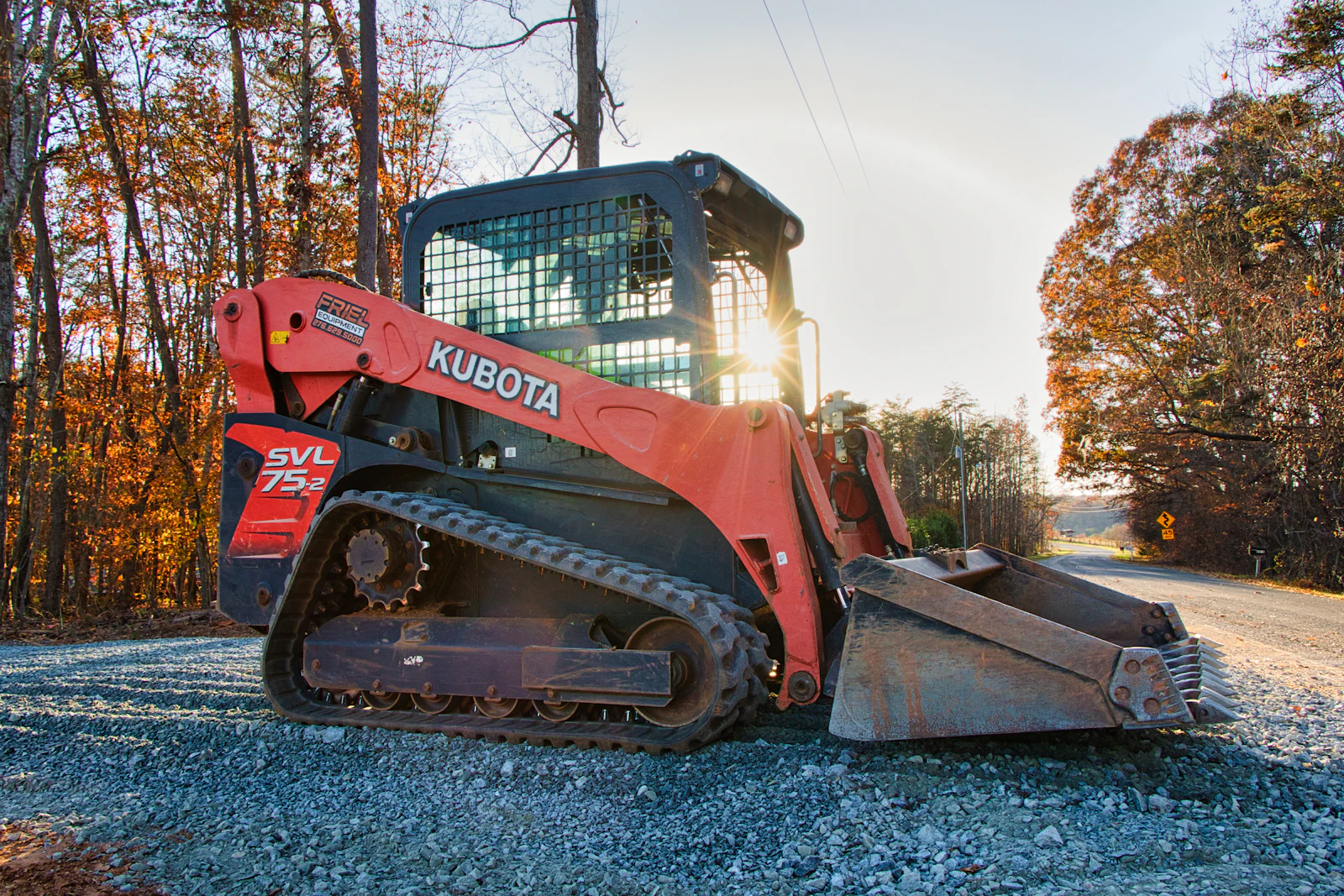
- Compact track loader / track skid steer (CTL): $370–$520/day; $1,110–$1,560/week; $3,330–$4,680/4-week.
Assumptions to state on your internal estimate: Most Detroit rental agreements price around an 8-hour “day” meter limit, 40-hour “week,” and 160-hour “4-week” (or 28-day) term. If your scope is production-heavy (e.g., continuous trucking, grading, or brooming), confirm the hour cap and the overtime billing method (commonly billed in 1/8-day or hourly increments) before you lock the PO.
What Drives Skid Steer Loader Hire Pricing In Detroit?
Skid steer equipment hire cost is not one rate—Detroit pricing moves with jobsite constraints, fleet utilization, and how you spec the machine. The biggest cost drivers you’ll see on quotes include:
- Tracks vs wheels: CTLs price higher but can reduce rutting and rework on wet or thawing sites; wheeled units are often cheaper and faster on hard surfaces. If you’re on industrial slabs, wheels may lower both rent and wear risk.
- High-flow hydraulics: High-flow is a frequent step-change in rate (and availability), but it’s required for some attachments (mulchers, some cold planers). If your attachment needs standard-flow, avoid paying for high-flow you don’t need.
- Cab configuration: Enclosed cab + heat is common for Detroit winter work and can push daily cost above an open ROPS unit. Factor this early if you’re planning November–March work.
- Machine size and lift path: Vertical-lift units typically command a premium in material handling because they load trucks more efficiently; if you’re only backfilling and rough grading, the incremental cost may not pay back.
- Risk profile / surface sensitivity: Finished concrete, epoxy floors, pavers, and interior work can trigger additional requirements (non-marking tracks, plywood protection, dust control) that don’t show up in base rent.
Detroit-Specific Logistics That Change The Total Hire Cost
Detroit metro projects (downtown, Corktown, New Center, riverfront corridors, and large industrial campuses) add practical constraints that can move your all-in skid steer loader rental cost even when the day rate looks competitive:
- Delivery radius norms: Many suppliers price delivery/pickup assuming a local radius (often 15–25 miles). Budget $125–$250 each way for standard delivery/pickup inside the metro, then add $4–$6 per loaded mile beyond the base radius as a planning allowance.
- Downtown access and time windows: If the site requires a narrow delivery window (e.g., 7:00–9:00 AM only), expect either a scheduling premium or a redelivery risk. Budget a $75–$150 after-hours/expedited scheduling allowance and a $50–$125 “dry run / refused delivery” allowance if your site isn’t ready.
- Winter conditions: Freeze/thaw mud increases cleaning time and undercarriage wear. Budget a $95–$250 cleaning fee risk line (especially on CTLs) and confirm whether the supplier enforces “returned reasonably clean” language.
- Industrial site security: Automotive/industrial facilities often require escorting, badging, or check-in delays. If your unloading takes longer than the carrier’s included time, plan a detention exposure (commonly $75–$125 per 30 minutes after an included window, depending on carrier policy).
Attachments And Options: The Adders That Usually Matter Most
Attachments are where skid steer loader hire costs get won or lost. Detroit rental coordinators typically see the following attachment adders (planning ranges), with availability and wear charges as the swing factor:
- Pallet forks: add $25–$60/day or $100–$180/week. (Often required even if “maybe.”)
- General purpose bucket: often included; confirm bucket width (e.g., 66–78 in.) to avoid a last-minute swap charge.
- Tooth bar / cutting edge: add $15–$35/day; can reduce bucket wear and improve production in compacted fill.
- Auger drive: add $120–$180/day or $360–$540/week; auger bits commonly add $50–$120/day depending on diameter. Also confirm who supplies pilot bits and extensions.
- Trencher attachment: add $130–$220/day or $390–$660/week, plus possible chain wear.
- Hydraulic breaker / hammer: add $250–$450/day or $750–$1,350/week, and confirm tool steel policy (some suppliers bill on wear or damage).
- Sweeper / pick-up broom: add $140–$220/day or $420–$660/week; bristle wear is often billed separately, so include a wear allowance.
- Snow bucket or snow blade (seasonal): add $45–$125/day depending on width and trip edge; confirm whether chains are permitted on finished pavement.
Hidden-Fee Breakdown For Skid Steer Loader Equipment Hire
To keep your Detroit skid steer loader rental estimate realistic, call out the fees that routinely appear after the “rate”:
- Damage waiver (rental protection plan): often 10%–15% of rental charges (machine + attachments). It may reduce exposure for accidental damage but typically excludes negligence, theft, submersion, or tire/track abuse.
- Deposit / authorization: for non-account rentals, a deposit or card authorization of $500–$2,000 is common depending on machine class and attachments.
- Fuel and refuel service: most agreements require “return full.” If not returned full, budget a refuel service fee of $60–$150 plus fuel billed at a retail-plus rate (often effectively $6–$8 per gallon equivalent after handling).
- Cleaning: returned excessively muddy, concrete-splashed, or oily units can trigger $95–$250 cleaning charges; interior/demo jobs can also add filter service exposure.
- Late return / extra day: if off-rent isn’t processed by the supplier cutoff (commonly morning, such as 9:00–10:00 AM), you may get billed another day. Also plan a $50–$150/day late/standby charge risk if the unit cannot be picked up due to site access.
- Minimum billing: even if the machine is used for a partial shift, many suppliers enforce a 1-day minimum (and sometimes delivery minimums).
Example: 3-Week CTL Rental In Corktown With Tight Delivery Windows
Scenario: Interior/exterior support on a redevelopment site with one-lane access. Delivery must occur between 7:00–8:30 AM, and the unit must be on non-marking mats when crossing a finished slab. Production needs include debris handling and sweeping daily.
- Base machine: CTL at $1,350/week × 3 weeks = $4,050.
- Attachments: pallet forks $160/week × 3 = $480; pick-up broom $520/week × 3 = $1,560.
- Delivery/pickup: plan $200 each way = $400 (tight window allowance included).
- Damage waiver: 12% applied to rental charges (machine + attachments). On $6,090, that’s $730.80.
- Site requirements: budget $120 for sacrificial plywood/mats handling and $150 potential cleaning exposure (mud + dust).
Planning total: approximately $7,440.80 before tax and any overtime hours. Key operational constraint: if your crew runs long shifts and exceeds the weekly meter cap, overtime billing can erase the perceived weekly discount—confirm the hour cap and overtime rate mechanism on the quote.
Budget Worksheet (Detroit Skid Steer Loader Hire Cost Allowances)
- Skid steer loader rental (base machine): $________ (daily/weekly/4-week term selected)
- Attachment package: forks $________; broom $________; auger $________; breaker $________
- Delivery + pickup: $250–$500 allowance (or mileage adders at $4–$6/mile beyond radius)
- Damage waiver: 10%–15% of rental subtotal
- Fuel/refuel exposure: $100–$300 allowance (service fee + fuel)
- Cleaning/return condition: $95–$250 allowance
- Overtime hours exposure: $150–$450 allowance (if over meter cap or weekend use)
- Redelivery / failed pickup risk: $50–$125 allowance
- Surface protection & dust control (interior work): $100–$400 allowance
Rental Order Checklist (PO, Delivery, Off-Rent, And Returns)
- PO details: rate term (day/week/4-week), meter caps, overtime billing method, and any negotiated “Saturday/Sunday billing” terms.
- Machine spec: wheels vs tracks, ROC, cab/heat, 2-speed, standard-flow vs high-flow, auxiliary coupler type.
- Attachments: exact list, widths, required hoses/couplers, spare teeth/cutting edge needs, and who supplies consumables (bits, tool steel, bristles).
- Delivery instructions: address, jobsite contact, delivery window, unload area, and whether a dock/telehandler is needed to offload attachments.
- Site constraints: security check-in, escort needs, slab protection, indoor emissions policy, and dust-control requirements.
- Condition documentation: photos at delivery (tires/tracks, bucket edge, forks tines, cab), and note existing damage on the delivery ticket.
- Off-rent procedure: who calls off-rent, cutoff time (confirm), and how “ready for pickup” will be verified.
- Return condition: fuel level, cleaning expectations, and required accessories returned (keys, manuals, attachment pins/hoses).
How Detroit Contractors Control Skid Steer Equipment Hire Cost
Once you have a realistic base rate, the biggest savings on skid steer loader equipment hire costs typically come from operational discipline—avoiding avoidable charges, right-sizing the machine, and structuring the term to match actual utilization.
Right-Size The Term: Daily Vs Weekly Vs 4-Week
In Detroit, it’s common to see crews rent “by the day” for what becomes a multi-week need, then lose money to repeated delivery/pickup and minimum-day rules. As a planning rule, if you expect to use the skid steer more than 3–4 working days, compare:
- Weekly conversion: a weekly rate often prices near 3–4x the daily rate. If you’re paying 5 separate days, you’re frequently overpaying.
- 4-week conversion: a 4-week term is often near 2.5–3.5x the weekly rate, but only pays if you can keep the machine working without excessive downtime and you can manage meter caps.
If your scope is intermittent (punch-list handling), consider negotiating a “standby” or “weekend-only” plan rather than a full-time 4-week commitment—especially if secure onsite storage is limited.
Off-Rent Rules, Weekend Billing, And Hour-Meter Overage
These policies are where two identical Detroit skid steer loader rental quotes can produce very different totals:
- Off-rent cutoff: confirm the supplier’s daily cutoff (often morning). If you call off-rent after cutoff, budget one additional day of rent.
- Weekend/holiday billing: clarify whether Saturday counts as a full day, half day, or is bundled into weekly pricing. If your job requires weekend production, negotiate this up-front to avoid surprise billing.
- Hour limits: if the rental is capped at 8 hours/day and your crew runs 10–12 hours, you may get charged overtime. Ask whether overtime is billed at an hourly rate, by 1/8-day increments, or as an added “extra shift” day.
- Idle time still costs: if you keep a skid steer onsite for access or snow events, you’re still paying rent. Consider a smaller standby unit if you just need “something with forks.”
Insurance, Damage Waiver, And High-Risk Cost Exposures
For equipment managers, the largest uncontrolled costs come from damage categories that waivers may not cover. Build these into your risk plan:
- Track and tire damage: punctures, curbing, and rebar hazards can produce meaningful back-charges. As a budgeting reference, skid steer tires can be $250–$450 each depending on size and ply; CTL track replacement can be $2,500–$4,500 for the set depending on model and tread.
- Undercarriage wear on CTLs: demo rubble and steel debris accelerate wear; consider a wheeled unit on slabs if traction is sufficient.
- Unauthorized attachments: running third-party attachments can create hydraulic damage exposure. Confirm whether only supplier-provided attachments are permitted.
- Theft risk: Detroit projects with street exposure should plan for immobilization controls. If the contract pushes theft to the renter, budget for onsite security or fenced storage.
Detroit Jobsite Requirements That Add Cost (But Are Often Non-Negotiable)
Some project conditions reliably increase skid steer loader hire costs in Detroit metro—factor them early so your PO matches reality:
- Indoor use and dust control: interior renovations can require dust suppression and cleanup. Budget $150–$400 for HEPA-adjacent dust-control supplies, floor protection, and additional filter/cleaning exposure.
- Heat and cold starts: winter-ready specs (enclosed cab/heat) reduce downtime. If you skip them, you may lose production and still pay the same rental days.
- Surface protection: if you must cross finished slabs, include mats/plywood and a spotter. A small materials allowance (often $100–$250) can prevent thousands in damage back-charges.
Negotiation Notes For Skid Steer Loader Rental Rates In Detroit
When you’re comparing vendors for skid steer loader equipment hire, make sure each quote is apples-to-apples:
- Confirm what’s included: bucket included or not, spare key policy, and whether standard forks are bundled.
- Ask for “all-in” logistics: delivery/pickup included vs line-itemed; redelivery terms; and whether after-hours windows trigger premiums.
- Lock attachment wear terms: bristle wear, bit wear, tooth wear, and cutting edge policies. If the supplier bills wear (e.g., broom bristles or auger bits), include a wear allowance rather than treating it as “misc.”
- Service response: ask about field service call-outs. Budget exposure of $150–$250 for a service dispatch plus $125–$175/hour labor if the issue is deemed renter-caused (policies vary).
Ownership Vs Hire: A Quick 2026 Break-Even Reference
If your Detroit operation rents a mid-size skid steer loader continuously, ownership may pencil—but only at high utilization with controlled damage. As a broad 2026 reference for estimating discussions:
- Purchase price band: a mid-size skid steer commonly lands around $65,000–$95,000 depending on configuration; CTLs often price higher.
- Maintenance and wear: routine maintenance plus wear items can run $3–$8 per operating hour depending on environment and how hard the machine is pushed.
- Utilization reality: if you only need a skid steer 2–3 days per week, hire often wins once you include storage, transport, and downtime risk.
For many Detroit GCs and facility operators, a hybrid strategy is common: own one “standard” unit for predictable internal use and hire specialty units (CTLs, high-flow, enclosed cab/heat, or dedicated attachment packages) when the scope demands it.
Key Takeaway For Detroit Skid Steer Loader Equipment Hire Costs
For 2026 planning, treat the skid steer loader rental rate as only the starting point. The invoice is typically shaped by (1) delivery/pickup and time-window constraints, (2) attachments and wear policies, (3) damage waiver and risk allocation, and (4) off-rent/hour-meter rules. If you capture those four items on the PO and align your field team on fuel/cleaning/return documentation, you’ll prevent most “surprise” costs on Detroit skid steer equipment hire.