Build your next estimate with CountBricks
Create an itemized estimate for your project, with materials, labor, and quantities you can review and edit.
Create my estimateStart a 7-day free trial. Sign up, then enter your project details.
Skid Steer Loader Rental Rates El Paso 2026
For El Paso-area footing work in 2026, budget skid steer loader equipment hire in three layers: the base machine rate, the time-basis the supplier bills (4-hour, day, week, and a 28-day “monthly”), and the jobsite adders that usually decide the true cost per day. As a planning range, a wheeled skid steer suitable for moving spoil and backfilling footings typically lands around $260–$525 per day, $1,040–$1,450 per week, and $2,500–$3,250 per 28 days depending on capacity and whether you need higher-flow hydraulics or a cabbed unit. Local published examples include a small Bobcat S70 at $260/day and $1,040/week (plus optional charges), while larger “S650/S76 class” rate cards show $450/day and $1,100/week with a 4-week rate structure. Plan to add delivery, damage waiver, fuel, and cleaning/return-condition costs on top of the advertised hire rate.
| Vendor |
Daily Rate |
Weekly Rate |
Review Score |
Website |
| United Rentals (El Paso – Branch 616) |
$375 |
$1 450 |
9 |
Visit |
| Sunbelt Rentals (El Paso – Branch 391) |
$360 |
$1 400 |
8 |
Visit |
| EquipmentShare (El Paso) |
$345 |
$1 300 |
9 |
Visit |
| Bobcat of El Paso (Total Equipment & Rental) |
$200 |
$600 |
8 |
Visit |
| El Paso Tool Rental |
$260 |
$1 040 |
10 |
Visit |
What Counts as a “Skid Steer Loader” for Footing Work (And Why Size Changes Hire Cost)
When the scope is digging footings, most crews use the skid steer loader for spoil management, loading out, stone import, and backfill/rough grading, while the actual trench/footing cut is often done with an excavator or a dedicated trencher. That matters for hire pricing because the “right” skid steer for footings is usually sized for cycle time and traction rather than fine trench geometry.
For budgeting purposes, separate these equipment hire cost bands:
- Small/yard-class skid steers (e.g., S70 size): lower day rate, but slower cycles and limited breakout force in El Paso’s caliche/hardpan. A local published example shows $188.68 per 4 hours and $260.00 per day for an S70 class unit, with a $1,040/week rate (optional charges excluded).
- Mid-size wheeled skid steers (roughly 2,000–3,000 lb ROC): the common “footing support” hire category. Regional published rate sheets show day rates around $375–$395/day, weekly around $1,200–$1,300/week, and 28-day around $2,500–$2,750 for comparable capacity wheeled machines.
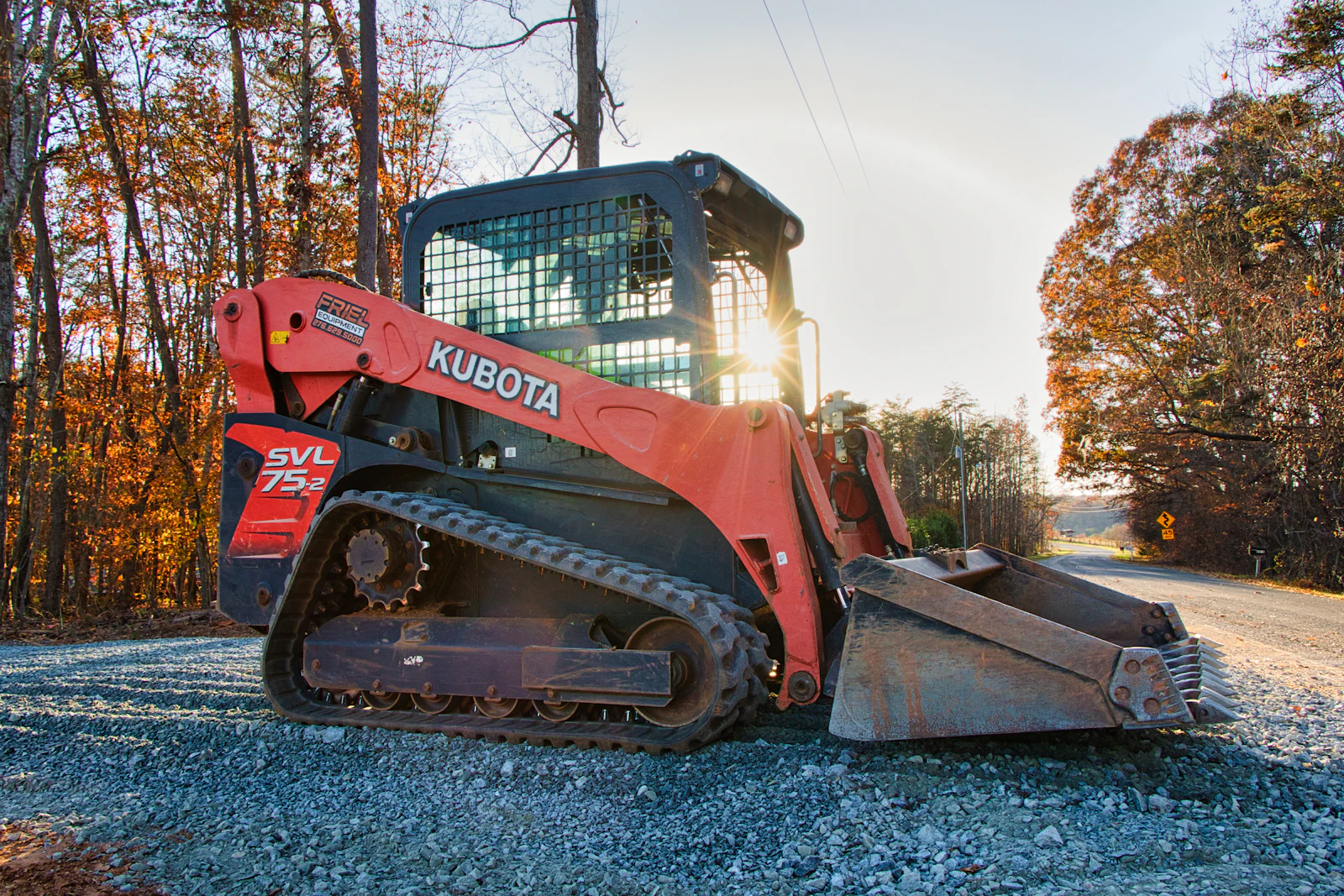
- Compact track loaders (CTLs) sometimes booked as “tracked skid steers”: higher hire cost, but better flotation and push in sand/loose fill and around moisture-conditioned subgrade. Published CTL averages for El Paso have been quoted around $515/day and $1,578/week, and rate cards for tracked units commonly show $450–$500/day and $1,450–$1,700/week.
These published examples should be treated as budget anchors, not guaranteed pricing. Vendor fleets, minimums, and availability can swing quoted rates significantly week to week—especially when contractors pivot between wheeled and tracked units based on soil conditions and access constraints.
Source examples for published rates and structures: El Paso Tool Rental posted S70 rates and extension policy; regional rate cards for wheeled/tracked skid steers; published “4-week” rate structures; and published El Paso CTL averages.
Key Cost Drivers for Skid Steer Loader Equipment Hire in El Paso
El Paso is a market where the mobilization and operating environment can change equipment hire cost just as much as the base rate. For footing operations, the main drivers are:
- Delivery radius and access: Many sites run 15–25 miles from the rental yard. If the supplier prices delivery by zone or mileage, cost can swing quickly. Tight residential streets, controlled-access commercial projects, and federal installations near Fort Bliss can require stricter delivery windows and check-in time.
- Soil profile (caliche/hardpan): Expect higher tire wear risk, more aggressive cutting edges/teeth, and longer cycle times if you under-size the machine. Under-sizing looks cheaper on day rate but can be costlier per linear foot of footing once production drops.
- Heat and dust: Summer heat increases cooling-system sensitivity; dust increases cleanup and filter servicing risk. Dust-control requirements for indoor or near-finished shell work can drive cleaning fees at return.
- Attachments and hydraulic flow: A standard bucket often suffices for backfill, but footing scopes frequently add forks, a 4-in-1 bucket, or a trencher/auger for related utility penetrations. Attachments can add $59/day for forks, $145/day for a 4-in-1 bucket, or $195/day for a trencher on some published cards.
Operationally, the most predictable way to avoid overruns is to decide early whether you are buying production (CTL, high-flow, cab) or minimum viable handling (wheeled, standard flow). Then negotiate delivery, waiver, and weekend billing up front.
Billing Rules That Change the “Real” Daily Hire Cost
Skid steer loader hire is rarely priced as a pure calendar day. Many suppliers define a day/week/month by metered hours and apply overtime when you exceed them. Published rental rate sheets commonly reference an 8-hour day, a 44-hour week, and a 176-hour month. If your footing schedule runs extended shifts (or you simply keep the machine running while trades share it), overtime can erase the savings between day vs. week pricing.
- Day basis: Plan around an 8-hour allowance; exceeding it may trigger overtime billing (confirm the hourly overage and when it starts).
- Week basis: A “week” may be 5–7 calendar days, but the hour cap matters more than the calendar.
- Monthly basis: Many national suppliers show monthly as 28 days (not a full calendar month). That is important when you schedule footing work across a month-end or when you’re trying to bridge into slab prep.
Also confirm off-rent rules: some vendors stop billing only after the equipment is picked up and checked in, not when you call off-rent. If your site is far east/west of central El Paso, coordinate pickup cutoffs so you don’t pay an extra day simply due to dispatch timing.
Published examples of hour-basis and 28-day monthly structures are common in rental documents and marketplaces.
Hidden-Fee Breakdown
For professional rental coordinators, the fastest way to tighten a footing budget is to treat “hidden fees” as known line items. Use these 2026 planning allowances for El Paso-area skid steer loader equipment hire (confirm on each quote):
- Delivery and pickup: $125–$250 each way within a typical metro zone; $3.00–$6.00 per loaded mile when priced by mileage; $150–$300 after-hours or Saturday dispatch premium when you request nonstandard windows.
- Minimum rental charge: 4-hour minimums are common on small machines; a published local example shows a 4-hour rate (e.g., $188.68 for an S70 class unit).
- Damage waiver (optional): Often 10%–15% of the rental charge; confirm whether it applies to attachments, tires/tracks, and glass.
- Insurance/admin documents: COI processing and compliance can add internal cost (and schedule risk) even if the vendor does not charge a fee; some rental sheets require substantial liability coverage and equipment coverage from the renter.
- Fuel and refuel: Expect “return full” language. If returned short, plan $6.00–$9.00 per gallon plus a $25–$75 service fee (varies by supplier and policy).
- Cleaning at return: Plan $75 per hour for excessive cleaning in worst cases, with practical triggers like hardened mud, concrete slurry, or interior cab dust on “finished” jobs.
- Holdover/late extension: Published local policy examples include a $35/day holdover fee when you do not extend in advance, and late fees that can accrue at current rental rates if you miss the return time.
Published examples: local listed 4-hour/day/week rates and a $35/day holdover policy; published cleaning fee language; and published insurance responsibility notes.
Attachments and Add-Ons That Commonly Hit Footing Budgets
For digging footings, the attachment question is usually less about “can we dig?” and more about “can we keep the excavation moving without rehandling material?” Attachments also drive whether you need standard-flow versus high-flow hydraulics (which can increase hire cost).
Use these 2026 planning adders (published examples vary by fleet and pairing rules):
- Pallet forks: $59/day, $155/week, $397 per 4 weeks (useful for moving forms, rebar bundles, bagged cement, or trench boxes where allowed).
- 4-in-1 bucket: $145/day, $440/week, $900 per 28 days (helps with grading and cleanup and reduces handwork around footing edges).
- Trencher attachment: $195/day, $550/week, $1,485 per 4 weeks (often booked when footings are bundled with shallow utilities).
- Auger (post-hole): Published examples commonly show $250/day, $500/week, $1,000/month for a post-hole auger class attachment; confirm bit pricing and wear charges.
- Hydraulic breaker: Published examples include $300/day, $800/week, $2,000/month for a 500 lb class hammer, but confirm whether your skid steer has the required hydraulic flow and couplers.
For El Paso footing scopes specifically, confirm whether the supplier includes a tooth bucket as standard or charges an upgrade. In caliche, teeth and cutting edges are not optional for production; they are cost control.
Published examples of attachment day/week/4-week rates.
Example: El Paso Footings Support Package With Real Dispatch Constraints
Scenario: Small commercial addition in East El Paso. Footings are cut by a mini excavator, but you need a skid steer loader for spoil relocation, bedding stone handling, and backfill. Site has a strict delivery window (07:00–09:00 only) due to school traffic control, and off-rent must be called before 15:00 for next-day pickup.
- Machine: Mid-size wheeled skid steer budgeted at $395/day for 3 days = $1,185 (rate anchor from published regional cards; your local quote may differ).
- Attachment: Add a 4-in-1 bucket at $145/day for 3 days = $435 (if your standard bucket is not aggressive enough for trimming and cleanup).
- Delivery/pickup: Assume $200 delivery + $200 pickup = $400 (adjust for distance and access limits).
- Damage waiver: Budget 12% of rental charges (machine + attachment) = roughly $194.
- Fuel: If you burn ~8 gallons/day and diesel is $6.50/gal, budget $156 (plus refuel service if you return short).
- Cleaning/return-condition allowance: Budget $150 if the unit comes back dusty/muddy (especially after watering for dust control).
Working budget total (planning): about $2,520 before tax and any overtime, standby, tire damage, or unplanned extra day from missed pickup cutoffs. On short footing jobs, that “extra day” risk is often larger than the difference between two vendors’ advertised day rates.
Budget Worksheet (Skid Steer Loader Equipment Hire Costs Only)
- Base skid steer loader hire: $___/day x ___ days (or $___/week x ___ weeks)
- 28-day conversion check: if over 10–12 working days, request the 28-day rate and compare
- Delivery: $___ (zone) or $___/mile x ___ miles
- Pickup: $___ (zone) or $___/mile x ___ miles
- Damage waiver: ___% of rental subtotal (typical allowance 10%–15%)
- Attachment adders (choose what you actually need for footings): forks $___/day; 4-in-1 bucket $___/day; trencher $___/day; auger $___/day
- Fuel/def: ___ gal/day x ___ days x $___/gal (plus refuel service allowance $25–$75)
- Cleaning allowance: $75/hr x ___ hrs (budget 1–3 hrs if dusty or muddy)
- After-hours/limited-window dispatch allowance: $150–$300 if required by GC/site rules
- Contingency for one unplanned billing day due to pickup cutoff: 1 x day rate
Rental Order Checklist (For Rental Coordinators and Estimators)
- PO and cost code issued (confirm whether attachments require separate line items)
- Requested machine spec: wheeled vs tracked; ROC class; standard-flow vs high-flow; cab vs open station
- Delivery address, site contact, and gate/lock combo; confirm delivery window and cutoff times
- COI requirements confirmed (liability and equipment coverage if required); waiver decision documented
- Pre-rental condition photos requested/recorded (tires, cutting edge/teeth, quick coupler, hour meter)
- Fuel policy confirmed (return full vs vendor refuel); DEF requirements if applicable
- Off-rent procedure confirmed (who calls, by what time, and whether billing stops at call or pickup)
- Return-condition documentation: cleaning expectations, mud removal, cab vacuuming, and debris disposal
- Extension protocol: who can authorize; avoid holdover fees by extending before due time
Note: Local published pricing and policies cited above are examples to support budgeting; always validate final equipment hire costs and terms on the written rental contract for your El Paso project.
How to Keep Skid Steer Loader Hire Costs Predictable on Footing Schedules
Footing work is a classic “schedule compression” phase: concrete dates drive everything, and the skid steer loader is often shared across excavation, formwork staging, and cleanup. That sharing creates cost volatility unless you manage billing rules deliberately. The following practices are aimed at rental coordinators managing skid steer loader equipment hire costs in El Paso.
Match the Hire Term to Real Utilization (Not Calendar Time)
If the skid steer is only needed intermittently (for example, 90 minutes in the morning for spoil relocation and 60 minutes late afternoon for bedding stone), a 4-hour minimum or day rate may still be cheaper than a week—but only if you can avoid paying for idle days due to pickup constraints. Where published rate structures use hour caps (8-hour day, 44-hour week, 176-hour month), track your hour meter and compare it to the cap mid-rental so you can shift terms before the vendor bills overtime.
If your footing plan includes any of the following, you should ask for a weekly or 28-day quote early:
- Multiple footing segments across 2+ mobilizations (you will pay delivery/pickup twice if you off-rent between phases)
- Coordination with rebar deliveries and formwork staging (forks and a skid steer become “material handling” all day)
- Weather/dust-control downtime that still leaves the machine on site (you may pay calendar time even when production pauses)
Published examples reference metered hour structures and 28-day “monthly” pricing display conventions.
El Paso-Specific Cost Traps to Call Out in the Estimate
- Dust-control cleanup: If you’re working near active tenant spaces or inside a shell, your GC may require water misting and frequent sweeping. That can turn into a return-condition issue. Budget 2 hours of cleaning at $75/hour (= $150) as a realistic allowance, and require return photos.
- Heat-driven downtime: In peak heat, a clogged cooler pack can reduce productivity and increase your on-rent days. Operationally, that cost is often larger than the difference between a $395/day and $450/day unit.
- Hard material exposure: Caliche and demolition debris can create “damage” events that are not covered by a waiver (depending on policy). Budget a realistic contingency or specify tracked units where traction and control reduce wheel spin and tire wear.
Negotiation Levers That Actually Move Total Hire Cost
Instead of negotiating only the base day rate, ask for concessions that reduce the common adders:
- Delivery/pickup caps: Request a “not-to-exceed” mobilization charge (for example, cap each leg at $200 within city limits) or a fixed zone charge.
- Weekend billing rules: Confirm whether Saturday/Sunday are billed as full days when the yard is closed. If you must hold the machine over a weekend, negotiate a weekend hold rate (for example, 1 day + a reduced hold charge) rather than paying two extra day rates.
- Attachment bundling: If you need forks and a 4-in-1 bucket for the full term, request an attachment package rate rather than paying two separate day rates.
- Damage waiver scope: Ask exactly what the waiver covers (attachments, tires, glass, vandalism). If it is limited, consider providing your own coverage and declining the waiver to avoid paying 10%–15% for minimal benefit.
Operational Controls That Reduce Billable Days
These are practical controls that prevent accidental extra days—common on footing jobs when the machine becomes “everybody’s helper.”
- Delivery and pickup cutoffs: Set a site rule that off-rent is called by 14:00 the day before you want pickup (adjust to vendor dispatch). Missing the cutoff is a frequent cause of an unplanned extra day of hire.
- End-of-shift return prep: Require a 15–20 minute end-of-shift cleanup (remove mud from steps and undercarriage, blow out radiator screens if permitted) to reduce cleaning charges and overheating risk.
- Fuel policy compliance: If you’re “return full,” put fueling responsibility on a named foreman and require a photo of the gauge at demob.
- Document condition at both ends: Photos of tires/tracks, bucket cutting edge/teeth, and hour meter reduce dispute risk and speed closeout.
Planning Ranges Summary (Use in 2026 Estimates)
Use these as non-binding 2026 planning ranges for skid steer loader equipment hire costs in El Paso when supporting digging footings. Final pricing should be confirmed on written quotes and the rental agreement:
- Small skid steer (S70 class): about $260/day and $1,040/week shown in a local published listing; 4-hour minimums may apply.
- Mid-size wheeled skid steer: commonly $375–$475/day, $1,200–$1,450/week, and $2,500–$3,250 per 28 days depending on capacity and options.
- Tracked skid steer / CTL: commonly $450–$515/day and $1,450–$1,700/week, with 28-day rates often around $3,000–$3,950 depending on class.
- Common attachment adders (examples): forks $59/day; 4-in-1 bucket $145/day; trencher $195/day; post-hole auger class $250/day; 500 lb breaker class $300/day.
- Common policy-driven adders (allowances): damage waiver 10%–15%; cleaning $75/hour; holdover fee example $35/day if not extended in advance.
Published examples referenced: local listed S70 rates and holdover policy; published attachment and 4-week rate structures; published cleaning fee language; and published El Paso CTL averages.
Closeout Guidance to Prevent Post-Rental Cost Surprises
- Confirm the vendor’s “off-rent” timestamp rule (call time vs pickup/return time) in writing.
- Request a return inspection note the day of pickup/return (photos if possible).
- Reconcile attachments: verify each attachment’s return condition and that it is removed from billing on the same date as the carrier pickup.
- Ask for a final invoice that itemizes: base hire, waiver, delivery/pickup, fuel/refuel, cleaning, and any damage charges.