Build your next estimate with CountBricks
Create an itemized estimate for your project, with materials, labor, and quantities you can review and edit.
Create my estimateStart a 7-day free trial. Sign up, then enter your project details.
For 2026 planning in El Paso, skid steer loader equipment hire typically pencils out in three bands: small wheeled units at roughly $145–$200/day, mid-size wheeled units around $175–$275/day, and compact track loaders (CTLs) commonly $240–$350/day, with weekly and monthly (28-day) rates discounting materially versus day hire. Published El Paso listings show examples like $145/day (small wheeled) up to $350/day (larger tracked), with $435–$1,050/week and $1,305–$3,150/month depending on size and undercarriage. Your “all-in” hire cost is usually driven more by delivery, attachment adders, damage waiver/insurance, cleaning, and off-rent rules than the base day rate alone—especially on short-duration civil, utility, and commercial site packages.
| Vendor |
Daily Rate |
Weekly Rate |
Review Score |
Website |
| United Rentals |
$395 |
$1 480 |
8 |
Visit |
| Sunbelt Rentals |
$410 |
$1 520 |
9 |
Visit |
| Herc Rentals |
$385 |
$1 450 |
8 |
Visit |
| The Home Depot Tool & Truck Rental |
$365 |
$1 290 |
8 |
Visit |
| The Cat Rental Store |
$425 |
$1 650 |
9 |
Visit |
skid steer loader rental
Base rental rate ranges (El Paso, 2026): Use these as estimator-friendly ranges for quoting and job-cost forecasting. They are anchored to current published El Paso listings and should be validated against your account pricing and availability at time of order.
- Small wheeled skid steer (e.g., compact footprint / lower ROC): plan $145–$200/day, $435–$600/week, $1,305–$1,800/28-days. Published El Paso examples include $145/day, $435/week, $1,305/month and $175/day, $525/week, $1,575/month.
- Mid-size wheeled skid steer (general dirt work / pallets / site cleanup): plan $200–$275/day, $600–$825/week, $1,800–$2,475/28-days. A published El Paso example shows $200/day, $600/week, $1,800/month.
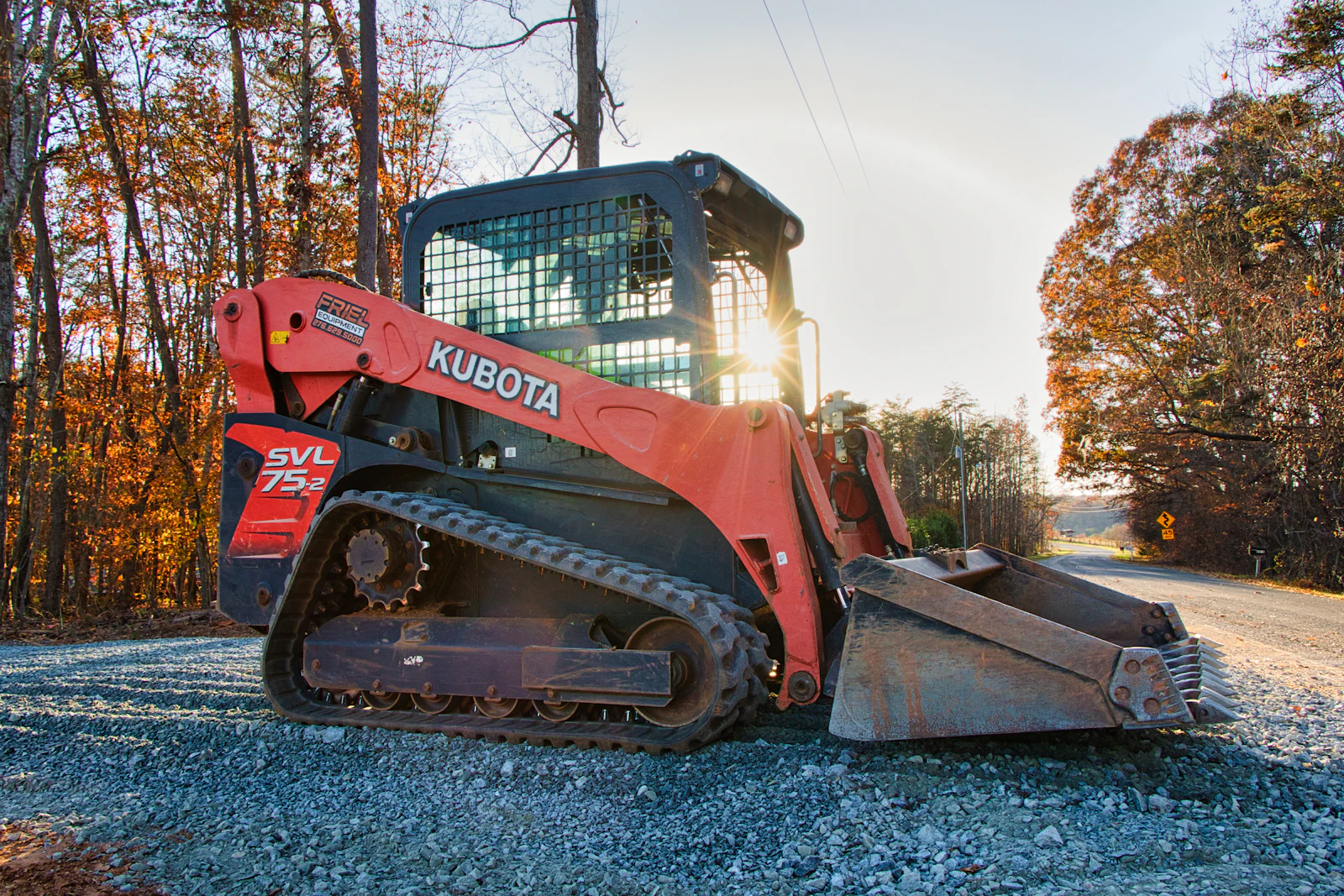
- Compact track loader (CTL) / track skid steer (better flotation and traction in loose material): plan $240–$350/day, $720–$1,050/week, $2,160–$3,150/28-days. Published El Paso examples include $240/day, $720/week, $2,160/month, $275/day, $825/week, $2,475/month, and $350/day, $1,050/week, $3,150/month.
Mini / stand-on track loader (“mini skid steer”) pricing: If you’re forecasting interior work, backyards with access constraints, or small demo/cleanup where a full-size skid steer is overkill, published El Paso rates for a mini unit show $127 per 4 hours, $175/day, $700/week, and $1,225/month (tax and optional charges excluded).
Rate term definitions that affect totals: Many national accounts price “monthly” as a 28-day term (not a calendar month), and publish day/week/28-day pricing as separate rate buckets. Confirm whether your quote is “calendar monthly” versus “28-day,” and confirm whether “weekly” is 5 billed days or 7 billed days for your account structure.
What Actually Drives Skid Steer Hire Cost in El Paso?
For rental coordinators and estimators, the practical cost drivers in El Paso are usually (1) machine class and configuration, (2) jobsite access and delivery complexity, (3) attachments, and (4) return condition/documentation discipline. The base skid steer loader rental rate is only the start.
1) Size class and features: Higher rated operating capacity (ROC), vertical-lift geometry, and higher horsepower tend to move you from the $145–$200/day band into the $240–$350/day band. Enclosed cab with HVAC and visibility options often price above open ROPS units; in El Paso’s heat, enclosed cab/AC is frequently not optional operationally, which can force you into the higher pricing tier even when the lift plan is modest.
2) Wheels vs tracks (and undercarriage exposure): CTLs can reduce productivity risk in sandy soils, decomposed granite, and loose base, but tracks create higher exposure to cleaning, undercarriage wear, and transport constraints. If you are budgeting for asphalt paving support, curb and gutter backfill, or landscape/irrigation trench backfill on loose material, the CTL premium is often cheaper than losing hours to spinning, rutting, or rework—yet the hire total goes up because delivery, damage waiver, and environmental fees scale with the base rental amount.
3) El Paso-specific operating conditions that change cost: (a) Dust (desert fines) increases the likelihood of “returned dirty” charges unless you plan end-of-shift blow-off and containment; (b) heat raises the risk of downtime if you don’t control refuel timing and cooling system cleanliness; and (c) metro sprawl (far East / Horizon area runs) increases delivery mileage and makes “will-call pickup” unrealistic for many sites, pushing you into round-trip transport charges.
Delivery, Pickup, and Mobilization: The Line Item That Breaks Short-Term Hire Budgets
In El Paso, delivery/pickup can swing your effective daily cost more than the difference between two machine sizes. Plan delivery as its own scope line, with explicit assumptions.
- Typical in-town delivery allowance: budget $125–$250 each way for a skid steer/CTL within a standard service radius (often 10–25 miles), then $3–$5 per mile beyond that. Treat these as planning numbers unless your vendor confirms a fixed-rate zone for your account. (Delivery norms vary by yard density and dispatch capacity.)
- Per-mile structure example you can model: some public contract schedules show $120 each way plus $3.95 per loaded mile for pickup/delivery. This is not “the El Paso rate,” but it is a useful estimator pattern when you need a defensible placeholder before vendor quotes come in.
- Site constraints that trigger extra delivery cost: limited receiving windows (e.g., 7:00–9:00 AM only), escort requirements, liftgate/tilt deck limitations, and “call-ahead only” gates can create re-delivery or wait-time exposure. Carry a $95–$150/hour standby allowance if you routinely receive after-hours or behind security checkpoints (confirm with your vendor’s dispatch policy).
Off-rent cutoffs matter: If you’re using the machine only for a partial last day, ask the yard what time you must call off-rent to stop billing (many accounts functionally require next-day off-rent notice). Without that confirmation, plan that any “late call” becomes another full day of rent.
Hidden-Fee Breakdown
Use this section to build an “all-in” equipment hire cost rather than a base-rate-only number. These are the most common adders that show up on skid steer loader rental invoices.
- Damage waiver / rental protection plan: If you do not provide proof of insurance that meets the rental contract requirements, you may purchase a protection plan. One major lessor’s Rental Protection Plan fee is stated as 15% of the rental charges, and it limits certain damage/theft responsibility to the lesser of 10% of replacement/repair cost or $500 (plus taxes), subject to exclusions.
- Tires/undercarriage exclusions: Terms can carve out tire/undercarriage items; for example, another major lessor’s RPP language references tire repair responsibility beyond a stated threshold (e.g., charges in excess of $50 per tire). Budget wear-and-tear exposure separately if you’re working in demolition debris or caliche with sharp rock.
- Cleaning fee (return condition): Local terms can include explicit cleaning charges; one El Paso rental provider states a $50 cleaning fee may be charged if equipment is returned unclean. In abrasive dust conditions, assume cleaning is not optional—plan wash-down and photo documentation at off-rent.
- Same-day late fee and hold-over billing: Example local terms include a $75 same-day late fee if returned after the scheduled time (before close of business), and overnight hold-over rolling into additional 24-hour increments at the then-current daily rate.
- Hold-over administrative fee example (mini loader): A published El Paso mini skid steer page notes a potential $35/day fee for “hold overs” not extended in advance. This is exactly the kind of small adder that can turn a 2-day plan into a 3-day invoice.
- On-site service call: If you request a mechanic to the jobsite for diagnostics/maintenance, an example local term includes a $45 service call fee. Carry it as a contingency on remote sites where swapping machines is slower than field service.
- Declined payment fees / admin: Example local terms include a $25 fee per declined transaction. On multi-branch, multi-PO programs, this can occur when cards on file expire or PO caps are hit mid-rental.
- Lost-rental revenue due to damage: One set of local terms describes “lost rental revenue” accruing at 25% of the daily rental rate while the unit is down for repair. For bid risk management, that is a strong reason to document condition in/out and control operator authorization.
- Fuel / refuel expectations: Even when fuel is not priced explicitly on the face of the quote, vendors commonly require “return full” and may offer a fuel purchase/prepay option; confirm whether the yard charges “posted” per-gallon rates if returned short.
- Excess meter hours: Many accounts include hourly caps (often modeled as 8 hours/day, 40 hours/week, 160 hours/28-days), with excess hour charges commonly in the $15–$35/hour range depending on class. If you are using the skid steer as a production machine for loading trucks all day, budget excess-hour exposure up front rather than treating it as a surprise.
Attachments and Accessories That Change Skid Steer Hire Totals
Attachment pricing is where two quotes with the same base skid steer rental rate diverge quickly. Budget attachment adders as separate scope lines and confirm coupler type, auxiliary hydraulic requirements, and whether you need high-flow.
- Standard bucket: often included; confirm tooth bar vs smooth edge. If tooth bar is billed separately, carry $25–$50/day.
- Pallet forks: carry $60–$110/day or $180–$330/week, depending on class and fork rating.
- Grapple bucket / root grapple: carry $120–$200/day and consider increased damage-waiver base because the accessory value is higher.
- Auger drive: carry $95–$175/day plus bits typically $25–$60/day per diameter set.
- Trencher attachment: carry $160–$275/day, and confirm chain wear policy (rocky caliche can burn chain fast).
- Hydraulic breaker: carry $180–$325/day plus tool steel wear terms.
- Sweeper / pickup broom: carry $140–$250/day and budget debris disposal and dust suppression (water source or vacuum strategy).
- Ground protection mats (when working indoors or over finished surfaces): carry $10–$25 per mat per week or a project allowance if the vendor supplies; otherwise, plan owner-furnished mats.
Example: El Paso 6-Day Utility Trench Backfill With Weekend Exposure
Scenario: You need a CTL for backfill and base placement on a utility package near the far East side of El Paso with restricted receiving: delivery allowed 7:00–8:30 AM only, and you must keep the unit through a weekend because the inspector window is Monday morning.
- Base machine: plan a published-rate-equivalent CTL in the $275/day class, but book a weekly term at roughly $825/week to avoid paying 6 individual day rates.
- Delivery/pickup: carry $200 each way (allowance) due to distance and restricted window coordination (confirm with dispatch).
- Damage waiver/RPP: carry 15% of rental charges if you cannot provide compliant insurance on time (or if the GC requires it for subs).
- Cleaning: carry $50 (minimum) because caliche fines and dust often require wash-down to avoid return-condition charges.
- Cost check: $825 weekly rent + $400 round-trip delivery allowance + $124 (15% of $825) RPP + $50 cleaning allowance = $1,399 before tax, fuel, and attachments.
Operational takeaway: In this example, delivery + RPP + cleaning is $574 on top of $825 rent—so “shopping” the base day rate alone would not materially change the total unless delivery and protection plan are also optimized.
Budget Worksheet
Use this bullet worksheet to build a procurement-ready skid steer loader equipment hire estimate for El Paso (2026). Adjust the allowances to your contract terms.
- Skid steer/CTL base rent: $________ /day, $________ /week, $________ /28-days
- Delivery to site (each way): $________ (assume $125–$250 each way; add mileage if outside service radius)
- Pickup from site (each way): $________
- Damage waiver / RPP: ________% of rental (carry 10%–15%; confirm)
- Environmental / recovery fees: $________ (carry 2%–6% of rent + accessories unless your MSA excludes)
- Attachments: forks $______/day; bucket options $______/day; auger $______/day; trencher $______/day
- Fuel (return full) allowance: $________ (or require operator to refuel end-of-shift)
- Cleaning allowance: $50–$350 depending on mud/concrete exposure (carry $________)
- Excess hour allowance: $________ (carry $15–$35/hr beyond included meter hours)
- Standby/wait time for delivery window misses: $________ (carry $95–$150/hr if gate/escort delays likely)
- Contingency: $________ (typically 5%–10% on short-term rentals with heavy attachment use)
Rental Order Checklist
- PO setup: correct job number, cost code, on-rent date/time, and off-rent contact (name + mobile)
- Site address: include gate instructions, delivery window, and onsite receiver name
- Equipment spec lock: wheeled vs CTL, ROC class, open ROPS vs enclosed cab/AC, standard-flow vs high-flow hydraulics
- Attachments: confirm coupler type, hose routing, and whether the attachment is billed as a separate line item
- Insurance/waiver: provide certificate of insurance (COI) or approve RPP/damage waiver on PO before dispatch
- Receiving: confirm you can unload safely; if the vendor unloads, confirm responsibility boundaries and photo requirements
- Condition documentation: take time-stamped photos on delivery (undercarriage, bucket cutting edge, tires/tracks, cab, hour meter)
- Operations plan: refuel/cleaning responsibility assigned (operator vs laborer) and end-of-shift checklist issued
- Off-rent rules: confirm cutoff time, weekend/holiday billing, and whether you must schedule pickup 24 hours in advance
- Return condition: wash-down plan, debris removal, and a final photo set at pickup to dispute cleaning/damage charges
How to Control Skid Steer Equipment Hire Costs on Real El Paso Sites
The cheapest skid steer loader rental rate rarely produces the lowest equipment hire cost. Cost control comes from aligning the rental term, logistics, and return discipline with the way El Paso projects actually run (heat, dust, long-haul deliveries across town, and schedule volatility).
Choose the Correct Rental Term (Day vs Week vs 28-Day) for the Workface
Rule of thumb for estimators: if you expect to use the machine more than 3 billed days in a week, price-check the weekly term; if you expect more than 18–20 billed days, price-check the 28-day term. National rental platforms commonly publish distinct daily, weekly, and monthly (28 days) rates, and your account pricing typically follows that same structure even when you order through a branch rep.
Weekend and holiday exposure: El Paso projects with Friday afternoon utility conflicts often “accidentally” keep a skid steer through the weekend. If your off-rent rules require next-business-day processing, you can pay 2 extra days (Sat/Sun) even if the machine never moves. When that risk exists, booking a weekly rate up front is often the lowest-risk strategy.
Control Delivery Costs With Receiving Discipline
Delivery is where otherwise well-priced skid steer hire packages go sideways. Put operational constraints in writing on the PO and require the vendor to confirm dispatch details.
- Standardize delivery windows: If you can choose, set receiving to a consistent block like 9:00–11:00 AM instead of “anytime,” which often results in failed first attempts at secured sites.
- Budget re-delivery risk: carry $75–$150 as an internal allowance for a reschedule on sites that need escorts, badges, or have single-point gate entry.
- Model mileage when you must: a common pricing structure in public schedules is $120 each way plus $3.95 per loaded mile—useful when you have to estimate delivery before the vendor quotes.
Insurance, Damage Waiver, and the True Cost of Risk Transfer
If your company already carries inland marine/property coverage that satisfies the rental contract, providing proof can eliminate the damage waiver line item. If you cannot provide compliant coverage quickly (common on short-notice work), the damage waiver/RPP can be material.
- Cost planning: carry 10%–15% of rental charges for damage waiver/RPP when you don’t have confirmed COI compliance at bid time.
- Example published fee structure: one major rental provider states an RPP fee equal to 15% of rental charges (plus taxes) and describes a damage/theft responsibility cap commonly tied to $500 or 10% thresholds, subject to exclusions.
- Don’t assume tires/tracks are covered: another major provider’s RPP terms reference tire cost responsibility beyond a $50 per tire threshold, which is a reminder to budget separate exposure for track damage, punctures, and undercarriage impacts in demo debris.
Return-Condition Documentation (The Cheapest Cost Control Available)
Most disputed charges on skid steer loader equipment hire are not about base rent; they’re about cleaning, damage, and “missing time.” Build a closeout routine that mirrors what rental yards can actually verify.
- Cleaning: if your work includes wet clay, concrete slurry, or caliche fines, plan a 30–45 minute end-of-rental wash-down with a water source and berm/containment per site rules. A local El Paso provider states a $50 cleaning fee may apply if equipment is returned dirty—so even a quick wash can be a positive ROI.
- Late return controls: treat return time as a scheduled milestone. Example local terms include a $75 same-day late fee after the scheduled return time and continued 24-hour billing for hold-overs.
- Photo set: capture undercarriage, tires/tracks, bucket cutting edge, cab/controls, and hour meter at both delivery and pickup. Store photos in the job folder with the PO and invoice so accounting can dispute quickly.
City-Specific Considerations for El Paso Skid Steer Hire
- Dust-control expectations: For interior TI work or warehouse yards, GC safety teams may require dust suppression (water, sweeper attachment, or vacuum strategy). If you add a pickup broom, carry $140–$250/day plus disposal and downtime for filter cleanout.
- Heat planning: On summer work, plan for reduced productivity during peak heat and consider enclosed cab/AC when operator turnover or heat stress controls are part of the site plan. This can shift you from a $200/day open unit to a $240–$350/day class unit, but it may protect schedule.
- Sprawl and cross-town travel time: El Paso is large enough that “local delivery” may still mean a long dispatch. Build delivery as a scoped cost line, not a buried assumption, and confirm if delivery is priced as a zone or by mileage.
Procurement Notes: What to Put in the PO to Prevent Cost Creep
- Billing caps: request “not-to-exceed” language for delivery/wait time (e.g., delivery wait time not to exceed 1 hour without written approval).
- Operator authorization: specify who can run the skid steer. If unauthorized operators damage the machine, you lose leverage in disputes.
- Service call protocol: if the machine derates or throws a code, require your superintendent to call the vendor first; requesting field service can trigger a $45 service call fee per local terms, which is worth budgeting but also worth controlling.
- Payment hygiene: ensure card/credit terms won’t fail mid-rental; example terms include a $25 declined transaction fee, which is small but avoidable with clean account setup.
Quick 2026 Planning Summary (El Paso)
If you need a single estimator snapshot for skid steer loader equipment hire costs in El Paso for 2026, plan:
- Wheeled skid steer: $145–$275/day, $435–$825/week, $1,305–$2,475/28-days depending on size and cab.
- CTL / track skid steer: $240–$350/day, $720–$1,050/week, $2,160–$3,150/28-days, with higher exposure to cleaning/undercarriage costs.
- Delivery (allowance): $125–$250 each way in-town; add $3–$5/mile beyond standard radius.
- Damage waiver/RPP (if needed): carry 10%–15% of rental charges; one major provider states 15%.
- Return-condition risk: carry at least $50 for cleaning and $75 for potential late fees on short, schedule-volatile rentals.