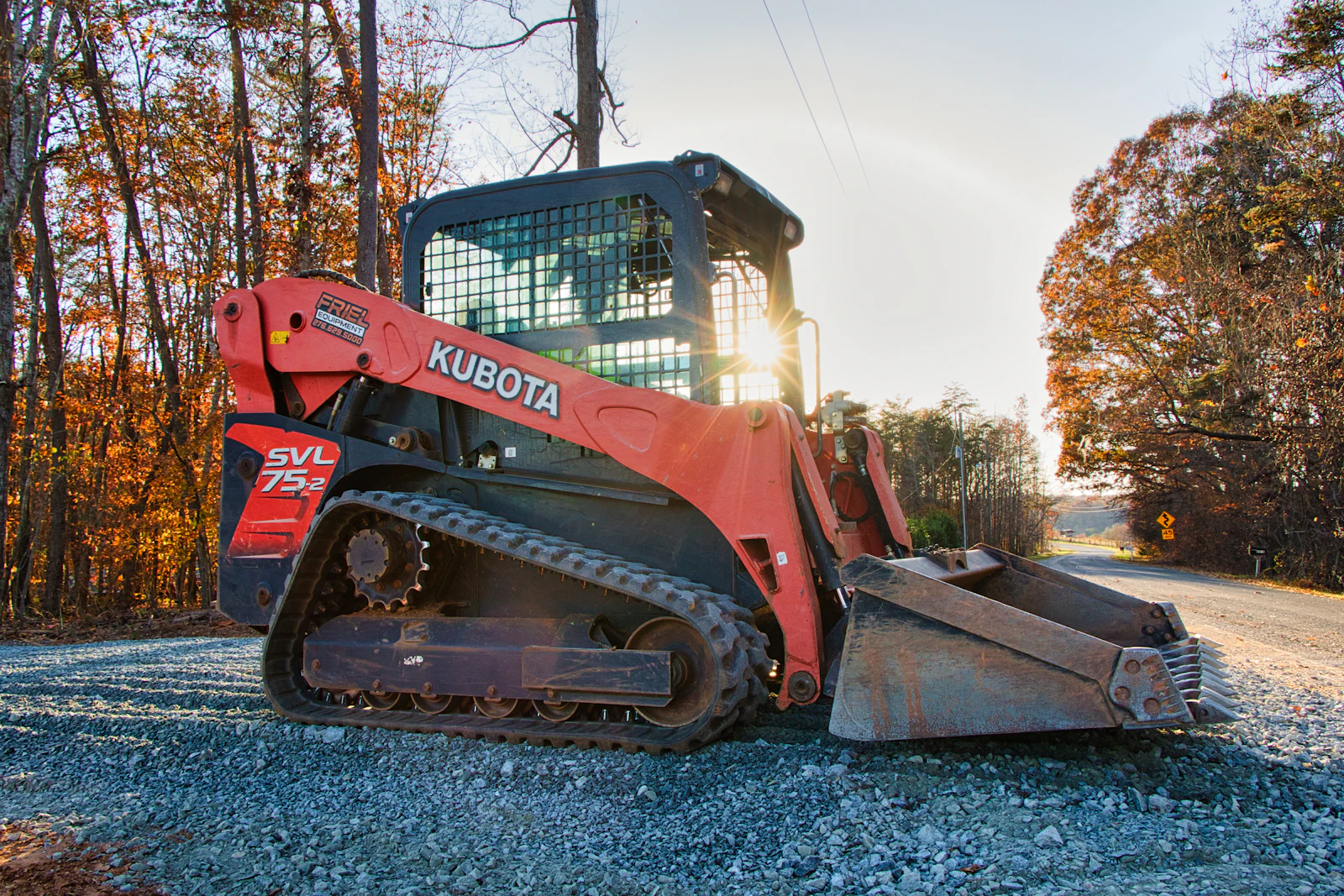
For Fort Worth, Texas, 2026 planning ranges for skid steer loader equipment hire typically land at $225–$475/day, $850–$1,650/week, and $2,250–$4,250/28-days for a general-purpose wheeled skid steer (bucket included) depending on rated operating capacity, cab configuration, hydraulics (standard vs high-flow), and metered usage. Dallas–Fort Worth advertised ranges commonly cluster around $200–$450/day, $640–$1,600/week, and $1,700–$4,300/month, while broader North American advertised averages have recently been reported around $420/day, $1,206/week, and $3,004/month for skid steer loaders (average across markets and listings). In Fort Worth specifically, you can also find posted local examples (e.g., a compact track skid steer listed at $285/day, $950/week, $2,475/month). National providers commonly used in the Fort Worth metro (in addition to independents) include United Rentals, Sunbelt Rentals, and Herc Rentals; final pricing is quote-driven once you lock delivery address, dates, attachments, and shift usage assumptions.
| Vendor |
Daily Rate |
Weekly Rate |
Review Score |
Website |
| Hoyer’s Equipment Rentals |
$285 |
$950 |
10 |
Visit |
| United Rentals |
$350 |
$1 150 |
8 |
Visit |
| Sunbelt Rentals |
$360 |
$1 200 |
9 |
Visit |
| Herc Rentals |
$325 |
$1 050 |
8 |
Visit |
| Texas First Rentals |
$375 |
$1 250 |
9 |
Visit |
Skid Steer Loader Rental
When rental coordinators say “skid steer loader rental” in Fort Worth, it can mean anything from a small wheeled unit for tight-access backfill to a high-flow cab machine set up for a broom or planer. To estimate hire cost correctly, start by classing the machine and separating base rent from jobsite-cost adders (delivery, waivers, fuel, cleaning, meter/overtime, attachments, and any project controls like indoor dust mitigation).
Fort Worth 2026 Planning Ranges And What They Assume
Use the ranges below as budgetary allowances for 2026 (not a guarantee of any specific vendor’s counter rate). Assumptions: (1) a “month” is typically billed as 28 days / 4 weeks in the rental industry; (2) rates usually include one shift of use; and (3) billing is commonly metered (hour limits) even if the calendar is daily. United Rentals notes that their marketplace displays daily, weekly, and monthly (28 days) rates when you browse equipment categories.
- Wheeled skid steer (general-purpose, ~1,500–2,200 lb ROC): plan $225–$475/day, $850–$1,650/week, $2,250–$4,250/28-days (bucket typically included; forks often extra).
- Compact track loader (CTL) substitution (common request in wet clay): add roughly +$35–$125/day or +10%–25% over a comparable wheeled unit; also plan more for cleaning and undercarriage inspections.
- Enclosed cab with A/C (summer production in Fort Worth): add about +$40–$110/day vs open canopy, especially when you need operator retention, dust control, or weather protection.
- High-flow hydraulics (broom/planer/mulcher ready): add about +$50–$150/day to the base machine class, plus higher attachment rates.
Shift-hour reality check: large lessors commonly define one-shift as 8 hours/day, 40 hours/week, 160 hours per 4 weeks. Herc Rentals publishes this one-shift framing and notes that usage beyond one shift can be billed as an hourly fraction of the base rate (e.g., 1/8 of the daily charge per extra hour, 1/40 of the weekly charge, 1/160 of the 4-week charge). This is one of the biggest reasons the “$X/day” number can understate the real all-in cost on a long day or double-shift civil package.
What Drives Skid Steer Equipment Hire Cost In Fort Worth?
Fort Worth cost drivers are less about the machine nameplate and more about jobsite friction: access constraints, surface protection, soil conditions, and delivery timing. Three local considerations that frequently show up on invoices in the Fort Worth metro:
- Delivery scheduling vs DFW congestion: many branches operate with cutoffs (often mid-afternoon) for next-day delivery. Missing a delivery window can trigger an extra trip fee ($125–$250) or standby/redelivery ($95–$185) depending on how the provider books their truck time.
- Clay soil and rain events: North Texas clay can cake tracks, wheels, and quick-attach faces. If you’re using CTLs to avoid rutting, budget a cleaning allowance ($150–$350) and be strict on end-of-rent pressure washing to avoid shop labor back-charges.
- Heat and dust controls: summertime work (often 95–105F days) pushes demand toward enclosed cab A/C units and pre-cleaner setups. Indoors (warehouse TI, retail pad rework), expect additional requirements: poly sheeting/dust walls ($75–$250 allowance), HEPA vac support, and stricter return-condition documentation.
Other cost levers that change your Fort Worth skid steer loader hire cost quickly: (a) ROC class and lift path (radial vs vertical); (b) tires vs tracks; (c) solid/non-marking tires; (d) high-flow vs standard flow; (e) whether the vendor bills by calendar day or 24-hour periods; and (f) how your team handles off-rent (pickup) timing.
Attachment Adders That Move The Needle
Most rental coordinators win or lose skid steer budgets on the attachment stack-up. Even when the base unit is competitively priced, a broom, trencher, or auger package can double the daily cost. Published rate cards from independent rental operations show typical attachment pricing behavior (daily/weekly/monthly steps and separate auger bits). For example, one published 2024 rate sheet lists a skid steer auger attachment at $114/day and individual auger bits at $36–$40.80/day depending on diameter; a brush grapple at $120/day; a power broom at $120/day; and a skid steer trencher at $144/day. A separate published 2025 guide shows higher attachment levels in some markets (e.g., pallet forks at $110/day, auger drive at $160–$185/day, pickup hopper broom at $215/day plus wear).
For Fort Worth budgeting, use these 2026 attachment planning adders (per attachment, unless noted):
- Pallet forks: $35–$110/day, $125–$330/week.
- Grapple bucket / brush grapple: $90–$175/day; local mini-skid grapple buckets can show posted examples around $100/day.
- Auger drive (power unit): $95–$200/day plus bits; bits commonly add $25–$55/day each depending on diameter and tooth condition expectations.
- Trencher (skid steer mount): $140–$300/day depending on depth and chain spec; plan consumables and tooth wear as a separate allowance.
- Pickup broom / angle broom: $120–$250/day; some vendors bill brush wear separately (e.g., a per-inch wear charge) so photograph bristles at delivery/return.
- Soil conditioner / harley rake: $100–$250/day (often worth it for finish grading, but only if you control meter hours).
Hidden-Fee Breakdown
To keep Fort Worth skid steer loader equipment hire costs predictable, pre-load these common “non-rate” items into your estimate and PO notes. The specific names vary (environmental, energy, maintenance recovery), but the cost impact is consistent.
- Delivery / pickup: plan $125–$225 each way for in-town moves, or a $175 minimum plus mileage for outer Fort Worth / Alliance / south-of-I-20 runs; if mileage applies, a common planning factor is $4–$8 per loaded mile.
- Transportation surcharge: some national providers apply a surcharge to transport charges; Herc publishes a fixed component of 9% (minimum $9) plus a variable fuel-index component (example shown totals 16% in their illustration).
- Damage waiver / rental protection: budget 10%–15% of time charges when used (or as required by policy), with higher percentages sometimes applied to specialty attachments.
- Meter overages / overtime: if your contract follows the common “one shift included” approach, budget overage at roughly 12.5% of the daily rate per extra hour (i.e., 1/8) when billed that way.
- Preventive maintenance recovery (PM) charges: some agreements add a per-hour PM charge; Herc states a PM charge can be $1–$6 per operating hour and is adjusted to actual hours used.
- Refuel / recharge expectations: plan a refuel service line item if you can’t return full; on diesel equipment, many yards charge a posted, non-retail “service” rate, commonly planning at $6–$9/gal equivalent when convenience refueling is used.
- Cleaning: plan a $150–$350 minimum if you’re in wet subgrade or concrete slurry. Industry rate sheets show examples like $75/hour excessive cleaning, with thresholds such as more than 2 hours cleaning on daily rentals triggering charges.
- Admin/environmental fees: budget 2%–5% of rental charges, plus a possible $10–$25 contract/admin document fee.
- Weekend/holiday billing: policies vary by branch; plan at least 1 day minimum for weekend possession if pickup cannot occur until Monday, and add a contingency of $50–$150/day if your supplier bills closed days as hold time.
Delivery, Off-Rent Rules, And Return Timing (Where Fort Worth Jobs Leak Money)
Operational controls matter as much as negotiated rates:
- Delivery cutoffs: confirm a hard cutoff time for next-day delivery requests and whether Saturday delivery is offered; if Saturday delivery is available, it may carry an after-hours premium ($125–$200).
- Off-rent (stop-bill) procedure: require your superintendent to submit off-rent notices with date/time-stamped emails, and confirm whether billing stops at notification or at physical pickup. If pickup lags 2–3 days, the exposure can be $450–$1,400+ on a mid-size unit depending on the contracted daily/weekly structure.
- Return condition documentation: photograph all four sides, hour meter, quick-attach, bucket cutting edge, and tires/tracks at both delivery and return. For broom and trencher packages, photograph bristles/chain and note tooth counts to defend against wear disputes.
Example: Two-Week Skid Steer Loader Hire For A Fort Worth Site Package
Scenario: 10 working days (2 calendar weeks) for a retail pad rework near west Fort Worth. You need a wheeled skid steer (2,000 lb ROC class) with forks and a grapple for debris staging. The project has a narrow delivery window (7:00–9:00 AM) and requires tarping to keep dust off adjacent tenant parking.
- Base machine: plan $1,150/week x 2 = $2,300 (assumes one-shift use).
- Forks: plan $55/day x 10 = $550 (or a weekly equivalent if quoted).
- Grapple: plan $135/day x 10 = $1,350.
- Delivery/pickup: $195 each way = $390 (tight window increases likelihood of redelivery if the gate is locked).
- Dust control allowance: $150 (poly, sweeping, basic controls).
- Damage waiver (assume 12% of time): 0.12 x ($2,300 + $550 + $1,350) = $504.
- Cleaning contingency: $250 (mud + concrete washdown).
Planned all-in: about $5,294 before taxes/fees. If the crew runs 10-hour days and the contract bills the extra 2 hours/day at an overtime fraction, the overage can be material (for some contracts, roughly 25% of the daily rate per day in this example). The control point is aligning production planning with meter limits rather than letting overtime appear as an end-of-month surprise.
Budget Worksheet
Use this as a field-ready estimating artifact for Fort Worth skid steer loader equipment hire (edit quantities as needed):
- Skid steer loader (wheeled) base rent: $225–$475/day or $850–$1,650/week
- Compact track loader upgrade (if required): +$35–$125/day
- Enclosed cab A/C upgrade: +$40–$110/day
- Delivery (each way): $125–$225 (allow $175 min)
- Outer-area mileage (if charged): $4–$8 per loaded mile
- Forks: $35–$110/day
- Grapple: $90–$175/day
- Auger drive (if needed): $95–$200/day; bits $25–$55/day each
- Broom (if needed): $120–$250/day + wear allowance
- Damage waiver / rental protection: 10%–15% of time charges
- PM / maintenance recovery (if applicable): $1–$6 per operating hour
- Fuel/refuel service allowance: $75–$250 (or plan vendor refuel at $6–$9/gal equiv.)
- Cleaning allowance: $150–$350 (worst-case billed at shop labor rates; examples exist at $75/hour)
- Admin/environmental fees: 2%–5%
- Contingency for schedule slips / weekend hold: $50–$150/day
Contract Terms That Change The Effective Day Rate
For Fort Worth rental coordinators, the practical goal is to convert quoted rates into a controlled effective hourly cost. The same skid steer loader can price well on a day rate and still blow the budget if the contract language and field behavior aren’t aligned.
- One-shift definitions and meter caps: Many agreements define the included shift as 8 hours/day, 40 hours/week, 160 hours per 4-week period, with overtime billed as a fraction of the base rate (e.g., 1/8 of daily per extra hour). Build that into production plans when crews are working extended days or Saturdays.
- Stop-bill vs pickup delay: Confirm whether “off-rent” stops billing at the time of notice or the time of physical pickup. If your job is in south Fort Worth and the yard cannot retrieve until mid-week, you may carry multiple unproductive days. Put a must-pickup-by requirement in the PO notes when possible.
- Weekend and holiday possession: Some suppliers treat a Friday delivery with Monday pickup as a 1-day charge, others bill closed days as hold time. If you have to keep the unit over a closure, pre-negotiate a weekend cap (for example, “Friday PM to Monday AM counts as 1 day”) to avoid accidental +2 days on the ticket.
- Transportation surcharges: If your supplier applies a transport surcharge, budget it explicitly. Herc describes a fixed 9% component (minimum $9) and provides an example where the total surcharge shown is 16% based on fuel index assumptions. This can add $20–$80+ to a typical Fort Worth delivery/pickup line set.
- PM charges and other per-hour add-ons: If a PM charge is on the agreement, it can add real money on high-utilization weeks. Herc indicates PM charges can be $1–$6 per operating hour and are adjusted to actual hours. For a 2-week run at 80 hours, that’s $80–$480 incremental.
Risk, Damage Waiver, And Insurance Planning
Skid steer loader rentals are high-damage-frequency compared to some aerial categories because of ground contact, attachment swaps, and tire/track exposure. Cost items to pre-plan:
- Damage waiver / rental protection: budget 10%–15% of time charges when elected; confirm whether attachments are included or billed at a separate rate.
- Deposit / credit hold: independents may require $500–$2,000 depending on account status and attachment value. National accounts often waive deposits but tighten insurance certificate requirements.
- Tires/tracks: confirm whether punctures, sidewall cuts, or track tears are billable (often yes). Plan a $150–$400 contingency on debris-heavy demo sites and require a pre-use walkdown to document existing damage.
Return Condition And Documentation To Avoid Back-Charges
Return-condition disputes are one of the most preventable sources of cost growth. Put these expectations into your internal closeout process:
- Fuel: return full unless you intentionally accept refuel service; if you accept refuel service, pre-approve a not-to-exceed value (e.g., $150) to keep dispatch from “topping off” multiple times.
- Cleaning: for Fort Worth clay jobs, require end-of-rent washdown. Published rate sheets show examples like $75/hour excessive cleaning after a threshold (e.g., beyond 2 hours for daily rentals). Even if your vendor’s exact policy differs, the budgeting lesson holds: cleaning is a labor line, and it moves quickly.
- Attachment wear: broom bristle length and trencher teeth/chain condition should be photographed at delivery and return. If your supplier uses wear billing (common on brooms, planers, and trenchers), create a simple sign-off form for the operator.
- Hour meter capture: require the operator to text a photo of the hour meter at the end of each shift when running near caps. That avoids surprise overtime charges and supports disputes.
- Quick-attach and hydraulics: document leaks, damaged couplers, and bent latch pins at delivery so they don’t become back-charges.
Rental Order Checklist
Use this checklist to reduce Fort Worth skid steer loader equipment hire cost variance between quote and invoice:
- PO and contract setup: PO number, job name, job address (gate code), authorized requester list, COI requirements (GL limits and any additional insured wording), tax-exempt documentation if applicable.
- Rate structure confirmation: confirm day/week/4-week structure, whether month is 28 days, included hours per period, overtime billing method (e.g., hourly fractions), and any PM/per-hour recovery charges.
- Delivery instructions: requested delivery date/time window, site contact name/phone, unload surface requirements, forklift-on-site confirmation if needed, and redelivery/standby policy if access is blocked.
- Attachments and accessories: bucket type (standard vs 4-in-1), forks, grapple, auger drive and bit sizes, broom type; confirm coupler standard (SSQA) and hydraulic flow requirements (standard vs high-flow).
- Operations controls: fueling plan (return full vs refuel service), daily inspection responsibility, indoor dust-control requirements (filters, sweeping), and weekend possession plan (avoid accidental hold days).
- Off-rent and return: who can request pickup, stop-bill timing rules, required photos (all sides, meter, attachments), and cleaning expectations before pickup.
2026 Market Notes For Fort Worth Skid Steer Loader Hire
Fort Worth pricing tends to swing with construction volume, storm response, and seasonal landscape demand. To keep bids stable in 2026, anchor your estimate to a realistic regional range (DFW postings) and validate against at least one local posted reference when possible. Dallas–Fort Worth published ranges around $200–$450/day and $1,700–$4,300/month provide a useful sanity check, while broader advertised averages (e.g., $420/day, $3,004/month) help flag when a quote is materially above normal for the machine class. In practice, the best savings usually come from (1) specifying the smallest suitable ROC class, (2) minimizing attachment swaps, (3) enforcing meter-hour discipline, and (4) executing off-rent quickly with documented stop-bill requests.