Build your next estimate with CountBricks
Create an itemized estimate for your project, with materials, labor, and quantities you can review and edit.
Create my estimateStart a 7-day free trial. Sign up, then enter your project details.
Skid Steer Loader Hire Costs Las Vegas 2026
For skid steer loader equipment hire costs in Las Vegas (especially for digging footings in tight residential lots, CMU additions, and small commercial pads), 2026 planning budgets typically land in these ranges: $190–$375/day, $540–$1,450/week, and $1,650–$3,950 per 4-week period for the base machine (wheeled skid steer on the lower end; compact track loader / tracked skid steer on the higher end). Your “all-in” skid steer hire cost almost always increases once you add delivery/pickup, damage waiver, fuel/cleaning, and the correct attachment package (tooth bucket or trenching bucket is the usual requirement for footing excavation in Las Vegas soils). In the Las Vegas metro, national suppliers (e.g., United Rentals, Sunbelt Rentals, Herc Rentals) and local heavy equipment houses commonly support contractor accounts with jobsite delivery, service swap-outs, and attachment availability—so the cost conversation is less about base rate and more about utilization hours, off-rent rules, and return condition control.
| Vendor |
Daily Rate |
Weekly Rate |
Review Score |
Website |
| United Rentals (Las Vegas) |
$415 |
$1 050 |
9 |
Visit |
| Sunbelt Rentals (North Las Vegas) |
$405 |
$1 000 |
9 |
Visit |
| Sunstate Equipment (Henderson / Las Vegas Metro) |
$425 |
$1 075 |
9 |
Visit |
| EquipmentShare (Las Vegas / North Las Vegas) |
$400 |
$980 |
9 |
Visit |
| H&E Equipment Services (North Las Vegas) |
$395 |
$975 |
9 |
Visit |
Rate Ranges You Can Use For 2026 Estimating (Wheeled Vs. Tracked)
Wheeled skid steer (typical 25–75 HP class) is often the lowest daily equipment hire cost option when the site is paved/compact and spoil handling distances are short. For Las Vegas budgets, plan $190–$300/day, $540–$950/week, and $1,650–$2,800/4-week for a basic bucketed unit, before logistics and surcharges. Publicly available contracted rate sheets show wheeled skid steer examples in this general band (with separate delivery/pickup fees).
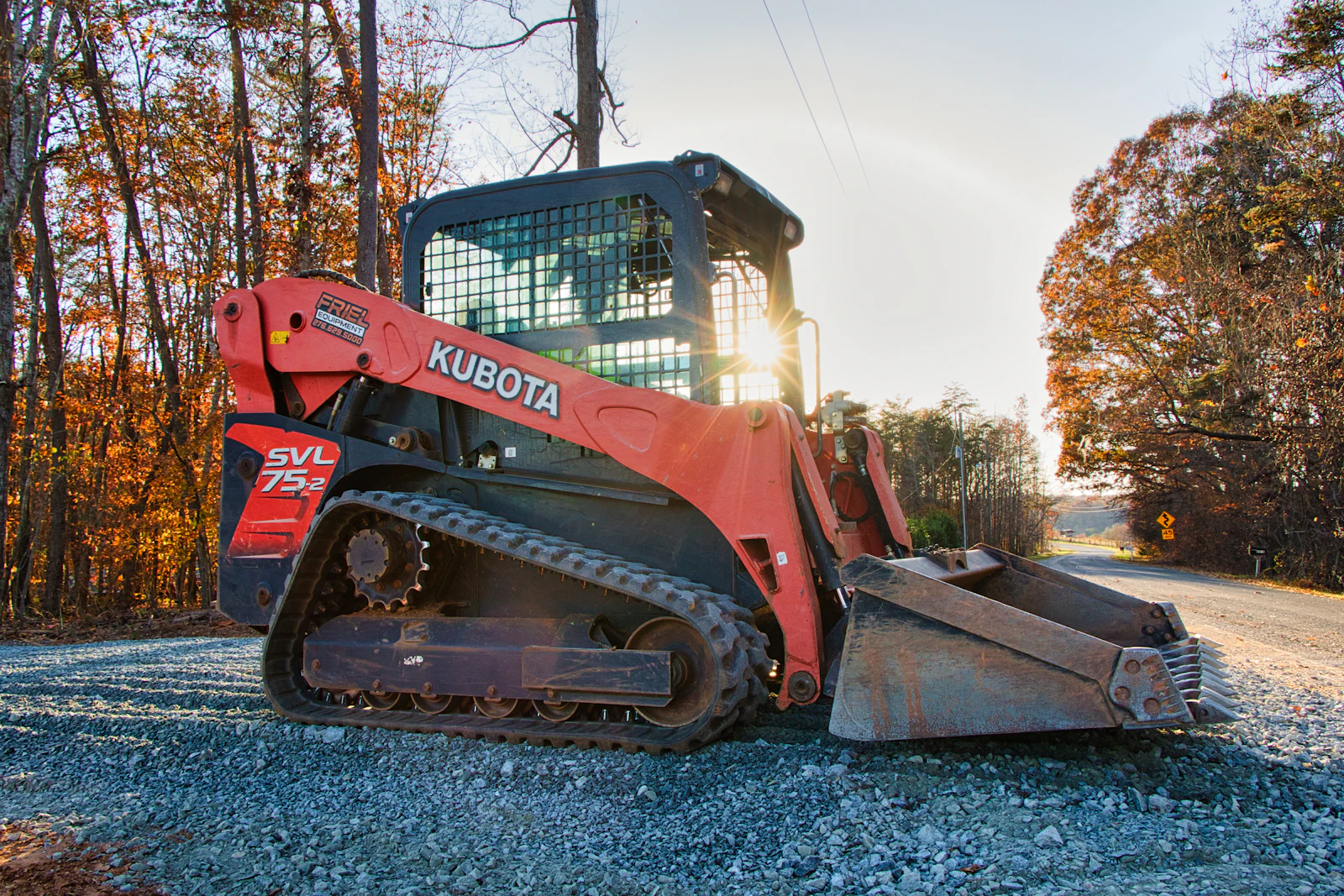
Tracked skid steer / compact track loader (CTL) generally rents higher but can reduce total cost for footing work where you need flotation, traction, and stability on loose subgrade, backfilled utility corridors, or caliche that has been ripped. A Las Vegas local rate card shows tracked units (various capacities) in the neighborhood of $350–$500/day, $1,200–$1,700/week, and $2,500–$3,950/month depending on size class, with attachments priced separately.
Assumptions to keep your estimate defensible: most rental agreements price “daily/weekly/4-week” around one-shift utilization (commonly 8 hours/day, 40 hours/week, 160 hours/4-week). If you exceed the included meter hours, overtime is billed (often as a fraction of the daily/weekly/4-week rate). Build this into your equipment hire cost model if you’re scheduling extended pours, night work, or weekend excavation to hit inspections.
What Drives Skid Steer Hire Pricing For Digging Footings In Las Vegas?
For digging footings, the base skid steer loader rental rate is only the starting point. The biggest cost drivers in Las Vegas estimating are (1) traction choice (wheeled vs. tracked), (2) attachment requirements (especially trenching and auger packages), (3) delivery access windows (HOA rules, gated communities, and tight residential streets), and (4) the return-condition standard in a dusty desert environment (filters, radiators, and undercarriage cleaning expectations can trigger cleaning/maintenance charges if abused).
Local job constraints also matter. Two recurring Las Vegas factors that move real hire costs:
- Heat and dust management: expect higher sensitivity to radiator/airflow blockage and faster filter loading in summer operations; plan for mid-shift blowouts and a conservative productivity rate if you’re trenching in fine dust.
- Soil behavior (caliche / hardpan pockets): when footings hit hard material, contractors frequently switch from a smooth bucket to a tooth bucket or use a breaker/hammer plan. That change can add both attachment hire cost and downtime risk.
- Delivery logistics across the valley: deliveries from yards in North Las Vegas/Henderson often price by radius or by a flat local fee with surcharges; schedule discipline is a measurable cost lever.
Typical Attachment Adders For Footing Excavation (Budget These Separately)
For footing work, the attachment package frequently makes or breaks production. Budget typical adders (2026 planning ranges) like:
- Trenching bucket / narrow excavation bucket: $35–$85/day (if treated as a “specialty bucket”) or bundled; confirm width (12 in, 18 in, 24 in) to match engineered footing spec.
- Tooth bucket upgrade: $20–$60/day (or a one-time wear fee if teeth are returned excessively worn).
- Hydraulic auger (post-hole auger): a local Las Vegas rate card lists an auger at about $250/day, $500/week, $1,000/month; note that bits/diameters and tooth wear may be extra.
- Pallet forks: a local Las Vegas rate card lists forks around $75/day, $200/week, $500/month—useful if you’re also staging rebar, form lumber, or palletized CMU onsite.
- Sweeper (site cleanup / slab prep dust control): a local Las Vegas rate card shows a sweeper around $250/day, $500/week, $1,050/month, which can be cost-effective if you must maintain clean access or reduce dust migration.
- Grapple: a local Las Vegas rate card shows grapple around $200/day, $500/week, $1,000/month (typically more relevant to demo/land clearing than footings, but it comes up on renovation work).
Operational note: confirm hydraulic flow requirements (standard flow vs. high flow). A high-flow attachment mismatch can force a last-minute machine upsizing (and a rate jump) or a second mobilization charge.
Hidden-Fee Breakdown (What Turns A “$250/Day” Quote Into A $600/Day Invoice)
To control skid steer loader equipment hire costs, treat these as line items, not surprises:
- Delivery and pickup: common budgeting is $125–$250 each way inside the metro area; one public schedule shows $150 delivery and $150 pickup for skid steer class equipment.
- Transportation surcharge: some suppliers apply a transportation services surcharge as a percentage with a fixed component (example disclosure: 9% fixed component, minimum $9, plus a variable fuel component).
- Damage waiver / rental protection plan: budget 10%–15% of rental charges if you’re not waiving it via your insurance program (confirm whether tires/tracks and glass are excluded).
- Meter-hour overage (overtime): if you exceed one-shift use, some agreements calculate overage as 1/8 of the daily charge per extra hour (or equivalent fractions for weekly/4-week).
- Fuel / DEF / refuel service: “return full” is standard; if not, budget $6–$10/gal diesel plus a $35–$75 refuel service fee.
- Cleaning / undercarriage charge: for excessive caked mud/concrete, plan $150–$450. For tracked units, undercarriage cleanup can be billed at $95–$165/hr shop time if neglected.
- Wear items for excavation: tooth wear, cutting edge damage, bent quick-attach levers—budget an allowance of $25–$120 depending on soil hardness and operator skill.
- After-hours / constrained delivery windows: if you need delivery before 7:00 a.m. or after 3:00 p.m. to satisfy a site rule, budget a dispatch premium of $75–$175 (varies by supplier and routing).
- Weekend/holiday billing: many accounts treat Saturday/Sunday as billable days unless you negotiate “weekend off-rent,” so plan on 1–2 additional days if your inspection/pour schedule spans a weekend.
Example: Las Vegas Footing Dig With Real Constraints And Numbers
Example: Small commercial TI in Spring Valley: dig footings for an exterior CMU wall, 120 LF of trench at 18 in wide x 24 in deep, with spoils stockpiled onsite and haul-off by others. Jobsite has a narrow gate and strict dust control (no sweeping into the street). You choose a tracked skid steer/CTL for traction and stability on disturbed subgrade.
- Base machine (tracked skid steer/CTL class): budget $450/day or move to a weekly if your inspection timing is uncertain. (Local posted tracked rates show this class commonly in the mid-$400s/day.)
- Delivery + pickup: $150 + $150 baseline (confirm radius and any routing surcharge).
- Damage waiver: assume 12% of rental charges (unless your COI is accepted and waiver is declined).
- Tooth bucket / trenching bucket: $60/day combined allowance if not bundled.
- Dust control add: $250/day sweeper attachment (if required by site rules), or plan a laborer with water/cleanup; local rate cards show sweepers in this neighborhood.
- Overtime risk: if you run 10 hours on the meter in a day, budget 2 hours overage; some agreements price extra hours as a fraction of the daily charge.
Why the weekly often wins in Las Vegas: if you anticipate inspection lag (e.g., footing inspection gets pushed 24–48 hours), a weekly rate can be cheaper than stacking daily rates, especially once you consider that delivery/pickup is typically the same whether you keep the unit 2 days or 6 days.
How To Choose The Right Machine Class Without Overbuying
To keep equipment hire costs aligned with productivity, pick the smallest skid steer/CTL that meets: (1) trench depth/grade control needs, (2) breakout force for the worst soil pocket you expect, and (3) access constraints.
- Small-frame wheeled skid steer: lower hire cost, easier transport, but traction can be limiting if you’re cutting footings in loose backfill or after irrigation leaks.
- Mid-size wheeled skid steer: often the best “value per day” for short footing digs where the surface is firm and you can keep utilization within 8 hours/day.
- Tracked skid steer/CTL: higher daily hire cost but can reduce stuck time and rework. In Las Vegas heat, CTLs also tend to keep pushing in loose material where wheeled units spin out.
Off-Rent Rules That Change The Invoice (And How To Manage Them)
“Off-rent” is a controllable cost lever. Establish internal rules for your superintendent/foreman:
- Call-off cutoff: set a hard internal deadline like 12:00 p.m. local time to request next-day pickup; many yards route trucks early, and late call-ins can create an extra billable day.
- Weekend planning: if you don’t have “weekend off-rent” in writing, assume the machine continues billing through Saturday/Sunday even if idle.
- Return condition documentation: require 20–30 photos at pickup and return: hour meter, serial tag, all sides, tires/tracks, bucket cutting edge, quick-attach, cab glass, and any existing dents. This reduces dispute time on damage/cleaning backcharges.
Also validate “same as delivered” expectations (full tank, attachments returned, pins/hoses intact). Suppliers and dealers often include disclaimers that prices exclude delivery, setup, documentation, or other charges unless explicitly stated—so write your assumptions into the PO notes.
Budget Worksheet (Skid Steer Hire Cost Build-Up For Las Vegas Footings)
Use this field-friendly worksheet to build an auditable skid steer loader equipment hire cost estimate for digging footings in Las Vegas. Adjust quantities based on wheeled vs. tracked, and whether you’re stacking daily rates or buying a full week.
- Base skid steer / CTL rental: $190–$375/day (wheeled) or $350–$500/day (tracked/CTL) allowance.
- Weekly tier allowance: $540–$1,450/week depending on class (plan weekly if inspection or rebar delivery is uncertain).
- 4-week tier allowance: $1,650–$3,950 per 4 weeks for sustained sitework or phased pads.
- Delivery (in): $125–$250 (budget $150 baseline).
- Pickup (out): $125–$250 (budget $150 baseline).
- Transportation surcharge: allow 9% of transport charges (minimum $9) plus any variable fuel component, where applicable.
- Damage waiver / protection plan: 10%–15% of rental charges allowance (or $0 if waived by contract + COI accepted).
- Attachment package (typical footings): $55–$145/day combined allowance (tooth bucket + narrow bucket), depending on supplier bundling.
- Auger option (if drilling piers/sonotubes): $250/day, $500/week, $1,000/month allowance.
- Forks (material handling onsite): $75/day, $200/week, $500/month allowance.
- Sweeper / dust management attachment: $250/day, $500/week allowance if site rules require it.
- Refuel/DEF contingency: $35–$75 service fee + $6–$10/gal diesel allowance if returned short.
- Cleaning contingency: $150–$450 (higher risk on tracked undercarriage).
- Overtime (meter-hour overage): allow 1–3 extra hours/day at a rate that can be calculated as 1/8 of daily charge per hour on some agreements.
- Damage contingency: $250–$750 (glass, lights, tires/tracks, cutting edge).
Rental Order Checklist (What Your Rental Coordinator Should Put On The PO)
- Job identifiers: project name, address, gate code, onsite contact, and a second backup contact.
- Delivery window: request a firm window (e.g., 7:00–9:00 a.m.) and note any site blackout times; if you require after-hours, pre-approve a $75–$175 dispatch premium allowance.
- Machine spec: wheeled vs. tracked; operating capacity class; enclosed cab vs. open (Las Vegas heat can justify enclosed cab for operator retention and productivity).
- Attachment list (with widths): tooth bucket size, trenching bucket width (12 in / 18 in / 24 in), quick-attach type, hydraulic coupler type.
- Utilization assumption: state “pricing based on 8 hours/day included” to prevent surprises on multi-shift use.
- Off-rent instructions: specify that pickup must be scheduled upon request, and write your internal cutoff (e.g., “call in by 12:00 p.m. for next-day pickup”).
- Fuel/return condition: “return full, debris-free, tracks/tires cleaned, bucket cutting edge inspected.”
- Documentation: require delivery ticket with pre-existing damage marked; require hour meter at drop and pickup; require serial number on invoices.
- Insurance and waiver: attach COI or authorize damage waiver percentage.
- Billing controls: require separate lines for base rental, attachments, delivery, pickup, waivers, surcharges, and cleaning so you can audit true equipment hire cost.
Ways Las Vegas Crews Accidentally Add 1–3 Billable Days (And How To Prevent It)
Most overruns are scheduling and logistics, not rate. Common loss points:
- Inspection/pour drift: footing inspection slides by 1 day, rebar delivery slides by 1 day, concrete placement moves to Monday—suddenly a “3-day rental” becomes 6–7 days including weekend billing.
- Late off-rent call: pickup requested after dispatch routing; you pay an extra day even if the machine is idle and parked.
- Attachment mismatch: wrong bucket width requires swap; you pay a second mobilization or lose half a shift waiting.
- Return condition disputes: no photos = cleaning/damage backcharges that are hard to contest.
When A Mini Excavator Is Cheaper Than A Skid Steer (Cost Perspective Only)
Even if your scope says “skid steer loader,” there are cases where your total equipment hire cost drops if you shift trenching to a mini excavator and keep the skid steer for spoil and backfill:
- Deep or tight footings: if you need consistent grade at 30–48 inches deep in restricted corners, a mini excavator’s control can reduce over-excavation and backfill costs.
- Hard material: excavators typically handle breakers more efficiently; on caliche pockets, you may spend less time fighting with a skid steer bucket.
That said, for short, accessible footing lines where you need fast spoils handling and backfill, a skid steer/CTL remains a strong single-machine solution—just ensure the attachment and utilization assumptions are locked.
Compliance And Site Controls That Affect Rental Cost
- Utility locating: build time for 811 utility markings; delays often translate into extra billable rental days.
- Silica/dust control: if the GC requires dust suppression, budget either a sweeper attachment ($250/day) or dedicated labor/water controls, and schedule work to avoid windy periods that slow production.
- Heat plan: schedule trenching early (e.g., start by 6:00–7:00 a.m.) to maintain productivity and reduce overheating risk; if you must run longer days, include overtime cost per meter-hour rules.
Quick Reference: A Practical “All-In” Daily Cost Target For 2026
For budgeting (not a formal quote), many Las Vegas contractors aim for an “all-in” skid steer equipment hire cost target of:
- Wheeled skid steer, basic bucket, delivered: roughly $425–$725/day after typical delivery/pickup allocation, waiver, and fuel/cleaning allowances.
- Tracked skid steer / CTL, footing attachment package, delivered: roughly $650–$1,050/day depending on attachment mix (sweeper/auger) and overtime risk.
To tighten this range for your project, the fastest path is to finalize (1) machine class, (2) attachment list with widths, (3) delivery window, and (4) expected meter hours per shift—then request a written rate + fee schedule that separates base rate from logistics and surcharges.