Build your next estimate with CountBricks
Create an itemized estimate for your project, with materials, labor, and quantities you can review and edit.
Create my estimateStart a 7-day free trial. Sign up, then enter your project details.
Skid Steer Loader Rental Rates Milwaukee 2026
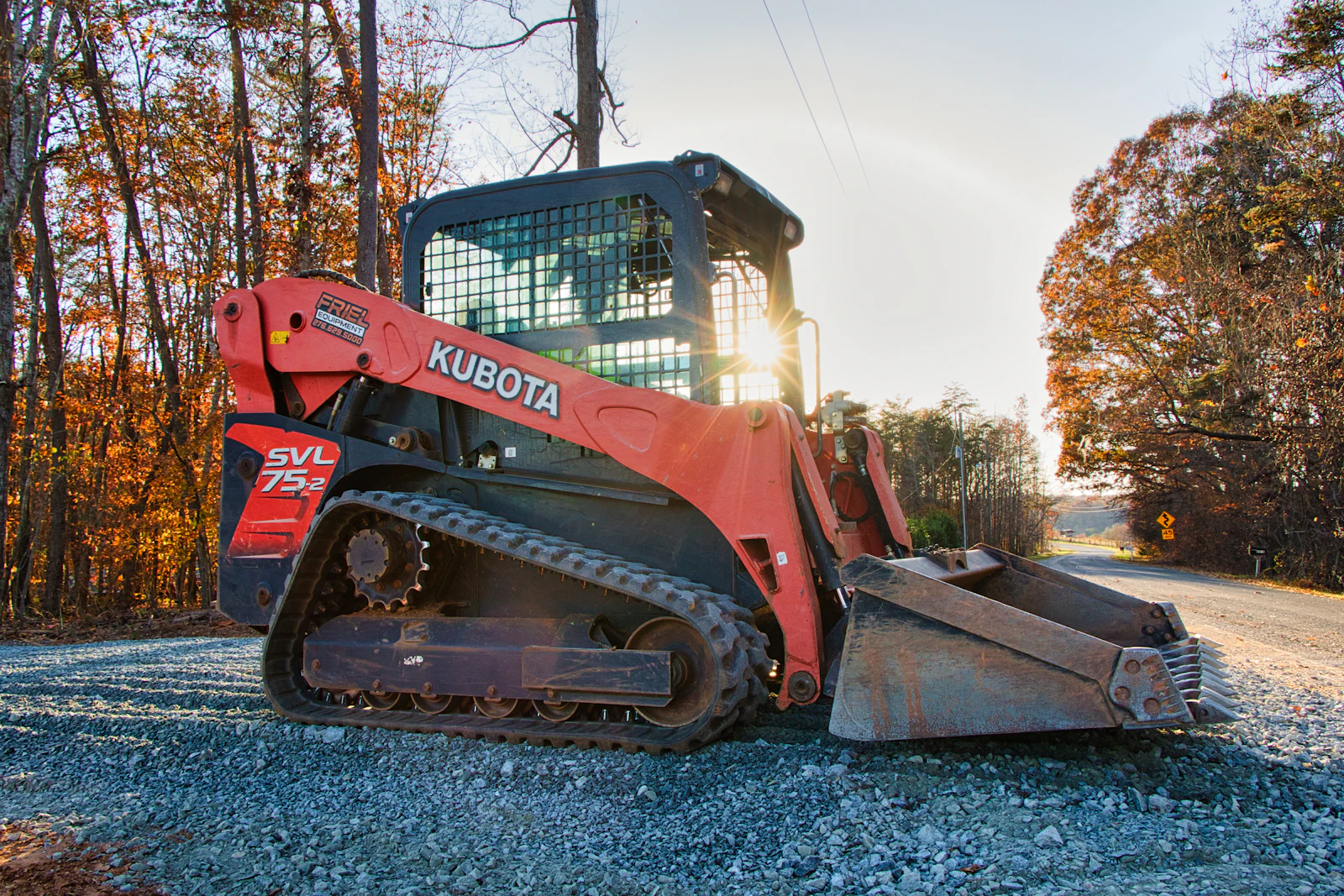
For Milwaukee-area footing work in 2026, budget skid steer loader equipment hire in these planning ranges (excluding delivery, fuel, and protection): wheeled skid steer typically $200–$400/day, $600–$1,050/week, and $1,800–$3,100/month; compact track loader (CTL) typically $275–$525/day, $825–$1,500/week, and $2,475–$3,600/month. These ranges align with published local rate cards such as Milwaukee Tractor & Equipment (e.g., $200/day to $300/day for New Holland skid steers depending on size, and $275/day to $325/day for comparable CTLs) and Area Rental (e.g., $380/day for a wheeled skid steer and $480/day for a track skid steer), while larger national yards (United Rentals, Sunbelt, Herc) often quote similar base rates but with branch-to-branch freight and policy differences that move the total delivered cost. Plan on the delivered, protected, attachment-ready number being 1.3×–2.0× the base day rate once you add freight, damage waiver, and the right tooling for digging footings.
| Vendor |
Daily Rate |
Weekly Rate |
Review Score |
Website |
| United Rentals |
$365 |
$1 460 |
8 |
Visit |
| Sunbelt Rentals |
$350 |
$1 400 |
8 |
Visit |
| Herc Rentals |
$340 |
$1 360 |
7 |
Visit |
| The Home Depot Tool Rental |
$320 |
$1 280 |
8 |
Visit |
| Badger Contractors Rental & Supply |
$330 |
$1 320 |
9 |
Visit |
How Milwaukee Footing Work Changes Skid Steer Hire Costs
“Digging footings” in Milwaukee isn’t just an earthmoving task; it’s a depth-and-access problem. Wisconsin’s frost-protection rule generally drives footings to at least 48 inches below adjacent grade (unless an allowed exception applies), which can push a skid steer into deeper cuts where visibility, reach, and spoil management start to dominate cycle time. That directly impacts how many billable days you need, whether a CTL is worth the premium, and whether you’ll end up adding an attachment (trencher, breaker, auger) or even pairing the skid steer with a mini excavator for production. In practice, the equipment hire cost swing in Milwaukee often comes from (1) wet/clayey soils after rain near the lakefront, (2) tight residential access in older neighborhoods where you can’t stage spoils, and (3) winter/freeze-thaw cycles that create hard, lumpy excavation and increase cleanup time (and cleaning fees) at return.
What Drives Skid Steer Equipment Hire Pricing in Milwaukee?
When you’re coordinating skid steer loader rental for digging footings in Milwaukee, the “machine” line item is only the start. The rental coordinator’s cost drivers are usually:
- Frame size and ROC class: Small-frame units (roughly 1,600–2,000 lb ROC) tend to sit at the low end of day rates; mid/large-frame units (2,800–3,400 lb ROC) are commonly 15%–35% higher for the same term. Milwaukee Tractor’s published skid steer lineup, for example, steps from a 1,600 lb capacity class to a 3,400 lb capacity class with corresponding day/week/month increases.(m
- Wheels vs tracks: In Milwaukee’s shoulder seasons, paying a CTL premium can be cheaper than losing a day to ruts, towing, or access remediation. Locally published CTL rates are commonly about $25–$75/day above comparable wheeled units (sometimes more in peak weeks).(m
- Hydraulics: High-flow hydraulics for trenchers, planers, and some augers typically adds $40–$90/day (allowance) and can also increase damage-waiver cost because it raises the base rent.
- Cab configuration: Enclosed cab/heat/AC often adds $25–$60/day (allowance). In Milwaukee winter work, that can pay back in operator productivity.
- Tires/undercarriage risk: Foam-filled or severe-duty tires may add $20–$45/day (allowance). Track wear exposure is usually managed as damage/excess wear on return—budget a contingency if you’ll be turning on abrasive fill.
Milwaukee-specific note: if you’re working in dense areas (downtown/near the riverwalk/older lot lines), the “right machine” cost is frequently less important than delivery window fit and return/off-rent timing. A lower day rate can lose to a freight schedule that forces you to start billing a day earlier than planned.
Attachment Hire Costs for Digging Footings (What You Actually Need)
Footing excavation with a skid steer is usually a combination of bulk digging, grade control, and cleanup. Expect attachment hire to be a meaningful add-on, and confirm whether your vendor includes a standard bucket or charges it as “extra bucket.” Two Milwaukee-area published examples below show how attachment choices move the total equipment hire cost:
- Extra bucket / pallet forks (common yard adders): Milwaukee Tractor lists $50/day, $150/week, $450/month for an extra bucket and the same for forks.(m
- Auger drive with bit (common for pier/sonotube footings and post bases): Milwaukee Tractor lists $150/day, $450/week, $1,350/month. Area Rental lists a 3' skid-steer auger attachment at $170/day and $480/week (with a listed monthly rate as well).(m
- Hydraulic breaker (when you hit buried concrete or frost-hard material): Milwaukee Tractor lists $200/day, $600/week, $1,800/month. Area Rental lists a skid-steer concrete breaker at $320/day and $880/week.(m
- Trencher attachment (for continuous footing lines or utilities adjacent to footings): Milwaukee Tractor lists $200/day, $600/week, $1,800/month.(m
- Jobsite cleanup attachment (avoid cleaning fees): If you’re cutting in around existing pavement and want to reduce track-in, Area Rental lists a skid-steer Harley rake at $200/day and $590/week.(m
Planning tip for footing jobs: if you’re renting an auger, confirm bit diameter availability and whether the vendor charges for “wear” (teeth, pilots). For trenchers, confirm whether you’re getting a chain suitable for clay/rock—a wrong chain is a hidden cost because it turns into extra days billed.
Delivery, Off-Rent, And Meter-Hour Rules You Need To Budget
Freight and billing rules routinely decide whether your skid steer equipment hire is “on budget” or “mysteriously high.” Use these 2026 planning allowances unless your vendor quote states otherwise:
- Delivery and pickup: A common structure in public cooperative contracts is $120 each way plus a mileage charge not to exceed $3.95 per loaded mile (varies by location/product/time of day).(v Another published contract pricing page shows a not-to-exceed pickup/delivery model of $150 each way plus $4.00 per loaded mile, and includes service-response windows (for example, 4–8 hours emergency response and 24–48 hours normal response in that schedule).
- Billing day basis and meter hours: Many rate sheets are built around an 8-hour day, 44-hour week, and 176-hour month. Build your internal estimate the same way so you can spot overtime exposure early.(m
- Overtime/multi-shift: Cooperative terms often apply OT after 8 hours/day, 40 hours/week, or 160 hours/month, with 1.5× for dual shift and 2× for 3-shift use.(v
- Off-rent rules: Confirm whether off-rent is triggered by (a) your call-in time, (b) the pickup time, or (c) when the unit scans back at the yard. A one-day mismatch can erase the savings of shopping day rates.
- Weekend/holiday billing: In Milwaukee, many yards are closed Sundays and run limited Saturday dispatch. If your schedule forces Friday delivery but you can’t start until Monday (concrete, inspection, locates), you can end up paying a weekend you didn’t “use.” Negotiate weekend terms up front.
Hidden-Fee Breakdown
To keep skid steer loader hire costs predictable for footing work, treat these as standard “line items to ask about,” not surprises:
- Damage waiver / rental protection: Often budget 10%–15% of base rent. A worked rental example published in a 2026 price guide uses 12% as the damage-waiver assumption.(m
- Cleaning charges: One published rate sheet lists an excessive cleaning fee of $75/hour (and notes thresholds by rental term). For Milwaukee footing excavation in wet clay, this is a real risk if you return the unit with packed undercarriage or caked bucket.(m
- Fuel / make-up fuel: Policies commonly require return with a full tank; otherwise make-up fuel is charged. A published policy note states units are rented with a full tank and make-up fuel added on return is billed to the renter.(m
- Environmental / admin fees: Allow $10–$35 per invoice (varies by vendor and municipality) if your purchasing history suggests these show up routinely.
- After-hours freight or expedited delivery: Allow $150–$400 if you’re requesting same-day or tight-window delivery into constrained Milwaukee sites (alley access, lane closures, union sites with strict delivery appointmenting).
- Loss/damage administrative minimums: Allow $250–$750 for small “incidents” (lost pins, bent coupler levers, damaged hoses) that don’t rise to a major repair but still get billed.
Example: Milwaukee Skid Steer Hire Cost for 48-Inch Footings on a Tight Site
Example: You have a two-day footing dig for an addition where the footing base must be at roughly 48 inches below grade, spoils must stay on-site (no truck access until day 2), and delivery must hit a 7:00–9:00 AM window to avoid conflicts with other trades. You choose a CTL to reduce rutting and maximize traction. Budget (illustrative, adjust to your quote):
- CTL base rent: $300/day × 2 = $600 (within common Milwaukee published CTL day-rate bands).(m
- Auger (if you’re also drilling pier footings): $150/day × 1 = $150 (or use a comparable local attachment rate).(m
- Delivery + pickup: assume $150 each way plus $4.00/loaded mile. If the branch is 18 loaded miles away, each way is $150 + (18 × $4) = $222, roundtrip $444.
- Damage waiver: 12% of base rent (base rent only): $600 × 0.12 = $72.(m
- Cleaning contingency: allow 2 hours × $75/hour = $150 if soils are saturated and you can’t wash down before pickup.(m
- Fuel make-up contingency: allow $60–$140 if you return below full and the yard bills make-up fuel at retail-plus handling (confirm actual policy).
This puts a reasonable planning subtotal around $1,476 plus tax/fees and any additional attachments (breaker, trencher, extra bucket). The important operational constraint is that the delivery window and spoils handling can turn a “one-day dig” into a two-day billed rental—so build schedule float before you start shopping on day rate alone.
Budget Worksheet
Use this as an estimator-ready allowance list (no tables; convert into your internal coding):
- Skid steer (wheeled) base rent allowance: $250–$400/day or $750–$1,050/week
- CTL base rent allowance: $300–$525/day or $900–$1,500/week
- Attachment allowance (choose what the footing scope needs): extra bucket $50/day; forks $50/day; auger $150–$170/day; trencher $200/day; breaker $200–$320/day
- Delivery + pickup allowance: $120–$150 each way + $3.95–$4.00 per loaded mile
- Damage waiver allowance: 10%–15% of base rent (use 12% if you need a single number)(m
- Cleaning allowance: $75/hour (budget 0–4 hours depending on soil and whether wash-down is available)(m
- OT/multi-shift allowance: 1.5× (dual shift) / 2× (3 shifts) if your utilization exceeds daily/weekly/monthly hour limits(v
- Consumables/incidentals allowance: $150–$500 (pins, teeth wear, minor hose damage, lost hardware)
- Winterization/site access allowance (Milwaukee): $100–$350 (frozen pile breakup time, extra cleanup, traction aids)
Rental Order Checklist
Before you release a PO for skid steer loader equipment hire in Milwaukee, confirm the items below to prevent avoidable cost overruns:
- PO includes: rental term (day/week/4-week), machine class (ROC/HP), wheeled vs CTL, and required hydraulics (standard vs high-flow)
- Delivery address details: gate code, alley width, trailer access, overhead clearance, and preferred drop location to prevent re-spot charges
- Delivery window and cutoff: confirm dispatch lead time; request written confirmation of your AM or appointment window
- Off-rent procedure: who calls off rent, required notice time, and whether weekends/holidays change billing
- Return condition documentation: photos of bucket cutting edge, tires/tracks, quick coupler, and hour meter at delivery and pickup
- Fuel/DEF requirements: confirm “full-in/full-out,” acceptable fuel type, and whether DEF is required/charged separately
- Cleaning expectations: confirm whether the yard allows customer wash-down and what triggers “excessive cleaning” billing (use $75/hour as the planning benchmark)(m
- Attachment compatibility: coupler type, hose routing, and any required case drain for high-flow attachments
- Damage waiver vs certificate of insurance: confirm whether waiver is mandatory or optional and the percentage applied
Milwaukee Cost Drivers That Rental Coordinators Should Call Out Early
Milwaukee jobs routinely have constraints that change skid steer equipment hire costs even when the base rate looks fine. Build these into your scope notes so your field and vendor are aligned:
- Delivery radius reality: Even if a branch is “nearby,” urban routing (one-way streets, downtown access restrictions, bridge/rail constraints) can turn a short-distance move into higher billed loaded miles. Use the $3.95–$4.00 per loaded mile planning band and request the freight quote at order placement.(v
- Wet clay and lakefront moisture: A CTL premium can be cheaper than paying for (a) a second day due to getting stuck, or (b) site remediation. If your schedule is tight, the “more expensive” unit is often the lowest total cost.
- Freeze-thaw cleanup exposure: Frozen spoil and packed undercarriage increases the odds of billed cleaning. Treat $75/hour as a real contingency when you’re digging footings in wet conditions or during winter.(m
How To Control Total Skid Steer Hire Cost on Footing Work
Rental coordinators who consistently hit budgets tend to manage the term and the clock more than the posted day rate:
- Match the term to the work plan: If you truly need 3–4 workdays, ask for a week rate up front. Many published rate cards show week pricing that is materially less than stacking day rates (for example, Milwaukee Tractor’s day-to-week scaling on skid steers).(m
- Prevent overtime billing: If your crew will run extended hours to beat an inspection or concrete pour, confirm the vendor’s OT trigger. Many schedules reference OT after 8 hours/day and 40 hours/week, with 1.5× and 2× multipliers depending on shift use.(v
- Bundle attachments smartly: If you need an auger for only a few holes, try to schedule drilling on a single day. Using published attachment day rates like $150/day (auger) and $200/day (trencher/breaker class), even one extra “just in case” day is expensive.(m
- Control the freight clock: If the unit arrives Friday and you start Monday, you’ve potentially bought a weekend. When the vendor can’t change dispatch, consider switching to will-call pickup if you have capacity—or negotiate weekend billing terms explicitly.
Return-Condition Costs: Where Footing Jobs Get Billed After the Fact
Footing excavation tends to be muddy, and muddy returns create back-end charges. To keep equipment hire costs clean on closeout, budget and manage these:
- Cleaning: If your vendor applies an “excessive cleaning” model, costs can accrue quickly at $75/hour. A practical internal rule is to schedule 30–60 minutes of end-of-day cleanup time and have a wash-down plan before pickup.(m
- Cutting edges and teeth: If you’re digging in gravelly fill, plan a wear contingency of $75–$250 for tooth replacement and cutting-edge wear (confirm the vendor’s wear policy).
- Tire/track damage: Track damage can turn into a major unplanned cost. Build a contingency range of $1,500–$4,000 on high-risk sites (demo debris, rebar, sharp riprap). For wheeled units, severe tire damage events often land in the $250–$600 range per tire depending on size and whether foam-filled (ranges are planning allowances; confirm your vendor policy).
- Missing hardware: Lost attachment pins and coupler components frequently bill at $25–$150 per item plus admin time—take delivery photos and inventory at drop-off.
Should You Pair a Skid Steer With Another Rental for Footings?
This article is focused on skid steer loader equipment hire costs, but for Milwaukee footing scopes it’s worth stating the cost-control logic: the skid steer is often best used for spoil management, backfill staging, and site cleanup, while deeper footing cuts can be faster with an excavator. If your 48-inch depth and trench geometry will slow skid steer production, a second machine for a shorter duration can reduce the number of skid steer billable days and lower total rental spend—even if the second unit adds a day rate.
2026 Planning Notes for Milwaukee Skid Steer Equipment Hire
- Seasonality: Late spring through early fall is commonly the tightest availability window for CTLs and popular attachments. If you need an auger or trencher, reserve early and confirm the exact coupler/flow requirements.
- Snow and winter policies: Some Milwaukee-area dealers note special rates for snow rentals; if your “footing” work overlaps snow season, confirm whether winter work changes minimums or insurance requirements.(m
- Use published local rates as anchors, not absolutes: Milwaukee Tractor & Equipment and Area Rental publish explicit day/week/month pricing for skid steers and attachments, which is valuable for estimating, but always re-check the live quote for your delivery ZIP, machine availability, and attachment pairing.(m
If you want, share the job ZIP (or nearest cross streets), estimated spoil volume, and whether you need an auger/trencher/breaker, and I can tighten the 2026 delivered-cost range and identify the most likely cost risks (freight, OT, cleaning, and attachment duration) for your specific footing plan.