Build your next estimate with CountBricks
Create an itemized estimate for your project, with materials, labor, and quantities you can review and edit.
Create my estimateStart a 7-day free trial. Sign up, then enter your project details.
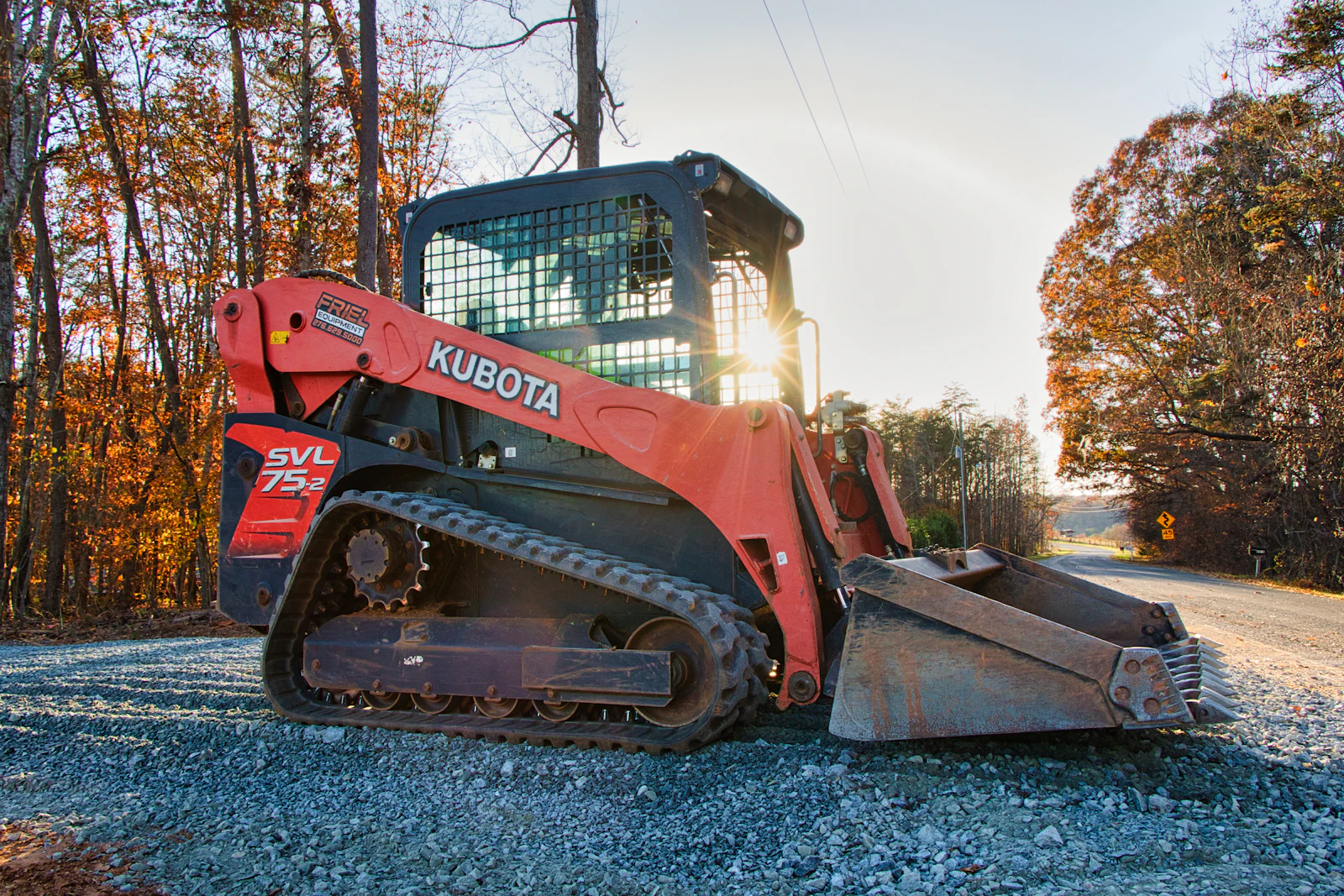
Skid Steer Loader Rental
For Milwaukee-area projects planning 2026 work, skid steer loader equipment hire typically budgets in three bands: (1) wheeled skid steer loaders around 60–90 HP at roughly $200–$325/day, $600–$900/week, and $1,800–$2,700/month (4-week) depending on rated operating capacity and tire spec; (2) compact track loaders (often substituted when traction and low ground pressure matter) around $275–$350/day, $825–$1,050/week, and $2,475–$3,150/month; and (3) attachment-driven packages where the base machine is “reasonable” but total hire cost is dominated by powered tools (breaker, trencher, box rake). Milwaukee Tractor & Equipment publishes local day/week/month rates for multiple skid steers and track loaders that fit these ranges, while national fleets (United Rentals, Sunbelt Rentals, Herc Rentals) commonly quote similar structures but with different delivery, surcharge, and damage/waiver line items that move the all-in invoice.
| Vendor |
Daily Rate |
Weekly Rate |
Review Score |
Website |
| Milwaukee Tractor & Equipment |
$275 |
$825 |
8 |
Visit |
| Area Rental & Sales |
$380 |
$995 |
10 |
Visit |
| United Rentals |
$335 |
$1 050 |
8 |
Visit |
| Sunbelt Rentals |
$330 |
$1 030 |
7 |
Visit |
| Herc Rentals |
$340 |
$1 060 |
8 |
Visit |
Milwaukee 2026 Posted Local Rate Benchmarks (Use As A Sanity Check)
If you need a local “posted-rate” checkpoint for estimating, Milwaukee Tractor & Equipment lists New Holland skid steer loader rates by model/capacity. Examples include: L316 (1,600 lb ROC) at $200/day, $600/week, $1,800/month; L320 (2,000 lb ROC) at $250/day, $750/week, $2,250/month; L328 (2,800 lb ROC) at $275/day, $825/week, $2,475/month; and L334 (3,400 lb ROC) at $300/day, $900/week, $2,700/month.
For compact track loader alternatives (often what you get when sites are soft, frozen/thawing, or you need lower ground pressure), the same page lists examples including C327 at $275/day, $825/week, $2,475/month and C345 at $325/day, $975/week, $2,925/month.
Estimator note (assumption you should state on the quote): Most “day/week/month” rate structures in the rental industry are tied to one shift usage. As one published example, Herc Rentals states daily/weekly/4-week rates entitle the customer to 8 hours/day, 40 hours/week, 160 hours/4 weeks and charges overtime based on fractions of the base rate (e.g., 1/8 of the daily, 1/40 of the weekly, 1/160 of the 4-week).
What Actually Drives Skid Steer Loader Hire Cost in Milwaukee?
In Milwaukee, the “rate card” is only the first line. Total skid steer loader rental cost is heavily influenced by how the machine is mobilized, metered, fueled, and returned—especially in urban delivery corridors, winter conditions, and tight GC-controlled receiving windows.
- Machine class and undercarriage: wheeled skid steer vs. compact track loader; pneumatic vs. solid/foam-filled tires (flats are a cost risk on demo and rubble).
- Rated operating capacity (ROC): moving from ~1,600 lb ROC to ~3,400 lb ROC is often a meaningful rate step (see the posted local examples above).
- Attachment mix: hydraulic-powered tools can add more cost than stepping up one size of base machine.
- Metered use/overtime: second shift, weekend push, or running the machine as a dedicated “site forklift” can trigger hourly overages (or a higher negotiated shift rate).
- Jobsite access and delivery constraints: downtown/near-downtown Milwaukee staging can create redelivery charges if the driver can’t offload due to blocked docks or unplowed access.
- Return condition and cleaning: concrete splatter, spoil packed into the chassis, or paint overspray drives cleaning/repair lines; some rental terms explicitly allow cleaning charges for excessive dirt, concrete, or paint.
Attachment Adders: The Fastest Way Your Hire Budget Moves
Milwaukee-area skid steer loader hire is rarely “machine only.” For estimating, treat the base machine + attachment bundle as the true unit cost. Using Milwaukee Tractor & Equipment’s published attachment pricing as an example, common adders include:
- Extra bucket: $50/day, $150/week, $450/month.
- Pallet forks: $50/day, $150/week, $450/month.
- Auger drive with bit: $150/day, $450/week, $1,350/month.
- Breaker (hydraulic hammer): $200/day, $600/week, $1,800/month.
- Trencher: $200/day, $600/week, $1,800/month.
- Power box rake: $200/day, $600/week, $1,800/month.
- Grapple bucket / skeleton rock bucket / concrete claw: commonly listed at $125/day, $375/week, and about $1,025/month depending on tool.
Practical takeaway: When you see a Milwaukee skid steer loader rental quote that looks “cheap,” verify whether it includes a standard general-purpose bucket only—or whether forks/auger/hammer/trencher are separate line items with separate delivery and damage waiver calculations.
Hidden-Fee Breakdown (The Lines That Commonly Appear After “Base Rate”)
To build a realistic equipment hire estimate for Milwaukee, carry explicit allowances for these cost buckets—even if the vendor eventually negotiates them down:
- Delivery / pickup: commonly budget $175–$350 each way inside a typical metro radius, and add mileage beyond an included zone (often $4–$8 per loaded mile). For tight downtown access or “call-ahead” dock appointments, add a wait-time allowance such as $90–$150/hour after a short free window.
- Transportation surcharges: some national suppliers publish transportation surcharge structures; for example, Herc Rentals describes a fixed transportation surcharge component of 9% (or minimum $9) plus a variable component tied to national diesel averages, with examples that can total 16% (or minimum $16) depending on diesel price conditions.
- Environmental / emissions surcharges: many large fleets apply an environmental/emissions-style line item; plan 2%–5% of the rental subtotal unless your MSA states otherwise (confirm per branch).
- Preventative maintenance (metered): some rental programs add per-hour PM charges. One published example states a PM charge range of $1–$6 per hour depending on equipment type/size and billed against hours of use (with monthly true-up).
- Damage waiver / rental protection: commonly budget 10%–18% of base rental (and sometimes of attachments too) unless you provide your own insurance and the vendor accepts it.
- Fuel / refuel: diesel machines are typically expected back full; if not, plan a refuel service rate such as $5–$8/gal equivalent plus a service fee. Some suppliers describe charging when equipment is not returned full.
- Cleaning: budget $150–$400 for heavy mud/clay cleanout and $300–$1,200 for concrete removal or paint overspray remediation (especially if the loader ran near concrete placement, patching, or coating work). Some rental terms explicitly allow cleaning charges for excessive dirt, concrete, and/or paint.
- Late return / extra day: carry a contingency of 1 extra day when your schedule crosses a weekend or a weather day—Milwaukee winter “lost days” are a real cost driver when off-rent is missed.
Shift Limits, Metering, And Overtime: How “One Day” Turns Into More
For planning, treat skid steer equipment hire as governed by both calendar time and metered shift limits. Published rental terms commonly define a day/week/4-week entitlement in hours (e.g., 8/40/160).
Example overtime math you can use for internal checks (illustrative): if your agreed daily rate is $300/day and overtime is billed at 1/8 of daily per hour, then the overtime add is $37.50/hour for hours beyond the daily entitlement. If a weekly rate is $900/week and overtime is 1/40 of weekly per hour, the add is $22.50/hour. Confirm the exact rule per supplier, but build your field plan (operators + tasks) to avoid “idling overtime.”
Milwaukee-Specific Operating Constraints That Change Real Cost
- Winter and shoulder-season traction: In freeze/thaw periods, compact track loader substitutions are common; higher base rates can still be cheaper than rework or tow-outs. Also plan for “snow rental” specials/seasonal pricing where applicable—one local list notes special rates for snow rentals.
- Downtown delivery windows: Many Milwaukee sites restrict deliveries to morning windows; missing a receiving slot can trigger redelivery or waiting charges. Carry a receiving plan (named contact, unload equipment ready, site access plowed/cleared).
- Indoor work (warehouses/light industrial): If the skid steer will run indoors, expect tighter dust-control requirements: budget $35–$85/day for consumables (poly, tape, filters), plus added cleaning time so the machine returns “rental-ready.”
Example: 4-Week Milwaukee Utility Backfill Package (With Real Constraints)
Scenario: GC needs a skid steer loader rental for 4 weeks (one shift) for utility backfill and material staging near an active street corridor. Work includes pallet handling, occasional rock removal, and a weekend push for restoration.
- Base machine: budget a mid/high ROC unit (e.g., similar to the posted L328 at $2,475/month or L334 at $2,700/month).
- Attachments: add pallet forks at $450/month and grapple bucket at ~$1,025/month if required for rock handling (posted examples).
- Mobilization: carry $250 delivery + $250 pickup (metro allowance), plus a downtown receiving/wait contingency of $150.
- Damage waiver: carry 15% of rental lines (machine + attachments) unless COI is accepted.
- Weekend push risk: assume 6 overtime hours for the week of restoration; at an illustrative $22.50/hour overtime equivalent, carry $135 (confirm actual overtime structure).
- Return condition: carry $250 cleaning allowance and require return photos to reduce disputes (bucket interior, tires/tracks, quick-coupler, aux hydraulics).
Why this matters: the “$2,475/month skid steer rental” headline can become a materially higher all-in hire cost once attachments, waiver, delivery logistics, and return-condition controls are included.
Budget Worksheet (Skid Steer Loader Equipment Hire) — Milwaukee
- Base skid steer loader hire (select class): $1,800–$2,700 per 4 weeks wheeled or $2,475–$3,150 per 4 weeks tracked (budget range; confirm model availability).
- Attachment allowance (choose what applies): forks $450/month; extra bucket $450/month; grapple/skeleton/concrete claw ~$1,025/month; auger drive $1,350/month; breaker $1,800/month; trencher $1,800/month; box rake $1,800/month.
- Delivery + pickup allowance: $350–$900 total (depends on distance, receiving windows, and redelivery risk).
- Transportation surcharge allowance (if applied): 9%+ of transportation charges (some suppliers publish fixed components and minimums).
- Damage waiver / rental protection: 10%–18% of rental lines (or $0 if you place coverage via COI accepted by supplier).
- Fuel/refuel contingency: $75–$250 (or require “return full” and document tank level on delivery/return).
- Cleaning contingency: $150–$400 typical mud clean; $300–$1,200 for concrete/paint risk environments.
- Overage hours contingency (metering): 4–12 hours at an internal placeholder rate of $20–$45/hour depending on your negotiated base rate and overtime rule.
Rental Order Checklist (What Your Rental Coordinator Should Lock Down)
- PO includes: machine class (wheeled vs tracked), ROC/HP requirement, coupler type, auxiliary hydraulics requirement, bucket width, tire type (pneumatic vs solid) and any spark arrestor needs.
- Confirm rate structure: day/week/4-week, included hours (8/40/160 typical in published terms), overtime rule, and weekend/holiday billing rules.
- Delivery requirements: address + on-site contact, delivery window, unload method (ramp vs tilt-deck), ground conditions, and whether the driver needs a 30-minute call-ahead.
- Insurance: provide COI if required; one local policy example requires renter insurance and proof naming the supplier as additional insured/loss payee.
- Pre- and post-rental documentation: photos/video of bucket/cutting edge, quick coupler, hoses, tires/tracks, hour meter, and fuel level; note any pre-existing damage on the delivery ticket.
- Return/off-rent procedure: confirm cutoff time for same-day off-rent processing (commonly 12:00–2:00 pm), who can release equipment, and required staging location for pickup.
How To Quote “All-In” Skid Steer Loader Equipment Hire (Not Just The Rate)
When you’re comparing skid steer loader hire quotes in Milwaukee, normalize every proposal to an “all-in cost to the jobsite” basis. Two suppliers can quote the same $/week and still differ materially once transportation surcharges, environmental/emissions line items, damage waiver, and metered PM are applied.
Recommended normalization steps:
- Convert everything to a 4-week cost (or your planned duration) including attachments, then add delivery/pickup and percentage-based lines (waiver, environmental, transportation surcharge).
- State the shift assumption in writing: one-shift use (e.g., 8 hours/day) unless you are explicitly paying for extended use. Published terms may define overtime calculations by fractions of the base rate.
- Force an attachment inventory check: forks, buckets, and powered tools should be listed with serial numbers and condition at delivery to avoid “missing attachment” back-charges.
Delivery, Off-Rent, And Weekend Billing: Where Milwaukee Jobs Get Surprised
Milwaukee project schedules frequently cross a Friday afternoon handoff into weekend work or a Monday morning inspection window. That’s exactly where rental billing can drift if off-rent communication is not tight.
- Off-rent cutoff: if your site releases equipment after the branch dispatch cutoff (often around 12:00–2:00 pm), pickup may slide a day and you may carry an extra day charge. Build the pickup request into your lookahead schedule.
- Weekend possession: some programs bill Saturday/Sunday as calendar days if the machine remains on rent, even if you didn’t run it. If you only need weekend use, ask for a weekend rate program up front.
- Delivery access in winter: unplowed alleys, snow berms, and frozen ruts can cause a failed delivery. A failed attempt can generate a redelivery charge; carry a $200–$400 contingency if your site historically struggles with access control.
Insurance, Damage Waiver, And “Who Pays When It Breaks?”
From a cost-control standpoint, you want to avoid the gap between “normal wear” and “chargeable damage.” One local published rental policy states rates include normal wear and that damage is charged at regular repair rates; it also requires the renter to carry insurance and provide proof.
For budgeting purposes, choose one of these two paths and carry it consistently across estimates:
- Provide COI: carry internal insurance costs and make sure the supplier accepts the COI without adding a waiver line anyway.
- Buy damage waiver/rental protection: carry 10%–18% of rental lines and confirm whether attachments are included or excluded.
High-frequency back-charge risks (carry allowances): tire cuts on demolition debris ($250–$450 per tire placeholder), bent bucket cutting edge ($150–$350), damaged auxiliary couplers/hoses ($90–$250 plus labor), and track damage on CTLs ($1,500–$3,500 placeholder depending on track type and idlers). These are planning allowances—confirm actual parts and labor schedules per supplier.
Fuel, Refueling Service, And Idle Time: Budgeting The “Not In The Rate” Costs
Most diesel skid steers are delivered fueled and expected to return full; some suppliers describe a refueling service charge when the machine is not returned full.
- Refuel contingency: carry $75–$250 unless you enforce a “return full” policy with photo documentation of gauge level at return.
- On-site fueling logistics: if the machine is inside a fenced site or multi-tenant facility, plan for escort time and access constraints that can add 0.5–1.0 labor-hours per fueling event.
- Idle reduction: excessive idle time is the most common “soft cost” of skid steer equipment hire—operator behavior can create overtime-hour overages without productive output.
Cleaning And Return-Condition Controls (Cheaper Than Debating Invoices)
Rental programs may assess cleaning charges for equipment returned with excessive dirt, concrete, and/or paint.
Milwaukee best practice for closeout:
- Schedule end-of-rent cleanup the day before pickup (don’t rely on “we’ll hose it off when the truck arrives”).
- Take timestamped photos: bucket interior, coupler face, machine sides, rear door, tires/tracks, and hour meter.
- Carry a cleaning allowance of $150–$400 on muddy work and $300–$1,200 where concrete or coatings are present.
Negotiation Points That Move Skid Steer Loader Hire Cost (Without Cutting Scope)
- Bundle duration: ask for a 4-week rate even if your plan is 3 weeks, then negotiate early off-rent credit language (some suppliers will pro-rate; others won’t).
- Bundle attachments: if you need forks + grapple for the full term, negotiate them together rather than as separate “daily tools” that get billed through weekends.
- Cap delivery charges: for multi-drop projects around Milwaukee County, propose a capped weekly logistics amount rather than per-move charges.
- Clarify metered fees: ask whether any per-hour PM charges apply (published examples show $1–$6/hour ranges in some programs) and ensure your team understands what triggers them.
Quick 2026 Planning Ranges (Milwaukee) You Can Reuse In Estimates
Use these as internal budget ranges for skid steer loader equipment hire in Milwaukee (assuming one shift, standard bucket, and typical availability):
- Wheeled skid steer (60–70 HP / ~1,600–2,000 lb ROC): $200–$275/day, $600–$825/week, $1,800–$2,475/4 weeks.
- Wheeled skid steer (74–90 HP / ~2,800–3,400 lb ROC): $275–$350/day, $825–$1,050/week, $2,475–$3,150/4 weeks (higher end typically reflects premium fleets, solid tires, or tight availability).
- Compact track loader substitution: often +$50–$125/day vs comparable wheeled, but may reduce “stuck machine” risk during freeze/thaw.
- Common attachment adders (posted examples): forks $50/day; auger $150/day; breaker $200/day; trencher $200/day.
Final estimator reminder: Put the assumptions in the estimate narrative—delivery radius, one-shift entitlement, return full/clean, and attachment inclusions—so your project team can manage the hire cost to the number you carried.