

Create an itemized estimate for your project, with materials, labor, and quantities you can review and edit.
Create my estimateStart a 7-day free trial. Sign up, then enter your project details.
For 2026 planning in Nashville, budget $225–$475/day, $850–$1,700/week, and $2,400–$4,800 per 4-week period for skid steer loader equipment hire, with the spread driven mostly by wheeled vs. compact track loader (CTL), rated operating capacity, cab/high-flow hydraulics, and attachment package. Market visibility from published Nashville-area references and aggregator averages supports a typical day-rate band around the low-to-mid $300s for common classes, with CTLs pricing above comparable wheeled machines. Regional fleets from United Rentals, Sunbelt Rentals, Herc Rentals, and Thompson Machinery (Cat Rentals), plus local independents, usually quote best value when the term is long enough to justify weekly/4-week billing and you control delivery, overtime, and return-condition costs.
| Vendor | Daily Rate | Weekly Rate | Review Score | Website |
|---|---|---|---|---|
| United Rentals (Nashville, TN — Branch M76) | $360 | $1 300 | 9 | Visit |
| Sunbelt Rentals (Nashville, TN — Branch #126) | $375 | $1 350 | 8 | Visit |
| Herc Rentals (Nashville, TN) | $340 | $1 250 | 8 | Visit |
| EquipmentShare (Nashville / La Vergne, TN) | $325 | $1 200 | 6 | Visit |
| Thompson Machinery (CAT Rental Store — Skid Steer Loaders) | $350 | $1 275 | 9 | Visit |
When you compare skid steer loader hire costs in Nashville, treat the posted “rate” as only the time charge. Your all-in invoice typically includes (1) base rent by day/week/4-week, (2) delivery/pickup (or trailer), (3) damage waiver or rental protection, (4) attachments and couplers, and (5) variable back-charges (fuel, cleaning, overtime hours, and late-return penalties). If you’re building a 2026 estimate, it’s usually safer to carry a planning range and then normalize quotes to the same assumptions: machine class (wheeled or track), hours-included, term definition (5-day week vs. 7-day week), and off-rent rules.
Planning assumption: rates below are typical “bare machine” time charges for one shift. Many rental agreements define one shift as 8 hours/day, 40 hours/week, and about 160 hours per 4-week period, with overtime billed when the hour meter exceeds the included usage. Confirm the hour basis on your contract before you compare suppliers.
Wheeled skid steer (open ROPS / standard-flow, general grading and material handling):
Compact track loader (CTL) / tracked skid steer (better flotation in wet clay, improved push and stability):
Sanity check against published examples: a 2026 published rate sheet example shows $250/day, $1,000/week, $3,000/month for an “open wheel” skid steer and $275/day, $1,100/week, $3,300/month for a tracked skid steer (rate-sheet style pricing).
1) Machine configuration (cab, heat/AC, and hydraulics): In Nashville’s heat and humidity, many GCs will specify an enclosed cab for longer shifts and better dust control in mixed-use sites. Typical 2026 adders you’ll see in quotes (or embedded in the base rate) include:
These are not “universal fees,” but they are realistic Nashville rental coordinator allowances when you don’t control which unit the branch allocates on the day of delivery.
2) Wheeled vs. track selection (soil and access): Nashville job sites frequently involve wet subgrade and clay soils; CTLs reduce rutting and rework, but you’ll pay more for undercarriage wear risk. If you anticipate muddy conditions, carry a CTL premium of roughly +$50–$120/day over a similarly sized wheeled unit, and add a cleaning allowance (see hidden fees).
3) Term definition and billing minimums: Some vendors price a “week” as 5 working days (40 hours) even if the machine sits on-site over the weekend; others treat it as a 7-day calendar week. If your crew wants the unit delivered Friday and kept through Monday, confirm whether you’ll be billed (a) a weekend special, (b) extra days, or (c) weekly minimum. A common internal estimating allowance is a 10% weekend/holiday premium when you cannot guarantee off-rent before a holiday cut-off.
Most “skid steer loader rental pricing” surprises come from attachments. If your scope is not bucket-only, carry attachment line items explicitly in the estimate and align them to the same term (daily vs. weekly vs. 4-week):
If your scope includes hardscape demo, grading, and material movement, it’s often cheaper to quote one CTL plus two attachments than to upsize to a small wheel loader for the whole term—but only if you manage overtime and cleanup.
To keep skid steer equipment hire costs predictable in Nashville, carry these common extras as allowances and then true-up once the rental contract is issued:
Downtown delivery windows and escorts: If your project is in the CBD, Gulch, Midtown, or near stadium/event traffic, tighten your delivery appointment and carry a standby allowance. A realistic Nashville standby exposure is $95–$150/hour if the driver cannot access the laydown area and has to wait for an escort or a lane to clear.
Off-rent rules and pickup lead time: Align with the supplier on how to stop the clock. Many national providers require an off-rent request; the time charge may continue until the machine is actually picked up if the contract language says so, and pickup can slip 24–72 hours during peak demand. Build your schedule so your off-rent call is not on a Friday afternoon unless the vendor confirms Saturday pickup (often premium-priced).
Indoor dust-control requirements: If you’re operating the skid steer inside a facility (warehouse TI, music venue retrofit, healthcare, or high-finish public space), you may need rubber tracks, floor protection, and stricter cleanup—carry $150–$400 for floor protection materials and $75–$200 for enhanced cleaning documentation/photos at return.
Scenario: You need a compact track loader for 10 working days on a site with wet subgrade, plus pallet forks for setting block and moving pallets. The crew works extended hours during a concrete pour week.
Estimated subtotal (before tax): about $4,691, so a practical estimator carry would be $4,700–$5,200 once you add admin/environmental fees and small schedule risk. The takeaway for Nashville skid steer loader hire cost control is that overtime + logistics can add 30%–70% to the base weekly rent if you don’t manage the meter and the off-rent/pickup process.
Even when you’re not in a regulated scope, treat return condition as a cost item, not a courtesy. Rental terms from major providers commonly require the customer to remove regulated materials and clean equipment to defined standards before return; in practice, that means you should plan for time to knock off mud, remove concrete, and document condition with photos (including the hour meter) at both delivery and pickup.
Estimator note: If the machine will work in wet clay or demo debris, consider writing a “jobsite washdown” line into your internal cost plan (labor + water access), because paying your own crew $120–$250 to clean before pickup is often cheaper than a vendor back-charge plus downtime disputing it.
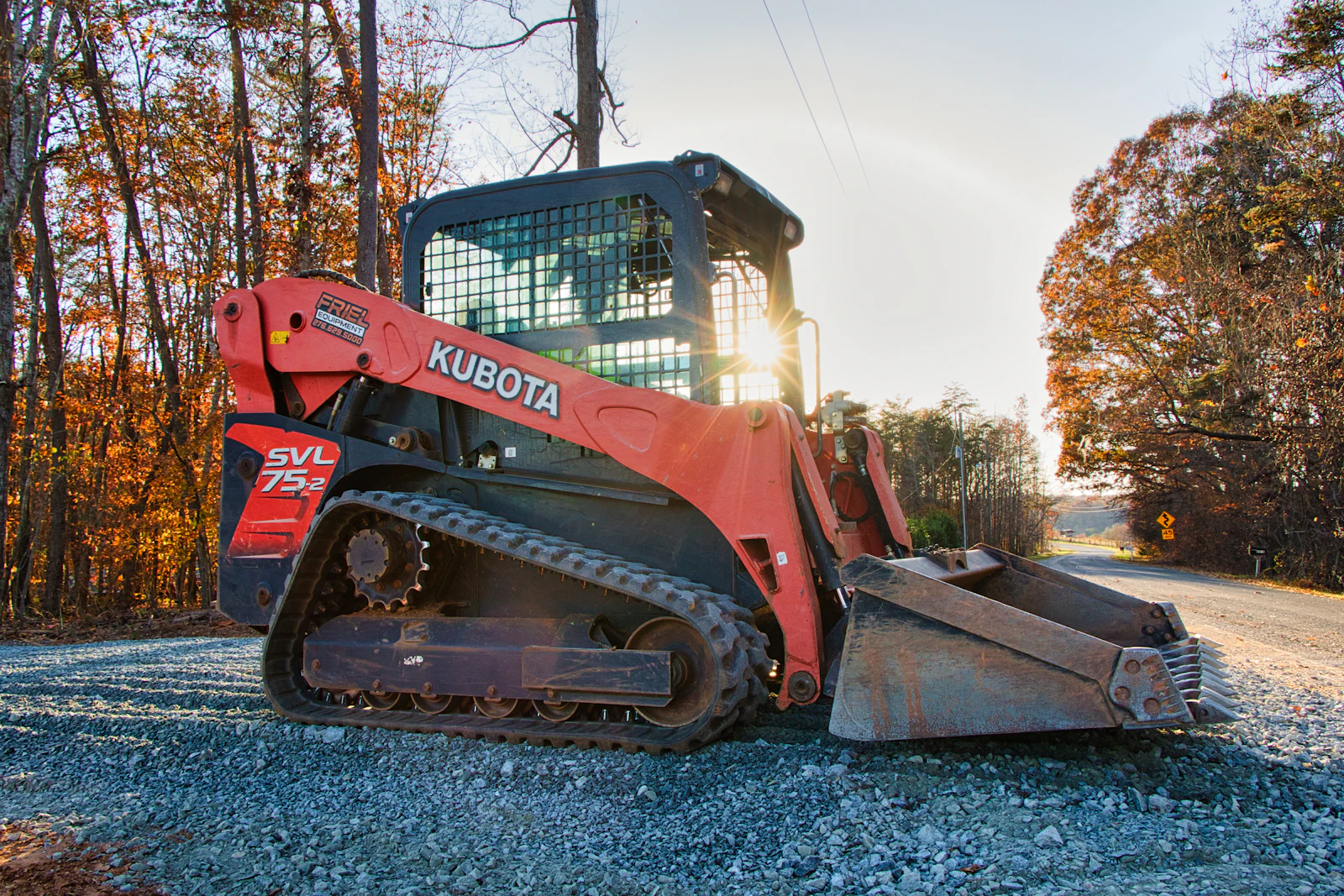
Use this bullet-format worksheet to build a defensible 2026 Nashville skid steer equipment hire budget without relying on a single quoted rate. Adjust the allowances to your contract terms (especially hours included and off-rent rules).
Use this field-ready checklist to reduce preventable cost additions on skid steer loader hire in Nashville.
These items directly affect skid steer equipment hire costs and should be confirmed in writing:
If you’re consistently extending week-to-week, you can end up paying more than a 4-week minimum. As a rule of thumb, if your schedule risk suggests you might exceed 18–20 calendar days on-site, request 4-week pricing up front and negotiate a fair early-return clause. This is one of the fastest ways to stabilize skid steer loader rental pricing on projects with inspection delays, weather days, or unpredictable punch lists.
For professional bid backup, state your assumptions explicitly: “Rates based on one-shift use (8 hours/day, 40 hours/week, ~160 hours/4-week), includes standard bucket; excludes overtime, fuel, cleaning, and delivery beyond metro radius; damage waiver carried at 14% pending COI acceptance.” This keeps the conversation focused on controllable cost drivers and prevents the skid steer equipment hire line from being value-engineered unrealistically.
Continue with estimating workflows, reviewed plan quantities, or cost guides organized by topic.
