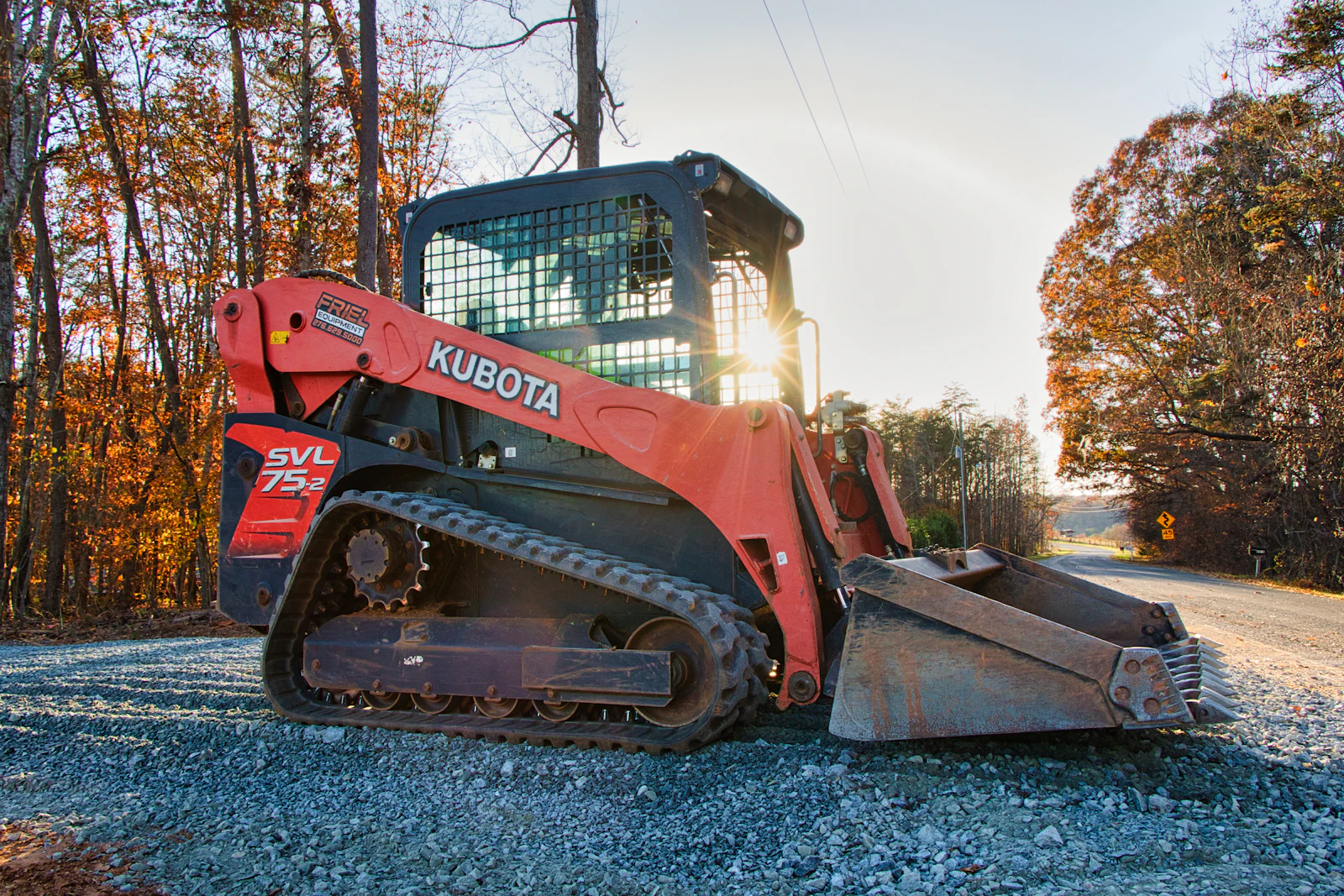
Skid Steer Loader Hire Costs New York 2026
2026 planning ranges (NYC/metro New York) for skid steer loader equipment hire: budget $275–$625/day, $950–$1,850/week, and $2,400–$4,600 per 28 days for a wheeled skid steer suitable for digging footings (typically with a toothed bucket and, where needed, a trencher or auger system). These ranges assume a standard single-shift rental (8 hours/day; 40 hours/week; 160 hours/4-week period), exclude tax, and exclude delivery, damage waiver, fuel/cleaning, and attachment adders that routinely move the “real” hire cost by 20%–60% on New York City jobs. As a pricing anchor, the New York State OGS heavy equipment rental schedule (updated 4/11/24) lists daily/weekly/monthly line items for skid steer loaders from $222/day (small ROPS class) up to $444/day (high-flow class), with NYC market rates commonly budgeting above those contracted figures depending on availability and access constraints. In practice, NYC rental coordinators most often source from national fleets (e.g., United Rentals, Herc Rentals) and local metro yards, then normalize the quote to a per-shift, delivered-to-curb, attachment-included number before releasing a PO.
| Vendor |
Daily Rate |
Weekly Rate |
Review Score |
Website |
| United Rentals |
$270 |
$780 |
9 |
Visit |
| Sunbelt Rentals |
$225 |
$660 |
8 |
Visit |
| Herc Rentals |
$235 |
$590 |
9 |
Visit |
| The Cat Rental Store (H.O. Penn) |
$295 |
$850 |
9 |
Visit |
NYC Rental Rate Ranges By Machine Class (And Why Footings Push You Up-Class)
For digging footings, the cheapest “yard skid steer” is rarely the lowest total equipment hire cost once you account for breakout force, cycle time, and rework. Use the following class-based budgeting approach, then validate with an availability check for your ZIP code (many vendors publish daily/weekly/monthly (28-day) rates once ZIP is entered).
- Small-frame wheeled skid steer (roughly 1,300–2,099 lb ROC): plan $275–$425/day, $950–$1,450/week, $2,400–$3,300/28 days. OGS line items show $222–$260/day depending on ROPS/CAB and high-flow configuration.
- Mid-frame wheeled skid steer (about 2,100–2,999 lb ROC): plan $350–$525/day, $1,250–$1,650/week, $3,000–$4,100/28 days. OGS line items show $320–$363/day across these classes.
- Large/high-flow wheeled skid steer (3,000+ lb ROC or HF hydraulics): plan $475–$625/day, $1,600–$1,850/week, $3,800–$4,600/28 days. OGS line items show up to $444/day for a high-flow class.
When to budget a compact track loader (CTL) instead: if you’re footing excavation on wet fill, soft subgrade, or you must limit surface damage (common in tight NYC sites with minimal laydown), CTLs reduce getting-stuck risk and rut remediation. Expect CTL hire to budget higher than wheeled skid steer hire: OGS CTL line items show approximately $358–$488/day depending on class and configuration, which often translates to $400–$750/day in 2026 NYC budgeting once delivery and demand premiums are included.
What Affects Skid Steer Equipment Hire Cost In New York City?
NYC skid steer loader hire cost isn’t just the base rate. The biggest cost drivers for skid steer rental for digging footings in New York City are operational constraints that change billable time and logistics:
- Access and delivery method: Manhattan and dense Brooklyn/Queens corridors frequently require tighter delivery windows (e.g., 6:00–7:00 AM), staged curb drops, or off-hour pickups. Vendors often price this as an after-hours dispatch premium (commonly $150–$300) plus any carrier detention if the drop cannot be completed in the allotted time.
- Machine configuration: CAB units typically budget $25–$60/day above open ROPS on like-for-like class; high-flow hydraulics can add $40–$120/day (or require stepping into a larger class) when running a trencher, planer, brush cutter, or breaker for ancillary scope.
- Ground protection and surface restoration: if you’re crossing finished sidewalks/stone pavers or working adjacent to brownstone stoops, budget ground protection mats at $20–$45 per mat/day, with a realistic NYC allowance of 12–24 mats depending on travel path and spoil placement.
- Utilization (shift and overtime): most rental pricing is based on a standard shift (8 hours/day; 40 hours/week; 160 hours/4 weeks). If you run extended shifts to hit a concrete window, the incremental charge is often computed from the base rate. Herc’s published guidance describes excess use payable at fractions of the daily/weekly/4-week charge (e.g., 1/8 of the daily for daily rentals).
Attachment Adders For Digging Footings (Where The Budget Usually Breaks)
For footing work, attachments and “small add-ons” are where equipment hire costs frequently jump—especially in NYC where you may be forced into smaller machines that then need specialized attachments to maintain production. The OGS schedule provides useful attachment price anchors (often below open-market NYC quotes), including:
- Skid steer trencher attachment: listed at $163/day, $481/week, $1,218/month (OGS anchor).
- Skid steer auger (medium or high torque): listed at $108/day, $308/week, $763/month (OGS anchor).
- Hydraulic breaker attachment (common mid-size classes): listed at $190/day, $536/week, $1,116/month (OGS anchor).
- 4-in-1 bucket (useful for trimming and cleanup): listed at $70/day, $157/week, $455/month (OGS anchor).
- Forks (material handling for forms/rebar bundles): listed at $43/day, $130/week, $287/month (OGS anchor).
- Extra buckets (width-specific): some bucket line items on the same schedule are as low as $11/day, $33/week, $92/month (useful anchor for “second bucket” requests).
NYC footing takeaway: if your scope includes any mix of trenching, drilling for sonotubes, or breaking an existing slab/areaway, treat the attachment package as a first-class cost line—not a contingency.
Delivery And Pick-Up Costs In New York (Where The Invoice Surprises Happen)
NYC jobs are delivery-cost sensitive because you’re paying for transport complexity, not miles. As a baseline anchor, the OGS schedule lists a $250 each-way transportation charge per item within 30 miles for many line items.
- Metro delivery planning allowance: budget $350–$650 each way for a skid steer delivered into NYC proper when curb access is constrained, with bridge/tunnel toll pass-through often showing as $15–$50 per trip depending on routing and truck class.
- Minimums and “failed delivery”: if the driver cannot offload due to blocked curb, missing plates/permits, or no receiver, a redelivery commonly triggers an additional $150–$400 plus detention time.
- Truck detention: plan $95–$175 per hour after an included free time window (often 30–60 minutes). In NYC, this is most often caused by waiting for a spotter, waiting on NYPD/flaggers, or elevator/hoist coordination for attachments and accessories.
Operational constraint that changes cost: if your contract requires “off-rent” notice by a daily cutoff (commonly mid-afternoon), missing the cutoff can push pickup to the next business day and create an extra billable day—especially if the vendor will not schedule Saturday pickups without premium charges.
Fuel, Cleaning, And Return-Condition Charges That Inflate Skid Steer Hire Cost
For footing excavation, the dirtiest costs are often the most predictable—plan them up front:
- Fuel/DEF return condition: most diesel skid steers are expected back full; otherwise budget “full-service” fuel at $6–$9/gal and DEF at $12–$20/gal (plus service fee where applicable).
- Cleaning fee: if returned with caked clay, wet concrete splatter, or spilled spoils in the belly pan, plan $75–$250 for standard cleaning and $150–$400 if hardened material requires extra labor.
- Wear items and damage: bucket teeth often get billed as replacement parts if returned missing/broken; budget $25–$60 per tooth depending on pattern and vendor.
Shift Limits, Weekend Billing, And Overage Hours (Read This Before You Pour)
Skid steer rental pricing is typically built around one shift. If you need extended hours to hit a concrete crew window, confirm the overtime computation method before you sign. Herc publishes that the basic daily/weekly/4-week rates cover 8 hours/day, 40 hours/week, 160 hours/4 weeks, and excess use is charged using fractions of the base (e.g., 1/8 of the daily for a daily rental).
- Planning allowance for overage: budget $35–$85/hour for incremental skid steer time if you commonly run 10-hour days during excavation/footing cycles.
- Weekend rules: many NYC programs treat Saturday as a billable day even if used lightly; some vendors require premium dispatch for weekend pickup/delivery (commonly 10%–20% surcharge on time charges, or a $150–$300 dispatch premium).
- Holiday constraints: if a holiday blocks pickup, you can inadvertently buy an extra 1–2 days. Carry a 1-day float allowance whenever your schedule crosses a holiday weekend.
Example: 5-Day Footing Dig In Brooklyn With Real NYC Constraints
Scenario: You’re excavating shallow strip footings and pier pads behind a Brooklyn rowhouse with a tight curb lane and limited staging. Access forces you into a mid-frame wheeled skid steer (CAB) with a toothed bucket and forks for handling form lumber. The GC requires delivery before 7:00 AM and pickup after 4:00 PM to avoid conflict with school drop-off traffic.
- Base machine hire (planning): $450/day × 5 days = $2,250 (single shift, NYC market planning figure).
- Delivery + pickup: $500 each way = $1,000 (includes toll allowance and tight window premium).
- Forks attachment: budget $40–$75/day × 5 = $200–$375 (OGS anchor is $43/day).
- Damage waiver / rental protection: plan 10%–15% of time charges (here, roughly $225–$340 on the base hire).
- Cleaning allowance: $150 (clay spoil + sidewalk tracking likely).
- One 2-hour overage day: budget $120–$170 depending on your overtime rate structure.
Planning total: in this Brooklyn example, the skid steer equipment hire cost commonly lands in the $3,945–$5,285 range once logistics and standard protections are included, before tax and before any specialized attachments (trencher/auger/breaker).
Budget Worksheet
Use the following checklist-style worksheet to carry realistic allowances for skid steer loader equipment hire costs in New York City (digging footings):
- Skid steer loader rental (time charge): ___ days at $___/day (or ___ weeks at $___/week)
- Configuration adder: CAB (+$25–$60/day) and/or high-flow (+$40–$120/day) as required
- Attachments: toothed bucket (often included), 4-in-1 bucket (+$50–$110/day), forks (+$40–$75/day), trencher (+$175–$325/day), auger powerhead (+$125–$250/day), breaker (+$225–$425/day)
- Delivery/pickup: $___ each way (carry $350–$650 each way for NYC planning; add $15–$50 tolls per trip)
- Detention/standby risk: 2 hours at $95–$175/hour (receiver delays, blocked curb, no spotter)
- Damage waiver / protection plan: 10%–15% of time charges
- Fuel/DEF allowance: $75–$250 (higher if vendor fuels at $6–$9/gal)
- Cleaning allowance: $75–$250 (carry $150–$400 if concrete contamination is possible)
- Ground protection mats: 12–24 mats at $20–$45/mat/day
- 1-day schedule float: 1 extra day of base hire to protect against pickup cutoff/holiday impacts
Rental Order Checklist
- PO scope clarity: exact machine class (ROC), tires vs tracks, CAB/ROPS, high-flow required (Y/N), bucket type (smooth vs teeth)
- Attachment list on the PO: forks, 4-in-1 bucket, trencher, auger powerhead + bit sizes, breaker + tool steel, coupler type
- Delivery requirements: street address, borough, contact + phone, delivery window, curb lane plan, spotter/receiver commitment, freight elevator notations (if accessories must go inside)
- Site access constraints: gate widths, alley turning, overhead clearances, posted weight limits, sidewalk bridging/mats required
- Off-rent process: required notice, pickup cutoff time, how to document off-rent (email + timestamp), and who is authorized to release equipment
- Return condition documentation: photos of machine/attachments at delivery and at pickup, hour meter reading, fuel level, and any existing damage noted on the ticket
- Billing controls: shift hours included, overtime method, weekend/holiday billing rules, damage waiver %, environmental/fuel surcharges, and tax-exempt documentation if applicable
Hidden-Fee Breakdown
To control total skid steer equipment hire cost in New York (especially for footing excavation), separate your estimate into “rate” and “charges that behave like rate.” These are the recurring line items that most often change the invoice:
- Delivery / pick-up: flat each-way charges vs mileage. As an anchor, NY OGS lists $250 each way within 30 miles on its heavy equipment schedule, but NYC operational delivery commonly budgets above that when access is constrained.
- Mobilization failure risk: redelivery fees of $150–$400 when curb space isn’t secured or a receiver isn’t present.
- Fuel or recharge surcharges: diesel billed at $6–$9/gal plus service; DEF at $12–$20/gal (if applicable).
- Damage waiver vs. full insurance: typical protection plans run 10%–15% of time charges; confirm whether attachments are included or billed separately.
- Cleaning fees: $75–$250 standard, $150–$400 heavy clean (mud/concrete).
- Late return / extra day mechanics: missing an off-rent cutoff can create a full additional billable day; carry a 1-day float on any schedule with permit uncertainty or weather risk.
- Excess shift hours: verify the overtime basis. Herc notes standard shift limits (8/40/160) and excess use charged by fractions of the base rate (e.g., 1/8 of daily for daily rentals).
NYC Off-Rent Rules, Delivery Cutoffs, And How To Avoid Buying Extra Days
In New York City, you don’t “return” a skid steer—you schedule a pickup, and pickup is where the job bleeds money. Build these controls into your rental coordination plan:
- Set a written off-rent cutoff: require the superintendent to submit off-rent notice by 12:00 PM (internal rule), even if the vendor cutoff is later, to protect against missed emails and dispatch backlog.
- Bundle pickups: if you have multiple items (skid steer + attachments + mats), schedule a single consolidated pickup window to reduce each-way fees and detention exposure.
- Document “last use” vs “last possession”: if the machine is idle but still on site, you’re usually still paying. Assign someone to confirm when it is truly off-rent and secured for pickup.
- Weekend planning: if Saturday pickup requires premium dispatch, it can be cheaper to keep the unit through Monday (but only if your yard space and security controls prevent theft and damage).
Skid Steer Vs Compact Track Loader For Footings: Cost Trade-Off In NYC
For footing excavation, the decision is often production vs surface impact vs getting-stuck risk:
- Wheeled skid steer: usually lower base hire cost and faster on hardscape, but more likely to spin/rut on wet fill.
- Compact track loader (CTL): often higher base hire, but can reduce remediation and downtime. OGS CTL line items (as a pricing anchor) list daily rates roughly $358–$488/day depending on class and configuration.
NYC-specific consideration: CTLs can be cost-effective when sidewalk/curb restoration is a contractual risk. If a wheeled machine causes a single sidewalk repair event, that can exceed a week of rental delta.
How To Quote Attachments For Footings Without Overbuying
Attachment hire cost is highly sensitive to “days on rent” vs “days actually used.” Two practical controls:
- Stage attachments: deliver the skid steer first, then deliver the trencher/auger only for the planned production days. As an anchor, OGS lists a skid steer trencher at $163/day and an auger system at $108/day; even if your NYC vendor quote is higher, staging still reduces total attachment days.
- Confirm couplers and hydraulics: mis-matched quick-attach or incorrect hydraulic flow can create a “paid but unusable” day. This risk increases on tight NYC schedules where same-day swaps are difficult.
Controls That Reduce Total Skid Steer Equipment Hire Cost In New York
- Pre-clear curb space and receiving: a confirmed receiver reduces redelivery and detention (often $95–$175/hour exposure).
- Specify the smallest workable class: smaller machines reduce delivery complexity and may avoid larger-truck dispatch; however, don’t under-class if it creates a second week of hire.
- Dust and debris controls: if you’re tracking spoil through a finished lobby or cellar access, budget containment (poly, tack mats) to avoid cleanup backcharges that exceed a $150–$400 cleaning fee.
- Photo documentation protocol: delivery photos + pickup photos reduce disputed damage and missing attachment charges (common for buckets, forks, and hydraulic tools).
2026 Pricing Assumptions Used In These Hire Ranges
The daily/weekly/28-day figures above are planning ranges intended for estimating and procurement alignment, not guaranteed vendor quotes. They are built from: (1) published rate structures where vendors show daily/weekly/monthly (28-day) pricing online after ZIP entry, and (2) New York State OGS schedule line items as a contracted-price anchor for skid steer loaders and attachments. In 2026, carry a 3%–6% escalation allowance for renewals/extensions and another 5%–10% for peak-demand periods (spring/summer excavation and post-storm recovery) when availability tightens.
Ownership Versus Hire Cost Snapshot (NYC Footing Work)
For frequent footing programs (multiple small sites), ownership can pencil if your utilization is consistent and you can control transport and storage. As a simple comparison point:
- Hire pattern: if you rent a mid-frame skid steer at $1,450/week for 10 weeks/year, your annual time charges alone are about $14,500, before delivery, waiver, and attachments.
- Delivery exposure: at $500 each way across 10 mobilizations, transport alone can add $10,000 annually.
If those numbers resemble your program, the “right” answer is often a hybrid: own a core skid steer (or mini excavator) and still hire specialty attachments (trencher, breaker) or a CTL when site conditions demand it.