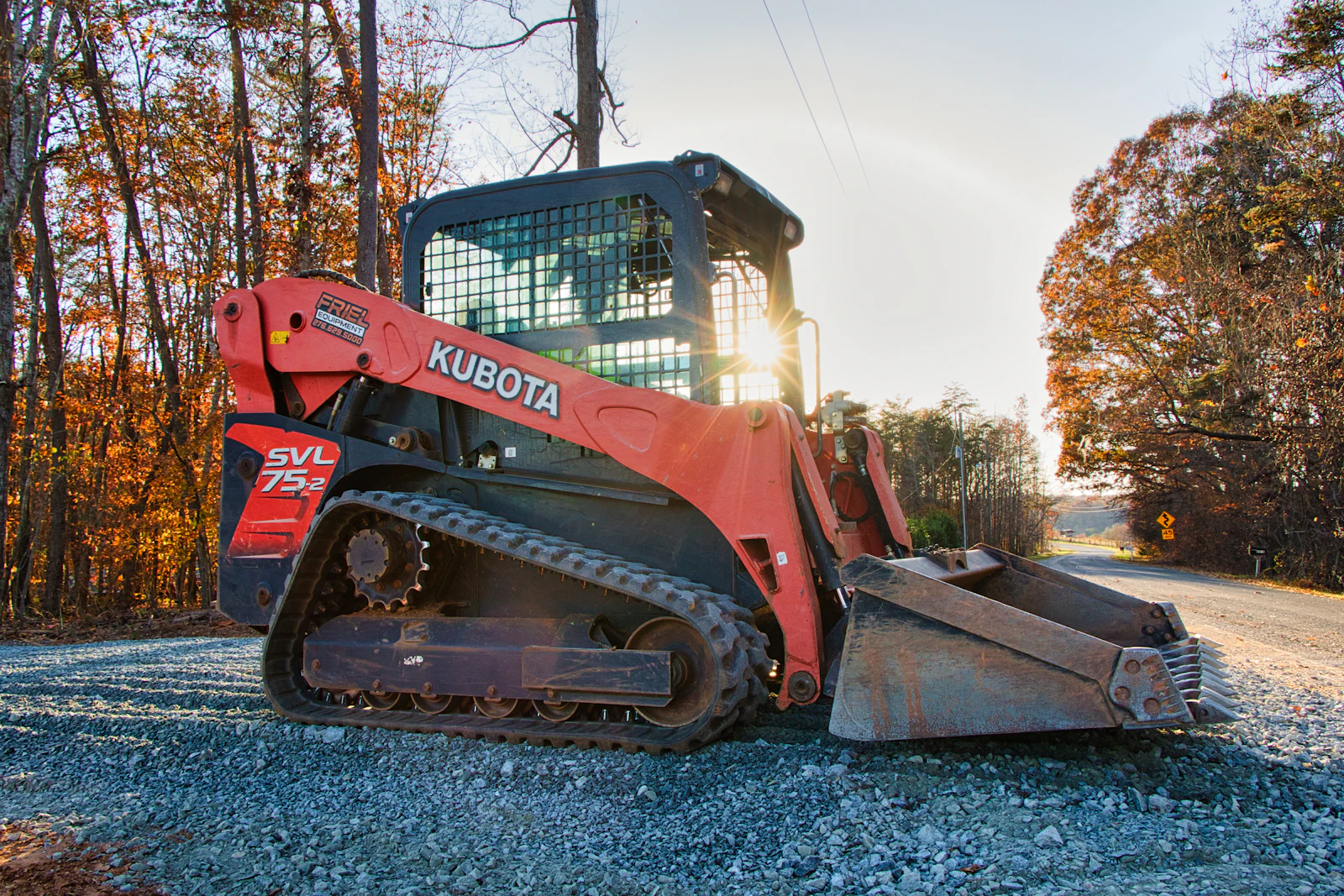
Skid Steer Loader Rental
For 2026 budgeting in New York (NYC metro), skid steer loader equipment hire typically plans in the following ranges (one-shift use unless noted): wheeled skid steer loaders run about $250–$450 per day, $900–$1,500 per week, and $2,200–$3,800 per 28-day “month”. Compact track loaders (CTLs) and high-flow configurations commonly budget higher at $380–$650 per day, $1,150–$2,200 per week, and $2,800–$5,500 per 28-day month, especially when access, undercarriage wear, and delivery constraints drive up total landed cost. In New York you’ll usually source from national providers (United Rentals, Sunbelt Rentals, Herc Rentals) plus independent yards across the five boroughs, Long Island, and North Jersey; net rates will vary by account program, fleet availability, and whether you’re packaging attachments, delivery, and rental protection.
| Vendor |
Daily Rate |
Weekly Rate |
Review Score |
Website |
| United Rentals |
$350 |
$1 000 |
9 |
Visit |
| Sunbelt Rentals |
$275 |
$825 |
8 |
Visit |
| H.O. Penn (Cat Rental Store) |
$395 |
$1 150 |
9 |
Visit |
| Bobcat of New York & Long Island (Bobcat Zone) |
$475 |
$1 200 |
10 |
Visit |
| Durante Rentals |
$325 |
$950 |
9 |
Visit |
Skid Steer Rental Rates in New York (2026 Planning Ranges)
Assumptions for these 2026 planning ranges: (1) standard bucket included unless otherwise stated, (2) “week” is commonly treated as a 5-day/40-hour or 7-day period depending on supplier, (3) “month” is typically a 28-day/160-hour rental cycle in rate cards, (4) NYC delivery logistics (tolls, limited windows, staging) often add more cost than the base rent.
Wheeled skid steer loader (general-purpose, 1,300–2,100 lb ROC class):
- Budget base rent: $250–$420/day; $850–$1,350/week; $2,000–$3,200/28-day.
- Cab premium (heat/AC): commonly +$25–$90/day depending on class and season.
Wheeled skid steer loader (2,400–3,000 lb ROC class, higher utilization on commercial sites):
- Budget base rent: $300–$500/day; $1,050–$1,700/week; $2,400–$4,000/28-day.
- High-flow hydraulics (for planers/mulchers): commonly +15%–30% on base rent, or +$60–$120/day as a planning adder.
Compact track loader (CTL) / tracked skid steer rental cost (soft ground, demolition, winter traction):
- Budget base rent: $380–$650/day; $1,150–$2,200/week; $2,800–$5,500/28-day.
- Track/undercarriage wear is real cost in NYC (curbs, steel plates, concrete spoils). For estimating, carry a $150–$300/week contingency on CTLs if your scope includes abrasive surfaces or mixed demo debris.
Published benchmarks you can sanity-check against: New York State contract rate schedules (often lower than walk-in NYC quotes) show skid steer loader daily/weekly/monthly pricing by capacity class, and include an example transportation charge structure (e.g., per-item delivery within a distance band). Use these as a floor reference when checking whether a quote is “NYC-logistics-heavy” versus “rate-heavy.”
What Drives Skid Steer Loader Hire Costs in New York City?
When you’re building a skid steer loader hire cost estimate for NYC, the base rental rate is rarely the whole story. The total landed cost is typically driven by (a) delivery constraints, (b) insurance/compliance requirements, (c) attachment mix, and (d) overtime/shift utilization on the meter. The following factors are the usual cost multipliers:
- Access and machine width: tight gates, alleys, and sidewalk protection can force a smaller-frame skid steer or even a mini track loader; smaller isn’t always cheaper if it’s scarce in your delivery window.
- Wheeled vs tracked: CTLs often cost more per day, but can reduce restoration scope (rutting) and rework risk—important on parks work, campus sites, and backyards in Queens/Brooklyn with limited remediation tolerance.
- Cab, heater/AC, and visibility packages: winter work and dust-control plans often push teams toward enclosed cabs, which can lift daily rent and can change cleaning expectations on return.
- Hydraulic flow requirement: specifying a planer, mulcher, or certain sweepers can force high-flow; plan a 15%–30% rent premium plus higher damage-waiver exposure because attachments drive claim severity.
- Seasonality: snow attachments and winter-ready CTLs can be higher-demand; summer utility seasons can tighten availability for general-purpose skid steers.
- Compliance paperwork cycle time: NYC sites frequently require COIs, additional insured language, and in some cases operator documentation. Admin friction can turn a “tomorrow delivery” into a “48–72 hour” mobilization unless you pre-stage documents.
Typical Add-On Costs And Attachments For Skid Steer Hire
Attachments can move your equipment hire costs more than the base machine—especially in New York where one attachment swap can save labor but add delivery complexity. Plan these 2026 attachment hire adders (ranges reflect common NYC-area quoting, not guaranteed list pricing):
- Pallet forks: $25–$60/day or $75–$180/week (sometimes bundled; confirm in writing).
- 4-in-1 bucket / grapple bucket: $70–$200/day depending on size; allow $250–$650/week.
- Auger drive (no bit): $90–$160/day; bits commonly $15–$35/day each (lost/damaged bits are often billed at replacement cost).
- Trencher attachment: $150–$260/day; plan $450–$780/week.
- Hydraulic breaker/hammer: $250–$450/day; plan $750–$1,350/week (plus grease and tool wear expectations).
- Angle broom / sweeper: $120–$220/day; plan $370–$900/week (often triggers stricter cleaning rules on return).
- Cold planer: $350–$650/day; plan $1,200–$2,500/week (high-flow requirement is common).
- Forestry mulcher (specialty): $850–$1,300/day and may carry a 1-week minimum depending on yard policy.
If you need a reality-check on attachment magnitudes, statewide rate schedules for skid steer attachments show daily/weekly/monthly pricing bands by attachment type (e.g., trenchers, sweepers, snow tools, mulchers), useful for validating whether an NYC quote is inflated by logistics or truly driven by the tool itself.
Hidden-Fee Breakdown
These are the line items that most often cause skid steer loader rental New York invoices to exceed the PO amount. Build them into your estimate so the site team doesn’t “discover” them after the fact:
- Delivery / pickup: NYC-area mobilization commonly budgets $250–$600 each way for a skid steer, plus $20–$80 in tolls/bridges where applicable. If the truck is held at site, waiting time can run $120–$200 per hour after an initial grace period.
- Minimum rental term: some suppliers enforce a 2-day minimum for delivered machines; specialty attachments may enforce a 1-week minimum.
- Damage waiver / rental protection: frequently 10%–18% of base rent, sometimes with exclusions (tires, glass, undercarriage, misuse). United’s Rental and Service Terms also call out that rental charges accrue during weekends/holidays and that “one-shift” usage assumptions apply, which becomes relevant when protection is priced as a percentage of rent.
- Environmental/service charges: often 2%–6% of rent (supplier-specific), sometimes applied before tax.
- Fuel / refuel and fluids: if returned below full, plan posted diesel billing around $6–$9 per gallon plus a $25–$45 convenience/admin fee. DEF (if billed) can be $6–$10 per gallon.
- Cleaning and decon: standard wash/cleanup $150–$450; concrete slurry, asphalt millings, or hardened spoils can trigger $300–$900 “excess cleaning.”
- Wear items and damage back-charges: flat tires and track damage are common on NYC curb lines; carry a contingency of $250–$450 per tire (if damage occurs) and confirm whether CTL undercarriage wear is billable versus “included.”
- Late return / lost time: missing an off-rent cutoff can effectively add 1 extra day. Also note that some terms state weekly and 4-week rates are not prorated, which matters when a return is a day late.
Budget Worksheet
Use this worksheet format to build a PO-ready skid steer loader equipment hire estimate (no tables—just line items with allowances). Adjust quantities to your schedule and delivery plan.
- Skid steer loader base rent (wheeled or tracked): allowance $250–$650/day × ____ days (or convert to weekly/28-day once you pass breakpoints).
- Machine configuration adder: cab +$25–$90/day; high-flow +15%–30% of base rent.
- Attachments (select): forks $25–$60/day; breaker $250–$450/day; trencher $150–$260/day; sweeper $120–$220/day.
- Delivery and pickup: $250–$600 each way + tolls $20–$80 + waiting time $120–$200/hr (carry 1 hour contingency).
- Rental protection / damage waiver: 10%–18% of base rent (confirm exclusions; include attachments if charged on total rent).
- Environmental/service charge: 2%–6% of rent (supplier-dependent).
- Fuel plan: assume 4–6 gallons/day in moderate duty; budget diesel at $6–$9/gal if supplier refuels.
- Cleaning/return condition: allowance $250 standard; add $600 if concrete/asphalt contamination risk is high.
- Schedule risk: carry 1 additional day of rent for weather/inspection slippage, especially when weekend billing applies.
Rental Order Checklist
Use this checklist to reduce change-orders and “extra day” charges on skid steer loader hire in New York.
- PO and contract alignment: confirm quoted basis (day/week/28-day), one-shift hour limits, and whether weekends/holidays accrue.
- Exact delivery address + access notes: borough, cross street, gate width, dock height, and whether a smaller truck is required.
- Delivery window and site contact: name/number on site, call-ahead requirement, and whether after-hours delivery adds $150–$350.
- COI requirements: additional insured language, waiver of subrogation if required, and certificate holder details before dispatch.
- Machine spec confirmation: ROC class, wheeled vs CTL, cab/heat/AC, high-flow yes/no, and any non-marking track request.
- Attachment list: bucket type, forks, breaker, sweeper, auger + bit sizes; confirm quick-attach compatibility.
- Condition-at-delivery documentation: photos/video of tires/tracks, bucket cutting edge, forks tines, cab glass, hour meter.
- Off-rent process: who is authorized to call off-rent, required notice (often same-day cutoff), and where equipment will be staged for pickup.
- Return condition plan: refuel expectation (return full vs supplier refuels), cleaning responsibility, and where washout is allowed.
Example: Two-Week Skid Steer Hire In Brooklyn With Attachments
Scenario: You’re running a two-week sidewalk/curb rebuild in Brooklyn with limited staging. The machine must be delivered after 7:00 AM, removed the final day before a Friday evening street sweep schedule, and cannot idle indoors due to dust-control requirements.
- Machine: CTL (cab) planned at $1,850/week × 2 weeks = $3,700 (within typical 2026 NYC planning ranges).
- Forks: $50/day × 10 working days = $500.
- Angle broom/sweeper: $180/day × 5 days = $900.
- Delivery and pickup: $450 each way = $900 (include tolls/borough access in this allowance).
- Waiting time contingency: $150/hour × 1 hour = $150 (truck held while site clears a lane).
- Damage waiver / rental protection: 15% of rent (machine + attachments if charged that way) on $5,100 = $765.
- Environmental/service fee: 4% of rent subtotal $5,100 = $204.
- Fuel/refuel allowance: assume 5 gallons/day × 10 days = 50 gallons at $7.50/gal = $375, plus a potential $35 convenience fee if not returned full.
- Cleaning allowance: $300 (sweeper use and concrete dust raises the probability of a wash/cleanup charge).
Planning total (before tax): $3,700 + $500 + $900 + $900 + $150 + $765 + $204 + $375 + $35 + $300 = $7,829. The operational constraint that matters here is timing: missing the pickup cutoff can add an extra billable day even if the machine is “done,” so align off-rent call, staging, and access.
Operational Rules That Change The Invoice
These rules show up in rental terms and rate cards, and they’re frequent drivers of “why is the invoice higher than the quote?” escalations:
- Standard hour caps: one-shift usage is commonly defined as 8 hours/day, 40 hours/week, and 160 hours per four-week period. If you’re running double shift to make up schedule in NYC, plan premium charges or a higher negotiated rate.
- Overtime / extra shift multipliers: one set of terms describes 1.5× the rental charge for double shift and 2× for triple shift on power equipment. Use this to forecast costs whenever a site plans extended hours or weekend production.
- Weekend/holiday accrual: rental charges can accrue through Saturdays, Sundays, and holidays depending on supplier terms—even if your crew is off—so confirm whether you’re paying “calendar time” or “working time.”
- Off-rent vs pickup date: some terms clarify that if pickup is delayed due to lack of access, the equipment may remain on rent. Operationally, you need a clean staging location and documented “ready for pickup” notification.
- Weekly/4-week proration: some terms state weekly and 4-week rates are not prorated. If you keep a unit one day beyond a 4-week cycle without a negotiated pro-rate, you can get hit with an additional period or daily overage at higher-than-expected cost.
Risk, Damage, And Documentation Controls
In New York, theft risk, street exposure, and curb-line damage make documentation part of cost control. For rental coordinators, the simplest guardrails are procedural:
- Pre-use inspection photos: capture all four sides, tires/tracks, bucket cutting edge, forks tines, cab glass, and hour meter at delivery.
- Daily closeout: confirm machine is parked in a fenced area or behind jersey barriers; if not feasible, budget off-site storage at $150–$300/week rather than risking a theft claim.
- Return-condition packet: photos on load-out, fuel level photo, and a quick note of any known damage. This helps when cleaning or repair back-charges show up later.
When Monthly Equipment Hire Beats Daily/Weekly
Skid steer loader hire rates usually “cap” once you hit weekly and 28-day rate breakpoints. In practice, you should start comparing options once your schedule passes:
- 4–5 billable days: check whether the weekly rate is cheaper than stacking daily charges.
- 15–18 billable days: start modeling the 28-day rate, especially if weekends accrue and you’re holding the machine on site between work phases.
Also, rate cards often assume a four-week month (not a calendar month). If your project runs 31 calendar days, you may owe the 28-day rate plus daily overage unless you negotiate a true calendar-month structure up front.
Notes For New York Jobsite Logistics
- Delivery radius norms: a “local” delivery in NYC can still be expensive due to traffic and restricted truck routes; plan higher delivery allowances than you would in suburban Upstate NY.
- Tolls and time-of-day constraints: bridge/tunnel tolls and daytime congestion can drive higher delivery/pickup pricing. If your site only accepts deliveries before 7:00 AM or after 3:00 PM, budget the after-hours surcharge (often $150–$350) and confirm it in the quote.
- Indoor dust-control: if using a skid steer inside (warehouse fit-out, large basement access), plan HEPA dust control and stricter return cleaning. Carry $300–$900 excess-cleaning risk depending on material.
Procurement Tips For Better Skid Steer Loader Hire Rates
- Bundle intelligently: bundling forks + bucket is common; bundling specialty tools (breaker/planer) may not be. Ask for “package” pricing, but separate delivery so you can see the true logistics cost.
- Lock delivery terms: confirm whether delivery includes tolls, how long the driver will wait before hourly charges apply, and what constitutes a failed delivery.
- Pre-negotiate extended use: if you might go double shift, negotiate a blended rate rather than accepting automatic 1.5×/2× multipliers after the fact.
- Get the off-rent cutoff in writing: one missed cutoff is often the single highest-probability driver of an unplanned extra day in NYC.
Reference benchmark: published NY rental rate cards (example: effective-date rate sheets for skid steers and attachments) show that even outside NYC, day/week/4-week pricing can be materially lower than NYC delivered totals—reinforcing that New York City equipment hire costs are often dominated by logistics, utilization, and compliance rather than base rent alone.