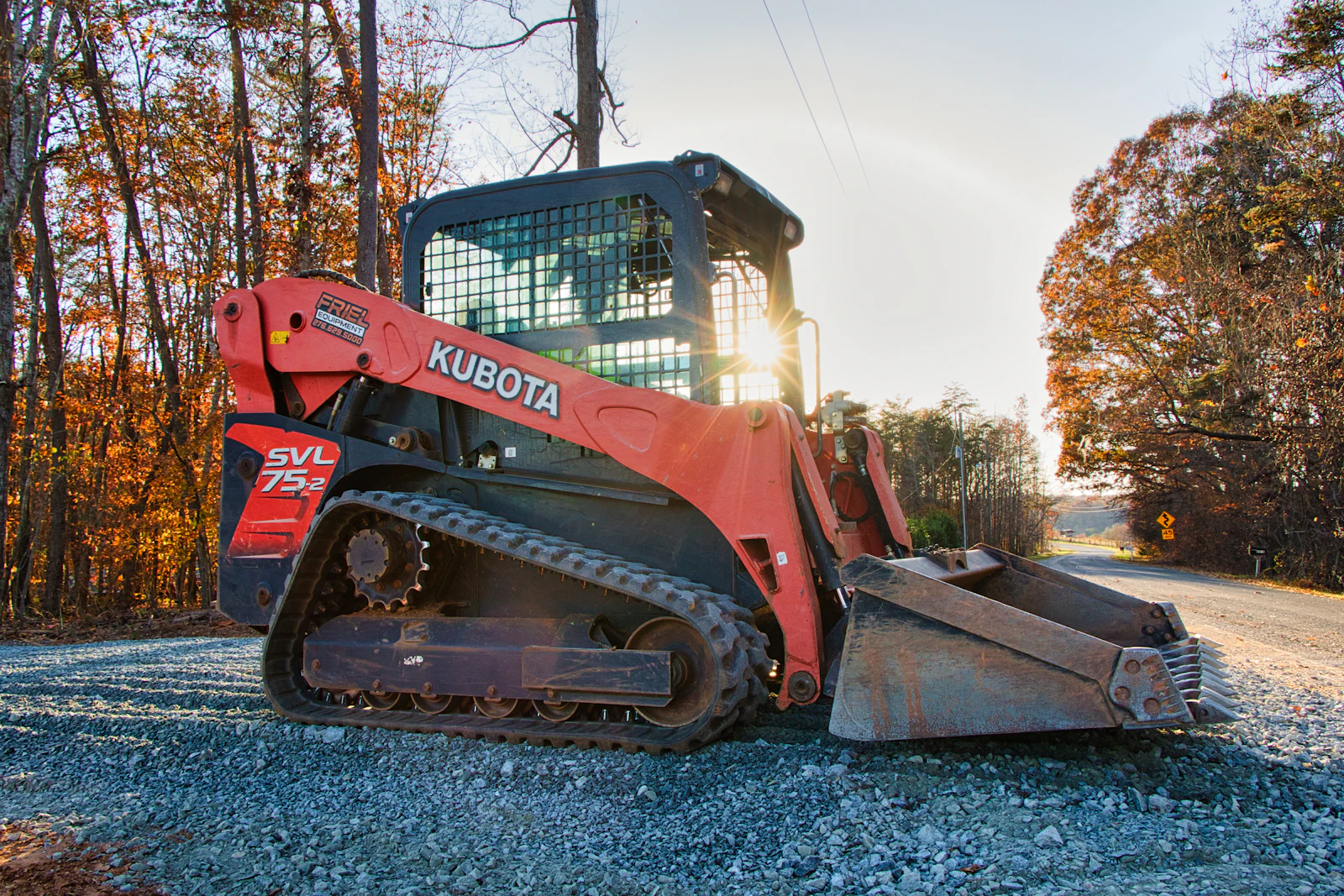
Skid Steer Loader Rental
For Omaha, Nebraska (2026 planning), skid steer loader equipment hire commonly budgets in three tiers: compact units in the $185–$225/day range, mid-frame units around $200–$325/day, and larger skid steers about $260–$310/day, with weekly and 4-week “monthly” rates typically discounted versus day-rent. Local market examples published by Omaha-area rental counters include daily/weekly/4-week pricing by model (for example, Bobcat S70 through S770) and also show the practical rules that drive true cost (hour caps, one-day minimums, fuel-return expectations, and protection-plan adders). National chains (Sunbelt, United Rentals, Herc) and local independents can price similarly, but availability and delivery lead-times often matter more than small day-rate differences during peak grading/flatwork seasons.
| Vendor |
Daily Rate |
Weekly Rate |
Review Score |
Website |
| United Rentals |
$295 |
$940 |
10 |
Visit |
| Sunbelt Rentals |
$300 |
$960 |
8 |
Visit |
| NMC The Cat Rental Store |
$290 |
$925 |
8 |
Visit |
| Bobcat of Omaha |
$260 |
$845 |
10 |
Visit |
| Rental City Tool & Equipment |
$325 |
$975 |
9 |
Visit |
Omaha 2026 Hire Rate Benchmarks By Machine Size (Rubber-Tire Skid Steers)
If you need a defensible budget quickly, start by mapping your scope to a size class (operating weight and ROC), then apply Omaha ranges with hours, delivery, and protection plan as separate line items (not hidden inside “rental rate”). Published Omaha-area pricing by model is a useful anchor for setting your 2026 plan, even if your final quote is account-based.
- Compact skid steer (e.g., S70 class): plan $185–$225/day, $650–$775/week, and $1,450–$1,750 per 4-week month for a basic bucket package when availability is normal.
- Mid-frame (e.g., S450 class): plan $200–$350/day, $700–$1,050/week, and $1,800–$2,300 per 4-week month. (Omaha examples show both a lower day-rate structure and a higher retail day-rate at another local counter; use the spread as your negotiating/budget band.)
- Large-frame (e.g., S650/S66/S76 to S770 classes): plan $260–$325/day, $845–$1,050/week, and $2,200–$2,650 per 4-week month depending on breakout force, lift path, and options.
Assumption note for 2026 planning: the “monthly” number on many rental sheets is a 28-day / 4-week rate, not a calendar month. That matters if your project managers think “month = 30 days,” or if your accounting accrues on calendar periods.
Hour Caps, Overtime, And Why The Posted Day Rate Is Not Your Day Cost
Skid steer hire in Omaha is typically governed by hour-meter caps per rental period. A common structure is 8 engine hours per 24-hour day, 40 hours per 7-day week, and 160 hours per 28-day (4-week) period, with overtime hours prorated.
From a cost-control perspective, the operational takeaway is simple: if you are running two shifts, pushing heavy material in high heat, or using a high-demand attachment (broom, mulcher, planer), you should model overtime hours as a separate cost exposure. For budgeting, many contractors in the region carry an overtime allowance of $18–$45 per excess hour (varies by machine size and vendor policy) so the job doesn’t get surprised when the hour meter is reconciled at closeout.
What Affects Skid Steer Loader Equipment Hire Costs In Omaha?
In Omaha, three practical variables usually explain most price spread on skid steer loader hire quotes:
- Machine class and lift path: larger ROC and vertical-lift machines generally rent higher than radial-lift units with similar horsepower. Plan a $40–$110/day spread from compact to large-frame units when comparing “apples to apples” bucket packages.
- Configuration: enclosed cab, heat/AC, ride control, and premium hydraulics often add $15–$60/day, but can reduce labor fatigue and cycle time enough to be net-positive on production work.
- Traction and surface protection: if turf, mud, or subgrade disturbance is a concern, you may be pushed into a compact track loader (CTL). Expect CTL hire to run roughly $60–$150/day more than a similar wheeled skid steer in many markets, and delivery can be more constrained due to transport weight and trailer requirements.
Omaha-specific consideration #1 (seasonality): freeze-thaw and spring rain can drive “tracks vs tires” decisions. If your schedule lands in March–May or late fall, plan for higher demand on CTLs and on ground-protection accessories (mats), which can tighten availability and raise transport costs even when base day-rent stays stable.
Omaha-specific consideration #2 (soil and cleanup): heavy clay and wet job exits around new subdivisions can increase undercarriage buildup and washout needs. If your contract requires “return clean,” carry a realistic cleaning allowance (see fees below) instead of assuming operators will have time at demob.
Hidden-Fee Breakdown (What To Ask Before You Issue The PO)
To keep skid steer loader hire costs predictable, confirm each of the following cost buckets in writing. Omaha-area rental sheets commonly call out these items as excluded from base rental:
- Rental protection / damage waiver: if you cannot provide the required proof of insurance for full equipment value, some local terms apply a 15% Rental Protection Plan fee to the equipment rental charges.
- Delivery / pickup: plan $140–$275 each way inside a typical metro radius; after-hours or short-notice can push to $300–$450. Some vendors price as a flat fee; others use mileage plus a minimum (for budgeting, carry $4–$8 per loaded mile beyond an included radius).
- Fuel / refuel: many Omaha counters require “return full” and charge a posted per-gallon rate if returned short. Budget $5.00–$7.50/gal for back-charged diesel exposure, plus 0.8–2.5 gal/hr burn depending on load and duty cycle.
- Cleaning fees: published local terms note a cleaning fee for excessive concrete, asphalt, or animal waste. For budgeting, carry $75–$250 for standard washout and $250–$600+ if concrete splatter, asphalt tack, or hardpack requires labor time.
- Minimum charges: some Omaha vendors have one-day minimum and “no hourly” policies; others offer a 4-hour rate on select units (useful for quick backfill or pallet moves, but delivery can erase the savings).
- Late return / extra day: many branches have a cutoff (often 7:00–10:00 AM) to count as “returned today.” Missing it can trigger another day. Carry an allowance of $80–$200 to cover a slip caused by truck scheduling, mud, or inspection delays.
- Weekend and holiday billing: if you take delivery late Friday, you may be billed through Monday depending on “time out / time in” rules. Confirm whether Saturday counts as a billable day and what the off-rent notification window is (commonly 24 hours notice).
Attachments And Package Adders That Move Your Hire Total
Most skid steer loader rental quotes in Omaha default to “machine with general-purpose bucket.” The moment you add specialized production tools, the attachment line can rival the base machine rent. Typical 2026 planning adders (budget ranges):
- Pallet forks: $25–$65/day, $85–$195/week.
- Tooth bucket upgrade: $10–$25/day (or bundled); heavy abrasion work can also create wear/teeth replacement back-charges.
- Hydraulic auger drive: $90–$185/day plus bits at $20–$55/day (12–24 inch), with rock bits higher.
- Trencher attachment: $110–$240/day, but note that chain wear and teeth damage can be billable.
- Hydraulic broom / sweeper: $140–$290/day (often requires high-flow hydraulics).
- Snow blade / pusher (seasonal): $65–$150/day (Omaha winters can make this a “must-have” package for site logistics and HOA access requirements).
Operational constraint: if you’re renting a high-flow attachment, confirm the machine is actually configured for high-flow and that the correct couplers/hoses are on the truck. A same-day “swap” can burn $140–$275 in extra freight plus lost crew time.
Budget Worksheet (Estimator-Friendly, No Surprises)
Use the following line-item allowances to build a skid steer loader equipment hire budget that survives field reality in Omaha:
- Base skid steer (mid-frame) rent: $200–$350/day (or $700–$1,050/week) × planned duration.
- Protection plan / waiver: 10%–15% of equipment rent (use 15% if you may lack full-value equipment insurance documentation).
- Delivery + pickup: $280–$550 round trip (carry $650 if tight windows or remote edge-of-metro sites).
- Fuel exposure: 15–35 gallons/week × $4.00–$5.00/gal (internal fuel) plus $0–$150 back-charge cushion for “returned short.”
- Cleaning allowance: $125 standard, $350 heavy-mud/concrete risk.
- Attachment package: forks $85–$195/week; auger + bit set $140–$300/day if drilling is on the critical path.
- Overtime hours: 10–25 excess hours × $18–$45/hr (only if you expect long days or multiple crews sharing the unit).
- On-site damage contingency: $250–$750 (tires, glass, bucket cutting edge wear, hose damage).
Example: 12-Day Site Package In West Omaha (With Real Constraints)
Scenario: You need a mid-frame skid steer with bucket and forks for a small commercial TI plus exterior grading near West Dodge, with tight delivery windows (receiving only 7:00–9:00 AM) and indoor dust-control requirements (poly + negative air) when crossing finished slabs.
- Rental structure: 2 weeks billed at weekly rates (better value than 12 separate days). Plan $700–$1,050/week × 2 = $1,400–$2,100.
- Forks: $85–$195/week × 2 = $170–$390.
- Delivery/pickup: tight morning window often adds dispatch complexity; budget $380–$650 round trip.
- Protection plan: if you can’t produce full-value equipment coverage, add 15% × equipment rent (on $1,700 rent, that is $255).
- Cleaning/dust control: indoor slab crossings increase cleanup time; carry $125–$350.
Resulting 2026 budget band (typical): roughly $2,330–$3,745 all-in before tax and before fuel burn, assuming no damage and returns made before the branch cutoff time.
Rental Order Checklist (For The Coordinator Issuing The PO)
- PO scope clarity: machine class (ROC), tire type, cab/open, standard vs high-flow, bucket type (smooth vs tooth), and required attachments.
- Insurance: certificate of insurance showing equipment coverage for full value (or pre-approve the waiver/protection plan percentage).
- Delivery window: confirm last dispatch cutoff (often same-day cutoff by early afternoon) and receiving rules at site (gate access, escort, dock scheduling).
- Off-rent rules: how to notify off-rent (email vs portal), required notice (often 24 hours), and what time equipment must be checked in to stop billing.
- Condition documentation: require time-stamped photos on delivery and at pickup (tires/tracks, bucket edge, couplers, cab glass, hour meter, fuel level).
- Return condition: “return full” fuel standard, grease points serviced, and no concrete/asphalt buildup to avoid cleaning fees.
How Delivery Logistics In Omaha Change Skid Steer Hire Costs
Omaha jobs routinely run into cost adders that are not “rental company problems,” but site-access problems—tight alley access in older neighborhoods, staged closures downtown, and muddy subdivision roads after storms. Treat logistics as a first-class cost driver.
- Metro radius norms: many branches quote competitively inside a core radius; once you push to the edge of Sarpy/Douglas/Washington County jobsites, it’s common to see higher freight or mileage adders. Budget $4–$8 per loaded mile beyond an included band when you don’t know the branch origin.
- Same-day vs next-day: if you miss a dispatch cutoff (commonly around 1:00–3:00 PM), you may pay for an extra day while waiting for delivery the next morning. Carry a “dispatch slip” allowance of $185–$325 depending on machine class.
- Weather downtime: Omaha thunderstorms can stop dirt work but not stop the rental clock. If rain risk is high, negotiate a standby structure or plan shorter billing periods with more frequent off-rent calls.
Skid Steer Hire Versus Compact Track Loader (CTL): When The More Expensive Machine Costs Less
Even if a wheeled skid steer is cheaper on base rent, it can be the wrong equipment hire choice if you end up paying for rework, towed recoveries, or surface damage. In Omaha’s wet shoulder seasons, CTLs can prevent lost days when tires spin out in clay subgrade.
Budget comparison (planning logic): if a CTL costs $90/day more but saves 2 labor-hours/day of rehandling (at, say, $65/hr blended labor), the CTL is net cheaper by $40/day on production—even before you price the risk of a tow/recovery (often $250–$600 if you need a second machine to extract it).
Attachment Cost Controls And Wear Back-Charges
Most disputes on skid steer loader rental closeout are about attachments and “wear items,” not about the base machine rate. For 2026 budgets, add attachment wear exposure explicitly:
- Cold planer / milling head: $450–$950/day plus teeth wear (job-dependent). This is the type of attachment that can eclipse the base skid steer rent.
- Hydraulic breaker: $175–$350/day plus point wear. Plan an additional $35–$90 if you need multiple tool points on standby.
- Grapple bucket / root grapple: $55–$140/day. Watch for bent tines on demo and land-clearing scopes.
- Rock bucket / skeleton bucket: $85–$190/day. Clarify whether it must be returned free of rebar and wire (cleanup time).
Practical control: add a “photo-at-return” step for every attachment, not just the machine. It reduces back-and-forth on missing pins, coupler damage, and hose scuffs that can be billed as repairs.
Insurance, Damage Waiver, And Why Your COI Language Matters
To manage equipment hire cost, confirm whether the vendor requires:
- Proof of insurance for full equipment value (equipment coverage, not only GL).
- Liability coverage and additional insured wording per the rental agreement.
- Waiver/protection plan pricing when equipment coverage is not provided (for Omaha planning, carry 10%–15%; some local terms show 15%).
If your firm self-performs and moves machines between projects, consider whether your internal equipment policy already covers rented/leased equipment and whether it satisfies “full value” language. If it doesn’t, you will pay the waiver—so include it up front in the estimate rather than absorbing it at AP time.
Off-Rent Rules, Return Cutoffs, And Weekend Billing (Where Costs Quietly Inflate)
Two common operational traps inflate skid steer hire totals:
- Off-rent timing: if you finish at 2:30 PM but the branch can’t pick up until tomorrow, you may pay another day unless the vendor offers a grace structure. Always ask whether you can “off-rent, hold for pickup” to stop billing while it sits secured.
- Weekend capture: if you keep the machine over a weekend for “just in case,” you can unintentionally buy 2 extra days at $185–$325/day. If you only need it Monday morning, off-rent Friday and redeliver Monday unless site logistics make that impossible.
Omaha-Specific Jobsite Constraints That Change The Real Rental Cost
- Downtown access and staging: tighter laydown can require smaller machines (higher day rate per capacity) or scheduled deliveries (higher freight). Carry a $150–$300 “restricted access” contingency if you expect traffic-control constraints.
- Heat and idle time: in July–August, higher idle time for cab cooling can add fuel burn and can push hour-meter totals toward overtime thresholds if the machine is left running for HVAC or hydraulic warm-up. Build a fuel allowance of 20–40 gallons/week for heavy summer use.
- Indoor dust control: if operating inside finished spaces, plan for extra cleanup and consumables (poly, tape, filters). Even if the rental vendor doesn’t charge it, you will: carry $75–$250 in job consumables to keep the space compliant.
Negotiation Levers Rental Managers Actually Use
To reduce skid steer loader equipment hire costs without compromising production, use levers that rental branches respond to:
- Commit to term: ask for a weekly or 4-week rate even if you might return early; confirm whether early return reprices to higher “time used” day rates.
- Bundle attachments: request a packaged rate (machine + forks + bucket upgrade) instead of à la carte lines.
- Standardize delivery windows: predictable receiving cuts freight premiums. A consistent 7:00–9:00 AM window across projects often gets better dispatch treatment.
- Request a dedicated machine: if you are renting continuously, a “same serial number” arrangement can reduce changeover downtime and delivery costs.
2026 Planning Ranges Summary (What To Carry In Your Estimate)
For Omaha-area budgeting in 2026, a practical all-in model (before tax) for a mid-frame skid steer with bucket, typical delivery, and protection plan often lands in these bands:
- 1-week package (machine only): $700–$1,050 base rent + $140–$275 delivery + $140–$275 pickup + 10%–15% waiver (if applicable) + $75–$250 cleaning/fuel exposure = commonly $1,150–$1,900 before fuel burn.
- 4-week package (machine only): $1,800–$2,650 base rent + freight + waiver + closeout exposure = commonly $2,400–$3,650 before attachments and overtime hours.
Use these numbers to set your not-to-exceed, then refine with the vendor’s written quote for the exact model, attachments, and delivery constraints on the project.