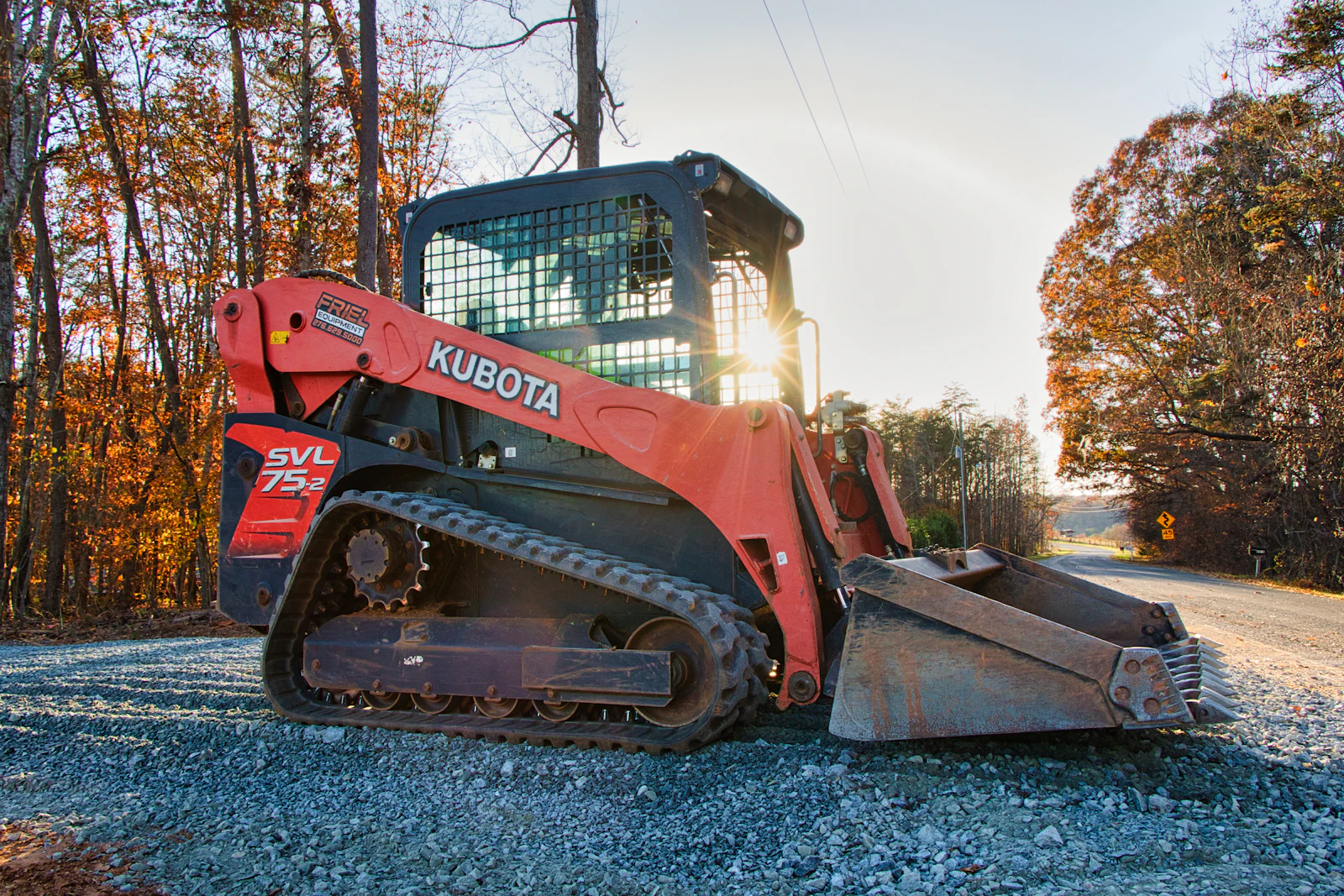
Skid Steer Loader Hire Costs Philadelphia 2026
For Philadelphia-area footing work in 2026, most contractors should budget skid steer loader equipment hire (machine only) in these planning ranges: $275–$525/day, $1,050–$1,950/week, and $2,800–$4,950 per 4-week “month”, with tracked compact track loaders (CTLs) typically at the upper end and smaller wheeled units at the lower end. These are estimating ranges built from publicly visible marketplace pricing for Philadelphia (e.g., published “starting at” and average daily rates) and common national rental structures (daily/weekly/4-week) rather than a guaranteed quote; final numbers move with rated operating capacity, track vs tire configuration, attachment package (bucket, forks, auger), delivery logistics into dense neighborhoods, and whether the rental is billed as a single shift (most houses assume 8 hours/day) vs extended use. In Philadelphia you can generally source machines through national branches (Sunbelt, United, Herc) plus regional independents, but plan on quoting early if your footing schedule touches weekends, street closures, or tight access constraints typical of rowhouse additions and infill sites.
| Vendor |
Daily Rate |
Weekly Rate |
Review Score |
Website |
| United Rentals |
$425 |
$1 275 |
9 |
Visit |
| Sunbelt Rentals |
$430 |
$1 290 |
9 |
Visit |
| Herc Rentals |
$415 |
$1 245 |
8 |
Visit |
| The Home Depot Rental (South Philadelphia #4101) |
$389 |
$1 167 |
9 |
Visit |
| EquipmentShare (Camden, NJ – serves Philadelphia metro) |
$405 |
$1 215 |
9 |
Visit |
Planning Rate Ranges For Skid Steer Equipment Hire For Digging Footings
Use these 2026 planning bands when your scope is “digging footings” and the skid steer is doing a mix of: trench/strip footing excavation, spoils handling, stone base moves, and loading into a dumpster or truck. Where the GC’s excavation plan calls for a true trench profile or deeper footing steps, confirm whether a mini excavator is the primary digging tool and the skid steer is primarily support (spoil, material staging). That split changes whether you need a high-flow unit, how many attachments you carry, and how many days you keep the machine.
- Small wheeled skid steer (≈1,000–1,800 lb ROC): plan $275–$400/day, $1,050–$1,450/week, $2,800–$3,750/4-weeks for equipment hire when available locally.
- Mid-size wheeled skid steer (≈2,000–2,700 lb ROC): plan $325–$475/day, $1,250–$1,750/week, $3,400–$4,500/4-weeks.
- Compact track loader (CTL) for soft ground / winter / demolition debris): plan $375–$525/day, $1,450–$1,950/week, $3,900–$4,950/4-weeks (higher if you need high-flow or a newer large-frame unit).
Shift-hour assumption: many national programs structure “basic” rental rates as one shift (commonly 8 hours/day, 40 hours/week, 160 hours/4-weeks). If you run extended shifts to hit concrete cutoff times, overtime is often billed by formula (example: an hourly rate equal to 1/8 of the daily charge for daily rentals). On a $400/day unit, that planning overtime rate is roughly $50/hour before tax/fees.
How Footing Excavation Scope Changes Your Hire Price
“Digging footings” is a deceptively broad work term. On Philadelphia infill work, the skid steer often becomes a logistics machine as much as an excavation machine: it may be moving spoils through a narrow side yard, pulling from a stockpile, or loading to a staged dumpster location where truck access is limited. Expect real hire-cost swings driven by:
- Access width and turning: if you must fit through a 52 in gate or tight alley, you may be forced into a smaller frame machine (lower daily rate but potentially more days due to smaller bucket volume and lower breakout).
- Ground conditions: after rain or in freeze/thaw, a CTL can prevent rutting and keep production up—often cheaper than extending a wheeled skid steer by 1–2 extra days.
- Export volume: if spoils must be loaded into multiple small containers due to street constraints, you’ll pay more in standby time (and sometimes extended-hour charges) than on an open suburban lot.
- Utility daylighting requirements: if the plan calls for potholing/daylighting, you may add an auger, a narrow trench bucket, or hand-dig time—each affecting rental duration.
Attachments And Adders Common For Footings (Budget As Separate Hire Items)
For footing jobs, the base machine is rarely the whole story. Budget attachment hire explicitly so your estimate doesn’t get eroded by “small” add-ons:
- General purpose bucket: sometimes included; otherwise plan $0–$35/day depending on house policy and bucket type.
- Tooth bar / cutting edge add-on: plan $15–$35/day (worth it in compacted Philly backfill and demolition fill).
- Pallet forks: plan $35–$85/day or $125–$260/week for moving form bundles, rebar mats, and palletized stone.
- Auger drive (standard flow): plan $90–$185/day; add bits at $25–$60/day each depending on diameter and wear (often needed for pier footings, fences, or sonotube points).
- Hydraulic breaker (SSL mount): plan $180–$325/day when you hit unexpected slab/ledge or need to break out old stoops/rat slabs to reach design subgrade.
- Trencher attachment: plan $120–$250/day if the footing layout is long/linear and you want a consistent trench width (verify soil class and chain spec).
- Hitch / tow package (for small site trailers): plan $10–$25/day if offered, but confirm site rules—many urban sites prohibit towing in tight lanes.
Attachment availability is often the hidden schedule risk. If you need a breaker or auger for one afternoon, you may still be billed a 1-day minimum, and you may pay a cleaning/inspection charge on return.
Hidden-Fee Breakdown For Skid Steer Equipment Hire (Philadelphia Reality)
For accurate equipment hire cost forecasting, carry allowances for the items below. These are typical charge categories across large rental networks and independents; exact line items vary by agreement and account status.
- Delivery and pickup: plan $150–$325 each way for metro Philadelphia job sites, with common “base radius” assumptions and $5–$9/mile beyond that radius (especially if access requires smaller trucks or special timing).
- Limited delivery windows / after-hours: if you require a 7:00–9:00 AM arrival, weekend drop, or coordinated street closure, carry an extra $150–$350 logistics premium.
- Fuel / refuel: most houses expect “return full”; if not, budget $6–$9/gal (plus a service fee in some agreements). Some published rental terms show refuel charges in the mid-$5/gal range historically; assume higher for 2026 planning unless your contract locks it.
- Damage waiver (not insurance): plan 10%–15% of base rental as a common waiver band (e.g., on a $1,600/week hire, carry $160–$240/week).
- Cleaning / decon: plan $95–$275 for heavy clay, concrete splatter, or track packing; more if you return it with wet spoil in the undercarriage.
- Wear and consumables: carry $75–$250 exposure for damaged cutting edges, lost bucket teeth, or fork tines (often billed at replacement cost if not normal wear).
- Late return / “extra day” exposure: if off-rent rules require you to call off-rent by a cutoff (commonly end-of-business), a missed call can roll to 1 additional day. Carry at least $300–$500 as a contingency on short-duration hires.
- Extended-use (OT) hours: using the common one-shift structure, if your $1,600/week skid steer runs an extra 10 hours, a planning overtime rate of 1/40 of weekly implies about $40/hour (so $400 before tax/fees).
Philadelphia-Specific Cost Drivers: Access, Tax, And Site Controls
Sales tax: equipment hire delivered to a Philadelphia job often carries combined sales/use tax of 8% (City 2% plus Commonwealth 6%). Confirm tax treatment with your accountant and the rental agreement, but budget it unless you have an exemption certificate on file.
Dense streets and staging: on rowhouse blocks, the “cheapest” hire rate can become the most expensive if you can’t stage spoils or the delivery truck can’t legally park. When you anticipate street occupancy permits, alley-only access, or tight backing moves, paying slightly more for a narrower machine (or a CTL with better traction control) can reduce the risk of burning a full day waiting on logistics.
Dust and track-out controls: if you’re working adjacent to occupied buildings, schools, or medical facilities, include allowances for ground protection and dust control (for example, a poly ground mat package at $12–$20/mat/day and a cleanup/track-out sweep at $150–$350 per mobilization). These costs are frequently triggered by Philadelphia urban constraints rather than the excavation itself.
Budget Worksheet (Estimator-Friendly, No Surprises)
Use this as a quick equipment hire costing worksheet for a typical footing package where the skid steer is on site for 5–10 working days.
- Skid steer loader equipment hire (mid-size wheeled or CTL): 1 week at $1,250–$1,950
- Bucket / tooth bar allowance: $0–$175 (5 days at $0–$35/day)
- Pallet forks (if staging forms/rebar): 1 week at $125–$260
- Auger drive + one bit (if any piers/sonotubes): 2 days at $230–$490
- Breaker contingency (unknown slab/ledge): 1 day at $180–$325
- Delivery + pickup: $300–$650 total (two legs)
- Damage waiver: 10%–15% of base rent (carry $125–$290 on a 1-week hire)
- Fuel/refuel contingency: $75–$225 (assumes 12–25 gallons of diesel exposure at $6–$9/gal equivalent)
- Cleaning / return condition: $95–$275
- Administrative / environmental fees: $10–$25/day if your vendor applies them (carry $50–$125 per week as a placeholder)
- Philadelphia sales/use tax allowance: 8% applied to taxable lines
Example: Digging Footings For A Rowhouse Addition (Operational Constraints And Numbers)
Scenario: 18 in x 24 in strip footings for a rear addition in Philadelphia with a narrow staging area. You need a machine that can run in soft ground after rain, and you have a hard cutoff for concrete on Friday.
- Machine selection: CTL (mid-frame) at $1,450–$1,950/week (planned as 1-week hire even though you expect 5 working days, to avoid daily rollovers if weather pushes you).
- Attachments: bucket included; add pallet forks at $125–$260/week for unloading form lumber/rebar; add tooth bar at $75–$175/week for compacted fill.
- Delivery/pickup: $225 each way (carry $450) due to tight street and scheduled arrival window.
- Damage waiver: assume 12% of base rent; on $1,700 base, that’s about $204.
- Extended use: you run late Thursday to hit Friday concrete—assume 4 overtime hours. Using a planning overtime of ~1/40 of weekly on $1,700, that’s about $42.50/hour or $170.
- Return condition: budget $150 cleaning because clay packs into the undercarriage.
- Tax: add 8% to taxable lines.
Resulting 2026 planning total for skid steer equipment hire package: roughly $2,900–$4,200 all-in (machine, key attachments, transport, waiver, a small amount of OT, cleaning, and tax), excluding operator labor and excluding any standby days caused by inspections or concrete/steel delays.
Rental Order Checklist (What Your Rental Coordinator Needs To Prevent Cost Creep)
- PO details: exact machine class (ROC range), track vs wheels, cab preference (open vs enclosed), and any required options (high-flow, 2-speed, backup alarm, strobes).
- Attachment list on PO: bucket type/width, forks, tooth bar, auger drive + bit diameters, breaker, coupler type (SSL universal vs proprietary).
- Insurance and compliance: COI requirements, waiver election (yes/no), and whether your site requires an operator certification or site orientation documentation.
- Delivery window and site constraints: confirm earliest drop time, street access limitations, contact name/number, and whether a smaller delivery truck is required.
- Off-rent process: confirm cutoff time for off-rent calls (to avoid an accidental extra day) and document who is authorized to call off-rent.
- Return condition documentation: photo log at delivery and at pickup (bucket teeth, forks, tracks/tires, cab glass), fuel level, and any existing dents/scrapes noted on the contract.
When A Mini Excavator Beats A Skid Steer For Footings (Cost Implication, Not Preference)
If your drawings call for deeper trench profiles, stepped footings, or tight dig lines along existing foundations, a mini excavator may do the primary excavation more efficiently—while the skid steer remains a support unit for spoils and stone. The cost pitfall is paying for a “bigger skid steer” to do excavator work. In many Philadelphia footing packages, the best cost outcome is a right-sized skid steer (for spoils and material handling) plus a short-duration excavator hire, rather than stretching the skid steer hire by extra days due to lower trench productivity.
How Rental Terms And Utilization Rules Affect The True Hire Cost
For professional estimating, treat the quoted skid steer equipment hire rate as only the start. The “true” rate depends on utilization rules (shift hours), off-rent timing, and whether your contract converts daily-to-weekly-to-4-week automatically. Many national programs define the included utilization as 8 hours/day, 40 hours/week, and 160 hours per 4 weeks, with extended use billed at fractional rates of the base period (for example, 1/8 of daily per extra hour on a daily rental). Build your estimate so field teams are not incentivized to “just run it late” without understanding the incremental hourly cost.
Weekend, Holiday, And Off-Rent Timing (Where Philadelphia Jobs Get Burned)
Philadelphia footing work regularly crosses weekends due to inspections, utility mark-outs, and concrete scheduling. Three practical planning notes for equipment hire cost control:
- Weekend billing exposure: if you take delivery Friday afternoon and can’t off-rent until Monday morning, you may carry a 2-day weekend exposure depending on contract language and pickup availability. If your daily rate is $400, that’s a potential $800 swing that dwarfs most attachment fees.
- Off-rent cutoff times: many rental operations require an off-rent call before end-of-business to stop billing. Missing the cutoff by even one day can add $275–$525 to the job (your planning daily range).
- City logistics delays: if a pickup can’t occur due to blocked access (dumpster relocation, street work, or late-day concrete trucks), you may incur an extra billed day even if the machine is parked.
Delivery, Site Protection, And Return-Condition Rules That Change Cost
To keep skid steer loader hire costs predictable on Philadelphia sites, align field practices with the rental agreement:
- Delivery access requirements: if the rental house arrives and cannot safely offload due to soft curb edges, inadequate laydown, or blocked alley access, you can be hit with a “dry run” / attempted delivery fee—carry $150–$300 contingency if the site is constrained.
- Ground protection: on tight urban lots, plan ground mats (often $12–$20 each per day) and include labor time to place them; this frequently costs less than repairing rutting or damaging sidewalks/curbs.
- Indoor/adjacent dust control: if you are operating near occupied spaces, carry a $95–$275 cleaning allowance and consider whether you need a dedicated “clean bucket” to avoid concrete contamination.
- Refuel/recharge expectation: most terms require full fuel at return; if you return short, budget $6–$9/gal equivalent plus possible service charges (some published terms show mid-$5/gal historical refuel pricing, but don’t assume it’s still valid for your account in 2026).
Cost Control Notes For Attachments (Avoiding One-Day Minimum Traps)
On footing packages, attachments create two common cost overruns:
- Short-need, long-bill: if you need an auger or breaker for 2 hours, you may still be billed a full day plus delivery timing. Where possible, schedule attachment work into a single day and confirm same-day swap availability.
- Wrong flow requirement: ordering a high-flow attachment without a high-flow machine (or vice versa) can cause a mid-week change order. Carry a change-order allowance of $150–$350 to cover a swap delivery and admin, and confirm coupler/flow requirements on the PO.
Philadelphia Tax And Documentation (Small Percent, Big Dollar)
Philadelphia’s combined sales/use tax is commonly cited as 8% (2% City + 6% Commonwealth). On a $3,500 equipment hire package, that’s about $280—material to a footing bid. Ensure your rental coordinator has exemption documentation ready if applicable; otherwise, carry the full tax in your estimate and treat it as part of true hire cost.
Equipment Hire Cost Guardrails For Digging Footings
- Right-size the machine: for most footing support work, prioritize maneuverability and traction over maximum ROC; a CTL can be cheaper than adding 1–2 extra days due to wheel slip and rut repair.
- Lock the schedule around inspections: if you expect a footing inspection mid-week, consider a weekly hire instead of multiple dailies to reduce rollover risk.
- Control OT hours: align foreman expectations to the one-shift assumption; if the team wants a second shift, pre-approve a not-to-exceed OT allowance (e.g., $200–$600 depending on the weekly rate and expected extra hours).
- Document condition at both ends: photos of tracks/tires, bucket edge, cab glass, and hour meter reduce disputes that can land as $250–$1,500 unexpected back-charges.
Procurement Note (How To Ask For Quotes That Match Your Estimate)
When you request 2026 Philadelphia skid steer loader equipment hire pricing for digging footings, ask for the quote broken into: base rent (daily/weekly/4-week), included shift hours, hourly OT rate, delivery/pickup, waiver %, fuel policy, cleaning policy, and attachment day-rates. If the vendor won’t provide a full breakdown, apply the allowances from the worksheet in post-body-1 and treat any missing items as cost risk.