For Phoenix-area (Maricopa/Pinal) projects planning 2026 budgets, skid steer loader equipment hire for digging footings typically pencils at $180–$375/day, $720–$1,500/week, and $2,100–$4,200 per 28-day month, before attachments, delivery, fuel, and protection/fees. Those bands assume a mid-size contractor track loader (roughly 65–75 hp class) rather than a micro/yard unit, and assume “one-shift” utilization (commonly 8 hours/day) versus extended-hour footing schedules. In Phoenix, rental coordinators usually source from the national chains (fleet depth, swap-outs) plus local yards (faster delivery windows and attachment availability), and the published day/week/month rate cards you’ll see online generally land inside the bands above.
| Vendor |
Daily Rate |
Weekly Rate |
Review Score |
Website |
| United Rentals |
$325 |
$1 150 |
8 |
Visit |
| Sunbelt Rentals |
$310 |
$1 090 |
8 |
Visit |
| Herc Rentals |
$300 |
$1 050 |
7 |
Visit |
| Ahern Rentals |
$295 |
$1 025 |
8 |
Visit |
| EquipmentShare Rentals |
$285 |
$995 |
9 |
Visit |
Skid Steer Loader Rental Rates Phoenix 2026
Use these as estimating ranges for skid steer loader hire costs in Phoenix when the work scope is digging footings, pier holes, grade beams, and housekeeping spoils. Rates vary by machine weight, whether it’s wheeled vs tracked, cab configuration (open canopy vs enclosed with A/C), and whether the machine is equipped for high-flow hydraulics.
Compact / micro skid steer (tight access, light spoil handling): plan $180–$250/day, $700–$1,000/week, $2,100–$2,800/month. Phoenix-area published pricing examples for a compact skid steer show $180/day, $720/week, $2,100/month at one local yard (useful as an anchor for 2026 budgeting).
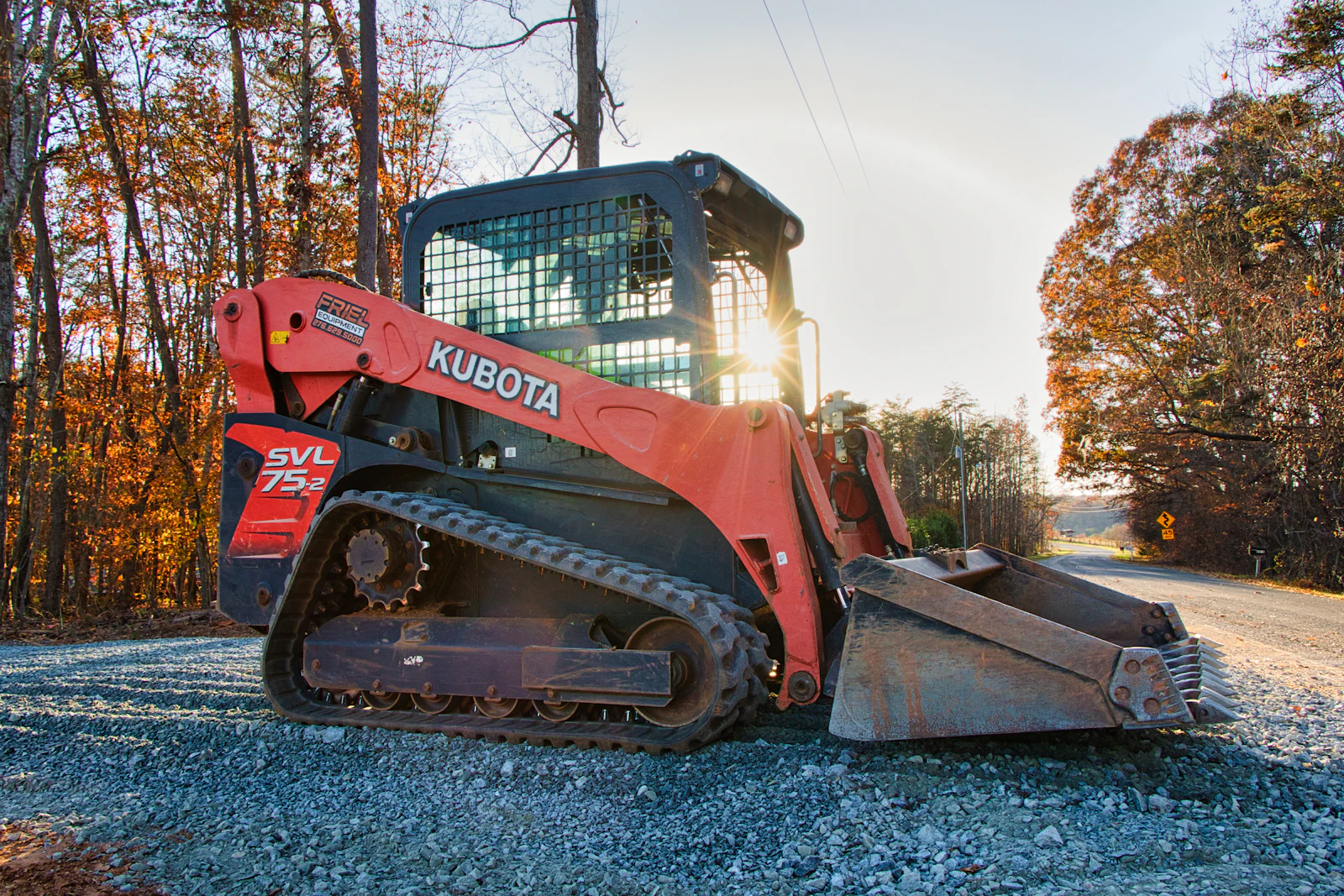
Mid-size tracked skid steer (common footing support machine): plan $240–$375/day, $950–$1,500/week, $2,700–$4,200/month. Published Phoenix-market examples for a tracked skid steer loader show $250/day, $1,000/week, $2,800/month, and another published 2026 rate card shows $275/day, $1,100/week, $3,300/month for a track skid steer category.
Wheeled skid steer (hardscape, improved surfaces, lower undercarriage sensitivity): plan $225–$350/day, $900–$1,400/week, $2,600–$3,900/month. A published 2026 rate card shows $250/day, $1,000/week, $3,000/month for an “open wheel” skid steer category, which is a reasonable reference point when you expect mostly paved travel and limited caliche ripping.
Key assumption (hours/shift): many rental agreements price “daily/weekly/4-week” around a one-shift allowance: 8 hours/day, 40 hours/week, 160 hours/4 weeks. Plan extra if your footing pour schedule requires extended shift work (layout, dig, inspections, then pour same day) and you expect the loader to run 10–12 hours.
How Digging Footings Changes Skid Steer Hire Pricing in Phoenix
For footing work, the skid steer’s cost isn’t just the base machine day rate—it’s the tooling package and the schedule risk. Footings often create “stop-start” utilization (dig to line/grade, wait for inspection, rework, then backfill), and that idle time is still billable if you keep the equipment on rent. In Phoenix, additional constraints that regularly change the hire cost include:
- Caliche/rock lenses: may push you from a standard tooth bucket to a breaker/hammer day (and potentially a higher-flow machine).
- Heat management: enclosed cab with A/C is not a luxury in summer; it can be the difference between safe production and downtime, but it often prices higher than open canopy.
- Dust-control compliance: Maricopa County dust rules apply to construction/earthmoving activities and can add water, trackout control, and cleanup scope that impacts equipment time-on-rent.
Tracked Vs Wheeled Skid Steer for Footings in Desert Soils
From a pure equipment-hire-cost standpoint, tracked units often run a higher base rate than wheeled units, but they can be cheaper overall if they prevent stuck events, rut repair, or excessive handwork around footings.
- Tracked skid steer: better flotation in loose fill and decomposed granite, improved stability when carrying spoil away from open excavations, but higher cleaning sensitivity (caliche packs into undercarriage) and higher damage exposure if run on abrasive demo rubble.
- Wheeled skid steer: typically faster travel and simpler cleanup on paved sites; watch for traction limits on loose subgrade around footing trenches and for tire replacement exposure if you’re crossing rebar chairs, form stakes, or sharp debris.
Estimator note: if you anticipate a lot of “creep work” around layout strings and batter boards, prioritize fine control and visibility over maximum horsepower. The cost driver becomes time: one extra day at $250–$375 can exceed the delta between machine classes.
Attachments and Adders That Commonly Hit Footing Budgets
For skid steer rental for digging footings in Phoenix, attachment strategy is usually where coordinators win or lose cost. A few published local examples show attachment day/week/month pricing such as $100/day, $400/week, $1,200/month for a skid steer auger, and $100/day, $400/week, $1,200/month for a rock grapple (often used for debris and form lumber cleanup).
Planning adders you can carry (2026 Phoenix ranges):
- Auger drive (standard-flow) + bit: $95–$160/day (budget bit wear separately). If the yard charges per-bit, carry $15–$35/day per bit for common diameters used on pier footings.
- Hydraulic breaker/hammer (skid steer / mini-ex size): $200–$325/day, often $800–$975/week, depending on class. One published 2026 card shows $200/day, $800/week, $2,400/month for a skid-steer/mini-ex hammer category.
- Pallet forks for footing material handling: $25–$75/day; a published 2026 card shows $50/day, $200/week, $600/month for forks/bucket for skid steer.
- General-purpose bucket upgrades: carry $20–$60/day for tooth bar, bolt-on edge, or specialty bucket swaps if the base bucket doesn’t match the dig profile.
Hidden-Fee Breakdown
Skid steer loader equipment hire costs in Phoenix can swing materially once you add logistics, protection, and return-condition charges. Build these into your estimate so you don’t “discover” them at invoice time:
- Delivery / pickup (common Phoenix metro practice): carry $175–$275 each way inside a typical local radius, plus $4.00–$6.50/mile outside the radius. If you need jobsite-call-ahead or restricted delivery windows, carry an extra $50–$125.
- Minimum transport charge: many yards effectively have a minimum; carry a conservative $150 minimum even for short hauls.
- Customer pickup option: if you’re towing with your own truck, budget trailer hire if needed. A published Phoenix-market example shows a 14k equipment trailer at $110/day, $440/week, $1,320/month.
- Fuel (diesel top-off): if returned short, carry $6.00–$9.00/gal plus a service/admin component depending on yard policy. Also budget 0.8–1.8 gal/hr consumption depending on load and travel (footing spoils are “stop-start,” which can be deceptively fuel heavy).
- Cleaning fees (caliche + concrete): carry $150–$450 if the undercarriage is packed or if wet concrete/mud is present. In Phoenix, monsoon-season mud can create higher cleanup exposure than crews expect.
- Environmental / service fees: many national contracts include separate line items (often calculated as a percentage of rental). Carry 2%–5% as a planning allowance if your MSA historically shows it.
Overtime, Weekend Billing, and Off-Rent Rules That Add Days
Overtime (run-hours beyond one shift): a common structure is that daily/weekly/4-week rates include one shift, and excess is billed proportionally. For example, if your daily rate is $250, the overtime rate can be 1/8 of daily per hour (i.e., $31.25/hr). Two extra hours on a long footing day adds $62.50 before tax/fees; five extra hours adds $156.25.
Weekend billing: policies vary by yard. Some offer “one-day weekend” style billing in specific cases (e.g., Saturday pickup returning Monday), but you must confirm cutoff times and whether hour limits still apply. Treat weekend deals as a bonus and estimate worst-case as 2 billable days if the job is schedule-critical.
Off-rent timing (the silent budget killer): build internal controls so the superintendent (or coordinator) calls off-rent in time for next-day pickup. Missing an off-rent cutoff can create 1 additional day of base rent plus protection/fees—often $250–$375 all-in for that “extra day” once surcharges are applied.
Insurance, Rental Protection, and Deposit Planning
If you’re using a national chain, confirm whether you’ll provide a COI (your GL + auto + inland marine as required) or purchase the rental protection option. United Rentals’ Rental Protection Plan (RPP) is described as a damage-waiver style program with a fee equal to 15% of the rental charges (plus taxes), and theft/damage responsibility may be capped in certain cases (e.g., the lesser of 10% of replacement value, 10% of repair cost, or $500, subject to terms/conditions).
Deposit / credit card hold (planning): for non-account walk-up rentals, carry $500–$2,500 as a typical deposit/authorization range for a skid steer + attachments package, depending on vendor policy and your credit setup.
Example: Footing Dig Package for a Small Commercial Pad in Phoenix
Scenario: dig 24 perimeter footing segments and 18 isolated pier holes on a constrained infill lot near Central Phoenix. Site has a 7:00 a.m.–3:30 p.m. noise window, deliveries must avoid school traffic (no trucks 2:30–4:00 p.m.), and the inspector can only arrive next day, forcing you to keep the machine overnight.
- Machine: tracked skid steer at $250–$375/day (budget 2 days = $500–$750).
- Auger attachment: published local example $100/day (budget 2 days = $200).
- Bits/teeth wear allowance: $60 (carry as consumable allowance if your vendor charges separately or if you swap a damaged tooth set).
- Delivery + pickup: $225 each way = $450 (use your contracted carrier rates if you have them; this is a planning figure).
- Cleaning allowance: $200 (caliche + wet spoils during monsoon humidity can pack into tracks).
- Rental protection (if elected): 15% of rental charges (apply to machine + attachments line items per vendor terms).
What makes this real in Phoenix: the cost driver is the forced overnight hold for inspection (1 extra day of base rent) plus delivery window constraints. Your best mitigation is scheduling inspection and delivery so the skid steer arrives just-in-time after layout is verified and your auger sizes are confirmed.
Budget Worksheet (No Tables)
- Tracked skid steer loader hire (mid-size): allowance $240–$375/day or $950–$1,500/week (pick duration based on inspection risk).
- Standard bucket included; add tooth bar / edge: allowance $20–$60/day.
- Auger attachment hire: allowance $95–$160/day (or use local published $100/day anchor if available).
- Breaker/hammer (caliche contingency): allowance $200–$325/day for 1 day contingency.
- Pallet forks (material handling for forms/rebar): allowance $25–$75/day (or published $50/day category).
- Delivery + pickup: allowance $350–$550 total (or $175–$275 each way).
- Fuel/top-off exposure: allowance $75–$180 (depends on hours; include a $6–$9/gal risk factor if vendor fuels).
- Cleaning/undercarriage: allowance $150–$450.
- Damage waiver / rental protection: allowance 10%–15% of rental charges depending on program elected; confirm contract.
- Dust-control jobtime impact (water/trackout cleanup): allowance 2–4 labor-hours/day impact on production if the site is dry and wind picks up.
Compliance reminder (Phoenix): any dust-generating activity (construction/earthmoving) must comply with Maricopa County dust control rules, and the City of Phoenix also addresses dust enforcement. Even when the skid steer rate is fixed, dust controls can change how many days you keep the machine on rent.
What Really Drives the Total Skid Steer Hire Cost on Footing Work
In practice, Phoenix skid steer loader equipment hire costs for digging footings are mostly driven by time-on-rent, not the difference between two similar day rates. Your estimator’s goal is to remove “extra day” triggers and reduce non-productive hours that still count against the shift allowance.
- Inspection sequencing: if the skid steer finishes digging by noon but you cannot backfill until next-day inspection, the hire cost is effectively “forced” into another day.
- Truck scheduling: if spoils haul-off is late, the skid steer may sit loaded (or re-handle spoils multiple times). Re-handling can add 1–3 billable hours/day.
- Heat plan: if the crew shifts to 5:00 a.m.–1:30 p.m. to beat heat, confirm the yard’s delivery windows; early drops can add $50–$125 if treated as a special window.
Production and Scope Notes for Digging Footings with a Skid Steer
A skid steer can support footing excavation efficiently when the footing is shallow-to-moderate depth and you have room to maneuver, but it is not a direct substitute for a mini excavator in every condition. For estimating, treat the skid steer as a “support platform” that can dig, clean, and move spoils—then validate whether trench depth and access will force a different machine (which can be cheaper than paying skid steer overtime and rework).
Carry these planning constraints that affect hire duration:
- One-shift hour cap: if your plan requires 10 hours/day for two days, you may incur overtime billing beyond the 8 hours/day allowance.
- Regrade and cleanup: footing work rarely ends at “dig complete.” Budget 0.5 day for final cleanup, subgrade trimming, and trackout control unless another scope covers it.
Managing Dust and Trackout Without Extending the Rental
Dust and trackout are not just compliance issues in Phoenix—they can extend the rental if the skid steer is used for unplanned sweeping, berm building, or water support. Maricopa County’s dust rules apply broadly to construction/earthmoving activities and require dust controls appropriate to the activity and site. The City of Phoenix also addresses particulate/dust enforcement.
Cost-control tactics that keep the skid steer from becoming a “dust-control tool”:
- Pre-stage water: if you’re renting supplemental dust gear, schedule it for the highest-risk days (demo/rough grade), not the precision footing days.
- Trackout plan: assign cleanup to a laborer + broom/scrape team so the skid steer stays on excavation/handling tasks.
- Document exits: take timestamped exit-condition photos to reduce disputes about trackout-caused cleanup charges.
Closeout Costs: Return Condition, Photos, and Dispute Prevention
On skid steer hire packages, invoice surprises typically come from return condition (fuel + cleaning) and damage attribution. Build a closeout routine that a rental coordinator can execute consistently:
- Pre-return inspection photos: take 12–18 photos (all four sides, cab, hour meter, tracks/tires, bucket cutting edge, quick coupler area, attachment serial plates).
- Fuel proof: photo of fuel gauge at yard drop (or onsite pickup) to defend against a $6–$9/gal top-off line item.
- Cleaning decision: if you can wash/clean in-house, spend 30–60 minutes and avoid a potential $150–$450 cleaning fee.
- Attachment matching: confirm you’re returning the correct auger bits, coupler pins, hoses, and protective covers; missing small parts can trigger $25–$200 replacement charges.
Rental Order Checklist (No Tables)
- PO and job identifiers: PO number, jobsite address, onsite contact, gate codes, and a 2nd phone number for the foreman.
- Delivery requirements: requested delivery window (e.g., 6:00–7:00 a.m.), offload location, ground bearing concerns, and whether a 30–40 ft trailer can access the laydown.
- Machine specs: tracked vs wheeled, enclosed cab A/C requirement, standard-flow vs high-flow, required bucket width, and whether you need forks on the first day.
- Attachments: auger drive + bit sizes (e.g., 12 in, 18 in, 24 in), spare teeth/cutting edges, breaker contingency authorization, and hose/coupler compatibility.
- Billing rules confirmation: one-shift hours (8/40/160), overtime billing method, weekend billing, off-rent cutoff time, and holiday policy.
- Insurance and protection: COI submission (additional insured / waiver of subrogation as required) or approval to purchase rental protection (budget 10%–15% of rental charges depending on program).
- Return requirements: full fuel expectation, cleaning expectation (undercarriage), and required return photos/condition report.
2026 Phoenix Planning Takeaways for Skid Steer Equipment Hire
- For digging footings, a mid-size tracked skid steer is commonly budgeted at $240–$375/day plus delivery, fuel, and attachments; published local examples in the region support that band.
- The fastest way to blow the hire budget is a 1-day extension driven by inspections, delivery windows, or late off-rent calls (often $250–$375 incremental before add-ons).
- Carry explicit adders for the attachments that footing crews actually need: auger, forks, and a breaker contingency day in caliche zones.
- In Phoenix, dust/trackout practices can directly affect time-on-rent—plan controls so the skid steer stays on productive footing tasks.