Build your next estimate with CountBricks
Create an itemized estimate for your project, with materials, labor, and quantities you can review and edit.
Create my estimateStart a 7-day free trial. Sign up, then enter your project details.
Skid Steer Loader Hire Costs Portland 2026
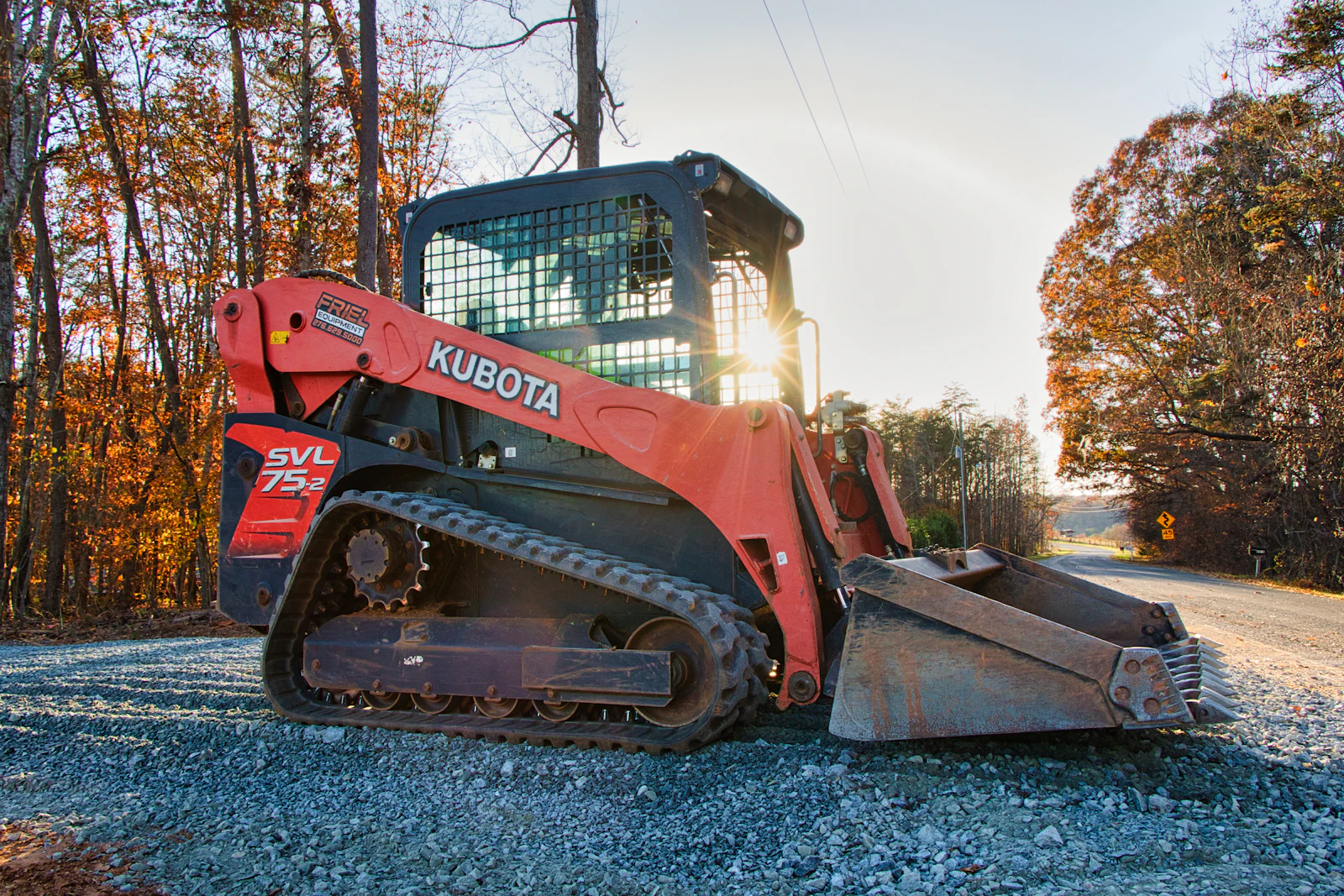
For Portland-area concrete driveway scopes in 2026, budget skid steer loader equipment hire (including compact track loaders commonly substituted for skid steers on wet sites) at $220–$360/day, $850–$1,350/week, and $2,400–$3,900/month (4-week) depending on rated operating capacity, hydraulics (standard vs high-flow), tire vs track undercarriage, and whether the quote is a 5-day “work week” or a 7-day “calendar week.” These planning ranges assume one general-purpose bucket is included, 1 shift of utilization, and that delivery, Oregon surcharges/taxes, attachments (breaker, forks, grapple), refuel/cleaning, and any damage waiver are billed separately. In Portland, most contractors price-check national rental fleets (United Rentals, Sunbelt, Herc) alongside regional yards serving the metro (Aurora/Clackamas/Vancouver service lanes) for availability and delivery cadence.
| Vendor |
Daily Rate |
Weekly Rate |
Review Score |
Website |
| United Rentals |
$420 |
$1 206 |
9 |
Visit |
| Sunbelt Rentals |
$420 |
$1 206 |
9 |
Visit |
| Herc Rentals (Portland ProSolutions) |
$420 |
$1 206 |
9 |
Visit |
| Portland Rent All |
$300 |
$1 050 |
8 |
Visit |
| Canby Rental & Equipment |
$285 |
$1 138 |
10 |
Visit |
Published Portland-Area Benchmarks You Can Use to Sanity-Check a Quote
When you need a defensible baseline for estimating, it helps to compare your vendor quote to publicly posted rates from local providers (recognizing that account pricing and fleet utilization will move the final number). One Portland-servicing yard posts daily and multi-day rates for compact track loaders frequently used on driveway demo and base prep: examples include $235/day with $940 (5-day) and $1,175 (7-day) for a smaller track loader, and $250/day with $1,000 (5-day) and $1,250 (7-day) for mid-size units.
A separate published benchmark from a Pacific Northwest tool-and-equipment yard shows a tracked skid steer at $308.75/day, $927/week, and $2,780 (4-week), with an hourly structure and a 4-hour minimum rental term and a $216.75 minimum rent amount (useful for short mobilizations and same-day returns).
For a third data point, one equipment price list shows monthly structures like $250/day, $1,000/week, $3,000/month for a wheeled skid steer class and $275/day, $1,100/week, $3,300/month for a track skid steer class. Treat these as directional benchmarks only—your Portland delivery lane, contract terms, and damage/cleaning provisions are typically the bigger swing factors than the sticker rate itself.
What Drives Skid Steer Equipment Hire Cost on a Concrete Driveway Scope?
Concrete driveway work is a “mixed-duty” rental: high breakout and shock loads during demo, plus finish-sensitive travel paths (adjacent garage slabs, sidewalks, curbs) during export and base prep. Your hire cost will usually be governed by four practical questions:
- Is it a wheeled skid steer or a compact track loader? In Portland’s wet season, tracked units are frequently chosen to avoid rutting and to keep production up on saturated subgrade. The trade-off is track cleaning and stricter “return condition” scrutiny.
- Do you need high-flow? If the driveway scope includes a planer/milling head, higher-flow hydraulics can change the base machine rate class and attachment availability.
- How many attachments are truly required? A driveway package often needs at least forks or a grapple for pallets/forms, and may need a hydraulic breaker for slab demo.
- What is your utilization pattern? If you’re staging demo over multiple days but only running 2–4 hours/day, a minimum-charge structure can be more expensive than it looks.
Shift Hours, Meter Limits, and Overage Math (Where Costs Quietly Escalate)
Most rental agreements price the base machine on “shift” utilization. A widely used industry structure is 8 hours/day, 40 hours/week, and 160 hours/4-weeks; hours beyond that are billed as a fraction of the base period rate (for example, 1/8 of the daily rate per excess hour on a daily rental).
Local Portland-area policies can also include explicit overage charges. One Portland-servicing yard states that a 24-hour rental allows up to 8 hours on the meter, and bills $50/hour for meter-time overages or time beyond the 24-hour period, with a cap at the daily rate (effectively rolling you into another 24-hour rental if the equipment is available).
Estimator takeaway: If a crew runs a skid steer hard on driveway export and base rock (for example, 10–11 meter hours in a day), the overage can be the difference between “one day” and “two days” of cost—especially if the vendor caps by extending the rental period.
Delivery, Pickup, and Portland Access Costs
On driveway scopes, delivery often costs more than a day of idle time—especially if the site is tight, downtown, or requires call-ahead windows. One Portland-servicing yard publishes Portland delivery ranges of roughly $120–$195 per trip as a general guideline (final charges vary by timing and exact location).
City-specific considerations that routinely change your delivered hire cost in Portland:
- Bridge/traffic timing: Delivery windows that avoid morning congestion can push you into premium routing or missed same-day cutoffs (plan for next-day delivery if you need a specific arrival time).
- Wet access and cleanup risk: Portland rain + clay subgrades = more track/undercarriage cleaning time and higher return-condition scrutiny.
- Street-use constraints: If your driveway staging requires curb occupancy, flagging, or short-term lane control, the “equipment hire” line item may be stable but total rental logistics cost rises quickly.
Also note that some national providers apply a transportation surcharge structure: one published example shows a fixed 9% component (or a $9 minimum) plus a variable diesel-indexed component, applied to transportation charges.
Hidden-Fee Breakdown
- Refuel/refill: If the machine ships full and comes back short, one local policy lists $9 per gallon for diesel/fuel top-off.
- Cleaning: Budget a cleaning contingency if you are working in mud, slurry, or broken concrete fines. One published policy lists a $70 cleaning fee if cleaning is more than a quick rinse, covering up to the first hour.
- Meter/time overages: If you exceed the hour cap, one local policy lists $50/hour overages with a cap at the daily rate (which can roll into an additional 24-hour period).
- Transportation surcharge: On some agreements, transportation line items can carry a surcharge (example structure: 9% fixed component with a $9 minimum, plus a variable diesel-indexed component).
- Attachments not included: Many yards do not rent attachments without the base machine, and attachment adders can rival the loader cost on demo days.
- Return access / trip charges: If a pickup truck cannot access the machine when scheduled, you can get hit with additional trip fees (avoid parking the unit behind material piles or inside a fenced rear yard without gate coordination).
Attachment Adders That Commonly Apply to Concrete Driveway Work
For driveway demolition and subgrade/base operations, attachments are where estimates often understate real equipment hire costs. Published add-on examples (directional benchmarks) include:
- Forks: +$40.25 (common for pallets, rebar, forms).
- Grapple bucket: +$72.50 (useful for broken concrete handling when you are not loading with a smooth bucket).
- Vibratory roller attachment: +$127.75 (alternative to a dedicated roller in tight access).
- Hydraulic breaker/hammer: +$189.50 (key driver for slab demo days).
- Equipment trailer (if customer-haul is allowed): +$35.50.
Portland estimating note: If your driveway demo involves any reinforced edge thickening, expect breaker production to be limited by disposal logistics (roll-off swaps, dump trailer turns) more than by hammer energy—so “more breaker hours” doesn’t always equal “more progress.”
Off-Rent Rules and How to Avoid Paying for Idle Days
Concrete driveway work often has weather and inspection interruptions. Your off-rent process must be operationally clean: one local policy states you must call or text when ready for pickup to stop the rental and get scheduled.
Practical controls that reduce idle-day exposure:
- Define your off-rent cutoff: Put an internal rule on your team (for example, “off-rent request by 2:00 PM local time”) so dispatch has time to schedule pickup and you have documentation.
- Stage for pickup: Park at the front of the property with attachments set out and accessible to avoid extra trip charges and missed pickups.
- Photograph return condition: Take meter, fuel gauge, and all-sides photos at off-rent; include track condition and any pre-existing scrapes.
Example: Portland Concrete Driveway Demo and Base Prep (Realistic Numbers)
Scenario: Demo and remove a 900 sq ft driveway slab averaging 5 inches thick (approx. 13.9 cubic yards), then regrade and place base rock. Tight residential street, no on-site stockpiling, and pickup must occur before 3:00 PM due to neighbor access restrictions.
- Base machine hire: 2 days at $250/day (track loader class) = $500 (directional, see published local daily benchmarks).
- Breaker attachment: 1 day at +$189.50 = $189.50.
- Forks attachment: 2 days at +$40.25/day = $80.50 (palletized base, forms, barriers).
- Delivery + pickup: Budget $120–$195 each way inside Portland = $240–$390 total (directional).
- Fuel top-off risk: If you return 8–12 gallons short and the vendor bills $9/gal, that’s $72–$108.
- Cleaning contingency: $70 if more than a quick rinse is required (common after rain + concrete fines).
- Overage exposure: If the crew runs 10 meter hours in a day on an 8-hour allowance, budget 2 × $50 = $100 overage unless it caps/rolls to another day (confirm policy before dispatch).
Result: Even before disposal and base material, it’s easy for “2-day skid steer hire” to land in the $1,150–$1,470 band depending on delivery, fuel/cleaning, and overages. The mitigation is administrative (off-rent discipline, pickup staging) as much as operational (right machine size, right attachment selection).
Budget Worksheet (No Tables)
- Skid steer/compact track loader equipment hire: allow $220–$360/day (select day count based on export logistics and access constraints).
- Weekly conversion allowance: allow $850–$1,350/week when mobilization spans multiple workdays.
- 4-week allowance (long driveway program or multiple small pours): allow $2,400–$3,900/4-weeks.
- Delivery to Portland (each way): allow $120–$195 (add a contingency for tight-window jobs).
- Attachment package allowance (typical driveway): forks (+$40/day class), breaker (+$190/day class), grapple (+$70/day class).
- Fuel/charge allowance: $75–$150 (or line-item gallons at $9/gal if contract terms allow pass-through).
- Cleaning allowance: $70–$210 (assume 1–3 events across a wet-week sequence).
- Overtime/meter overage allowance: $100–$300 (based on $50/hour exposure and a couple of long production days).
- Track/ground protection allowance (if working adjacent to finished slabs): $150–$400 for mats/plywood handling and additional labor time (project-specific).
- Oregon-specific surcharges/taxes allowance: carry a line for Oregon heavy equipment rental-related taxes/fee recovery when applicable (confirm current applicability with vendor at quote).
Rental Order Checklist (For the Rental Coordinator)
- PO includes: machine class (wheeled skid steer vs compact track loader), rated operating capacity, bucket width, and whether high-flow is required.
- Confirm what is included: 1 bucket included vs bucket billed separately; spare cutting edge availability; couplers.
- Confirm shift/meter rules: 8 hours/day baseline and any stated meter caps; confirm overage billing method (hourly vs “roll to next day”).
- Delivery: provide site contact, gate codes, delivery window, and a safe offload zone that avoids fresh concrete forms and utilities.
- Ground protection plan: mats/plywood staging and who supplies them.
- Return requirements: fuel top-off expectations ($9/gal exposure if not topped off), cleaning expectations ($70 first-hour cleaning exposure), and photo documentation (meter, fuel, all sides).
- Off-rent process: who calls/texts dispatch to stop time; confirm that the rental does not stop automatically until notice is given.
- Attachment accountability: serial numbers, hoses/couplers, and any wear items (teeth, cutting edges) noted at delivery.
How to Choose the Most Cost-Effective Machine Class for Portland Driveway Work
On concrete driveway scopes, “right-sizing” the loader is rarely about the cheapest day rate. It’s about total cost per productive hour after delivery constraints, cleanup exposure, and attachment needs. Use these decision rules:
- Track loader vs wheeled skid steer: If access crosses saturated lawns or muddy subgrade (common in Portland shoulder seasons), track loaders reduce bog-down and rework. If you are confined to pavement and finished concrete, wheels plus ground protection can lower cleanup risk and avoid track debris carryout.
- Operating weight vs export method: If you’re loading broken concrete into a dump trailer on-street, stability and reach matter more than raw horsepower. If you’re stockpiling on-site, cycle time dominates.
- Hydraulics match the attachment: A breaker can run on standard flow in many cases, but planers/mulchers typically drive you to higher-flow and a different rate class.
Cost Controls Specific to Concrete Driveway Work (Operational, Not Accounting)
Concrete driveway rentals lose money when the machine sits while trucks queue, dumpsters swap, or crews handwork edges. The fastest ways to control equipment hire costs are:
- Sequence demo to match haul-out capacity: If you only have one 10–12 yard dump trailer turn available, don’t book a breaker for a full day—book the breaker for the window you can actually export material.
- Prevent “surprise” second-day charges: If you may need an extra day due to inspection or weather, pre-negotiate the conversion rule (daily to weekly) and the off-rent cutoff.
- Plan the pickup path before you start: If the loader ends the day behind base rock piles, the pickup can fail and trigger trip fees; stage the machine and attachments where a rollback can load without moving materials.
Portland Delivery Windows, Weekend Billing, and Calendar Risk
Portland scheduling risk is real because driveway work is often residential and weather-sensitive. Three cost exposures to plan for:
- Weekend/holiday billing: Many rental providers treat Saturday/Sunday as billable days unless a defined weekend program applies. If your pour is Monday and you stage equipment Friday, budget for at least 2–3 billable days unless the vendor confirms a weekend structure in writing.
- Same-day vs next-day delivery: Tight delivery windows can push you into premium scheduling or missed cutoffs—often costing more than an extra half-day of machine time.
- Weather float: If rain delays export or base placement, your skid steer may sit while still accruing time unless you execute off-rent promptly (call/text requirement is common).
Oregon-Specific Line Items to Carry in Your Estimate
For Portland-area rentals, confirm and carry Oregon-specific tax/fee recovery lines on the rental ticket. One Portland-area catalog note flags that Oregon heavy equipment rental-related taxes and Oregon CAT recovery may be added to the final quote and are not always reflected in online pricing displays.
Insurance, Damage Waiver, and Risk Allocation (Budgeting Guidance)
Skid steer driveway work has predictable loss exposures: broken glass/curb strikes, track damage from rebar and demolition debris, hydraulic hose incidents, and theft risk when staged overnight. Your hire cost plan should include a clear decision:
- Damage waiver / rental protection: If offered, many contractors budget a damage waiver as a percentage of rental charges (often in the 10%–15% planning band) and then confirm the actual percentage and exclusions at time of quote.
- No-waiver policies: Some local providers state they do not offer damage insurance; in that case, confirm your contractor’s equipment coverage and jobsite security plan before delivery.
- Security allowance: Budget $25–$60/day equivalent for anti-theft controls (fencing coordination, immobilizers, or overnight positioning) on multi-day residential driveway projects.
Practical Estimating Shortcuts (When You Need a Fast, Defensible Number)
- One-day driveway assist (short demo/export assist): Carry $250–$360 for the day rate, plus $240–$390 for delivery/pickup inside Portland, plus a $150–$300 contingency for fuel/cleaning/overage.
- Three-to-five working days (multi-phase driveway: demo + base + backfill): Convert to weekly pricing early ($940–$1,250 class benchmarks) to avoid paying five separate daily minimums.
- Four-week program (multiple driveways / phased neighborhoods): Target $2,780–$3,300 as a starting benchmark for the machine, then negotiate transportation and attachment bundles.
Documentation That Prevents Cost Disputes at Closeout
- Delivery photos: meter reading, fuel gauge, bucket/teeth condition, and any pre-existing dings.
- Daily logs: start/stop times and approximate meter hours to reconcile any $50/hour overage claims.
- Off-rent timestamp: screenshot/text record of the call/text made to stop billing and schedule pickup.
- Return photos: wash-down condition to defend against cleaning fees beyond the stated $70 first-hour policy threshold.
Bottom Line for Portland Skid Steer Equipment Hire (Concrete Driveways)
If you are managing equipment hire costs for concrete driveway projects in Portland in 2026, the “headline” day/week/month rate is only about half the story. The other half is delivery lane control ($120–$195 each way is a common published guideline), shift/meter governance (8-hour allowances and potential $50/hour overages), and return-condition items (fuel at $9/gal and cleaning at $70 increments). Lock those terms early, stage for pickup, and package attachments intentionally—doing that reliably saves more than haggling the daily rate by $10–$20.