Build your next estimate with CountBricks
Create an itemized estimate for your project, with materials, labor, and quantities you can review and edit.
Create my estimateStart a 7-day free trial. Sign up, then enter your project details.
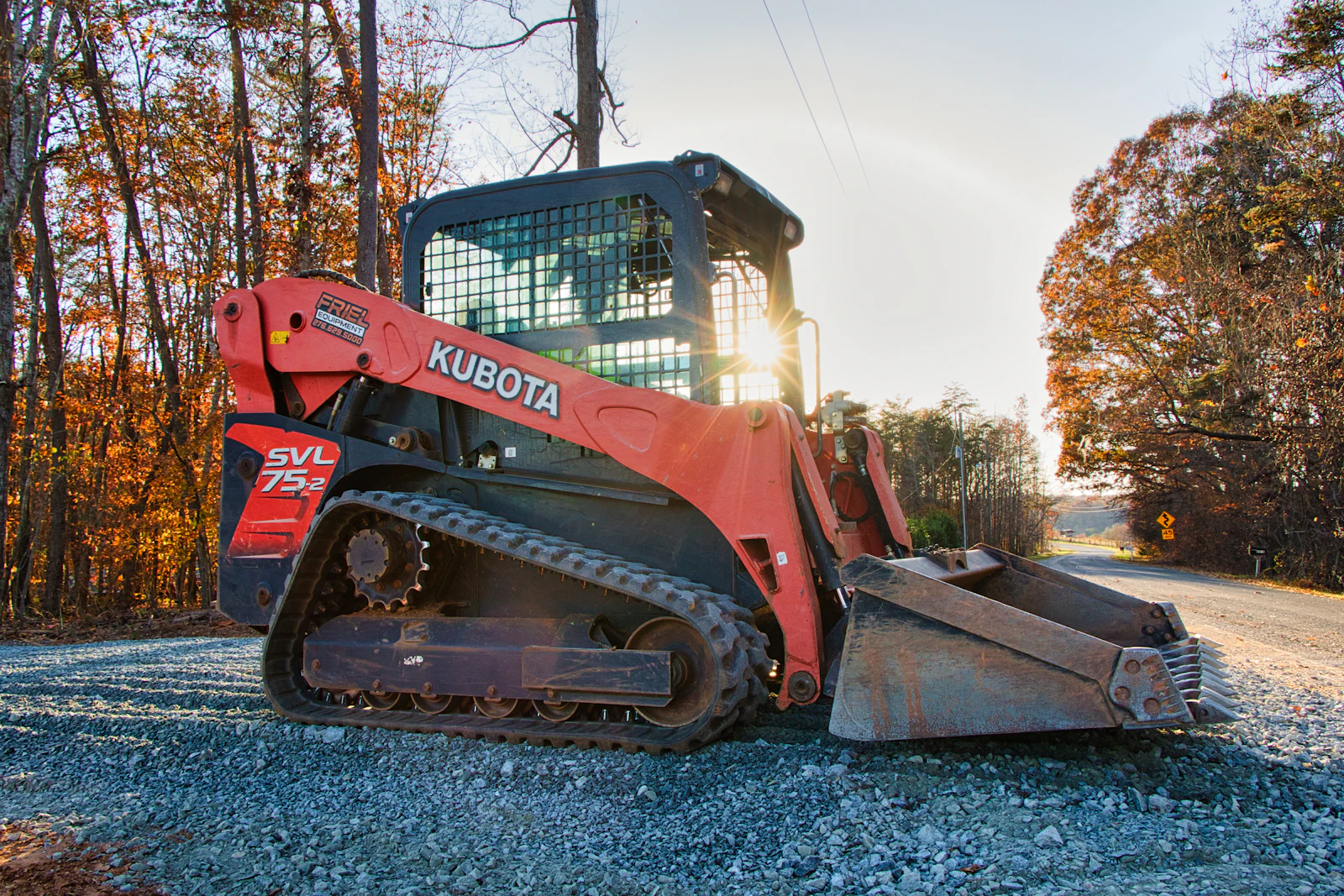
Skid Steer Loader Rental
For Portland-area projects budgeting in 2026, skid steer loader equipment hire typically lands in the following planning bands (machine only, bucket included unless noted): $300–$450 per day, $1,000–$1,350 per week, and $2,200–$3,500 per 4-week “month”. Tracked units (compact track loaders often rented as “tracked skid steers”) usually price higher than wheeled skid steers but reduce downtime in Portland’s wet season and on disturbed subgrade. Published Portland-area examples include a tracked skid steer listed at $285/day, $1,138/week, and $3,414/month, plus a 4-hour option at $254 and a 5-day rate at $854; most national and regional rental houses operating in the metro (including large multi-branch providers and independent yards) will quote similar structures with different class breakpoints, attachments, and delivery rules. Treat the numbers in this guide as 2026 planning ranges—final pricing will depend on class, hydraulics, availability, and commercial terms.
| Vendor |
Daily Rate |
Weekly Rate |
Review Score |
Website |
| Portland Rent-All |
$300 |
$1 050 |
8 |
Visit |
| Star Rentals |
$290 |
$1 080 |
9 |
Visit |
| C & E Rentals (C.A.N.D.E. Rentals) |
$495 |
$1 425 |
9 |
Visit |
| Canby Rental & Equipment (serving Portland metro) |
$285 |
$1 138 |
10 |
Visit |
2026 Planning Ranges by Machine Class in Portland
To keep your estimate defensible, separate “wheeled skid steer” from “tracked skid steer / compact track loader,” then confirm rated operating capacity (ROC), hydraulic flow, and whether an enclosed cab is required for the scope. Portland pricing volatility is usually driven more by availability and transport than by a small delta in base day rate.
- Small wheeled skid steer (approx. 1,300–1,900 lb ROC): plan $300–$400/day, $950–$1,150/week, $2,000–$2,600/4-week. (Aggregator averages published for Portland show about $325/day, $1,050/week, and $2,188/month as an “all companies” midpoint.)
- Medium wheeled skid steer (approx. 2,000–2,700 lb ROC): plan $350–$475/day, $1,100–$1,450/week, $2,400–$3,200/4-week, especially if you require two-speed travel or an enclosed cab.
- Compact track loader / tracked skid steer (approx. 1,700–2,900 lb ROC): plan $385–$525/day, $1,250–$1,650/week, $2,800–$3,800/4-week. Portland-area published examples include $285/day and $1,138/week for a tracked skid steer offering, while published CTL midpoints in Portland commonly land closer to the low- to mid-$400s/day.
- High-flow track loader (forestry head, cold planer, heavy brush cutter capable): plan $525–$750/day, $1,800–$2,800/week, $4,000–$6,500/4-week, plus higher damage waiver and stricter wear/tear language (tracks, cutting tools, and hydraulic couplers).
Assumptions used for 2026 planning: “Monthly” means a 4-week/28-day billing period (common in equipment hire), one bucket is included, taxes/fees/delivery are excluded, and you are operating within normal shift usage unless you negotiate otherwise.
Attachments and Accessories That Move the Hire Price
On most Portland scopes, attachments drive the “real” skid steer loader hire cost more than the base machine. Build your estimate with attachments as separate line items (and confirm whether the yard rents attachments “standalone” or only with a machine). Typical 2026 planning adders:
- Pallet forks (48 in.): plan $40–$70/day, $100–$200/week, $250–$450/4-week.
- Grapple bucket (72 in. class): plan $75–$125/day, $250–$450/week, $500–$1,000/4-week depending on width and duty rating.
- Auger drive: plan $90–$160/day, then add $20–$45/day per bit (6 in., 9 in., 12 in. commonly priced separately).
- Breaker / hammer attachment: plan $250–$400/day plus a potential $75–$150/day charge for a dedicated tool/bit set if not included.
- Trencher attachment: plan $175–$325/day, but verify chain wear terms—some yards treat damaged teeth as billable consumables.
- Cold planer (milling head): plan $650–$1,200/day plus consumables (teeth) and higher damage waiver; confirm whether you need a high-flow carrier and whether water suppression is required for dust control.
- Over-the-tire (OTT) steel tracks for a wheeled skid steer (when permitted): plan $60–$120/day, but expect restrictions on paved surfaces and higher property-damage exposure.
Published rate cards commonly show forks and grapple buckets as discrete rental lines (for example, forks and grapple buckets priced per day/week/month separate from the skid steer line). Use that as justification to keep attachments out of your “all-in machine rate.”
What Actually Gets Billed: Hours, Meter Caps, and Off-Rent Rules
Most equipment hire contracts are written around shift usage and meter limits, even when you’re quoted a daily or weekly rate. Key cost drivers to confirm on every Portland skid steer loader rental:
- Shift usage cap: many national providers define base rates as one shift (commonly 8 hours/day, 40 hours/week, 160 hours/4 weeks). Extra usage may be billed using a formula tied to the base rate (for example, additional hours billed at fractions of the daily/weekly/4-week rate).
- Daily meter cap examples: a Portland-area tracked skid steer listing notes a limit of 10 hours on the meter per daily rental, with overages billed as additional fees. If your crew runs a skid steer for 12 hours/day during a critical path pour-back, that overage can exceed the savings of choosing the cheaper yard.
- Off-rent timing: many yards require an off-rent notice before a cutoff time (often early afternoon) and require the machine to be accessible for pickup; if it’s buried behind a gate or blocked by rebar deliveries, expect an extra day of rent or a dry-run fee.
Practical estimating rule: If you expect sustained usage above one shift, model an “overtime factor” of 1.15–1.35 on the base rental line (before delivery and waiver) unless your MSA specifically grants multi-shift at no charge.
Delivery, Mobilization, and Site Access Costs in Portland
Portland skid steer equipment hire costs often swing on delivery logistics—especially for downtown, Pearl District, Central Eastside, and tight infill where curb space and delivery windows are constrained.
- Typical delivery and pickup (metro planning allowance): budget $150–$275 each way within a “local” radius (commonly 10–20 miles from the yard), then $4–$7 per loaded mile beyond the local zone.
- Downtown/limited access surcharge: budget $75–$150 if a smaller truck is required, if a flagger is needed, or if delivery must be timed to a strict dock window.
- Dry-run / failed pickup: budget $125–$250 if the driver can’t access the machine (blocked gate, no key, machine not staged).
- Weekend/holiday logistics: budget a 10%–20% premium for special dispatch in some agreements, or assume an extra day billed if delivery occurs late Friday and pickup can’t occur until Monday.
Portland-specific considerations that change cost: (1) wet-weather access—plan for track machines and/or matting when the site turns to mud, (2) tighter staging in urban neighborhoods—expect higher risk of “extra day” rent if pickup cannot be executed, and (3) dust-control constraints on demo/site prep—water suppression, sweeping, or indoor containment can require additional attachments and cleaning allowances.
Insurance, Damage Waivers, and Deposits
Most professional rental houses will require either proof of insurance (with hired/non-owned and rented equipment coverage, plus required limits) or the purchase of a damage waiver / rental protection plan. Build these into your estimate as explicit cost lines:
- Damage waiver planning allowance: 10%–15% of the base rental line (machine + many attachments), subject to exclusions (tires, tracks, glass, misuse, theft without key control, etc.).
- Deposit / authorization: commonly $300–$1,000 for smaller accounts or will-call transactions; credit authorization holds can impact project cash flow even when they are not “fees.”
- Taxes and recovery items: in Oregon, some suppliers explicitly note that items such as the Oregon Heavy Equipment Rental Tax (OR-HERT) and Oregon Corporate Activity Tax (OR-CAT) recovery may be added to the final invoice depending on the supplier’s structure and your account setup.
Budget Worksheet
Use this no-table worksheet to build a bid-ready skid steer loader rental (equipment hire) budget for a Portland job. Adjust quantities to your schedule and include allowances for the “gotchas” that cause overruns.
- Skid steer loader (wheeled) base rent: ______ days at $300–$450/day allowance
- OR compact track loader (tracked skid steer) base rent: ______ days at $385–$525/day allowance
- Delivery to site: $150–$275 allowance
- Pickup from site: $150–$275 allowance
- Downtown / restricted-window delivery allowance: $75–$150
- Damage waiver / rental protection: 12% allowance on rental subtotal
- Fuel (diesel) allowance: $45–$110/day depending on load factor and idle time
- Refuel service contingency (if not returned full): $25–$45 service fee plus $6–$10/gal fuel allowance
- Cleaning contingency (mud/heavy soil): $95–$250
- Concrete / slurry / adhesive cleanup contingency (if applicable): $250–$450
- Pallet forks: ______ days at $40–$70/day
- Grapple bucket: ______ days at $75–$125/day
- Auger drive + bit set: ______ days at $110–$205/day (drive + bits)
- Overtime / meter overage contingency: 15% of base rent (or price by expected extra hours)
- Security / theft deterrence (jobsite lockbox, GPS note, fencing): $50–$150 allowance
Rental Order Checklist
- Confirm exact machine class: ROC, operating weight, width (gate/sidewalk constraints), and whether tracks are required for soft ground.
- Confirm hydraulic flow requirement (standard vs high-flow) and attachment compatibility (coupler type, case drain, electrical, tooth pattern).
- Provide delivery address, contact, and onsite receiving hours; specify any delivery cutoff times and whether the driver needs a call-ahead window.
- PO must list: rental term (day/week/4-week), requested delivery date/time, expected off-rent date, and approved attachments.
- Document “on-rent” condition: photos of cab glass, tires/tracks, bucket cutting edge, forks tines, and quick coupler; capture meter reading at drop.
- Confirm fueling expectations at return (full tank / same level) and whether DEF is applicable (many compact units are diesel only, but confirm per model).
- Confirm off-rent rules: notice method (phone/email/portal), cutoff time, and staging requirements for pickup (machine accessible, key available).
- Confirm insurance path: COI provided vs damage waiver purchased; verify additional insured language if required by your MSA.
- Return condition documentation: photos, meter reading, and any reported issues to avoid “found on return” disputes.
Example: Two-Week Backfill and Export in Inner Southeast Portland
Scenario: You have a 10-business-day window (two work weeks) for trench backfill and spoils export on a constrained site with a single 10 ft gate, no overnight street staging, and deliveries restricted to 7:00–9:00 a.m. You select a tracked skid steer/CTL to avoid getting stuck on wet subgrade.
- Tracked skid steer base rent: 2 weeks at $1,138/week = $2,276 (planning example)
- Delivery + pickup: $220 each way = $440 (metro allowance)
- Damage waiver at 12% of rental line (base rent only): $273
- Pallet forks for pipe/boxes: 10 days at $55/day allowance = $550
- Cleaning contingency (mud): $175
- Overtime/meter overage contingency: assume 2 extra hours/day for 4 days; budget $300–$450 depending on contract formula
Budget takeaway: even when the base weekly rate looks competitive, transport, waiver, attachments, and overage risk can add 25%–45% to the equipment hire cost. The cheapest “day rate” is rarely the cheapest delivered-and-closed-out rental on a constrained Portland site.
Hidden-Fee Breakdown
Skid steer loader rental rates in Portland are straightforward on the quote, but the invoice often grows through recoveries and operational add-ons. Build the following into your pre-job review so you can control them (or negotiate them).
- Delivery / pickup charges: as noted, plan $150–$275 each way local, plus mileage beyond a radius. Confirm whether the supplier applies a transportation surcharge as a percentage of transport charges (some national agreements include a fixed component published at 9%, sometimes with a minimum such as $9, plus a variable fuel component that can change monthly).
- Fuel / recharge surcharges: plan a refuel charge as $6–$10/gal plus a service component $25–$45 if the unit returns low. If your site has no fueling access, price that “convenience” into the job rather than absorbing it at closeout.
- Damage waiver vs. full insurance: if you elect the waiver, budget 10%–15% of the rental subtotal and read exclusions (glass, tires/tracks, theft). If you provide a COI instead, confirm deductibles and whether the yard requires you to assume “all risk of loss” regardless of fault.
- Cleaning fees: light washdowns often pass, but “excess dirt, concrete, and/or paint” can trigger cleaning charges. Plan $95–$250 for heavy mud and $250–$450 for concrete contamination or adhesive/paint overspray scenarios.
- Late return penalties: if the unit is not staged by the agreed pickup window, budget 1 extra day of rent or a $125–$250 dry-run. For a $400/day class machine, one missed pickup can erase the savings of shopping rates.
- Hour overages / second shift: confirm whether your agreement treats the base rate as 8 hours/day (or another meter cap). As a planning allowance, treat additional usage as $12–$25 per hour on smaller machines and $20–$45 per hour on larger/high-flow track loaders unless you have a defined formula in writing.
- Preventive maintenance (PM) or meter-based charges: some providers publish PM as a per-hour charge in the range of $1–$6 per hour, reconciled monthly around a 160-hour baseline. If your project is month-to-month, this can be a meaningful add-on line if it applies to your account.
- Keys / lockout / recovery: budget $50–$150 for key control contingencies; a lost key can become a service trip plus admin time.
How to Quote Portland Skid Steer Equipment Hire Like an Estimator
To avoid “apples-to-oranges” comparisons, require every quote to answer the same operational questions:
- Is the rate day/week/4-week? Some suppliers quote calendar month, others quote 28 days. Put “4-week” on the PO when that is what you mean.
- What is included? Confirm bucket type (smooth vs toothed), whether a quick coupler is included, and whether standard forks are included or extra.
- What is the meter cap? If you plan 10-hour days during a shutdown, confirm the cap in writing. If the supplier’s cap is 8 hours/day, model overages.
- What is the off-rent procedure? Require an off-rent email confirmation with time stamp, and stage the machine by a known pickup point with gate access.
- What are the site constraints? In Portland, include alley access restrictions, no-idle zones (if applicable), mud management plan, and dust-control constraints for grading or demolition support.
When Weekly or 4-Week Rates Beat Daily (And When They Don’t)
Skid steer loader rental pricing is designed to push you toward weekly and 4-week terms, but only if you can actually keep the machine working (or at least keep it on rent without extra days caused by logistics). Use these rules of thumb for Portland scheduling:
- Go weekly when you have 3+ consecutive working days and you can keep the unit onsite without access interruptions.
- Go 4-week when scope is weather-exposed (Portland rain delays), inspections are unpredictable, or you have phased backfill/landscape restoration that benefits from having the unit onsite for “burst work.”
- Stay daily when site access is fragile (shared driveway, strict neighbor-hour limits, downtown staging) and you are likely to lose a day waiting for deliveries, locates, or inspections—those “idle days” still bill at the weekly/4-week term if you can’t off-rent cleanly.
Practical Cost Controls for Portland Skid Steer Loader Rental Rates
- Pick the carrier based on ground conditions: paying an extra $50–$125/day for tracks can be cheaper than losing half a day to recovery and cleanup when the site turns to soup.
- Stage for pickup the day before off-rent: avoid the $125–$250 dry-run risk and the “one more day” charge.
- Bundle attachments for the full term only when needed: forks for two days should not ride for four weeks at $250–$450/month unless you truly need them.
- Document return condition: a 10-minute photo set (tracks, bucket edge, cab glass) can protect you from a $250–$450 disputed cleaning or damage line.
- Control fueling: returning full can save $25–$45 plus $6–$10/gal and prevents schedule-driven “yard fueling” surprises at closeout.
If you want, share your expected duration (days on rent), whether you need tracks, and the attachment package (forks, grapple, auger, breaker, planer). I can convert this into a tighter Portland-specific equipment hire budget range (low/most-likely/high) without relying on any single vendor’s promotional rate.