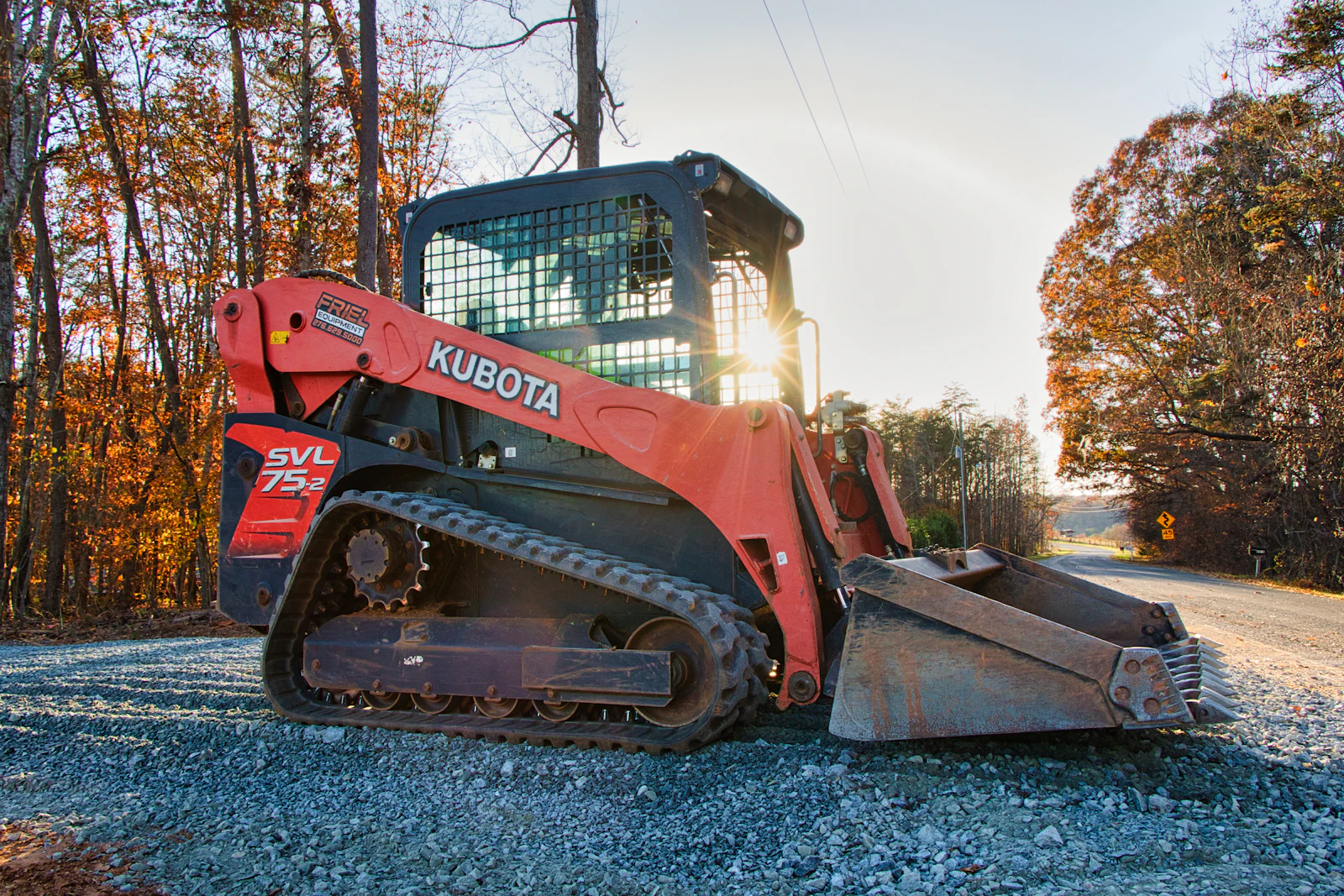
Skid Steer Loader Hire Costs San Francisco 2026
For San Francisco skid steer loader equipment hire on footing work in 2026, most contractors should budget $250–$375/day, $1,000–$1,250/week, and $2,400–$3,100 per 4-week for a wheeled skid steer with a standard bucket, with compact track loader (CTL) pricing commonly landing in the $295–$425/day, $975–$1,350/week, and $2,540–$3,900 per 4-week band depending on ROC, cab, and minimum term. These 2026 planning ranges are anchored to published Bay Area schedules (Peninsula/East Bay) such as wheeled units around $315/day and $2,500 per 4-week, and track units around $275–$325/day with some models carrying a 4-day minimum. National rental houses (United Rentals, Sunbelt Rentals, Herc Rentals) and established local yards will all quote daily/weekly/28-day structures, but your “real” hire cost is usually driven by delivery constraints, off-rent rules, and attachment adders as much as the base rate.
| Vendor |
Daily Rate |
Weekly Rate |
Review Score |
Website |
| Sunbelt Rentals (San Francisco – Branch #506) |
$345 |
$790 |
8 |
Visit |
| Cal-West Rentals |
$315 |
$1 150 |
10 |
Visit |
| Redwood City Rental Equipment (Redwood Rental & Repair) |
$200 |
$800 |
10 |
Visit |
| AAA Rentals (Redwood City – serves San Francisco Bay Area) |
$350 |
$1 400 |
9 |
Visit |
What drives skid steer hire pricing on San Francisco footing jobs?
When the work term is digging footings, the hire rate you’re offered is typically a function of (1) machine class (wheeled skid steer vs CTL), (2) minimum rental term, and (3) whether the yard expects heavy ground engagement in tight access. In San Francisco specifically, delivery logistics and traffic/curb constraints frequently add more cost than in suburban Bay Area deliveries. Build your estimate around the job’s operational reality: steep grades, narrow streets, limited staging, and restricted delivery windows can all push you toward “premium” dispatch times or smaller machines with higher day rates.
- Wheeled skid steer: Often the lowest base hire cost, but can struggle on wet/soft subgrade and steep backyards where traction is limited.
- Compact track loader (CTL): Typically a higher day rate, but may reduce schedule risk and rework (rut repair, stuck time) on footing excavations in variable fill or landscaped backyards.
- Minimum term: Some track loader offerings in the Bay Area show a 4-day minimum on certain models; that matters when the plan is “one-day footing dig.”
San Francisco 2026 rate benchmarks you can defend in a bid
When you need supportable benchmarks for a rental coordinator’s budget narrative, reference locally published schedules and then apply location/dispatch multipliers for San Francisco access and timing:
- Wheeled skid steer (mid-size) published Bay Area example: $315/day, $1,150/week, $2,500 per 4-week (bucket included). Use this as a “base case” then add SF delivery and site constraints.(m
- Wheeled skid steer (smaller frames) published Bay Area examples: $200–$250/day, $800–$1,000/week, $2,400–$3,000 per 4-week. These can fit tighter residential access but may be slower in dense clay or when loading spoils.(m
- Track loader (CTL) published Bay Area examples: $275–$325/day, $1,100–$1,300/week, up to about $3,900 per 4-week; note at least one published schedule shows a 4-day minimum on a CTL model.(m
- Track skid/CTL published East Bay example with multi-month breaks: $295/day, $975/week, $2,975 first month, then step-down monthly rates after month one. This is a useful anchor when a footing package turns into an extended shoring/grade beam scope.(m
Assumptions used for the planning ranges above: “Week” is typically priced as a discounted block relative to daily (often aligned to 5 working days), and “month” is commonly a 28-day (4-week) rate displayed by major rental platforms. Always confirm the yard’s billing definition before you lock durations in a subcontractor scope letter.(m
Hidden-Fee Breakdown (what usually moves the total hire cost)
For skid steer loader equipment hire costs in San Francisco, the most common budget misses are below. These are planning allowances for 2026—not guaranteed pricing—and should be carried as separate estimate line items so you can reconcile invoices quickly.
- Delivery / pickup: $175–$325 each way inside a typical local radius; $250–$450 each way for difficult downtown access or timed-window deliveries (e.g., narrow curb access, spotter required). Add bridge/toll pass-throughs where applicable (often $7–$9 per crossing depending on route and vehicle class).
- Mileage beyond local radius: $6–$10 per mile outside the included zone (many yards informally anchor “local” at 10–20 miles from branch; confirm the dispatch map).
- Minimum delivery charge: commonly $150–$250 minimum even if the site is close, especially when a tilt-deck is dispatched.
- Damage waiver / rental protection: typically 10%–18% of time-and-material charges (base rent + some attachments), unless your COI meets their waiver.
- Deposit / credit hold: $500–$2,500 depending on account status and machine class.
- Fuel / refuel: “Return full” is standard; if not, refuel is frequently billed at a retail-plus rate such as $6–$10 per gallon plus a service fee. (Budget this even if your crew intends to fuel—footing days run long.)
- Cleaning: $125–$350 for heavy mud; $250+ for track clean-out; $300–$600 if concrete slurry or rebar tie wire is embedded in the undercarriage and requires labor to remove.
- Late return / extra day exposure: common triggers include missed cutoff, driver no-show, or “not accessible at pickup.” Carry $95–$150 as a typical quarter-day exposure or $300–$425 for an unplanned extra day on mid-size units.
Attachments and accessories that matter for digging footings
For footing excavation, the skid steer is only productive if you have the right ground-engagement package. Many published schedules include one bucket, but “footings-ready” often means at least a tooth bucket and potentially an auger, forks, or a breaker depending on soils and demo scope.
- Tooth bucket vs smooth bucket: sometimes included as a choice; if not, plan a $15–$35/day upcharge for a tooth edge or tooth bar.
- 4-in-1 bucket: add $45–$90/day (useful when you need to do light grading and cleanup after footing pour prep).
- Pallet forks: add $25–$60/day (valuable for moving rebar cages, forms, trench boxes, or pallets of bagged mix in tight access).
- Hydraulic auger drive: add $150–$250/day; auger bit add $35–$75/day per diameter (common footing diameters drive how many bits you’ll stage).
- Trencher attachment: add $175–$325/day if footings tie into shallow utility reroutes or grade beam trenches.
- Hydraulic breaker: add $200–$450/day when you expect old slabs, buried rubble, or shallow rock that will stall a bucket-only plan.
On San Francisco infill sites, also budget for street protection accessories: $25–$60/day for steel plates (or a separate plate rental) and $40–$85/day for track-out control materials and sweep support when the curb line is tight.
Example: San Francisco footing dig with real constraints and numbers
Scenario: 12 pier footings for a rear addition in the Sunset District. Access is via a 36-inch gate with two steps, so the GC selects a mid-size wheeled skid steer staged at the curb with a ramp solution and wheelbarrow relay for the last stretch. Work is planned for two consecutive weekdays, but the city curb space is only available after 9:00 AM and the rental yard’s last dispatch window is 2:00 PM.
Hire budget build (planning):
- Skid steer hire: 2 days at $335/day = $670 (published local benchmark day rate).(m
- Delivery + pickup timed to window: $350 each way = $700 (SF access premium allowance).
- Damage waiver: 14% of rental charges (carry $190 allowance on $1,370 subtotal).
- Fuel exposure: carry $60 (about 8–10 gallons at retail-plus with fees if returned short).
- Cleaning allowance: $200 (mud + soil on tires, undercarriage wash-out).
- Potential extra day risk: carry $350 if the crew misses the off-rent cutoff and pickup slides to the next business day.
Why this is realistic in San Francisco: the base day rate is rarely the driver; curb constraints, dispatch cutoffs, and return-condition standards are what turn a $670 plan into a $1,800–$2,200 invoice if you don’t control them.
Budget Worksheet (skid steer equipment hire allowances)
- Base skid steer loader hire (wheeled): $250–$375 per day x ____ days
- CTL upgrade (if traction or rut risk): +$40–$100 per day x ____ days
- Weekly conversion check: compare 5 daily vs 1 weekly block (often saves 10%–25%)
- Delivery + pickup (SF access): $175–$450 each way
- Mileage beyond local zone: $6–$10 per mile (if applicable)
- Bridge/toll pass-through: $7–$9 per crossing (route dependent)
- Damage waiver: 10%–18% of rental charges (if not waived by COI)
- Fuel/refuel exposure: $6–$10 per gallon if not returned full
- Cleaning/undercarriage: $125–$600 depending on mud/concrete contamination
- Attachment adders: auger drive $150–$250/day; bit $35–$75/day; breaker $200–$450/day; 4-in-1 $45–$90/day
- Late return/off-rent miss: quarter-day $95–$150 or extra day $300–$425
- Street protection/track-out controls: $40–$85/day (site-dependent)
Rental Order Checklist (what to lock before you dispatch)
- PO number and job name must match invoice reference (avoid branch miscoding)
- Delivery address with cross-street, curb restrictions, and exact on-site contact phone
- Requested delivery window and your receiving plan (forklift/spotter if curb is tight)
- Confirm machine width, gate clearance, and whether ramps/boards are required
- Attachment list on the contract (bucket type, forks, auger, breaker) and whether couplers are compatible
- Insurance: COI submitted, waiver accepted or damage waiver % approved
- Off-rent procedure: cutoff time (often 1:00–3:00 PM), who can call off-rent, and how confirmations are documented
- Return conditions: “return full” fuel, cleaning expectations, and photo documentation at pickup
- Weekend/holiday billing rule (what constitutes an “extra day” in SF)
- Operator training confirmation and job hazard review for tight-access excavation
Delivery windows, off-rent rules, and weekend billing in San Francisco
For skid steer loader hire in San Francisco, the invoice outcome is tightly linked to dispatch rules. Most rental operations require (a) an off-rent call to stop billing, and (b) equipment to be accessible for pickup. If your machine is blocked by pallets, rebar, spoils, or parked vehicles, billing often continues until access is restored and the driver can physically retrieve it.
Carry these practical 2026 planning assumptions unless your branch confirms otherwise in writing:
- Dispatch cutoff: plan a 2:00 PM cutoff for same-day changes; missing it can add 1 extra day at $300–$425 on mid-size units.
- Weekend exposure: if a unit lands late Friday and can’t be collected until Monday, many branches effectively bill the weekend as 2–3 days depending on when the pickup is scheduled and whether Saturday operations occur.
- Timed pickup premium: add $75–$150 when you require a hard pickup appointment to meet street occupancy rules or inspection schedules.
Cost-control tactics rental coordinators actually use on footing packages
Digging footings is frequently a “bursty” scope (excavate, inspector sign-off, then forms/rebar, then concrete). The mistake is leaving the skid steer on rent while it sits idle waiting for inspection or concrete trucks. If you can’t avoid standby, shift to a tighter rental window and pay for more productive hours rather than more calendar days.
- Bundle excavation + backfill prep: Keep the machine busy for an 8–10 hour day rather than stretching across two half-days that trigger two daily minimums.
- Convert to weekly at day 3: If the footing dig expands (unexpected rubble, deeper piers, utility conflicts), ask the branch to re-rate days to a weekly block once you cross the threshold. The delta is often $200–$450 in your favor versus staying “daily.”
- Pre-stage attachments: A last-minute auger or breaker add-on can create a second delivery/pickup line item ($175–$325 each way). If you suspect you’ll need it, ship it with the machine on day one.
San Francisco-specific considerations that change real hire cost
Local conditions affect equipment hire costs in ways estimators outside the city sometimes miss:
- Curb space and staging: In denser neighborhoods, your delivery may require a spotter and a very short unload window. Budget $250–$450 each way for difficult deliveries instead of assuming the “standard” suburban drop fee.
- Hills and tire wear: Steeper grades raise tire scuffing risk; if you’re on a tracked unit, sharp turns on asphalt can accelerate track damage. Track or tire damage can be backcharged—carry an internal risk allowance (e.g., $250–$500) when conditions are harsh.
- Wet microclimates and soft subgrade: Morning fog and irrigated landscapes can make rear-yard footing excavation slippery. A CTL at $295–$325/day can be cheaper than a wheeled skid steer that loses half a day to traction issues.(m
Return-condition documentation (how to avoid cleaning and damage disputes)
To keep skid steer equipment hire costs predictable, treat return condition as a controlled process:
- Photo set at off-rent: 8–12 photos (both sides, front, rear, bucket cutting edge, undercarriage/tracks, hour meter, fuel gauge) timestamped before pickup.
- Fuel confirmation: If the contract is “return full,” record fuel level at pickup and confirm whether the branch uses a specific “full” mark tolerance (some treat anything under full as refuel).
- Undercarriage clean-out: If you worked in wet clay, assign 30–45 minutes at end of shift for cleanup. That $200 cleaning bill is often avoidable with planned labor.
How to use Caltrans equipment ownership rates as a sanity check (not a rental quote)
For public works–style estimating and force-account comparisons, Caltrans publishes an annual “Labor Surcharge and Equipment Rental Rates” book (cost of equipment ownership) effective April 1, 2026 through March 31, 2027. It includes a category that covers industrial/farm/skid steer classes (for example, <=50 horsepower vs over 50 horsepower) with hourly rates intended to represent ownership-and-operation costs, which Caltrans notes may be lower than a rental yard’s charged rate. Use these numbers as a reasonableness check when negotiating extended durations or when you need to justify internal equipment charges—do not present them as market rental pricing for San Francisco.
When skid steer hire is the wrong tool for footing excavation (cost risk note)
Keep this article focused on skid steer loader hire costs, but it’s worth stating the cost risk: if the footing design requires deep, narrow excavations with vertical walls, a skid steer can become a slow and messy way to “dig a hole,” especially when spoils must be exported and the machine is limited by reach. In those cases, your skid steer hire cost may be better allocated to a CTL for spoil handling plus a dedicated excavator for production. If you proceed with a skid steer-only plan, mitigate the risk by adding the correct bucket, staging spoil bins, and tightening your rental window.
Quick pricing recap for 2026 San Francisco planning
- Wheeled skid steer (budget range): $250–$375/day; $1,000–$1,250/week; $2,400–$3,100 per 4-week.
- Compact track loader (budget range): $295–$425/day; $975–$1,350/week; $2,540–$3,900 per 4-week.
- Delivery/pickup SF allowance: $175–$450 each way, plus possible $6–$10/mile outside local radius.
- Damage waiver planning: 10%–18% unless waived by COI.
- Common “gotchas”: minimum terms (including 4-day minimums on some CTLs), missed off-rent cutoff, and cleaning/refuel backcharges.