Build your next estimate with CountBricks
Create an itemized estimate for your project, with materials, labor, and quantities you can review and edit.
Create my estimateStart a 7-day free trial. Sign up, then enter your project details.
For Tucson concrete driveway scopes (demo, base export/import, fine grading, and site cleanup), 2026 planning ranges to hire a skid steer loader typically land at $300–$450/day, $900–$1,250/week, and $2,200–$3,100 per 4 weeks for a wheeled skid steer; and $375–$525/day, $1,150–$1,650/week, and $3,200–$4,800 per 4 weeks for a compact track loader (tracked skid steer). These ranges assume “one shift” utilization (commonly 8 hours/day, 40 hours/week, 160 hours/4-week) and exclude delivery, damage waiver, fuel, cleaning, and attachment adders. In Tucson, most coordinators will price-check national providers (for availability and fleet depth) alongside local independents (for faster delivery windows and flexible off-rent handling).
| Vendor |
Daily Rate |
Weekly Rate |
Review Score |
Website |
| United Rentals |
$410 |
$1 050 |
9 |
Visit |
| Sunbelt Rentals |
$405 |
$1 025 |
9 |
Visit |
| H&E Equipment Services |
$395 |
$1 000 |
8 |
Visit |
| The Home Depot Rental |
$400 |
$1 000 |
9 |
Visit |
| Action Rentz |
$415 |
$1 250 |
10 |
Visit |
Skid Steer Loader Hire Costs Tucson 2026
Use these 2026 ranges for budgetary estimating (not as exact vendor quotes). They’re anchored to published/posted market pricing and then widened slightly for 2026 planning contingency (availability, seasonal surcharges, and machine spec variance):
- Wheeled skid steer (2,000–3,000 lb ROC class): plan $300–$450/day, $900–$1,250/week, $2,200–$3,100 per 4 weeks. Market examples include ~$375–$395/day and $1,200–$1,300/week for 2,000–3,000 lb classes on a published rate page, and Tucson aggregator listings showing $392–$424/day and ~$1,004–$1,108/week in common capacity classes.
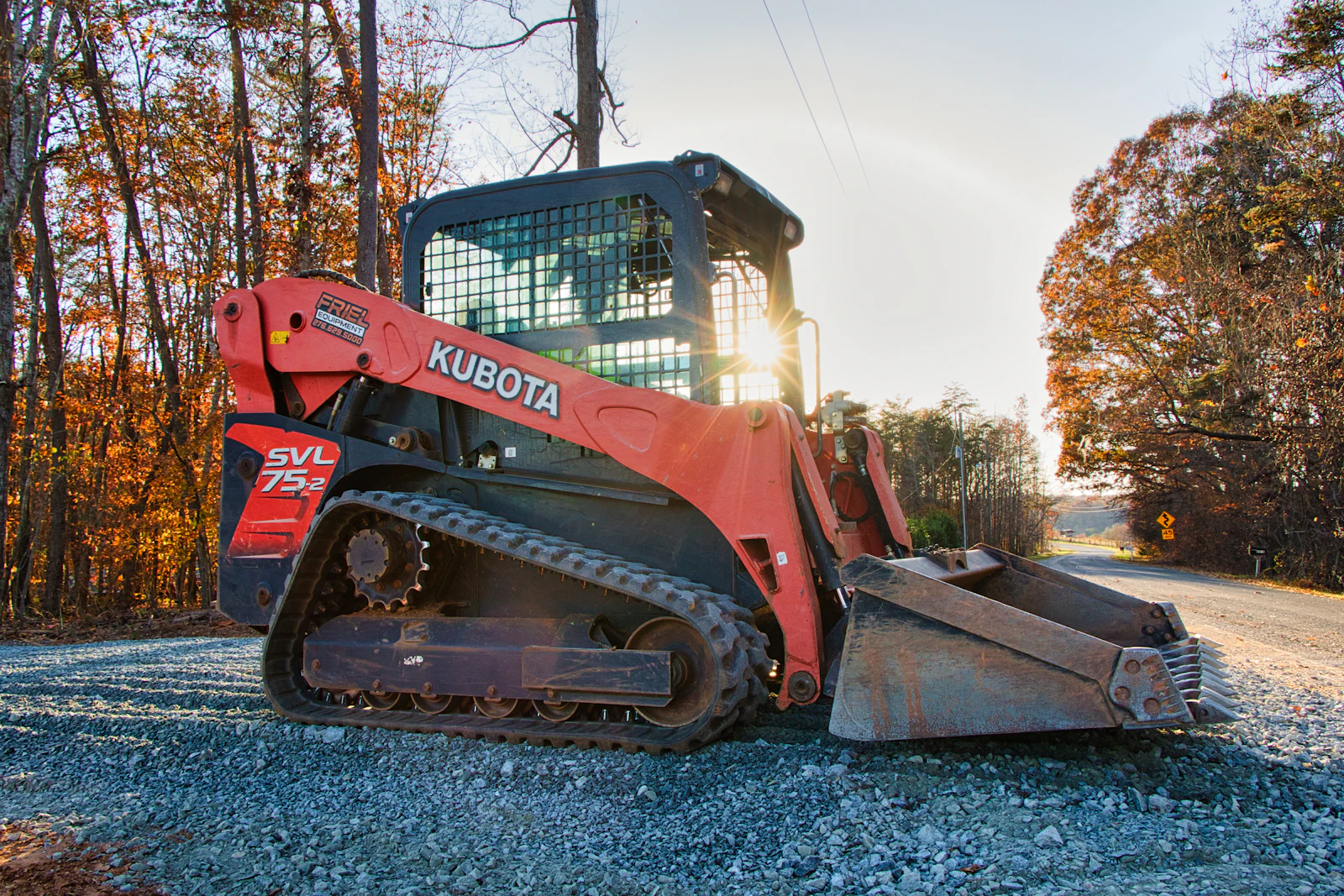
- Tracked skid steer / compact track loader: plan $375–$525/day, $1,150–$1,650/week, $3,200–$4,800 per 4 weeks. Tucson-area posted examples include a tracked Cat 259D3 listing at $390/day, $1,170/week, $3,510 per 4 weeks.
Assumptions that materially impact hire cost: rates above presume standard bucket included, standard shift limits, diesel billed separately or fuel returned full, and that the machine can be delivered/picked up within normal business hours. When your concrete driveway work term requires a breaker, forks, a grapple, or a specialized grading setup, attachment adders often drive more cost than the base machine rate.
What Changes the Hire Price on a Tucson Concrete Driveway Scope?
Concrete driveway production is a “small footprint, high consequence” scope: you’re maneuvering tight against forms, working around garage slabs/footings, and managing spoils without damaging adjacent hardscape. The following drivers usually explain why two quotes for “a skid steer” can land hundreds of dollars apart for the same calendar duration:
- ROC / size class: a 2,000 lb ROC wheeled skid steer typically prices below a 3,000 lb ROC unit; bigger frames also tend to require heavier transport (which can increase delivery). A published rate example shows a 2,000 lb class at $375/day vs a 3,000 lb class at $395/day.
- Tracks vs wheels: compact track loaders cost more to own and maintain, which shows up in hire pricing; they can also reduce rutting on decomposed granite and improve traction in monsoon-softened subgrade, which can reduce rework time on driveway base prep.
- Cab configuration: enclosed cab/AC is a real productivity lever in Tucson heat, but it typically carries a premium. In practice, you’ll pay more for comfort and operator retention, and less for open canopy—especially for short, intermittent driveway scopes.
- High-flow hydraulics: if your driveway scope includes a high-demand attachment (certain brush cutters or planers), confirm high-flow availability up front; high-flow machines often command a premium and can be scarce during peak season.
- Tires and ground-contact requirements: for driveway demo/cleanup (rebar, broken concrete), solid or foam-filled tires reduce downtime from punctures. Expect an upcharge or different machine class depending on rental house policy.
Tucson-specific considerations that affect real rental cost: (1) dust control is frequently required when you’re cutting/demoing or moving base in dry months—water truck coordination and cleanup expectations can create cleaning charges if the machine returns caked in caliche fines; (2) summer heat can change your shift plan (earlier starts) which intersects with delivery cutoffs; and (3) monsoon windows can extend rental duration if export/import trucking slips a day.
Attachment and Accessory Adders for Driveway Work
For a concrete driveway work term, the skid steer is usually hired as a platform—and the attachment selection is what determines whether you finish in one shift or burn a full week. Below are common equipment hire cost adders (verify coupler type, hydraulic flow, and return-condition rules):
- Hydraulic hammer / breaker (for slab demo, thickened edges, and stubborn sections): published example pricing shows $300/day, $800/week, $2,000/month for a 500 lb class hammer.
- Forks (palletized base material, form lumber, bundled rebar): published example pricing shows $75/day, $200/week, $500/month.
- Grapple (demo debris handling when you’re staging broken slab before haul-off): published example pricing shows $200/day, $500/week, $1,000/month.
- Landscape rake / power rake (final grade conditioning): published examples include $250/day and $575–$675/week depending on rake type.
- Rake bucket (tear-out and cleanup): Tucson-area posted example: $130/day, $300/week, $1,000 per 4 weeks.
- Brush mower (site clearing adjacent to driveway footprint): Tucson-area posted example: $250/day, $650/week, $1,000 per 4 weeks (attachment-only listing; confirm compatibility and whether the vendor requires it to be paired with a machine).
Cost-control tip for rental coordinators: if you need a breaker for only one production day inside a week-long machine hire, ask whether the vendor will “split-week” the attachment (e.g., 1 day breaker + 4 days bucket/forks) rather than billing a full weekly attachment rate. Policies vary, but this is one of the cleanest ways to reduce equipment hire cost on driveway packages.
Delivery, Self-Haul, and Site Access Costs in Tucson
Delivery is where Tucson bids often drift from “rate card math” to real-world invoice totals. Some local providers advertise free local delivery for certain skid steer rentals, while others price transport as a separate line (and may treat delivery and pickup as two billable moves).
- Typical delivery/pickup allowance (planning): $175–$325 each way inside a normal metro radius, plus $4–$7 per loaded mile beyond an included radius (commonly 15–25 miles). Add $75–$150 if the site requires a special unload window, a call-ahead requirement, or limited-access placement.
- Self-haul (only if policy allows): you may reduce transport cost, but confirm required trailer capacity, tie-down requirements, and whether the rental house charges a “yard load-out” or “loading/unloading” fee (commonly $25–$75).
- Jobsite access constraints that can trigger re-delivery fees: gated communities requiring scheduled access, soft shoulders that prevent tilt-deck unload, or a driveway apron that can’t take a rollback angle. A failed delivery attempt can become a second mobilization (often $150–$300).
Operational constraint that changes cost: many yards have delivery cutoffs (for example, dispatch windows that stop mid-afternoon). If your pour prep runs long and you miss same-day pickup, you may carry an extra billable day even if the machine is “done.” Build a $300–$525 contingency day into driveway estimates when the critical path depends on third-party trucking or inspections.
Hidden-Fee Breakdown for Skid Steer Equipment Hire
To keep equipment hire costs predictable, set expectations early on the fees that are commonly excluded from advertised daily/weekly/monthly pricing:
- Damage waiver / rental protection plan: commonly 10%–18% of rental charges (machine + attachments). If waived, you may need to provide a COI with limits matching the rental agreement.
- Environmental / admin fees: commonly 3%–7% of rental charges (varies by provider and contract).
- Fuel / refuel: return “full” where required; otherwise plan $6–$9 per gallon equivalent plus a $35–$95 refuel service fee.
- Cleaning (especially after caliche fines, wet monsoon mud, or concrete slurry splash): common ranges are $95–$250 standard cleaning; $250–$450 if removal of hardened material is needed or if undercarriage/track cleaning is intensive.
- Consumables / wear items: if you demo concrete with a breaker, confirm bit wear policy; some houses bill excessive wear or lost bits separately (often $40–$120 per bit depending on type).
- After-hours service: after-hours dispatch or weekend field swap can carry a $150–$350 call-out, plus travel.
On concrete driveway scopes, the two most common “surprise” adders are (1) cleaning and (2) overtime hours on the meter because the machine was used for material staging beyond the planned shift.
Hour Meter, Overtime, Weekend Billing, and Off-Rent Rules
Most professional rental agreements are structured around a standard shift meter allowance. For example, terms commonly reference 8 hours/day, 40 hours/week, and 160 hours per 4-week period; exceeding the allowance bills overtime based on a fraction of the period rate (e.g., 1/8 of daily, 1/40 of weekly, 1/160 of 4-week), and similar hour limits are published in some local terms.
- Plan for overtime: if your driveway scope includes demo + export + import + grading in a single “day,” it can become a 10–12 hour meter day. If you price only the daily rate, overtime can add $40–$90/hour equivalent depending on the base rate and the agreement formula.
- Weekend/holiday handling: some vendors offer a “weekend special” (Friday PM to Monday AM billed as 1 day), others bill by calendar day. Confirm in writing—this single rule can swing a short driveway job by 1–2 billable days.
- Off-rent (stop billing) process: clarify whether billing stops when you call off-rent, when the machine is physically picked up, or at a daily cutoff time. Missing an off-rent window can create an extra day even if you’re not operating.
Tracked units have added risk exposure: some rental terms explicitly warn that track damage from misuse or poor operating conditions is chargeable to the renter. For driveway work near demolition debris, confirm your housekeeping plan and whether you need plywood/protection mats for travel paths.
Example: Tucson Concrete Driveway Base Prep + Demo (Realistic Cost Stack)
Scenario: 2-day window to remove a failed driveway panel section, export spoils, import base, and fine-grade for forms. Site is occupied, access is tight, and deliveries must occur before 2:30 PM due to HOA gate scheduling. You choose a tracked skid steer for traction and to reduce rutting during monsoon moisture.
- Tracked skid steer hire (2 days): $390/day × 2 = $780 (posted Tucson-area example rate used for planning).
- Breaker attachment (2 days): $300/day × 2 = $600 (example published attachment rate).
- Forks (1 day only): $75/day × 1 = $75 (used for palletized base and form material).
- Delivery + pickup allowance: $250 each way = $500 (metro radius planning allowance; confirm if free local delivery applies).
- Damage waiver: assume 14% of rental charges ($780 + $600 + $75 = $1,455) → $203.70
- Environmental/admin: assume 5% of rental charges → $72.75
- Fuel/refuel: return full or plan $75–$160 depending on run time and vendor fuel policy
- Cleaning allowance: $150 (caliche dust + demolition residue)
- Overtime risk: if Day 2 runs 11 meter hours (3 hours overtime), and overtime bills at ~1/8 of daily per hour equivalent, plan $120–$250 additional depending on your contract language and base rate.
Order-of-magnitude subtotal (before tax): $2,434–$2,614 for a 2-day driveway push when you include attachments, transport, and typical fees. The key takeaway for estimators is that the “$390/day” headline rate is often only ~30%–40% of the all-in equipment hire cost once you add breaker time, delivery, waiver, and cleaning.
Budget Worksheet
Use the following line items as a no-surprises worksheet when budgeting skid steer loader equipment hire costs in Tucson for concrete driveway operations:
- Skid steer loader (wheeled) rental allowance: $300–$450/day or $2,200–$3,100 per 4 weeks (choose based on schedule risk)
- Compact track loader (tracked skid steer) rental allowance: $375–$525/day or $3,200–$4,800 per 4 weeks
- Standard bucket: confirm included; if not, allow $25–$75/day
- Breaker (if any concrete removal): allow $300/day, $800/week, or $2,000/month class pricing as a planning anchor
- Forks: allow $75/day, $200/week
- Grapple (demo debris handling): allow $200/day, $500/week
- Delivery + pickup: allow $350–$650 total (local) or $500–$900 total (extended radius / restricted access)
- Damage waiver: allow 10%–18% of rental charges
- Admin/environmental: allow 3%–7% of rental charges
- Fuel/refuel: allow $75–$200 per short driveway job (more if running a breaker heavily)
- Cleaning: allow $150 standard; $350 heavy cleanup after wet mud or hardened material
- Overtime/extra meter hours contingency: allow $150–$400 per week when schedule is tight
Estimator note: If the driveway scope depends on inspections or third-party export/import trucking, it is often cheaper to book a weekly rate up front than to “drip” daily extensions (and risk an availability swap). Align the hire term to schedule uncertainty, not just planned operating hours.
Rental Order Checklist
Before you release a PO for skid steer loader equipment hire on a Tucson concrete driveway, use this checklist to reduce avoidable charges and schedule slips:
- PO details: machine class (ROC), tracks vs wheels, cab/canopy, bucket type/width, coupler type, and whether high-flow is required.
- Attachments: breaker weight class, forks length, grapple type; confirm hoses and couplers are compatible and included.
- Rate structure: confirm daily vs weekly vs 4-week billing and the shift/hour allowance (8/40/160 is common; verify).
- Delivery instructions: exact drop location, contact on site, gate codes/HOA rules, and an acceptable delivery window (include a backup window).
- Site constraints: turning radius, overhead clearances, soft soils, and protected surfaces (asphalt apron, pavers, curbs).
- Off-rent process: who calls off-rent, cutoff time (e.g., before noon), and whether billing stops at call-in or at physical pickup.
- Return condition: fuel level, cleaning standard, and photo documentation requirements at pickup/return.
- Insurance: confirm whether you’re taking damage waiver or providing a COI; align insured values and deductibles with your internal risk policy.
How to Keep Concrete Driveway Skid Steer Hire Costs Predictable
Driveway scopes are vulnerable to “small delays that cost a day.” The following controls are common in high-performing rental coordination teams:
- Book the term that matches schedule risk: if the driveway is dependent on export trucking, inspection timing, or weather, a weekly term can be cheaper than extending daily—especially if your vendor’s daily rate is not a strict pro-rata of weekly.
- Separate “seat time” from “calendar possession”: if your crew needs the machine for staging and housekeeping beyond production, you may pay for possession days even with low meter hours. Align delivery and pickup to production windows (not to administrative convenience).
- Lock attachments to the critical path: plan the breaker day(s) precisely. If the breaker sits on rent while waiting for haul-off, you’re paying $300/day class money for idle steel.
- Control debris exposure on tracked units: rebar, wire, and sharp demo fragments can accelerate undercarriage wear and create chargebacks. Some terms explicitly place track damage risk on the renter—so plan for frequent cleanup passes and designate a debris staging zone.
Delivery Windows, Cutoffs, and Re-Delivery Fees (Tucson Reality)
Tucson is spread out, and driveway work often sits behind access controls (HOAs, narrow streets, occupied homes). These “logistics constraints” can create real equipment hire cost if they cause missed pickups:
- Missed pickup = extra day exposure: if your vendor can’t retrieve the machine before cutoff, you may carry an additional daily charge of $300–$525 depending on class.
- Standby/hold charges: if dispatch arrives and cannot access the drop zone, you may see a 30–60 minute minimum standby charge (commonly $75–$150) plus a re-delivery mobilization ($150–$300).
- Placement requirements: asking a driver to “set it in the backyard” can change the equipment needed for delivery (and sometimes requires customer-provided mats or a different truck). Budget an extra $75–$200 if special placement is required.
Local planning note: some Tucson-area providers market free local delivery on specific skid steer items, which can materially improve all-in cost—especially on 1–2 day driveway jobs where transport can be 25%+ of invoice.
Fuel, Cleaning, and Return-Condition Charges You Can Actually Manage
Unlike base rates, these are controllable with process. Set expectations with the field before the machine hits the job:
- Fuel: designate a fuel standard (return full, or allow vendor refuel). If you return short, plan $6–$9/gal equivalent plus a $35–$95 service charge.
- Cleaning: allocate 30–45 minutes at end of shift for a blowdown and scrape-down. That time can prevent $150–$450 in cleaning fees, especially after monsoon mud or caliche dust packing into radiators and undercarriage.
- Concrete residue risk: avoid driving through fresh concrete washout or slurry. If hardened material returns on tracks/tires or bucket, cleaning can escalate quickly and may also create wear-item billing.
- Documentation: take 12–20 photos at delivery and pickup (hour meter, bucket cutting edge, tires/tracks, cab, quick-coupler). Photo discipline is one of the most effective defenses against disputed damage.
When a Compact Track Loader Is Worth the Premium for a Driveway Crew
From a pure equipment hire cost perspective, tracks are typically more expensive (higher day/week/4-week rates). However, for Tucson driveway work, a compact track loader can be the cheaper choice when it prevents rework or lost days:
- Traction during monsoon moisture: fewer stuck events and less rutting can protect your base tolerance and prevent an extra day of regrading.
- Fine grading control: improved float can reduce handwork and avoid over-excavation into subgrade.
- Surface protection tradeoff: tracks can still mark some finished surfaces; protect travel paths where required and plan for cleanup.
Use tracked pricing anchors such as $390/day, $1,170/week, and $3,510 per 4 weeks (posted Tucson-area example) to set a realistic premium expectation versus wheeled units.
2026 Market Notes for Tucson Skid Steer Equipment Hire (Planning Only)
For 2026 scheduling, assume availability volatility during peak construction windows and after rain events. Practical planning actions that reduce both cost and risk:
- Reserve early for breaker days: breakers (and the correct coupler setup) are often the bottleneck, not the machine.
- Standardize on one coupler ecosystem where possible: reducing attachment mismatch reduces swap delays and avoids costly “wrong attachment” returns (which can still be billable days).
- Build an extension playbook: if you need to extend, call before the scheduled return time; some terms specify that extensions must be authorized prior to return deadlines.
Ownership vs Hire (Only as It Affects Driveway Bid Pricing)
For concrete driveway contractors that only need a skid steer intermittently (or need a breaker-capable unit occasionally), equipment hire can keep bid pricing clean by avoiding year-round carrying costs. But when your crew is running a skid steer 3–4 days/week consistently, the weekly and 4-week hire structure can approach ownership-equivalent cash flow quickly. A simple procurement rule that many managers use is to compare (a) a 4-week hire at $2,200–$4,800 (machine-dependent) plus typical fees, versus (b) internal cost of capital, transport, maintenance, and downtime risk. The point is not that hire is “better,” but that you should bid driveway work using the correct all-in number—machine rate plus attachments plus predictable fees.
If you want, share your planned duration (days on site), whether you need a breaker, and whether you prefer tracks or wheels, and I can tighten the worksheet into a single all-in allowance (still no vendor-specific quoting) that matches your Tucson concrete driveway production sequence.