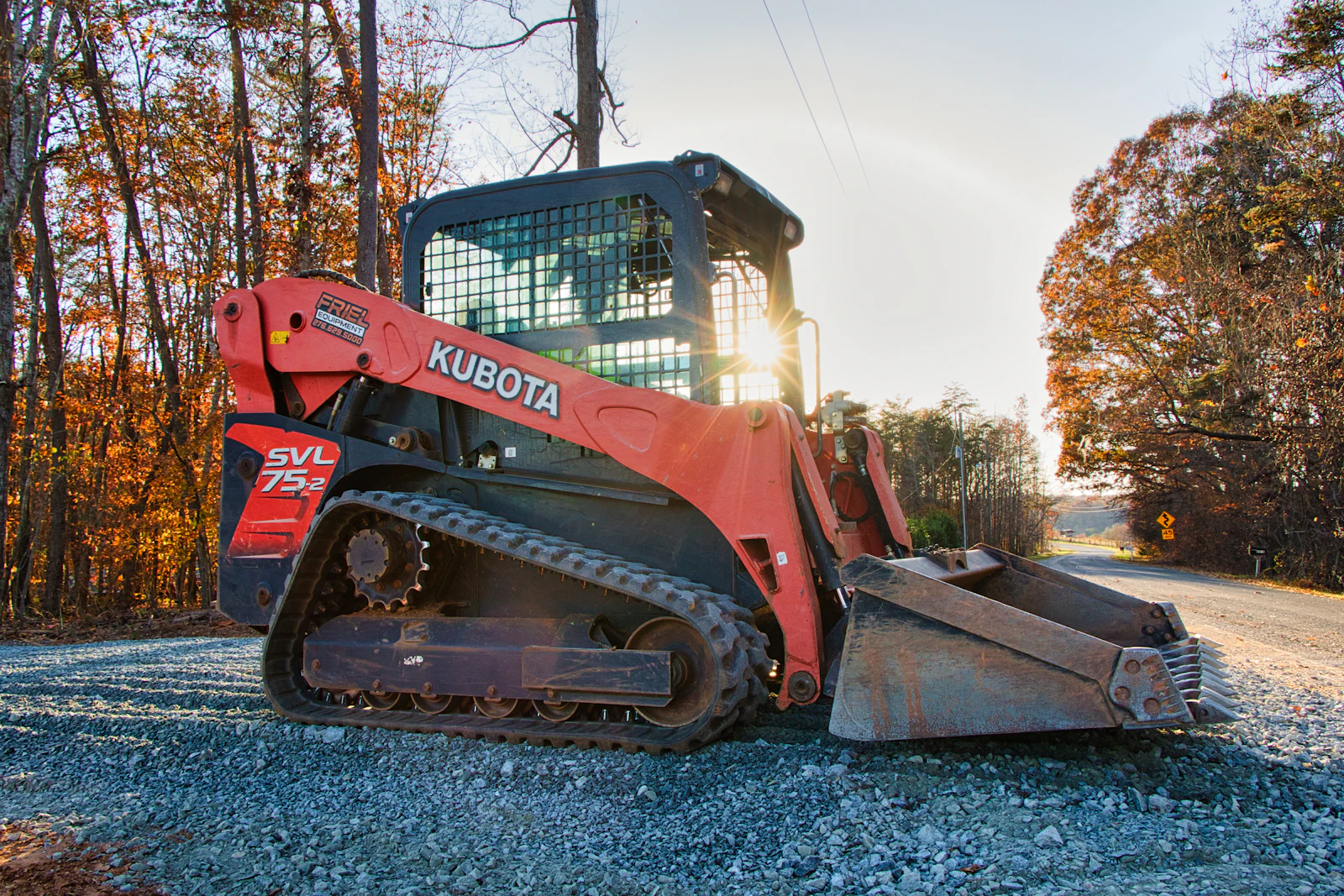
For Tucson-area projects planning 2026 budgets, skid steer loader equipment hire typically lands in these working ranges (machine only, before delivery/fees/attachments): wheeled skid steer roughly $280–$430/day, $940–$1,250/week, and $2,000–$2,800 per 4 weeks; tracked compact track loader (CTL) commonly $350–$550/day, $1,250–$1,650/week, and $3,100–$3,600 per 4 weeks. These ranges align with published Tucson pricing from local independents and marketplace averages, and assume a standard rental “day” is usage-limited (meter-hour caps) and the “month” is usually a 28-day billing cycle, not a calendar month. In Tucson, most contractors will source through national yards (e.g., United Rentals, Sunbelt, Sunstate) or local independents depending on availability, delivery response, and attachment needs.
| Vendor |
Daily Rate |
Weekly Rate |
Review Score |
Website |
| United Rentals |
$315 |
$910 |
9 |
Visit |
| Sunbelt Rentals |
$280 |
$735 |
9 |
Visit |
| Herc Rentals |
$258 |
$637 |
8 |
Visit |
| Action Rentz |
$415 |
$1 250 |
10 |
Visit |
skid steer loader rental
When you build a skid steer loader rental budget for Tucson, treat the posted rate as the starting point, then cost the mobilization, risk, and return-condition items that usually drive the final invoice. Two Tucson-specific realities to factor in:
- Heat and dust: summer ambient temps routinely exceed 105°F; clogged coolers and dust-heavy demo sites increase the likelihood of mid-rental downtime and end-of-rental cleaning charges.
- Soils and access: caliche and rock in the Tucson basin can push you toward higher horsepower and/or tracks; tight residential access and HOA restrictions can push you toward wheeled units with non-marking tires and narrower buckets (often an adder).
- Monsoon season: wet, sticky fines during July–September can trigger undercarriage cleaning needs on CTLs and schedule-driven “keep it over the weekend” costs if off-rent rules aren’t managed.
2026 Tucson Skid Steer Loader Hire Cost Ranges By Class
Wheeled skid steers (typical ROC classes) are generally the lowest base-hire option in Tucson for hard surfaces and paved yards. Marketplace pricing in Tucson shows examples like $284/day, $940/week, $1,984 per 4 weeks for smaller classes and around $410/day, $1,079/week, $2,438 per 4 weeks in mid-classes, subject to availability and supplier.
Tracked skid steers / CTLs cost more on base hire but frequently win on productivity when you’re in loose material, unimproved lots, or need flotation after monsoon storms. A local Tucson tracked skid steer listing shows $350/day, with a weekly promotion structured as pay for 4 days and keep for 7 (a planning equivalent of $1,400/week at that day rate, before tax/attachments).
For larger CTLs in Tucson, marketplace averages commonly sit around $485–$539/day, $1,578/week, and approximately $3,311–$3,370 per 4 weeks depending on class and supplier network.
Local published “simple pricing” examples (wheeled skid steer) in Tucson also include $415/day and $1,250/week for the machine, plus $150/day or $700/week for common attachments (e.g., mower, grapple, auger).
What Drives Skid Steer Equipment Hire Costs in Tucson?
1) Delivery radius and dispatch timing. In Tucson, a realistic allowance for a skid steer delivery/pickup package is often $125–$250 each way inside a short radius, then $4–$7 per loaded mile beyond the yard’s standard zone (especially if you are out toward Vail, Marana, or Sahuarita). If you need a tight delivery window (e.g., “must arrive 7:00–9:00 AM”), add a schedule premium or standby time; carry $75–$125/hour as a standby/driver waiting allowance when gate access or onsite escorting is uncertain.
2) Meter-hour caps, overtime, and shift work. Many rental contracts price an “8-hour day” and will bill overtime by meter-hours or convert to extra day(s). For estimating, assume 8 meter-hours/day and 40 hours/week unless your account says otherwise; carry an overtime allowance of $12–$25 per meter-hour for overage when you’re running extended compaction support, dump trailer cycling, or night work.
3) Machine spec that changes the rate class. In Tucson’s caliche and trenching work, you’ll often need: (a) higher horsepower, (b) two-speed travel, and/or (c) high-flow hydraulics for brush cutters and planers. High-flow packages can shift you one or two price tiers; budget an uplift of $40–$90/day compared with a standard-flow machine when high-flow is mandatory.
4) Return condition and cleaning standards. Concrete slurry, mud, and demolition dust are the usual invoice surprises. Some published rate sheets outside Arizona show “excessive cleaning” billed at $75/hour; whether your Tucson yard uses that exact figure or a flat fee, the risk is real—carry either a $150 minimum cleaning allowance or a 2-hour cleaning contingency if the job is dusty or wet.
Attachments And Add-Ons That Move The Total Hire Cost
Attachments are where a “$350/day skid steer” becomes a “$600–$900/day package.” For Tucson budgeting, the most common adders (ranges reflect typical market behavior; confirm with your supplier and machine interface type):
- Pallet forks: $35–$75/day, $150–$295/week (often the cheapest productivity add-on for pipe, pavers, and material handling).
- Grapple bucket / root grapple: $150–$225/day, $650–$950/week (common for land clearing and demo debris).
- Auger power unit: $150–$175/day, $625–$800/week; carry $50/day per bit (9"–36") when bits are rented separately.
- Trencher attachment: $150–$220/day, $700–$950/week (verify chain type for caliche/rock; wrong chain can kill production and drive overtime).
- Brush cutter / mower: $150–$250/day, $700–$950/week (often requires high-flow; confirm before dispatch).
- Hydraulic breaker: $200–$300/day, $825–$1,100/week (watch wear limits and tool charge policies).
- Trailer (if towable option is permitted): $75–$120/day, $250–$400/week, but only if your pickup + hitch + brake controller meet policy.
Operational note for Tucson: if you’re working downtown or on a campus/healthcare site with strict dust control, plan for an attachment package that supports cleanup (e.g., bucket + forks + sweeper/broom). A pickup sweeper or angle broom frequently adds $175–$250/day, but can reduce end-of-rental cleaning exposure and schedule risk.
Hidden-Fee Breakdown
To keep skid steer loader equipment hire costs predictable in Tucson, pre-load your estimate with explicit allowances for the items below (these are the line items that most often appear on invoices even when the base day rate is correct):
- Damage waiver / rental protection: commonly calculated as a percentage of rental charges (carry 10%–15% unless your contract rate is known). United’s Rental Protection Plan terms emphasize you must either show compliant insurance or purchase the protection product.
- Fuel and refuel: budget $45 for a “fuel service” minimum plus $6–$9/gal for diesel if returned not-full (or if the yard fuels it on your behalf). If you’re running a CTL hard, carry 8–12 gallons/day consumption depending on load cycle and idle time.
- Environmental / energy surcharge: carry 2%–6% of rental as a general surcharge allowance if your historical invoices include it.
- Administrative fees: carry $10–$25 per contract for processing/document fees (varies by supplier/account).
- Cleaning: carry $150–$350 for dusty demo, mud, or concrete residue; for CTLs, add a separate undercarriage wash allowance of $100–$250 if you’re operating in wet fines or caliche slurry.
- Wear items on specialty attachments: for trenchers, cutters, breakers—carry a wear allowance of $75–$200/day when ground conditions are abrasive or rocky.
- After-hours / weekend dispatch: carry $85–$150 for after-hours coordination or weekend delivery windows when required by site access rules.
Operational Rules That Affect Off-Rent And Billing
Skid steer rental costs in Tucson move materially based on when you place an off-rent and how you document return condition. Set these rules at PO time:
- Off-rent cutoffs: many yards require a same-day cutoff (often around 10:00 AM) for next-day billing stops. If you call off-rent at 2:00 PM, assume you may pay an extra day.
- Weekend billing: if you take delivery Friday and can’t get pickup until Monday, plan that you may be billed through the weekend unless your contract explicitly uses “weekday-only” billing. Carry 1 extra day as a weekend exposure when schedules are tight.
- Delivery windows: if the jobsite only accepts deliveries 7:00–9:00 AM (or has a 3:00 PM gate closure), budget standby time and communicate access constraints to dispatch in writing.
- Return condition documentation: require date-stamped photos of tracks/tires, bucket cutting edge, aux couplers, and hour meter at both delivery and pickup to reduce damage disputes.
- Refuel/recharge expectations: specify “return full” vs “yard refuels” on the order; for Tucson heat, ensure operators are instructed to blow out coolers daily to avoid overheating downtime that can extend rental days.
Example: 5-Day Trenching Package Cost In Tucson Metro
Scenario: 5 working days of irrigation + sleeve trenching on a commercial site near I-10 with limited delivery access (deliver by 8:30 AM, pickup after 3:30 PM). You need a tracked skid steer for flotation and a trencher attachment. Budget using conservative, invoice-realistic allowances:
- Machine hire: tracked skid steer at $350/day x 5 days = $1,750.
- Attachment hire: trencher at $200/day x 5 days = $1,000 (allowance).
- Damage waiver: 12% of rental charges (machine + attachment) = $330 allowance.
- Delivery + pickup: $200 each way = $400 allowance (tight window).
- Standby/wait time: 1.0 hour at $100/hour = $100 allowance (gate timing risk).
- Fuel: 10 gal/day x 5 = 50 gal at $7/gal = $350 allowance (or return-full policy).
- Cleaning: $250 allowance (dust + wet fines risk during monsoon season).
Planning total (before tax): $4,180. This is why experienced rental coordinators in Tucson treat base day rate as only ~40%–60% of the true equipment hire cost once attachments, mobilization, and risk controls are included.
Budget Worksheet
Use the following bullet list as a practical estimator worksheet (no surprises, no “misc” buckets):
- Skid steer loader base hire (wheeled or tracked): $_____ /day x ____ days
- Attachment package (select): forks / grapple / auger / trencher / broom: $_____ /day x ____ days
- High-flow hydraulic uplift (if required): $40–$90/day
- Delivery charge: $125–$250
- Pickup charge: $125–$250
- Mileage beyond radius (if applicable): $4–$7/loaded mile
- Damage waiver / rental protection: 10%–15% of applicable rental
- Fuel/refuel allowance: $45 minimum + $6–$9/gal
- Cleaning/undercarriage wash allowance: $150–$350
- Wear charges allowance (trencher/cutter/breaker jobs): $75–$200/day
- Standby/wait time allowance (gates/escorts): $75–$125/hour
- Weekend exposure (if pickup delayed): +1 day contingency
Rental Order Checklist
For Tucson skid steer loader rental orders, this checklist reduces cost leakage and invoice disputes:
- PO includes: machine class (ROC), wheeled vs tracked, standard-flow vs high-flow, quick-attach type, bucket width, and tire/track requirements.
- Confirm rate basis: day/week/4-week billing cycle, meter-hour caps, and overtime rules in writing.
- Insurance: provide COI with required limits and loss payee/additional insured language OR authorize rental protection plan on PO.
- Delivery: jobsite address, contact name/phone, gate codes, escort requirements, and delivery window (e.g., 7:00–9:00 AM only).
- Site constraints: indoor work (non-marking tires, dust control), noise limits, weekend restrictions, and spill prevention requirements.
- Condition reporting: require delivery photos (hour meter, tires/tracks, bucket edge, couplers) and pickup photos; log hour meter at off-rent call.
- Return requirements: “return full” fuel expectation, cleaning expectations, attachment return verification, and who signs pickup ticket.
- Off-rent procedure: designate who can call off-rent; note cutoff time (often around 10:00 AM) and require confirmation number.
How To Keep Tucson Skid Steer Equipment Hire Costs Controlled
Cost control on skid steer equipment hire in Tucson is mostly operational discipline: right-sizing the machine, preventing overtime conversion, and managing off-rent timing. The following practices consistently reduce total cost without under-scoping production:
- Match the machine to ground conditions: if you are in caliche/rock with trenching, a CTL often avoids wheelspin and rework. Even if the CTL is +$80–$150/day on base hire, it can save 1–2 rental days on schedule-driven scopes.
- Right-size bucket width: swapping from a wide bucket to a narrower bucket can reduce spillage and cleanup time on tight sites. If a non-standard bucket is an adder (often $25–$60/day), it can still be net-positive if it prevents cleanup and damage.
- Plan attachment swaps like tool changes: avoid “rented but idle” attachments. If the job only needs an auger for 1 day out of 5, schedule it and return it early (many yards will prorate; some will not—confirm policy).
Insurance, Damage Waiver, And Liability Notes That Change The Invoice
From a rental coordinator standpoint, insurance handling is a direct cost lever. United’s published terms indicate that for rentals you generally must either provide proof of insurance meeting the rental agreement requirements or purchase the Rental Protection Plan product.
For estimating in Tucson when contract terms vary by account, use two scenarios:
- Contractor account with compliant insurance on file: damage waiver can often be declined, reducing cost by an assumed 10%–15% of rental charges (verify).
- Short-term / new account / cash customer: expect damage waiver to be added and/or a refundable deposit. Carry a deposit allowance of $500–$1,500 depending on machine class and attachment value.
Delivery Planning In Tucson: Access, Heat, And Dust Controls
In Tucson, mobilization is not just “a fee”—it’s schedule risk. Three local considerations to budget explicitly:
- Gate times and downtown constraints: if the site has a hard gate closure (e.g., 3:00 PM), pickups can roll to the next business day and create an extra billed day. Carry +1 day exposure whenever pickup is dependent on third-party escorts.
- Heat management: in 105°F–112°F conditions, operators should blow out coolers daily. If overheating or limp-mode extends the rental by 1 day, that can be $350–$550 of avoidable cost plus delivery rescheduling.
- Dust control (indoor or sensitive sites): if you must meet indoor dust-control requirements, budget for (a) cleanup attachment (broom/sweeper) at $175–$250/day, and (b) cleaning closeout at $150–$350 even with best efforts.
When A Tracked CTL Costs Less Than A Wheeled Skid Steer In Tucson
Wheeled skid steers are often cheaper on paper, but in Tucson the total hire cost can flip in these cases:
- Monsoon-softened sites: if a wheeled unit bogs down and you lose 4 hours/day of productivity, you can easily add an extra day of rental. A CTL priced around $485–$539/day with a 4-week average around $3,311–$3,370 may be the lower total-cost option when it keeps production continuous.
- Finish grading and rework sensitivity: CTLs can reduce rutting and rework on decomposed granite and landscaped areas; avoiding even $500 of restoration can justify the higher base rate.
- Attachment-driven work: high-flow mower/forestry cutter work is commonly paired with tracked units for stability; forcing a wheeled unit can increase wear charges (carry $75–$200/day) and risk damage events.
Closeout: How To Avoid End-Of-Rental Charges
End-of-rental is where Tucson skid steer loader hire costs get finalized. These actions reduce closeout additions:
- Document hour meter at off-rent: if the machine is picked up next day, you want proof the unit wasn’t operated overnight. A photo at off-rent time helps prevent overtime-hour disputes.
- Refuel and grease: returning full avoids refuel surcharges (carry $45 minimum + $6–$9/gal if not). Daily greasing also prevents chargeable “lack of lubrication” damage classifications in many rental terms.
- Basic washdown: a 30–45 minute washdown can eliminate a $150–$350 cleaning fee. For CTLs, spend extra time on the undercarriage to avoid track/roller mud packing claims.
- Attachment verification: confirm bits, pins, hoses, and couplers are returned. Missing small components can trigger replacement charges in the $25–$250 range per item depending on what’s lost.
2026 Tucson Equipment Hire Notes For Skid Steers (Practical Takeaways)
For 2026 planning, the most dependable way to budget skid steer loader equipment hire costs in Tucson is to build a package cost: machine + mobilization + attachment + waiver + closeout. As a quick rule of thumb for rental coordinators, expect an “all-in” day to land 1.4x to 2.2x the posted base day rate once delivery, protection, fuel policy, and cleaning risk are properly carried—especially on dusty demo scopes or monsoon-affected sites.
If you need a single procurement-ready target, set your internal not-to-exceed (NTE) daily package allowances like this (before tax): $550–$750/day for a basic machine + delivery amortized + waiver, and $700–$950/day when you add a production attachment (trencher/auger/mower) and realistic cleanup/fuel allowances. Then, tighten the actual PO using your supplier’s contract terms, meter-hour caps, and off-rent cutoffs to keep the final invoice aligned to the estimate.