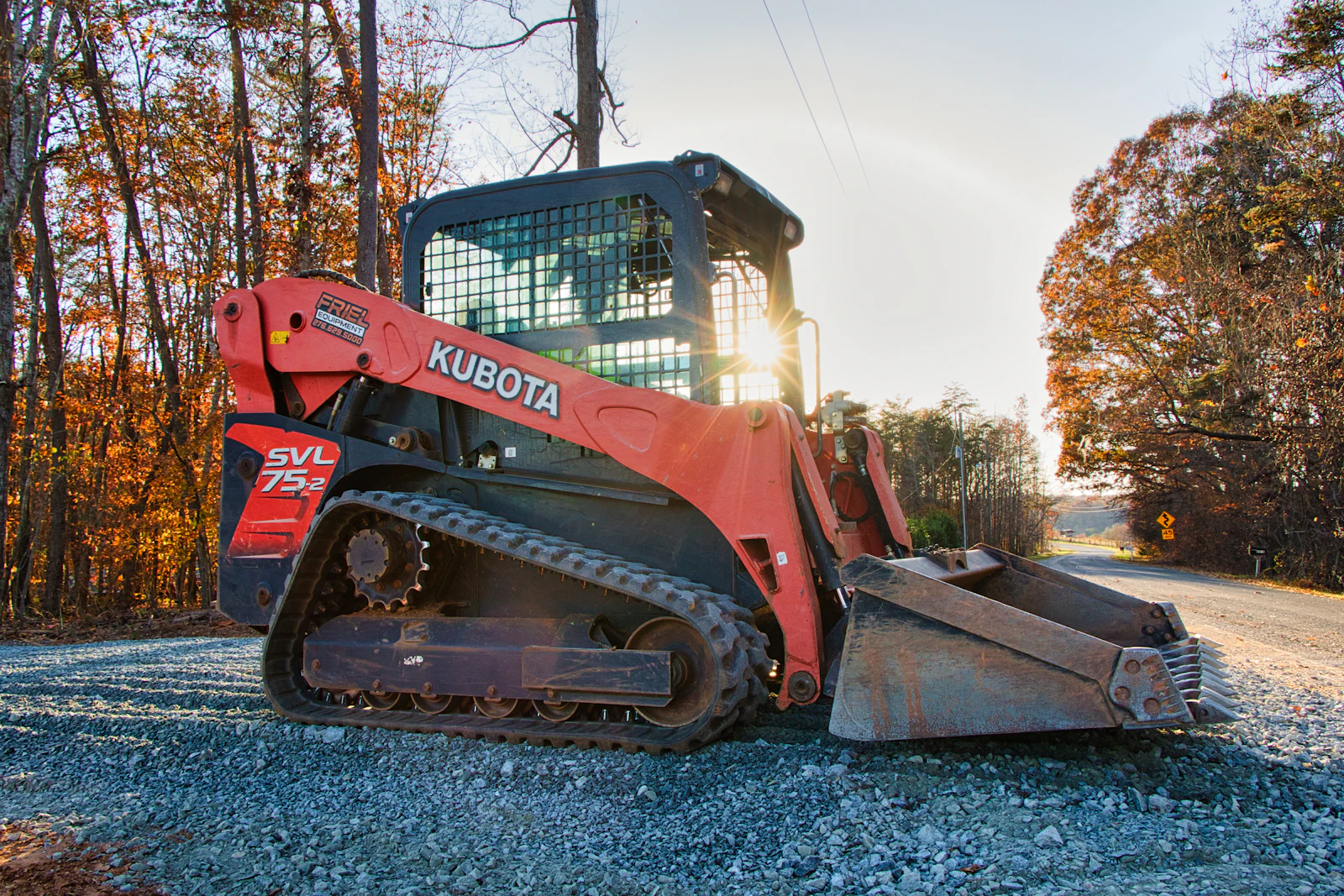
Skid Steer Loader Hire Costs Washington 2026
For Washington, DC metro footing work (District + close-in MD/VA), plan 2026 skid steer loader equipment hire budgets in three bands depending on frame size, hydraulic flow, tires vs. tracks, and site logistics: $220–$420/day, $850–$1,600/week, and $2,200–$4,700 per 28 days for wheeled skid steers with a standard bucket. Compact “gate-fit” units can land closer to $185–$300/day when you can self-haul, while higher-capacity machines and track loaders (often substituted when soil conditions or access demands it) push into the $450–$520/day+ bracket. In practice, DC-area coordinators most often source from national networks (e.g., United Rentals, Sunbelt Rentals, Herc) plus local dealer-rental yards; the pricing delta is usually less about the base rate and more about delivery windows, off-rent rules, and back-charges for fuel/cleaning/damage. Assumption: “Washington” here means Washington, DC metro (not Washington State).
| Vendor |
Daily Rate |
Weekly Rate |
Review Score |
Website |
| United Rentals |
$375 |
$1 450 |
9 |
Visit |
| Sunbelt Rentals |
$360 |
$1 395 |
9 |
Visit |
| Herc Rentals |
$350 |
$1 325 |
8 |
Visit |
| The Home Depot Rental |
$329 |
$1 249 |
8 |
Visit |
| EquipmentShare Rentals |
$365 |
$1 410 |
8 |
Visit |
What Moves Skid Steer Equipment Hire Pricing in Washington, DC?
When you’re hiring a skid steer loader specifically for digging footings, the cheapest “daily rate” is rarely the cheapest total cost. In Washington, DC metro, the biggest pricing drivers are operational: (1) getting the machine onto a constrained urban site (alley access, protected sidewalks, limited staging), (2) matching hydraulics and attachments to the production target, and (3) managing billable time (weekends/holidays, off-rent cutoffs, and shift-hour limits).
Machine class and capability usually decide your base rental band:
- Micro/mini skid steer (S70-class / stand-on): lowest hire cost; best when you must fit through a 36–48 in gate, but expect slower cycle time for spoils handling and stone backfill.
- Mid-frame wheeled skid steer (S450/S650-class): the “default” footing support machine for spoil management, base prep, and loading; typically the best $/production for tight DC lots if ground conditions allow tires.
- Track loader substitute (CTL): higher hire cost but can be cheaper overall when you’d otherwise lose days to rutting, wet clay, or slope/traction issues (common after summer storms).
Hydraulic flow and attachment readiness can swing the hire cost quickly. If your footing package needs a trenching attachment, auger, breaker, or a powered broom for public ROW cleanup, confirm whether the quoted skid steer is standard-flow or high-flow and whether the coupler is compatible. Budget adders are often $20–$60/day just to get the right bucket or coupler configuration when the “standard bucket” isn’t adequate for rock or demolition spoils.
2026 Rate Ranges You Can Use for Footing Excavation Planning
Use the following equipment hire cost planning ranges for Washington, DC metro in 2026 (USD). These are coordinator-grade budgeting numbers—final rates depend on availability, account status, and delivery lane constraints.
Compact wheeled skid steer (approx. 700–1,500 lb ROC): $185–$320/day, $650–$1,050/week, $1,450–$2,625/28 days. Published dealer rate cards in other U.S. markets show daily pricing around $185 for an S70-class unit and $200–$260/day for larger wheeled skid steers, which is a useful baseline before DC delivery/logistics uplift.
Mid-frame wheeled skid steer (approx. 1,600–2,000+ lb ROC): $260–$450/day, $845–$1,600/week, $2,200–$3,900/28 days. This is the most common bracket for footing support (moving spoils, stone, and forms) where tires are acceptable.
CTL / track loader (often quoted instead of skid steer on soft ground): $370–$520/day, $1,110–$1,560/week, $3,330–$4,680/28 days as a national published benchmark; in DC, delivery and demand can push totals higher even if the base rate matches these bands.
Local “floor” pricing reality check: aggregator listings for Washington, DC often show entry points around $300/week and $900/month for the lowest-cost units/configurations, but those figures commonly exclude attachment needs, delivery complexity, and chargeable surcharges.
Attachment Adders That Commonly Hit Footing Packages
Digging footings with a skid steer loader is typically a support role (spoil management, base prep, moving form materials), but the attachment package can still drive a large share of the equipment hire cost—especially if you need to cut through compacted subgrade, remove demo debris, or pre-auger for piers. For 2026 budgeting, use these planning adders (rates vary by yard and availability):
- Auger drive (skid steer attachment): budget $80–$190/day, $190–$360/week, $445–$1,080/28 days depending on size and whether you’re bundling the power unit and bits.
- Auger bits: budget $50/day for bits under 18 in and $80/day for 18 in and over (often billed separately from the drive), with weekly/28-day conversions.
- Breaker/hammer attachment: budget $210–$375/day for light-to-mid breakers in published dealer cards; DC urban demo work can also trigger additional wear/inspection charges on return.
- Pallet forks: budget $30–$120/day depending on class and whether they’re dedicated skid steer forks vs. light forks.
- Rock bucket / grapple: budget $130–$300/day when you’re separating debris or handling demo spoils.
- Trencher (where used instead of an excavator for shallow runs): budget $135–$250/day plus teeth/wear charges if you’re in abrasive fill.
Hidden-Fee Breakdown (What Actually Inflates Skid Steer Hire Cost)
For Washington, DC metro, the most common “surprise” costs are not the base rental—they’re the surcharges and condition charges that appear after the fact. Build them into your estimate so your PO matches the final invoice.
- Delivery / pickup: budget $175–$350 each way inside the Beltway when access is straightforward. Add $6–$9 per mile (or a lane-based uplift) once you’re outside the standard radius. If the jobsite has no legal staging, budget an additional $75–$200 for a second delivery attempt or a split delivery window.
- Transportation surcharge: some national vendors apply a transportation surcharge on top of delivery/pickup; one published example includes a fixed component of 9% (or a minimum of $9) plus a variable component tied to national diesel averages.
- Environmental / emissions surcharges: budget 2%–5% of the rental charges as a planning allowance (varies by vendor/program and can change).
- Damage waiver / rental protection: budget 10%–18% of the base rental for a standard waiver when you’re not providing a certificate that satisfies the rental company’s requirements; confirm whether it covers tires/tracks and glass.
- Shift-hour limits and overtime: many rental programs price on an 8-hour shift basis: 8 hours/day, 40 hours/week, 160 hours/4 weeks. If you exceed that, one published formula bills overtime at 1/8 of the daily rate per excess hour (daily rentals), 1/40 of the weekly rate per hour (weekly), and 1/160 of the 4-week rate per hour (4-week).
- Fuel / refuel: plan to return full. If not, budget a refuel service charge equivalent to $6–$9/gal plus a service minimum (often $25–$50) depending on yard policy.
- Cleaning: budget $95–$250 for “excessive dirt” cleaning and $300–$900 if concrete, paint, or slurry requires heavy cleanup. Some rental terms explicitly state customers are responsible for cleaning costs when returned with excessive dirt, concrete, and/or paint.
- Late return / non-notified off-rent: if your off-rent notice misses the vendor cutoff (commonly 2:00–4:00 PM), expect an additional day to hit. For DC projects, this is a frequent cost driver because returns get pushed by inspections, utility locates, or inspection sign-offs.
- Weekend/holiday billing: many yards bill Saturday/Sunday if the machine is on rent and not off-rented; if your footing pour slips, a single “dead weekend” can add 2 days of cost at $260–$450/day equivalent.
Washington, DC Metro Considerations That Change Real Rental Cost
DC is not just “another city” for equipment hire. These three local constraints are the ones that most consistently change final invoice totals on footing packages:
- Restricted delivery windows: downtown and dense neighborhoods often require delivery before 7:00 AM or after 9:00 AM depending on lane and site rules. Budget an $150–$300 after-hours/priority window premium if you cannot accept standard dispatch.
- Public right-of-way and sidewalk protection: if your skid steer must cross or stage on a protected sidewalk, you may need mats and added labor. Budget $40–$85/day for mat rental (or an internal allowance) plus a $100–$300 compliance/admin allowance for signage/coordination if you’re reserving curb space.
- Access and ground pressure: if the route is through an alley with tight turns or across finished pavers, a smaller wheeled skid steer may avoid damage claims—but if that slows spoils handling, your “cheaper” unit can add 1 extra day of hire, wiping out the savings.
Example: DC Rowhouse Addition Footings (Skid Steer as Spoils and Stone Handler)
Scenario: You have a 12-footing package behind a rowhouse in NE DC. Access is a 48 in gate; you can fit a compact wheeled skid steer but cannot stage a trailer on the street. You need the machine for spoils handling, moving #57 stone, and carrying form lumber/panels. The excavation itself is by mini-excavator, but the skid steer is on site for productivity.
Planning numbers (illustrative, not a quote):
- Base skid steer hire: 5 working days at $300/day = $1,500.
- Overtime: 2 extra hours/day above the 8-hour shift limit. Using the published overtime formula: 1/8 of daily rate per hour = $37.50/hour. Overtime = 2 hours/day × 5 days × $37.50 = $375.
- Delivery + pickup: $300 each way = $600, plus a transportation surcharge allowance of 9% = $54 (some programs apply this concept).
- Damage waiver: 14% of base rental ($1,500) = $210 (planning allowance).
- Fuel back-charge contingency: allow $80 (e.g., ~10 gallons at $8/gal equivalent) if the crew forgets to top off.
- Cleaning contingency: allow $150 for mud/dirt cleanup (higher if concrete slurry is present).
Resulting planned total: $1,500 + $375 + $600 + $54 + $210 + $80 + $150 = $2,969 before tax. That’s why DC estimators track delivery/overtime/off-rent with the same discipline as the base equipment hire rate.
Budget Worksheet (Skid Steer Equipment Hire Allowances)
- Skid steer loader rental (wheeled, standard bucket): $220–$420/day × ___ days
- Weekly conversion (if on rent 5–7 days): $850–$1,600/week × ___ weeks
- 28-day / 4-week conversion (if on rent >21 days): $2,200–$4,700/28 days × ___ months
- Delivery (each way): $175–$350 × 2
- Priority/after-hours delivery window allowance: $150–$300
- Damage waiver / rental protection: 10%–18% of base rental
- Environmental/emissions surcharge allowance: 2%–5% of base rental
- Fuel back-charge allowance: $50–$150
- Cleaning allowance (mud/dirt): $95–$250
- Concrete/paint heavy clean contingency (if applicable): $300–$900
- Attachment adders (as required): auger $80–$190/day, breaker $210–$375/day, forks $30–$120/day, grapple/rock bucket $130–$300/day
- Overtime hours allowance (excess shift use): 1/8 daily, 1/40 weekly, 1/160 4-week (convert to $/hr from your awarded rate)
Rental Order Checklist (For a Clean Off-Rent and No Back-Charges)
- PO includes: machine class, tire type, bucket type (smooth vs. tooth), coupler type, and any required attachments.
- Confirm billing basis: 8-hour shift limits, weekly/28-day conversion rules, and weekend/holiday billing treatment.
- Delivery plan: site contact, legal staging location, delivery window constraints, and a backup window if the truck is turned away.
- Access constraints documented: gate width (inches), alley turning radius, overhead clearance, and ground protection requirements.
- Utility locates confirmed (even for “just moving spoils”): keep the locate ticket number in the rental file.
- At delivery: take timestamped photos of hour meter, tires/tracks, bucket cutting edge, and any existing damage.
- During use: track daily meter hours; flag when you’re approaching the 8-hour/day included usage.
- Return condition: remove concrete spatter immediately; scrape bucket; rinse mud before it dries (avoid cleaning back-charges).
- Fuel: return full or document vendor-fueled agreement in writing.
- Off-rent: call in off-rent before the vendor’s cutoff (commonly 2:00–4:00 PM) and record the confirmation/reference.
If you want to reduce Washington, DC skid steer loader equipment hire cost on footing projects, the two highest-leverage moves are (1) bundling the correct attachments up front (avoid mid-rental swap fees and extra delivery legs) and (2) actively managing off-rent timing so you don’t “buy” dead weekends and weather days at daily-equivalent rates.
How Billing Cycles and Shift Hours Change Skid Steer Hire Cost
Most rental coordinators already know the daily/weekly/28-day bands, but the shift-hour basis is what quietly inflates total equipment hire costs on DC footing jobs. One published national policy states that basic daily/weekly/4-week rates include a maximum of 8 hours/day, 40 hours/week, and 160 hours/4 weeks, with excess billed using a fractional conversion of the base rate (1/8 daily, 1/40 weekly, 1/160 four-week). For digging footings, this matters because crews often run late when inspections slip, trucks stack up, or spoils hauling is delayed.
Practical DC rule: if your superintendent expects consistent 10–12 hour days, do not budget “5 days at daily rate” without an overtime plan. Convert your awarded daily rate into an overtime $/hr number in the estimate and assign ownership of meter-hour tracking.
Wheeled Skid Steer vs. CTL: When Paying More Lowers Total Cost
In Washington, DC metro, you’ll frequently be offered a compact track loader (CTL) when (a) the backyard is saturated clay after storms, (b) access crosses soft landscaping, or (c) slope/traction is a safety concern. CTLs often carry higher base hire cost—published 2026 benchmarks show track loader rates around $370–$520/day and $3,330–$4,680/4 weeks—but can reduce the probability of schedule slip and property damage claims.
Estimator takeaway: if the site has any risk of becoming unworkable on tires, the CTL premium can be cheaper than (1) a stuck-machine recovery event (often a $500–$1,500 incident once trucking/labor is counted) plus (2) an extra 1–2 days of dead rent while the site dries. Treat the CTL upsell as a risk-control line item, not just a rate increase.
Insurance, Damage Waiver, Deposits, and Compliance Costs
Skid steer loader hire cost in DC is also shaped by commercial compliance. If you can provide a certificate of insurance that meets the rental provider’s requirements, you may be able to reduce or eliminate the damage waiver line. If not, keep a 10%–18% waiver allowance in your budget and confirm what’s excluded (tires, glass, theft-from-unsecured-site, misuse). For non-account rentals or new vendors, be prepared for a refundable deposit/authorization; a practical planning range is $500–$2,500 depending on machine class and rental terms.
Delivery, Turn-Away Risk, and Off-Rent Discipline (DC-Specific)
Washington, DC has a higher-than-average probability of “turn-away” deliveries (no legal staging, blocked alleys, police detail required, or a missed curb reservation). To keep equipment hire costs predictable:
- Put a delivery plan in the PO notes: exact address, best truck approach, contact name/number, and whether a liftgate or smaller rollback is required.
- Budget a failed-delivery contingency: $75–$200 is a reasonable internal allowance for a second attempt in dense areas if access is uncertain.
- Set an off-rent owner: assign one person to call off-rent before the cutoff and record the confirmation. Missing the cutoff commonly adds 1 billable day.
- Avoid dead weekends: if the skid steer is not needed Saturday/Sunday, schedule pickup Friday and redelivery Monday. Two dead days at $300/day is $600 you rarely recover with “faster work.”
Return-Condition Documentation (Prevent Cleaning and Damage Back-Charges)
Cleaning and damage back-charges are among the most preventable costs in skid steer equipment hire. At minimum, require these closeout steps:
- Before pickup: photograph all sides, the bucket cutting edge, and the cab/controls; capture the hour meter.
- Remove concrete immediately: if the skid steer was used anywhere near slurry, wash the same day. Cleaning policies may charge customers for excessive dirt, concrete, and/or paint on return.
- Fuel documentation: photo of fuel level at pickup and at return; if vendor-fueled, ensure the refuel rate is in the agreement.
- Keys and attachments: confirm all attachments are returned and pinned; missing components commonly trigger replacement + admin fees.
2026 Planning Notes for Multi-Site Footing Programs in Washington, DC
If you’re coordinating multiple small footing scopes across DC neighborhoods (ADUs, underpinning, additions), you can often reduce total skid steer loader equipment hire cost more through logistics than rate negotiation:
- Standardize one machine class: keep one “go-to” ROC band and one coupler standard so attachments move without swap fees (avoid a $150–$350 extra delivery leg).
- Bundle attachments for the full week: even if you only use forks for 1 day, it can be cheaper to keep them on rent at $30–$120/day equivalent than to pay another transport charge.
- Meter-hour governance: if you routinely exceed included hours, negotiate an alternate shift arrangement or plan for overtime using the published fractional formulas.
- Weather buffers: build a 1-day weather float for summer storm weeks; the cost of one extra day is usually lower than the cost of rushed, damage-prone operations.
Bottom line: for Washington, DC digging-footings work, the most accurate skid steer loader hire budgets come from treating the rental as a managed scope (delivery, hours, attachments, off-rent timing, and return condition), not as a simple day-rate purchase.