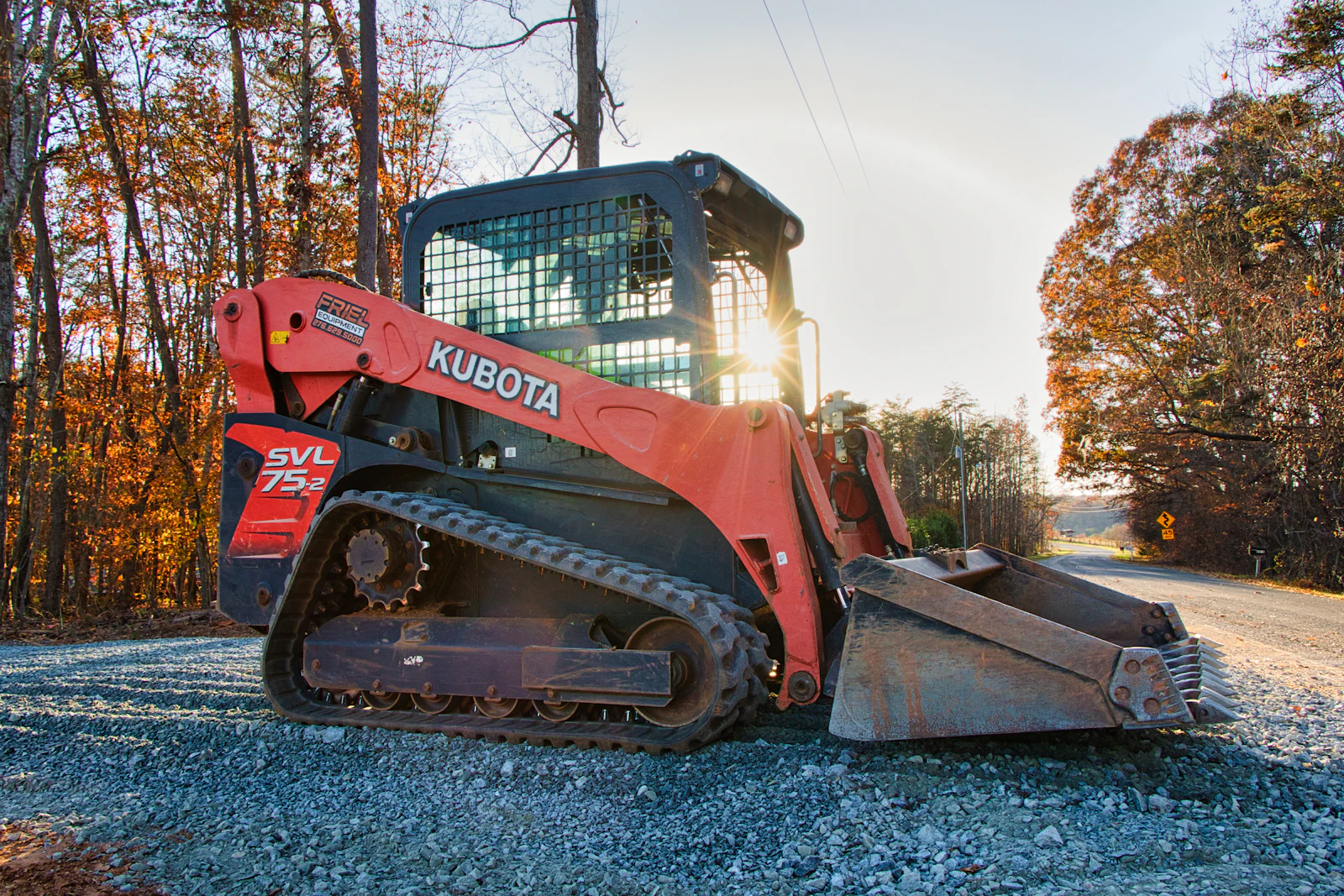
Skid Steer Loader Rental
For Washington, DC (District + close-in MD/VA) 2026 planning, skid steer loader equipment hire commonly pencils out in these ranges (machine only, no operator): $250–$420/day, $850–$1,300/week, and $2,200–$3,400/4-week month for a mid-size wheeled skid steer (roughly 1,500–2,000 lb ROC). Compact track loaders typically run higher at $325–$525/day, $1,050–$1,650/week, and $2,700–$4,200/4-week month. High-flow hydraulics, enclosed cab/heat/AC, and dense urban logistics (delivery windows, access controls, staging constraints) move the all-in cost materially. In the DC market, national providers such as United Rentals and Sunbelt Rentals serve Washington directly, and Herc supports the metro area from nearby Maryland locations—use them as baseline benchmarks, then validate final pricing against your exact machine class, accessories, and site rules.
| Vendor |
Daily Rate |
Weekly Rate |
Review Score |
Website |
| United Rentals |
$350 |
$1 050 |
8 |
Visit |
| Sunbelt Rentals |
$225 |
$660 |
8 |
Visit |
| Herc Rentals |
$292 |
$710 |
7 |
Visit |
| EquipmentShare |
$301 |
$800 |
7 |
Visit |
| The Home Depot Tool Rental |
$330 |
$990 |
8 |
Visit |
Skid Steer Loader Rental Rates in Washington, DC for 2026 Planning
To keep estimates consistent across projects and rental coordinators, standardize your assumptions up front. Most equipment hire quotes you’ll receive in the Washington, DC area are structured around an 8-hour day, a 40-hour week, and a 160-hour 4-week month (or similar meter/hour conventions). If your project runs extended shifts, overnight, or weekends, confirm whether the rental is calendar-based (day/week/month) or meter-based (hour caps), because this is where “good rate / bad invoice” scenarios occur.
- Wheeled skid steer (mid-size, open or enclosed cab): $250–$420/day; $850–$1,300/week; $2,200–$3,400/4-week month (planning range). Use the upper end for enclosed cab + HVAC, solid tires, or higher ROC demand.
- Compact track loader / tracked skid steer: $325–$525/day; $1,050–$1,650/week; $2,700–$4,200/4-week month (planning range). Track machines often come with higher wear exposure and cleaning expectations (mud/clay).
- Mini track/stand-on skid steer (when access is the constraint): $190–$325/day; $650–$1,000/week; $1,600–$2,700/4-week month (planning range). Use this class when alleys, courtyards, or secured interior loading docks make full-size delivery impractical.
- High-flow upgrade (if not included): add $50–$90/day or $150–$280/week depending on vendor and configuration.
Reality check using published public-sector schedule data: a 2026 equipment lease/rental (no operator) schedule for Sunbelt lists (example lines) a wheeled skid steer (1,500–2,000 lb class) at $225/day, a tracked skid steer (1,500–2,100 lb class) at $345/day, and larger track skid steer cab units up to $395/day, with weekly and monthly rates shown as well. Use these as directional anchors, then apply DC-area uplifts for congestion, compliance, and delivery complexity rather than assuming parity.
What Drives Skid Steer Equipment Hire Costs in Washington, DC?
Skid steer loader hire rates are “simple” only when the machine class is correctly specified. Most cost overruns in the DC metro come from a mismatch between the hired configuration and jobsite reality (surface type, access, shift plan, and return-condition requirements). Key cost drivers to review before you release a PO:
- Machine class and ROC band: 1,000–1,200 lb ROC units are not priced like 2,600–3,200 lb units; expect step changes as you cross common fleet breakpoints.
- Tracks vs wheels: track loaders typically command higher daily/weekly pricing and tighter return-cleanliness rules. They can also avoid downstream restoration costs on lawns/soft subgrades, which matters for urban parks, streetscapes, and tight ROW work.
- Cab configuration: enclosed cab is a cost adder but can be the difference between safe production and shutdown on dust-controlled sites (interior demo, adjacent occupied buildings, sensitive federal facilities).
- Hydraulics (standard flow vs high flow): high flow is essential for certain attachments (planers, some mulchers), and that upgrade is frequently priced separately and subject to limited availability during peak civil season.
- Tire choice and surface protection: solid tires and non-marking track options reduce puncture risk and surface damage exposure, but they also influence availability and rate.
- Billing basis and included hours: if your crews run 10-hour shifts, confirm whether the rental week includes 40 hours, 50 hours, or is calendar-based regardless of meter. If it’s meter-capped, overages become a hidden “second rate.”
Delivery, Access, And Urban Jobsite Logistics Costs
In Washington, DC, delivery logistics can be as expensive as the machine delta between wheeled and tracked models—especially for short-duration rentals. Build your estimate around a realistic access plan, not just “deliver to site.” Typical planning allowances for skid steer loader equipment hire logistics:
- Delivery + pickup (inside the Beltway): $175–$350 each way is a common planning range for a skid steer-sized move, assuming normal business hours and straightforward drop. Use $450+ each way when a crane, forklift assist, liftgate constraints, or escorted access is required.
- Mileage/zone fees: if your vendor uses distance pricing, carry $6–$10 per loaded mile beyond any included radius.
- Minimum transport charge: budget a $150 minimum even for short runs, and expect aborted delivery / “dry run” charges around $95 when the driver cannot access the drop zone.
- Time-window surcharges: for after-hours, overnight, or time-certain delivery (common around downtown congestion), carry a $125 scheduling premium if the vendor has to route a dedicated truck.
DC-specific considerations (budget-impacting): (1) downtown and Capitol-adjacent deliveries often require tighter delivery windows due to traffic and security check-in; missed windows can trigger redelivery costs and lost rental days, (2) staging space is limited—if the machine must be set on mats and fenced immediately, include accessory and labor coordination, and (3) some projects require enhanced dust control; that can push you toward enclosed cab, poly track pads, and additional cleanup time before off-rent.
Reference point from a published 2026 schedule: one public-sector Sunbelt schedule shows delivery/mobilization pricing structured as a “first mile” charge (example: $290 first mile) plus an additional per-mile component (example: $4 per additional mile) on listed skid steer lines. Your DC vendor quote may use a different structure, but this illustrates how transport can dominate short-term hires.
Attachment And Accessory Hire Pricing That Moves The Invoice
Attachment selection is where skid steer loader rental pricing becomes project-specific. If your scope requires multiple changeovers (forks for palletized materials, bucket for spoils, auger for footings), write the accessories into the PO so the dispatcher loads correctly and the invoice matches your estimate. 2026 planning adders (Washington, DC market):
- Pallet forks / fork frame: $35–$60/day; $90–$180/week; $180–$350/month. A published schedule example shows pallet forks at $40/day, $90/week, $185/month.
- 4-in-1 bucket: $45–$90/day depending on width and machine class; confirm coupler type (universal quick attach vs proprietary).
- Auger drive unit (skid steer mount): $80–$140/day; $200–$420/week.
- Auger bits (6–36 in.): $10–$35/day each. A published schedule example shows bits from $11/day (6 in.) up to $31/day (36 in.), with corresponding week/month pricing.
- Trencher attachment: $95–$160/day. A published schedule example lists a trencher attachment at $110/day, $225/week, $490/month.
- Cold planer (milling head): commonly $250–$600/day plus wear charges; confirm tooth wear billing in writing.
Operational note: if your project is in an area with strict dust-control requirements (interior demo, adjacent occupied retail, or sensitive office environments), budget for a HEPA vac or dust extractor and plan a cleanup allowance at off-rent. The “right” attachment plan reduces re-handling and usually saves more than it costs—even when accessory hire charges look high on the quote.
Hidden-Fee Breakdown (What to Ask Before You Approve the Quote)
Use the following fee categories as an estimator/rental coordinator script. You don’t need every line on every job, but you do need to confirm what applies so you don’t get surprised by automatic line items.
- Delivery / pickup: confirm each-way price, included radius, and any “wait time” policy. Carry $75–$150/hour for driver detention if the drop zone isn’t ready.
- Weekend / holiday billing: confirm whether Saturday counts as a full day, and whether a Friday delivery + Monday pickup bills as 3 days or a full week. If the vendor uses weekly minimums in peak season, you may be billed a week even if you off-rent early.
- Fuel / recharge: plan that units are delivered full and must return full. If refueled by the vendor, budget $6–$10/gal plus a $25 service fee. If the unit uses DEF, carry 2.5–5.0 gal at $8–$12/gal when applicable.
- Damage waiver / rental protection: carry 10%–15% of the time-charge as a planning allowance unless your contract disallows it and you provide certificates. Major rental firms offer rental protection products; confirm coverage and exclusions.
- Cleaning: budget $150–$450 for general cleaning if returned muddy or with concrete spoil; track undercarriage clean-out can be $250+ if clay/mud is packed into the rollers.
- Late return / “held over” day: carry $75–$200/day if return documentation is late or pickup cannot be completed due to access issues.
- Excess usage: if the rental has included-hour caps, carry $35–$60/hour for overages (or a 1.25x–1.50x multiplier on the base time rate).
Budget Worksheet (Skid Steer Loader Equipment Hire Allowances)
Use these line items as a practical estimate scaffold (adjust to your job’s duration and site class). No two DC jobs are identical—your goal is to prevent missed scope on the rental PO and invoice.
- Skid steer loader rental (wheeled, 1,500–2,000 lb ROC): $250–$420/day × ____ days
- OR compact track loader rental (tracked): $325–$525/day × ____ days
- Delivery (each way): $175–$350 × 2
- Time-certain / after-hours delivery premium: $0–$125
- Aborted delivery / redelivery risk allowance: $0–$95
- Damage waiver / rental protection allowance: 10%–15% of time charges
- Pallet forks: $35–$60/day × ____ days
- 4-in-1 bucket: $45–$90/day × ____ days
- Auger drive: $80–$140/day × ____ days
- Auger bits (each): $10–$35/day × ____ days × ____ bits
- Trencher attachment: $95–$160/day × ____ days
- Ground protection mats (if required for pavers/sidewalks): $15–$35 each/day × ____ mats × ____ days
- Fuel/DEF top-off allowance at return: $60–$180
- Cleaning / washout allowance: $150–$450
- Excess hours / overtime allowance: $0–$300/day (if multi-shift or meter caps)
Example: 5-Day Streetscape Scope in Northwest DC (Real-World Constraints + Numbers)
Scenario: A GC needs a tracked skid steer for backfill and pallet handling on a constrained streetscape near active pedestrian traffic. The site has a narrow delivery window (to avoid rush-hour conflict), requires surface protection, and the client mandates documented pre-existing damage photos at drop and pickup.
- Machine: compact track loader at $425/day × 5 days = $2,125 (planning figure)
- Delivery/pickup: $300 each way × 2 = $600 (inside Beltway, time-windowed)
- Time-window premium: $125 (dedicated routing to hit a 6:30–7:00 a.m. arrival)
- Pallet forks: $50/day × 5 = $250
- Ground mats: 10 mats at $22/day × 5 = $1,100 (to protect pavers and keep ADA path stable)
- Damage waiver: 12% of time charges ($2,125) = $255
- Cleaning allowance: $250 (clay/mud in tracks after rain event)
- Fuel top-off: $120 (vendor refuel at return instead of field fueling)
Planned all-in (illustrative): $2,125 + $600 + $125 + $250 + $1,100 + $255 + $250 + $120 = $4,825. The key operational lesson is that, in DC, accessories and logistics can exceed the machine time-charge—so manage mats, delivery windows, and return condition as actively as you manage the daily rate.
Rental Order Checklist (PO, Delivery, Off-Rent, Return Requirements)
- PO scope: machine class (wheeled vs tracked), ROC band, cab type, high-flow requirement, and coupler type.
- Accessories: bucket type/width, forks, auger drive + bit sizes, trencher boom length/cut width, and any specialty tires/track pads.
- Billing terms: day/week/month structure, included hours (if any), excess-hour rate, and weekend/holiday billing rules.
- Delivery plan: exact address + gate, on-site contact, delivery window, truck access route, and drop zone photo.
- Site controls: required cones/barricades, flagger needs, security check-in process, and any street/ROW restrictions affecting pickup.
- Pre-use documentation: photos of machine condition at delivery, hour meter at start, and attachment serials.
- Off-rent rules: how to place off-rent (phone/email/portal), cutoff times (e.g., before noon), and written confirmation requirement.
- Return condition: “broom clean” vs “wash clean,” fuel level expectations, and debris removal from undercarriage/tracks.
- Closeout package: pickup ticket, off-rent confirmation, return photos, and final meter reading.
Off-Rent Rules, Cutoff Times, And Avoiding Extra Billable Days
For skid steer loader equipment hire in Washington, DC, the most avoidable cost is the “extra day” created by admin timing, not production. Build these controls into your field/rental coordinator routine:
- Off-rent cutoff: confirm the vendor’s cutoff time (often morning or midday). If you call off-rent at 3:30 p.m., you may own the next day even if the machine is idle overnight.
- Pickup readiness: if the skid steer is behind fencing, under a canopy, or blocked by deliveries, you can incur $95–$150 “attempted pickup” charges plus another day of rent.
- Weekend rule of thumb: if you take delivery Friday and cannot guarantee Monday pickup access, price it as a weekly minimum or carry 2–3 additional day charges in the estimate.
- Weather delays: if rain/mud creates track packing, plan an extra 30–60 minutes of cleanup time and a $250 clean-out risk. DC’s sudden summer storms are a common cause of “returned dirty” fees.
Insurance, Damage Waiver, Deposits, And Documentation Practices
Most large rental providers support Washington, DC projects through credit accounts, certificates of insurance (COIs), and optional rental protection products. Align your contract position (waiver accepted vs waived) with what your PM team can administratively support.
- Damage waiver planning allowance: carry 10%–15% of the time charge unless your MSA prohibits it or you can provide COIs that meet the vendor’s requirements.
- Deposit / authorization hold: for non-account or first-time renters, carry $500–$2,500 per unit depending on class and accessories.
- Loss/damage exposure: verify deductible structures, excluded wear items (e.g., tires, cutting edges, planer teeth), and what qualifies as “abuse” vs normal wear.
- Photo documentation: require delivery photos (all four sides, cab glass, tires/tracks, quick-attach plate, bucket cutting edge) and pickup photos. This is especially important in DC where curbside staging exposes machines to incidental contact.
Major providers publish guidance around rental protection products and operational best practices; confirm the current terms with your branch because coverage details change by account structure.
Fueling, Cleaning, And Return-Condition Charges (Where Short-Term Rentals Get Expensive)
Even when your skid steer loader hire cost looks competitive on day rate, the closeout charges can change the effective cost per hour. Set expectations with the foreman on day one.
- Return fuel expectation: return full (or at delivery level). If vendor fuels, carry $6–$10/gal plus a $25 service fee.
- DEF top-off (when applicable): budget $20–$60 for typical top-offs, or $8–$12/gal if billed by the vendor.
- Cleaning: carry $150–$450; if concrete splatter is present on the chassis/bucket, cleaning can be charged as shop labor rather than a flat wash fee.
- Track undercarriage: for tracked units used in clay, include a $250 clean-out allowance; failure to de-mud can also delay pickup and add a day.
- Missing items: quick-attach pins, fork locks, or protective guards can be back-charged—carry a $50–$200 “small parts” contingency on attachment-heavy scopes.
How Attachment Mix Changes the Best Hire Strategy
In DC, access and surface protection often dictate the machine class more than lift capacity. A practical estimator approach is to decide whether the job is primarily:
- Material handling dominant: prioritize forks, visibility, and stability. If you need forks daily, it may be cheaper to hire the forks for the full term than to “swap midweek” and risk redelivery.
- Earthmoving dominant: prioritize track machine availability and plan for cleaning. Consider a wider bucket or 4-in-1 bucket add-on if it reduces labor re-handling.
- Drilling/trenching dominant: confirm high-flow requirement and price auger drive + bits or trencher as separate lines. Published schedule examples show how quickly these accessories accumulate: auger drive at $80/day and bits from $11–$31/day, plus delivery/mobilization charges layered on top.
When Monthly Skid Steer Hire Beats Ownership (2026 Planning View)
For equipment managers, the buy-versus-hire decision is usually driven by utilization certainty and logistics overhead. In Washington, DC, ownership carries real soft costs: secure storage, transport coordination, theft/vandalism risk, and downtime when the unit is tied up on a site you can’t access quickly. As a simplified 2026 planning test:
- If you have steady utilization >12–15 billable days/month on similar sites, ownership can be competitive—if you already have transport capacity and a yard.
- If utilization is sporadic or sites are highly constrained (downtown access controls, time-window delivery, strict surface protection), hiring often wins because you only pay logistics when you need the machine.
- If your scope depends on multiple specialized attachments (planer, trencher, auger, grapple), hiring can reduce capital tied up in accessories and shift wear exposure back to the rental vendor—provided your PO clearly defines what’s included and how wear items are billed.
For most GCs and specialty trades operating across multiple DC micro-sites, a disciplined rental process (predefined machine classes, accessory kits, and off-rent controls) typically produces more predictable cost outcomes than maintaining a small owned fleet that still requires rental “gap coverage” during peak periods.
Quick Negotiation Notes for Washington, DC Skid Steer Loader Equipment Hire
- Bundle accessories: ask for a “forks + bucket + machine” package rate when you know you’ll carry forks for the whole term.
- Standardize delivery windows: if your project can accept a wider window, you can often reduce time-certain premiums and detention risk.
- Confirm transport structure: zone-based vs per-mile vs first-mile-plus-additional-mile pricing changes the best branch choice for DC vs close-in VA/MD staging.
- Write return-condition expectations into the PO: define “clean” and “fuel level,” and require pickup tickets and meter readings to close out cleanly.