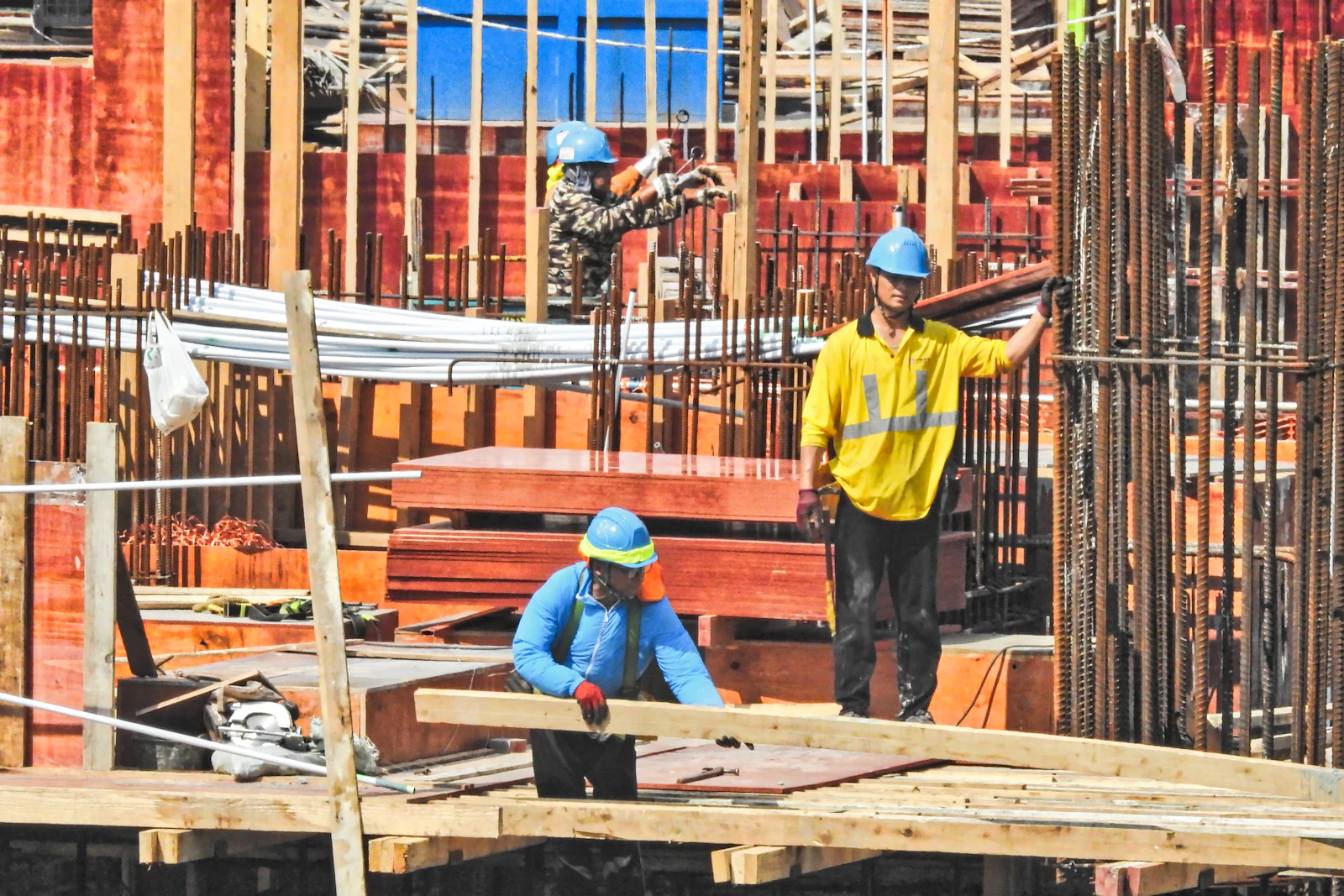
For San Diego land clearing in 2026, budgeting a skid steer mulcher as an equipment-hire package (high-flow compact track loader plus forestry drum mulcher head) typically lands in three bands: $950–$1,650 per day, $3,200–$5,800 per week, and $8,500–$14,500 per 4-week month, depending on whether you’re renting a dedicated forestry package (guarding + forestry door + high-flow hydraulics), the tooth system, and how far you are from the yard for delivery/pickup. These are planning ranges for trade/rental coordinators; quoted rates will vary by account, availability, and wildfire-season demand. In San Diego County, fleets are commonly sourced through national providers (e.g., United Rentals, Sunbelt, Herc) or regional dealer/rental yards that can support high-flow forestry configurations and jobsite service.
| Vendor |
Daily Rate |
Weekly Rate |
Review Score |
Website |
| United Rentals |
$350 |
$1 220 |
8 |
Visit |
| Sunbelt Rentals |
$375 |
$1 300 |
9 |
Visit |
| Herc Rentals |
$2 426 |
$4 707 |
8 |
Visit |
| Hawthorne Cat Rentals (Cat Rental Store) |
$650 |
$2 250 |
9 |
Visit |
| Coast Equipment Rental |
$625 |
$2 200 |
7 |
Visit |
Skid Steer Mulcher Rental Rates San Diego 2026
Use the following 2026 equipment hire cost ranges for estimating in San Diego. Assumptions: (1) high-flow capable CTL (typically 74–96+ HP class), (2) forestry guarding/door required for mulching, (3) hour-meter caps apply (commonly 8 hours/day and 40 hours/week, but some rate books use 10 hours/day and 50 hours/week), and (4) rates exclude fuel, transport, taxes, and consumables (teeth/wear parts).
- High-flow CTL (machine only): plan $425–$650/day, $1,450–$2,250/week, $3,600–$6,200/4-week. Published rate books show high-flow CTL day rates in the mid-$400s depending on class and hour assumptions.
- Forestry mulcher head (attachment only): plan $550–$950/day, $1,800–$3,200/week, $4,800–$8,500/4-week. For reference, one published rental rate sheet lists a forestry cutter package at $1,420/day (machine + cutter) with hour limits and notes that fuel/transport are excluded.
- Complete skid steer mulcher package (recommended for land clearing): plan $950–$1,650/day, $3,200–$5,800/week, $8,500–$14,500/4-week. (This aligns with published “package” style pricing where the mulcher head is the dominant cost driver.)
San Diego estimator note: If you’re bidding work in the backcountry (Ramona, Alpine, Jamul, Campo) or on constrained coastal infill sites, the transport and operating restrictions can swing total equipment hire cost more than the base rental line-item. Treat delivery/pickup, tooth wear, and cleanup/containment as first-class cost items—not as contingencies.
What Drives Skid Steer Mulcher Equipment Hire Costs in San Diego?
Skid steer mulcher equipment hire pricing for land clearing is primarily driven by (a) hydraulic performance requirements and (b) risk/wear exposure. A standard-flow skid steer may physically carry a mower, but forestry mulching usually requires high-flow hydraulics and enhanced cooling, plus a forestry door/guarding package for operator protection. Those specs tighten availability and push rates up, especially during peak vegetation-management windows.
Key cost drivers you should capture on the requisition (because they directly affect the rate class the rental yard will quote):
- Hydraulic flow class: standard-flow vs high-flow (high-flow is commonly required for drum mulchers).
- Forestry guarding: forestry door, polycarbonate, belly pans, guarding kits—often mandatory for rental approval on mulchers.
- Cutting system and wear policy: carbide vs steel teeth, number of teeth, and whether the yard bills dull/damaged teeth on return.
- Drum width: 50-inch class heads are common; wider heads increase productivity but may increase daily equipment hire costs and transport complexity.
- Ground conditions: rock, wire, trash, and fence-line hazards increase the likelihood of tooth damage and drum events.
- Support expectations: whether the yard provides field service, spare teeth, and same-day swap-out if you strike rebar/rock.
Land Clearing Output Assumptions That Affect Your Hire Budget
For budget sanity checks, tie the hire rate to realistic production. A skid steer forestry mulcher is often modeled at roughly 1–3 acres per day depending on stem size, density, slope, and material handling constraints (stacking, pushing, back-dragging). In San Diego, production frequently drops below “brochure” rates due to (1) access limitations on canyon lots, (2) dust-control rules near neighbors and roads, and (3) heat load in inland microclimates (higher cooling demand, more idle time to manage temps).
Two operational realities that change true cost-per-acre more than most estimators expect:
- Travel and staging time still burns “time out”: many contracts bill time out, not time used; published rental policies explicitly call out that charges are for time out and hour limits apply.
- Hour caps and overage rates: if you exceed the daily hour-meter cap, you can trigger overage billing (for example, one published CTL price page states 8 hours included and overage billed at $50/hour).
Example: 2-day land clearing mobilization in East County (numbers you can actually use). You need a high-flow CTL + mulcher package for a 1.5-acre brush and sapling clearing with rocky patches. You plan for 2 rental days at $1,250/day (mid-range package), plus delivery/pickup because you cannot legally/comfortably tow in traffic: assume $325 each way within a base radius and $6/mile beyond, plus a 10% damage waiver (if elected). Add realistic incidentals: $200 tooth wear allowance, $250 dust-control consumables/cleanup (water truck not included), and $150 for jobsite protection (mats/plywood). Before tax, you’re already around $3,000–$3,800 in equipment hire cost depending on delivery miles and waiver selection. If you also need weekend possession (Friday drop, Monday pickup), confirm whether it’s billed as 1 day, 2–3 days, or “time out” across the weekend—policies vary and can move the total by $1,000+.
Hidden-Fee Breakdown
Skid steer mulcher rental cost overruns in San Diego are usually traceable to a short list of line items that weren’t carried in the estimate. Build them in explicitly:
- Delivery/pickup: commonly $250–$450 each way inside a standard service radius; add $4–$8 per loaded mile outside the radius; after-hours or constrained windows can add $150–$300 per trip.
- Minimum transport charge: many yards enforce a $250 minimum even for short hops.
- Damage waiver (optional): often budget 10%–15% of rental charges (machine + attachment). California also regulates disclosure requirements when damage waivers are sold.
- Sales tax: in the City of San Diego, plan for 7.75% sales/use tax (verify by job address).
- Environmental/administrative recovery fees: frequently 2%–5% of rental line items (varies by contract).
- Fuel/DEF: return full or expect refuel billing, often modeled at $6–$9 per gallon diesel equivalent plus a $35–$75 service charge; DEF top-offs sometimes billed as a flat $25–$60.
- Cleaning fee: carry $150–$450 if the machine returns with caked mud, seed-laden debris, or heavy dust ingestion. Published rental policies explicitly flag cleaning fees when applicable.
- Tooth wear / damaged teeth: budget $10–$30 per tooth for wear replacement and a larger contingency if you’re working in rocky material or near wire/fence. (Confirm the yard’s tooth accounting method at checkout.)
- Key / lockout costs: at least one published policy shows a specific $12 charge if the key is not returned—small, but it signals how strictly return condition is enforced.
- Late return penalties: commonly 25%–100% of a day rate if you miss the cutoff, especially if the unit is pre-reserved for the next morning.
Budget Worksheet
Use this as a San Diego skid steer mulcher equipment hire worksheet template (no tables—line items you can drop into a cost code/PO):
- High-flow CTL base rent: ____ days at $____/day (carry $425–$650/day planning range)
- Forestry mulcher head rent (or forestry package adder): ____ days at $____/day (carry $550–$950/day planning range; package reference pricing exists at $1,420/day in published sheets)
- Delivery + pickup: ____ trips at $____ (carry $250–$450 each way plus mileage)
- Damage waiver: ____% (carry 10%–15%)
- Taxes: 7.75% (validate job address jurisdiction)
- Fuel/DEF allowance: $150–$400 per week depending on run time and haul distances
- Tooth wear allowance: $200–$800 (rock/wire risk dependent)
- Cleaning allowance: $0–$450 (site conditions dependent)
- Dust-control allowance (San Diego neighbors/roads): $150–$600 for water, tackifier, or additional cleanup (scope-dependent)
- Spare attachment/backup plan: $0–$300/day contingency if you need a standby brush cutter head while mulcher teeth are serviced
- Jobsite protection: mats/plywood/fencing $100–$500
Rental Order Checklist
- PO includes: machine class (high-flow), mulcher head model/width, forestry guarding requirement, and approved application (land clearing/vegetation management).
- Confirm hour-meter caps in writing (e.g., 8 hours/day, 40/week, 160/month is explicitly shown in some published policies).
- Confirm “time out” vs “time used” billing and off-rent procedure (what constitutes valid off-rent notice, and what time-of-day cutoff applies).
- Delivery window: request a 2-hour window if site access is gated; ask about cutoffs (e.g., last delivery slot often 2:00–4:00 PM depending on yard routes).
- Site requirements: turning radius for rollback, overhead clearance, and stable staging area for a mulcher head if detached.
- Return condition: machine washed out, radiator/engine bay blown out, track frames cleared; take photos/videos at pickup and return.
- Consumables policy: teeth wear, missing hardware, drum damage, and what constitutes “normal” vs billable wear.
- Safety kit: fire extinguisher, first aid kit, and any required spark-arresting or fire-prevention controls for brush work (especially in wildfire season).
If you want, share your expected acreage, average stem diameter (e.g., 2-inch vs 6-inch), and job address area (coastal vs inland). I can tighten the above San Diego equipment hire cost ranges into a realistic “not-to-exceed” PO budget with the right contingencies.
San Diego Logistics That Change the Real Rental Cost
San Diego is a logistics-driven rental market. Two projects with identical land clearing scope can have very different skid steer mulcher equipment hire totals due to transport and site constraints:
- Delivery radius and backcountry mileage: Projects in Ramona/Julian/Campo often fall outside “standard” local delivery zones, so the $4–$8 per loaded mile adder can become material. Plan a higher NTE if the job is 35–60 miles from the yard.
- Coastal infill and dust-control constraints: Near neighbors, schools, or arterial roads, dust and debris control can reduce production and increase cleanup/cleaning fees risk. Carry $150–$600 for additional dust-control measures depending on site sensitivity.
- Heat and elevation impacts inland: Inland summer heat increases cooling load and can force more idle time. That doesn’t always exceed hour caps, but it can extend possession time and bump you into a weekly tier sooner than expected.
Off-Rent, Weekend Billing, And Meter Hours
Before you issue a PO, align expectations on what “a day” means. Published rental policies commonly use hour-meter caps (for example, 8 hours per day, 40 hours per week, 160 hours per month) and explicitly note that charges are for time out, not time used. Other published rate guides may assume 10-hour days, 50-hour weeks, and 200-hour 4-week months.
Cost-control moves rental coordinators use on mulcher packages:
- Schedule delivery early day 1: A 3:30 PM delivery can effectively “burn” most of a billed day if the contract is time-out based.
- Clarify weekend possession: Some yards offer weekend programs, others bill calendar time. If you need the unit onsite for a Monday 7:00 AM start, ask whether Friday delivery triggers 2–3 days of billing.
- Overage rates: If your operation is double-shift or you’ll exceed meter caps, ask for the explicit overage schedule. One published CTL listing charges $50/hour over the included daily hours.
Attachment-Only Versus Forestry Package: What Usually Costs Less?
In theory, renting a mulcher attachment only can be cheaper—if (and only if) you already own a compatible high-flow CTL with forestry guarding and appropriate hydraulic capacity. Otherwise, package rentals are usually the safest way to control risk and downtime.
Published examples show how wide attachment pricing can swing:
- A published rental brochure lists a forestry cutter with T770/T870/T86 at $1,420/day, $3,975/week, and $10,650/4-week, with separate policies for hour limits and excluded fuel/transport.
- Another published listing shows a forestry attachment (Fecon BH74SS “Bull Hog” style) at $688/day and $2,064/week (attachment context varies by provider; verify what’s included).
- Rate sheets for smaller mulchers can appear lower (e.g., published “small mulcher” and “large mulcher” day rates on a general rate page), but those may be for a different region and machine pairing—use them only as a cross-check.
Practical San Diego guidance: If your scope includes unknown debris (wire, old fencing, urban dumping), the package rental with a yard that supports forestry applications often reduces your total cost because they can swap or service the head faster—avoiding multi-day idle time that still bills as “time out.”
Risk And Damage Planning For Mulching Heads
Mulcher heads are where hire budgets get blown. Manage this like you would any high-risk attachment:
- Pre-walk the site: flag wire, T-posts, boulders, and irrigation hardware. One “wire wrap” event can turn into a drum seal issue and significant downtime.
- Carry a tooth contingency: budget at least $200 on clean brush; push to $800+ if rocky or contaminated.
- Confirm what damage waiver does and does not cover: damage waivers are contract modifications, not insurance; California requires clear disclosure when they are offered for consideration.
- Return condition documentation: close-out photos of the head, drum, skid shoes, hoses, and couplers reduce disputes about pre-existing wear.
Sources And Rate References (For Estimating Benchmarks)
- San Diego sales/use tax rate reference (effective July 1, 2026): CDTFA.
- Published rental brochure showing hour limits (8/40/160), time-out billing note, key fee, and a forestry cutter package rate ($1,420/day): Bobcat Plus Rental Brochure 2026 (PDF).
- Published rate guide with skid steer/CTL classes and a hi-flow brush cutter attachment rate ($400/day) and hi-flow CTL rate examples, with a 10-hr/50-hr/200-hr assumption: Rental Rate Guide PDF (2025).
- Published forestry attachment day/week pricing example ($688/day; $2,064/week): Art’s Rental Equipment product page.
- Production planning references for skid steer forestry mulching acres/day: HomeGuide and MulchDeck productivity guidance.
Reminder for 2026 POs: do not treat these as guaranteed San Diego pricing. Use them as rate anchors to negotiate and to avoid under-carrying the predictable adders (transport, waiver, wear parts, cleaning, and tax).