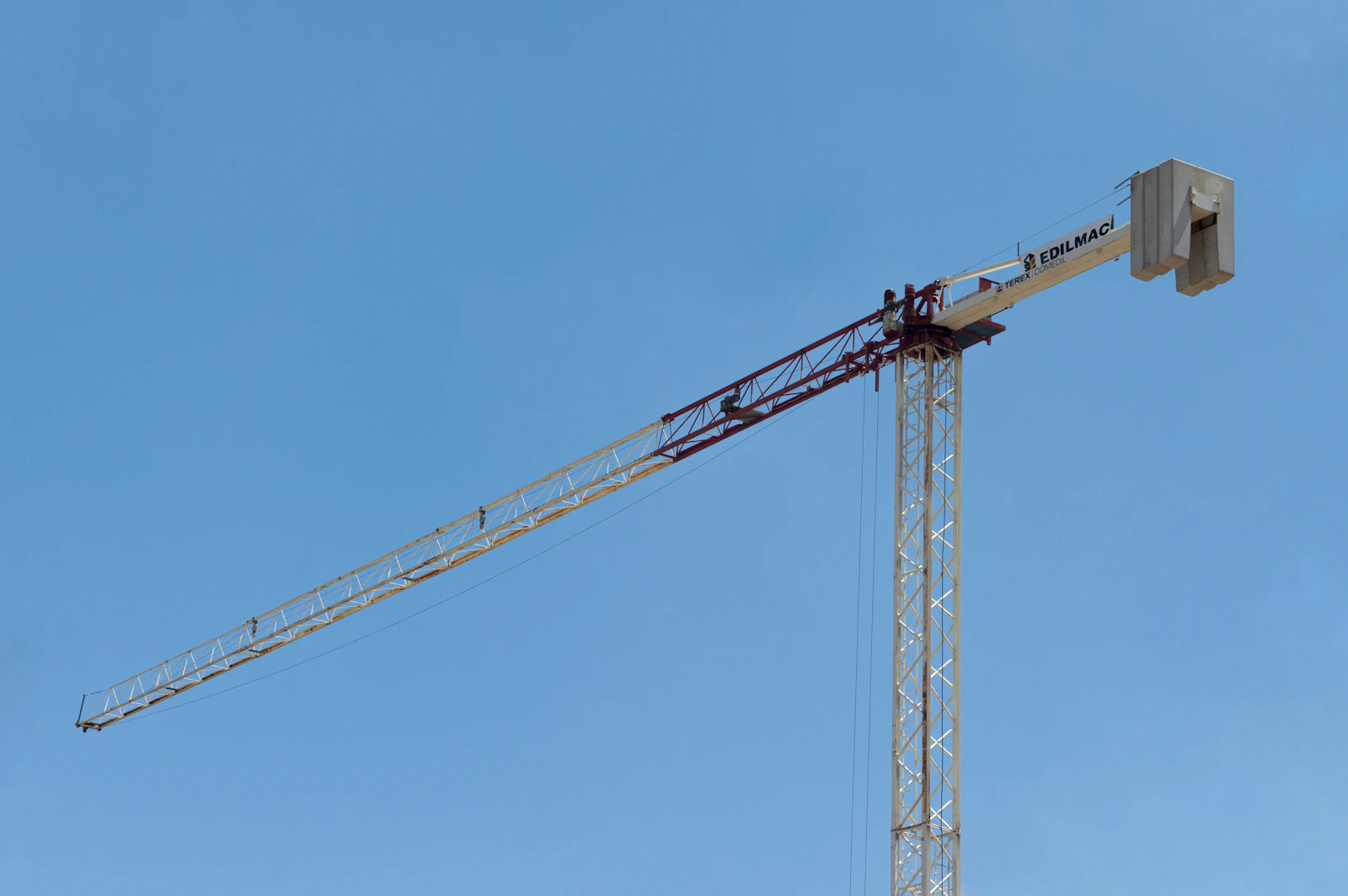
Spider Crane Rental Rates Philadelphia 2026
For Philadelphia spider crane equipment hire supporting curtain wall installation, 2026 planning budgets typically land in these bands (USD, bare machine, before freight/taxes/waivers): 3T class mini spider crane at roughly $900–$1,600/day, $2,300–$3,500/week, and $4,800–$7,200 per 28-day month; and 6,000–7,000 lb class units at roughly $1,300–$2,100/day, $2,600–$4,200/week, and $5,700–$9,000 per 28-day month. These ranges assume an in-demand urban market, tight delivery windows, and that you’ll likely add at least one curtain-wall-specific attachment (most commonly a glass vacuum lifter or manipulator). Published reference points show a 3T spider crane advertised at $750/day, $2,250/week, $4,500/month in one U.S. rental market, and a Maeda MC285-class unit listed on a public contract schedule at $1,500/day, $2,600/week, $5,750/month—use those as anchors, not guarantees for Philadelphia quotes.
| Vendor |
Daily Rate |
Weekly Rate |
Review Score |
Website |
| Pro Crane Rentals |
$2 400 |
$9 000 |
10 |
Visit |
| ALL Crane Rental of Pennsylvania (ALL Family of Companies) |
$1 900 |
$7 200 |
9 |
Visit |
| Herc Rentals |
$1 250 |
$4 700 |
8 |
Visit |
| United Rentals |
$1 650 |
$6 200 |
9 |
Visit |
What drives spider crane equipment hire cost for curtain wall installation in Philadelphia?
In curtain wall work, spider crane hire cost is rarely driven by “crane size” alone. The invoice moves with (1) access (can you roll through a standard double door and elevator, or do you need a rig/hoist and street occupancy), (2) rigging plan complexity (spreader bars, tag lines, suction gear, softeners), (3) pick cadence (multiple short picks vs. a few heavy picks), and (4) billing rules (calendar day vs. shift-based, weekend/holiday treatment, off-rent cutoffs). For Center City and University City sites, the biggest cost driver is often time-on-site that becomes billable standby because deliveries arrive late, hoist/elevator windows are missed, or façade crews are waiting on sealants/anchors—spider cranes are efficient when the workflow is staged and predictable.
Also note that “Philadelphia-area spider crane equipment hire” may source the unit from outside the city depending on fleet density, which makes mobilization/demobilization and yard-to-yard rental clocks more important than on greenfield sites. A number of crane rental agreements define a “month” as 28 consecutive days and commonly scale weekly as 1/3 of monthly and daily as 1/15 of monthly; even if your local provider uses different factors, confirm the math in writing because it impacts whether you should convert a 9–12 day curtain wall run from daily to weekly or monthly billing.
Bare equipment hire vs. operated spider crane hire (O&M)
For curtain wall installation, you’ll usually price two lanes:
- Bare spider crane hire (equipment-only): You provide the qualified operator and signal/rigging labor, and you typically carry more operational responsibility. Bare hire can pencil well when you’re repeating the same lift geometry over multiple days and you control the schedule.
- Operated & maintained (O&M) spider crane hire: The provider supplies the crane and operator (and sometimes a rigger). This is often safer administratively for short-duration, high-risk picks or when the GC wants single-source responsibility for the lifting package.
Budget-wise, a common 2026 planning allowance for O&M mini spider crane hire in Philadelphia is $1,900–$3,200 per 8-hour shift for the crane + operator (class dependent), plus rigging labor, freight, and any suction equipment. If your provider quotes hourly, expect the effective hourly cost to jump after the included shift minimum; even broad “crane rental in Philadelphia” averages show how wide daily ranges can be for crane services, so treat the spider crane as a specialty subset that often sits toward the higher end once access constraints and attachments are added.
Common add-ons for curtain wall installation that move the hire price
For façade and glazing scopes, the spider crane is frequently only one line item in the equipment hire package. Common adders that rental coordinators should carry as allowances:
- Glass vacuum lifter / suction cup system: typically $450–$950/day depending on capacity, with $150–$300 for extra pads, seals, or a cup kit refresh.
- Compact glass manipulator: commonly $500–$750/day and $1,500–$2,600/month depending on class and market; confirm indoor/non-marking requirements.
- Spreader bar: $75–$150/day (or $225–$450/week) based on length and WLL documentation.
- Chainfalls / lever hoists: $25–$60/day each when required for micro-adjusting mullion frames or setting brackets.
- Synthetic slings, softeners, corner protection: $18–$35/day per sling set; façade finishes get expensive fast if you under-spec protection.
- Man basket (if allowed/needed for positioning tasks): $175–$350/day plus additional site controls and approvals.
- Floor protection / outrigger pads / track mats: $25–$40 per mat per week; for interior atrium or lobby staging, this is not optional if you want a clean return condition.
Hidden-fee breakdown for Philadelphia spider crane equipment hire
The fastest way to miss your curtain wall equipment hire budget is to treat the day rate as “all-in.” For Philadelphia-area sites, carry explicit allowances for:
- Delivery & pickup: $250–$450 each way within a local radius is common; add $6–$9 per mile beyond the base zone, with a typical $300 minimum freight when the truck is dispatched.
- After-hours delivery window: $150–$350 surcharge when your site only accepts 6:00–7:00 a.m. drops or night deliveries to avoid traffic/closures.
- Jobsite waiting time (truck): $95–$175/hour after a 30–60 minute grace period if the receiving area isn’t ready.
- Minimum rental charge: many specialty mini-crane providers bill a 1-day minimum even if you only pick for 3 hours; confirm whether “day” is a calendar day or shift-based.
- Overtime: common billing is 1.5× after 8 hours, and 2.0× on certain holidays; some providers also add an equipment overtime premium such as $125–$175/hour for the crane when you exceed the base shift.
- Weekend premium: frequently 10%–25% on bare hire, or 1.5× labor on O&M shifts if you need Saturday picks to hit façade milestones.
- Fuel/consumables: $50–$175 refuel charge if returned short, or $35–$85 recharge/conditioning charge for battery-electric units if returned below the agreed state of charge.
- Cleaning fee: $150–$450 for concrete slurry, sealant residue, or masonry dust; interior “white-glove” jobs can trigger higher cleaning if tracks or pads are contaminated.
- Damage waiver: commonly a percentage of rental charges (often 5%–15% depending on equipment and policy).
- Lost remote/keys or damaged controls: carry $350–$900 as a realistic exposure for replacement and downtime administration.
- Documentation adders: $250–$500 for special cert packages, lift plan reviews, or additional inspection copies when the project has strict submittal gates.
Delivery, access, and off-rent rules that change real hire cost in Philadelphia
Philadelphia curtain wall sites tend to stack constraints that change the “true” cost of spider crane hire:
- Delivery cutoffs and congestion: If your receiving window is short (for example, 7:00–9:00 a.m.) and traffic on I-76/Schuylkill impacts arrival, you can pay waiting time and still start the rental clock.
- Street occupancy and staging footprint: Even when the spider crane itself is compact, the delivery vehicle, rigging gear, and glass handling equipment can require a larger curb footprint than the crane’s operating envelope suggests—plan for re-handling costs if you can’t store suction equipment near the workface.
- Indoor dust-control expectations: Curtain wall retrofits in occupied buildings often require track protection, HEPA filtration, and “clean route” policies. Those policies don’t only add labor; they add cleaning fees and increase the probability of chargeable cosmetic damage if floors or walls are tagged during moves.
- Off-rent timing: Many agreements run rent from yard-out to yard-in, not from the moment you stop picking; if demob can’t happen until the next day due to loading dock rules, you may burn an extra day. Some providers explicitly define a “month” as 28 consecutive days, with daily/weekly factors tied to the monthly rate, so confirm the off-rent math before you assume a pro-rated credit.
Example: Center City curtain wall installation using a 3T spider crane
Scenario: A unitized curtain wall crew needs a mini spider crane for 2 days to set 18 panels/day from a tight courtyard. Each panel averages 850 lb, picks are at 22 ft radius, and your building only allows deliveries between 6:30–7:30 a.m. The GC requires non-marking track protection and photo documentation at return.
- Spider crane bare hire: assume $1,250/day × 2 = $2,500 (planning mid-range for Philadelphia).
- Freight in/out: $375 each way = $750 (tight window, small surcharge included).
- Glass vacuum lifter: $650/day × 2 = $1,300.
- Floor/track mats: $180 allowance (pads + consumables; return inspection photos required).
- Damage waiver: assume 10% of rental lines ($2,500 + $1,300) = $380 (policy-dependent).
- Cleaning allowance: $250 (masonry dust risk; avoidable with good controls).
Planning subtotal (equipment-focused): approximately $5,660 before tax, labor, permits, and any waiting-time overruns. The operational constraint here is the 1-hour delivery window; if the truck is turned away and returns later, you could add $150–$350 in re-delivery plus $95–$175/hour waiting time and still lose a day of picks—so the cheapest mitigation is often paying for an earlier staging day rather than “hoping traffic behaves.”
Budget Worksheet
Use this as a no-surprises budget worksheet for spider crane equipment hire costs in Philadelphia (curtain wall installation):
- 3T spider crane hire (bare): ________ days at $________/day (carry $900–$1,600/day)
- Weekly conversion check (if > 6–7 days): $________/week (carry $2,300–$3,500/week)
- 28-day month check (if > 15 days): $________/month (carry $4,800–$7,200/28-day month)
- Delivery/pickup: ________ trips at $________ each (carry $250–$450 each way)
- Distance surcharge: ________ miles at $________/mile (carry $6–$9/mile beyond base)
- Glass vacuum lifter: ________ days at $________/day (carry $450–$950/day)
- Rigging gear package (spreader, slings, softeners, tag lines): allowance $________ (carry $250–$650/week)
- Floor protection mats/outrigger pads: allowance $________ (carry $150–$400)
- Damage waiver (if taken): ________% of rent (carry 8%–15%)
- Cleaning/return-condition allowance: $________ (carry $150–$450)
- Recharge/refuel allowance: $________ (carry $35–$175)
- Standby / waiting time contingency: ________ hours at $________/hour (carry $95–$175/hour)
- Overtime contingency (missed hoist window): ________ hours at $________/hour (carry $125–$175/hour equipment premium where applicable)
Rental Order Checklist
Use this checklist to keep your spider crane hire from bleeding cost on a curtain wall package:
- PO details: correct jobsite address, onsite contact, and billing contact; list crane model/class (3T vs 5T/6k–7k lb) and any indoor requirements (non-marking tracks, electric-only).
- Delivery controls: confirm delivery window, cutoff times, and receiving plan; state whether freight is billed portal-to-portal or dock-to-dock; pre-authorize after-hours fees if needed.
- Access plan: door widths, elevator capacity, floor loading limits, and turning radii; confirm if a forklift/telehandler is required to unload (budget it if yes).
- Attachment schedule: glass vacuum lifter capacity, spare pad kit, spreader bar length/WLL, slings/softeners, tag lines, and any specialty rigging.
- Insurance & waiver: COI requirements, additional insured wording, and whether damage waiver is accepted or rejected (and what replaces it).
- Billing rules: define “day,” “week,” and “month” (28-day month is common); confirm overtime, weekend, and holiday multipliers; confirm standby/waiting-time rates.
- Off-rent procedure: who can call off-rent, required notice (often 24 hours), where the unit returns, and whether the rental clock stops at pickup or at yard-in.
- Return condition documentation: required photos/video (tracks, outrigger pads, controls, hour meter), cleaning expectations, fuel/charge state, and any “missing items” checklist for rigging kits.
Philadelphia practical note: if your curtain wall sequence is sensitive to wind or weather, build a standby plan that avoids “crew waiting on weather” while the crane stays on rent. A single weather-lost day can be more expensive than upgrading from daily to weekly terms—so coordinate off-rent authority and pickup windows with the superintendent, not just the procurement desk.
How to spec the right spider crane for curtain wall installation (so you don’t overpay)
For curtain wall installation equipment hire, the cheapest spider crane quote is often the wrong target if it triggers slow picks, resets, or re-rigging. To control total cost, write the RFQ around the lift geometry and handling method:
- Max pick weight: include the heaviest panel (glass + frame + any lifting frame), and add a realistic contingency (many teams carry 10%–15%).
- Working radius: provide the farthest hook position from setup point; a spider crane that “can lift it” at short radius may not do it at your actual radius.
- Hook height and obstructions: parapets, canopies, overhead protection, and adjacent façades often force an extended radius (cost) even if the crane is physically close.
- Surface and bearing: interior slabs, pavers, or vaults may require additional mats or reduced outrigger loadings, slowing the cycle time and increasing standby risk.
- Handling equipment: specify whether you are using a vacuum lifter, glass manipulator, or panel frame; these choices materially change rental add-ons and return-condition risk.
As a reference for budget sanity checks, published U.S. rate sheets show specialty compact cranes in the general range of $500/day for a small mini crawler crane in one market, while public contract listings show higher daily numbers for Maeda and Jekko compact crane models (for example, $1,000/day for a Jekko MPK20 and $1,500/day for a Maeda MC285-class unit). Philadelphia quotes can be higher once freight constraints and demand are applied.
Rate structures, billing cycles, and off-rent language to confirm in writing
When you’re managing spider crane hire cost across multiple curtain wall elevations, billing language becomes a cost driver. Confirm these items on every rental order:
- What starts the clock: yard-out, delivery-on-site, or first use. Yard-out/yard-in is common in heavy equipment agreements.
- What ends the clock: pickup time, yard-in, or the next business day if pickup occurs after a cutoff.
- Definition of month: many agreements define a month as 28 consecutive days and scale weekly and daily as fractions of the monthly rate (for example, weekly = 1/3, daily = 1/15). This impacts whether you should negotiate a monthly conversion once you cross ~15 billable days.
- Included hours: some rentals include a maximum operating-hours threshold; excess hours can trigger additional hourly rent (critical if you run double shifts to close façade).
- Idle time: confirm whether idle time is still billable (it commonly is). If your curtain wall picks are only 3–4 hours/day, negotiate standby vs. full-day billing explicitly.
Risk planning: insurance, damage waiver, and return-condition exposure
On curtain wall scopes, the equipment exposure is not only “bent boom.” It’s suction damage, track damage to finished floors, and control damage from tight access moves. Many rental houses offer a damage waiver priced as a percentage of rental charges; published guidance commonly cites single-digit to mid-teen percentages (often 5%–15%). Treat the waiver decision as a procurement control: if you reject the waiver, confirm your insurance responds to rented equipment and that your subcontractor structure doesn’t create uninsured gaps.
For return-condition management, set expectations internally before the unit arrives:
- Clean return standards: require a wipe-down and inspection before pickup to avoid the $150–$450 cleaning fee band.
- Photo set: take timestamped photos of tracks, outriggers, hook block, remote, and hour meter at delivery and at pickup.
- Consumables reconciliation: confirm what belongs to the rental package (remote, charger, pad kit, rigging tote) to avoid “missing item” backcharges (often $50–$900 depending on component).
2026 Philadelphia market notes for spider crane equipment hire on façade work
For Philadelphia, the practical market reality in 2026 is that specialty mini spider crane availability can tighten during peak construction months, and the real cost swings come from: (1) freight complexity into dense neighborhoods, (2) short receiving windows that generate waiting time, and (3) competing demand from interior atrium projects and retrofit work that prefer compact electric units. If your curtain wall schedule is milestone-driven, consider reserving the equipment hire window early and paying a modest “guaranteed delivery window” premium rather than risking a resequenced installation that adds days of standby.
Ownership vs. hire cost check (when curtain wall programs run long)
If your company repeats similar curtain wall installations (same panel weights, same access constraints) across multiple Philadelphia projects, a basic ownership-vs-hire screen can be helpful. As a rule of thumb, if you are consistently renting a 3T spider crane for 10+ days per month across multiple months, you may be paying enough in rent (plus freight, plus attachment rentals) that owning could become competitive—but only if you can staff operators, maintain the unit, and keep it utilized. Many bare rental agreements also emphasize that rent can remain due during idle time and certain repair periods depending on responsibility allocations, so utilization discipline matters either way.
RFQ scope notes to get comparable spider crane hire quotes (Philadelphia)
To make sure your Philadelphia spider crane equipment hire pricing comes back apples-to-apples, include these scope notes in the RFQ:
- Project: curtain wall installation; describe picks per day and max panel weight.
- Site location and access: curb restrictions, loading dock dimensions, elevator limits, interior floor protection requirements.
- Requested billing: daily/weekly/monthly with stated definitions (confirm whether month is 28 days).
- Freight: require separate line for delivery/pickup, waiting time policy, and after-hours surcharge policy.
- Attachments: quote glass vacuum lifter/manipulator, spreader bar, rigging kit, mats/pads as separate equipment hire lines.
- Damage waiver: show price with and without waiver (percentage and cap details if any).
- Overtime and weekend: list multipliers and any equipment overtime premium.
- Off-rent: notice required, cutoff times, and whether rental ends at pickup or yard-in.
If you want, share your expected panel weights, radius, and whether the work is interior or exterior staging—then I can tighten the 2026 planning ranges to a narrower equipment hire budget band (still non-vendor-specific) for your specific Philadelphia curtain wall sequence.