

For New York (NYC-area) house framing in 2026, plan telehandler (reach forklift) equipment hire budgets in these working ranges (USD, bare machine, forks included, assuming a standard rental “month” is ~28 days and includes typical hour-meter allowances): $450–$900/day, $1,600–$3,200/week, and $4,200–$8,600/month. Smaller 6,000–8,000 lb / 42 ft-class units used for stick framing and truss sets commonly land in the lower-to-mid part of that spread, while 10,000 lb+ / 55 ft+ units (or higher-spec models with stabilizers/encab) push the upper end. National fleets (e.g., United Rentals and Sunbelt Rentals) and regional yards that service NYC from New Jersey, Long Island, and the Lower Hudson Valley typically quote the same rate structure but NYC logistics (tight access, bridge/tunnel tolls, time-windowed deliveries) often drive the all-in hire cost more than the base rate. As a benchmark, one 2026 pricing guide pegs average telehandler rentals around $665/day, $1,644/week, and $3,592/month, before delivery and adders.
| Vendor | Daily Rate | Weekly Rate | Review Score | Website |
|---|---|---|---|---|
| United Rentals | $474 | $1 324 | 9 | Visit |
| Sunbelt Rentals | $248 | $684 | 9 | Visit |
| Herc Rentals | $510 | $1 360 | 9 | Visit |
| Empire Tool Rental | $795 | $2 700 | 9 | Visit |
Telehandler rental cost for house framing in New York is primarily driven by (1) capacity/reach selection, (2) transport complexity into the five boroughs, and (3) time-on-rent versus utilization hours. A 6K/42' class telehandler may be “enough machine” for truss picks, LVL bundles, and rooftop material placement on typical 2–3 story builds, but stepping up to 8K/55' (or 10K/55'+) can reduce rehandling and crane time—often worth it if you’re staging materials in a constrained footprint.
NYC-specific considerations that materially change equipment hire cost: (a) delivery radius norms—many rental yards that can reliably service Brooklyn/Queens also service from outside the city, so mileage, tolls, and deadhead time matter; (b) delivery windows/cutoffs—Manhattan and dense Brooklyn corridors may require early morning delivery slots, DOT coordination, or weekend set-downs; and (c) site access—narrow streets, parked cars, and limited laydown can force smaller transport (higher per-unit freight) or a smaller telehandler that then stays on rent longer to maintain production.
Use the ranges below as 2026 planning numbers for telehandler equipment hire costs in New York (non-operated rental). Always verify the exact model (overall width/height, turning radius, ground pressure) and whether the unit has frame leveling or outriggers—those specs can shift rate tiers.
Published rate sheets in the Northeast show that larger telehandlers can price similarly to (or higher than) the top end of these ranges; for example, one NY-area sheet lists an 18,000 lb telehandler at $660/day, $1,980/week, and $5,950/month (not NYC-specific, but useful for anchoring capacity-driven pricing).(m A separate contractor rate sheet (2025) shows mid-class telehandlers around $400/day and $3,800/month for a JLG 6042, with a higher class at $450/day and $4,500/month for an 8042—again, market- and vendor-dependent, but directionally consistent for budgeting.(m
For framing, the surprise cost is often not the day/week/month headline rate; it’s the hour-meter structure and how your crew actually uses the machine. Many yards apply a “standard utilization” allowance (commonly framed as 40 hours per 7-day week and 160 hours per 28-day month), then charge an overtime rate per additional hour. One rental listing explicitly calls out that a 7-day week includes up to 40 hours of machine time, which mirrors how many fleets structure heavy equipment rental utilization.(m
For NYC-area telehandler hire planning, carry these 2026 allowances (confirm on quote):
To keep telehandler equipment hire costs predictable on NYC residential framing projects, treat the base rate as only one component. The following adders show up frequently on invoices and are where rental coordinators can either negotiate or control behavior.
Telehandlers on framing sites rarely run “forks only” for long. When budgeting telehandler hire costs for house framing in New York, add accessories that reduce manual handling and improve safety compliance.
NYC telehandler hire cost control is mostly logistics discipline. Three policies to clarify on every PO:
Example scenario: Two-family new build in Queens with limited curb frontage. GC needs an 8,000 lb / ~42 ft telehandler for truss picks, rooftop material staging, and daily dumpster loading. The street cannot be blocked during school arrival, so delivery must be 6:00–7:00 AM. The unit runs heavier utilization during sheathing week.
Budget check: This plan puts the rough all-in at $18,752 (excluding tax/permits/traffic control), with the biggest controllables being delivery constraints, waiver %, overtime hours, and attachment days. The estimator can often shave $800–$2,000 by (a) consolidating attachment days, (b) negotiating weekend billing, and (c) staging pickup accessibility so off-rent starts on time.
Use this as a job-level allowance list for New York house framing estimates (edit to your company’s coding).
For equipment managers negotiating telehandler rental for house framing in New York, the most effective levers are: (1) committing to a predictable multi-week term (vendors will often discount weekly rates when they can plan fleet utilization), (2) bundling multiple jobsite deliveries into a single route day to reduce freight, and (3) confirming whether damage waiver is mandatory or optional on your account. Also ask whether the vendor will cap overtime hours or provide a blended “high-utilization” weekly rate if you know the framing crew will run the machine longer than the standard hour allowance.
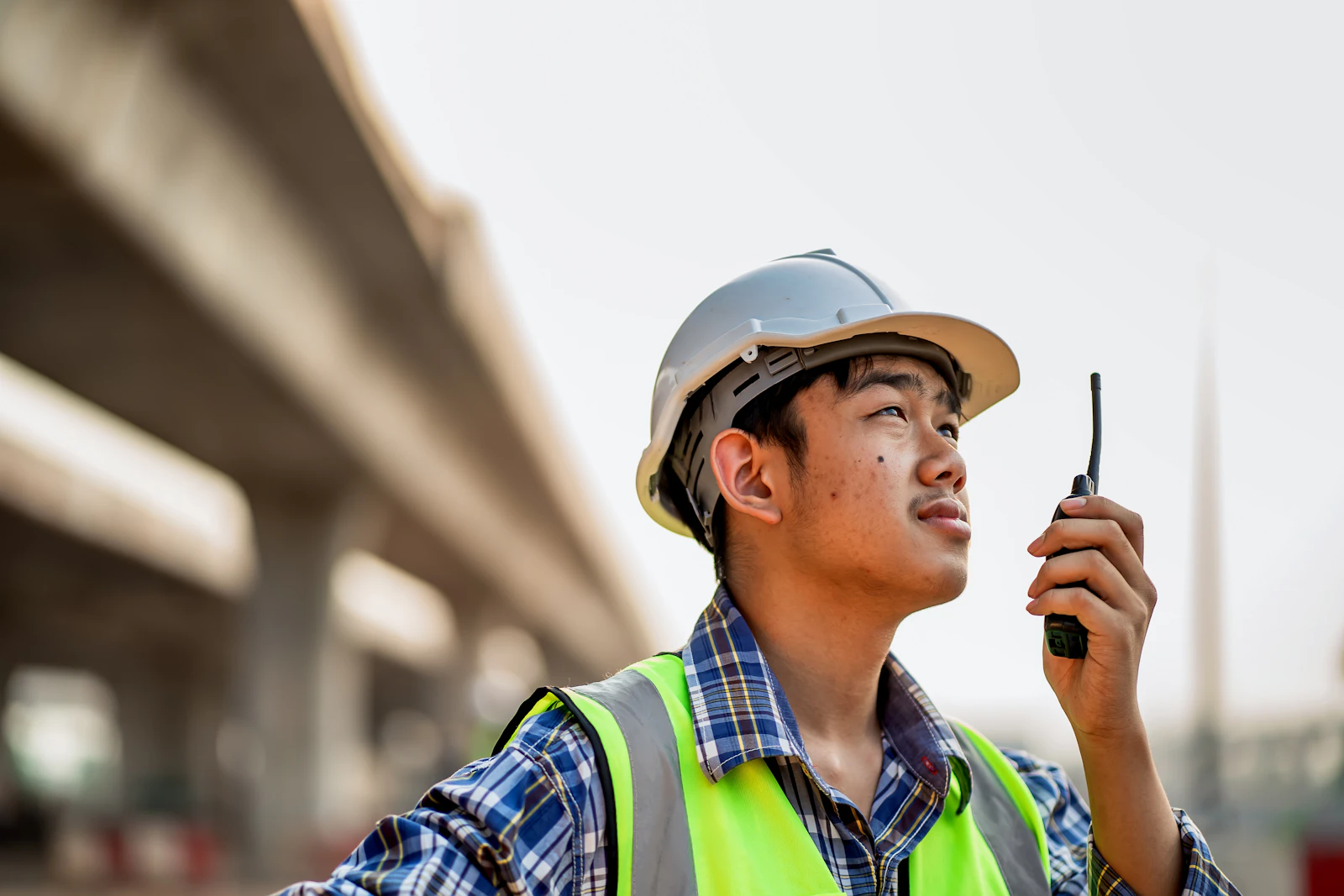
On New York house framing sites, telehandlers are frequently treated like “site utilities”—material staging, truss picks, dumpster loading, and moving bundles. That’s exactly why cost creep happens: the machine stays on rent while production ebbs and flows. The controls below are operational (not theoretical) and directly reduce total equipment hire cost.
Two common NYC framing missteps are (a) over-sizing capacity “just in case,” then paying higher weekly rates for capability you rarely use, and (b) under-sizing reach, which forces extra moves and longer rental duration. A disciplined approach is to build a pick plan for your heaviest and farthest material placements (truss bundles, LVL beams, roof sheathing) and choose the smallest telehandler that safely completes those picks with margin. If you can downshift one class (for example from 10K/55' to 8K/42' where feasible), it’s realistic to save $300–$800/week in base hire, plus lower freight in some cases.
For telehandler equipment hire costs in New York, freight can rival a full week of rent when access is difficult. Build freight into estimating early and then manage it in the field:
Most rental coordinators treat the damage waiver line as non-negotiable, but it’s worth reviewing annually. If your account is charged 10%–15% of base rental for DW, a long framing schedule can put thousands into that single add-on. One documented example shows a 10% damage waiver structure (excluding certain fees).(m Practical approaches include: (1) accepting DW for short, high-risk scopes (tight brownstone lots, alley access), and (2) self-insuring (if your company policy supports it) for longer, lower-risk runs where you control operator access and lockout. Confirm what DW excludes (glass, tires, theft, misuse) so you are not double-paying for coverage that doesn’t respond to your most likely exposures.
Telehandlers in NYC often idle more than suburban jobs due to spotter coordination and intermittent picks. That increases fuel burn and raises the chance you return the unit short. Avoid refueling bill-backs by establishing a simple policy: return full with receipts documented on the day of off-rent. If you do get billed, typical refuel charges can land at $6–$10/gal plus a $25–$75 service fee. For winter framing, plan for cold-start issues and ensure the vendor provides a battery in good condition; a dead-start service call can cost $150–$350 if it’s outside normal service terms or caused by leaving the master switch on.
House framing sometimes overlaps with early MEP rough-in or interior material staging, especially on tight NYC sites where the only laydown is “inside the shell.” If a telehandler is asked to cross finished slabs, stoops, or protected sidewalks, costs rise due to:
Telehandler hire costs for NYC framing frequently balloon in the last week: the machine sits “just in case” while punch work happens. Put an off-rent trigger in the schedule: once roof sheathing and bulk exterior material placement is complete, either (a) off-rent immediately, or (b) downshift to a smaller material handling plan for the remainder (smaller forklift, skid steer with forks, or scheduled re-rent days). If you can reduce rental duration by even 5 days at $550/day, that’s $2,750 saved before waiver and fees.
Most NYC residential framing telehandler rentals are bare (contractor-operated). If your project has strict site controls, high turnover, or you’re working under a CM with enhanced safety oversight, pricing an operated telehandler can be rational. For 2026 planning, carry $95–$140/hr for an operator (market- and union-condition dependent) with a 4–8 hour minimum, plus the equipment rental itself. This can reduce damage risk and speed picks, potentially saving total days on rent (often the biggest cost driver).
If you need sanity checks while budgeting, published reference points can help prevent underestimating. A 2026 guide summarizes average telehandler rental costs around $665/day, $1,644/week, and $3,592/month, which is helpful as a national baseline before NYC freight and constraints.(m Separately, published regional rate sheets show telehandler day rates in the $400–$660/day band depending on size/class, with monthly structures and hour limits noted on some sheets.(m Use these anchors to pressure-test quotes that are either unusually low (risk of older units, limited service coverage, or restrictive hour/overtime language) or unusually high (often freight/access-driven rather than purely base rent).
For 2026 NYC-area house framing, a realistic telehandler equipment hire budget is built from: (1) the right machine class at $450–$900/day equivalent, (2) controlled freight and access planning (often $600–$1,400 round-trip in NYC once tolls/time windows are included), and (3) tight management of DW %, overtime hours, and attachment days. When those levers are managed, telehandler hire remains a predictable production tool instead of a slow leak across the job’s final third.
