

Create an itemized estimate for your project, with materials, labor, and quantities you can review and edit.
Create my estimateStart a 7-day free trial. Sign up, then enter your project details.
For Milwaukee sprinkler system installation work in 2026, plan threading machine equipment hire costs around $45–$95/day, $170–$360/week, and $450–$980/4-week for a handheld power-drive threader package (good for tight MEP rooms and overhead tie-ins); $90–$160/day, $300–$525/week, and $780–$1,550/4-week for a Ridgid 300-class threading machine with stand/cutter/reamer/oiler; and $140–$295/day, $440–$900/week, and $1,050–$2,450/4-week for automatic machines (Ridgid 535/1224 class) when you need faster production or larger pipe capability. These are planning bands (not quotes) built from posted rate sheets and Midwest market norms; in Milwaukee you’ll typically see the big national rental houses alongside plumbing/pipe supply rental counters—availability and what’s “included” in the kit often moves total cost more than the headline day rate.
| Vendor | Daily Rate | Weekly Rate | Review Score | Website |
|---|---|---|---|---|
| United Rentals | $90 | $270 | 9 | Visit |
| Sunbelt Rentals | $85 | $255 | 8 | Visit |
| Herc Rentals | $95 | $285 | 8 | Visit |
| The Home Depot Tool Rental | $79 | $316 | 8 | Visit |
| Ahern Rentals | $80 | $240 | 8 | Visit |
Assumptions behind the 2026 planning ranges: (1) “Week” pricing is commonly billed as a 5-business-day week, but some branches bill 7 consecutive days—confirm before issuing the PO; (2) “Month” is often a 4-week (28-day) rate, not a calendar month; (3) die heads/dies, cutting oil, stands/vises, and containment accessories may be separate line items even when the listing says “complete.” A published rate sheet example shows a handheld cordless pipe threader at $30/day, $120/week, $350/month; a 1/2 in.–2 in. Ridgid 300-class w/stand at $75/day, $225/week, $450/month; a Ridgid 535 at $115/day, $345/week, $805/month; and a Ridgid 1224 at $125/day, $375/week, $875/month (use these as historical anchors and adjust for Milwaukee + 2026 conditions).
For a second data point in the Midwest region, one Chicagoland-area rental listing shows a 1/2 in.–2 in. pipe threader/vise package at $80/day, $240/week, $600/month; other posted listings for similar Ridgid 300-class electric threaders show day rates in the $55–$92 band with weekly rates roughly 2.8x–4.0x the day rate. Your Milwaukee hire cost exposure will typically land higher when the kit is truly job-ready (stand + cutter/reamer + oiler + die heads) and when delivery, waiver, and “consumables restock” are accounted for.
Sprinkler system installation threading machine hire costs hinge on three operational variables: pipe size mix, workface access, and production windows. If the job is primarily 1 in.–2 in. Schedule 40 and you can stage a dedicated threading station, the Ridgid 300-class typically gives the lowest cost-per-thread. If you’re tying in overhead in finished spaces (healthcare, schools, occupied industrial), a handheld power-drive threader can reduce handling and lift time but may increase coupling count and labor minutes per joint. If you routinely touch 2-1/2 in.–4 in. or are under aggressive shutdown windows, the automatic 1224-class can justify its higher rental rate by reducing rework and thread quality variability—especially when die condition is controlled.
Milwaukee-specific cost considerations (practical, not theoretical): (1) winter deliveries often require tighter delivery windows and longer load/unload times—budget for an earlier “dock reservation” and a wider receiving window; (2) downtown/near-lake projects frequently have limited staging and paid parking/loading constraints—expect higher risk of “failed delivery” or “redelivery” fees if a lift gate or designated receiver isn’t ready; (3) indoor retrofits commonly require enhanced spill control and housekeeping (threading oil containment, floor protection, dust control) that can add accessory rental and cleaning charges.
When estimating pipe threader rental rates for commercial fire sprinkler work, specify the package by capability and accessories—not by a single model name. A “threading machine” line on the quote can mean anything from a handheld power drive tool-only (no stand, no vise, no dies) to a fully-kitted station with cutter/reamer/oiler and multiple die heads.
Typical package adders to expect on the rental ticket (2026 planning allowances): dies/die heads $15–$45/day each (or $45–$135/week), tripod vise or pipe stand $18–$40/day, wheel stand (for 300-class) $25–$55/day, oiler bucket $6–$15/day, and a 12-R die head set sometimes billed as a separate “set” at $20–$60/day. If you need multiple sizes on a sprinkler rough-in (for example 1 in., 1-1/4 in., 1-1/2 in., 2 in.), clarify whether you’re renting one die head with multiple dies or multiple heads to keep production flowing.
Threading machine equipment hire costs frequently exceed the base rate because the “small” fees stack up across a 2–6 week sprinkler install. Build these into your estimate so the field team isn’t forced into last-minute change requests.
On sprinkler projects, the threader often sits idle while hangers, mains, and inspections catch up—so off-rent control is a major equipment hire cost lever. Confirm these items in writing on the PO or rental agreement:
Scenario (typical operational constraints): a tenant improvement sprinkler system installation in Milwaukee with a 4-week rough-in window, but only two weekend shutdowns permitted for riser tie-ins; weekday work is in tight mechanical rooms with limited staging. You choose a Ridgid 300-class threading machine package for production and add a handheld power-drive for overhead touch-ups.
Planning numbers (illustrative): Ridgid 300-class at $120/day on a $1,200/4-week negotiated basis; handheld power-drive at $65/day for 6 days total use ($390); die heads/dies allowance $180; tripod vise/stand $30/day for 10 billed days ($300); cutting oil/absorbents $160; delivery/pickup $140 each way ($280); damage waiver at 12% on base rental (approx. $190 on $1,590 base). Add a conservative cleaning allowance of $75 and a “missed cutoff” contingency of 1 extra day ($120) if return occurs after the branch cutoff. Total equipment-hire-related budget for threading operations: approximately $2,075 excluding labor and fittings. The cost swing risk is mostly from (a) weekend billing if off-rent isn’t processed, and (b) missing die heads or stands at check-in.
Planning note: If your sprinkler system installation sequence includes only intermittent threading (for example, one riser room plus a few branch additions), consider negotiating a short-term “call-off” rental (two separate 2–3 day rentals) instead of a continuous 4-week hold—provided you can tolerate availability risk in Milwaukee during peak commercial TI season.
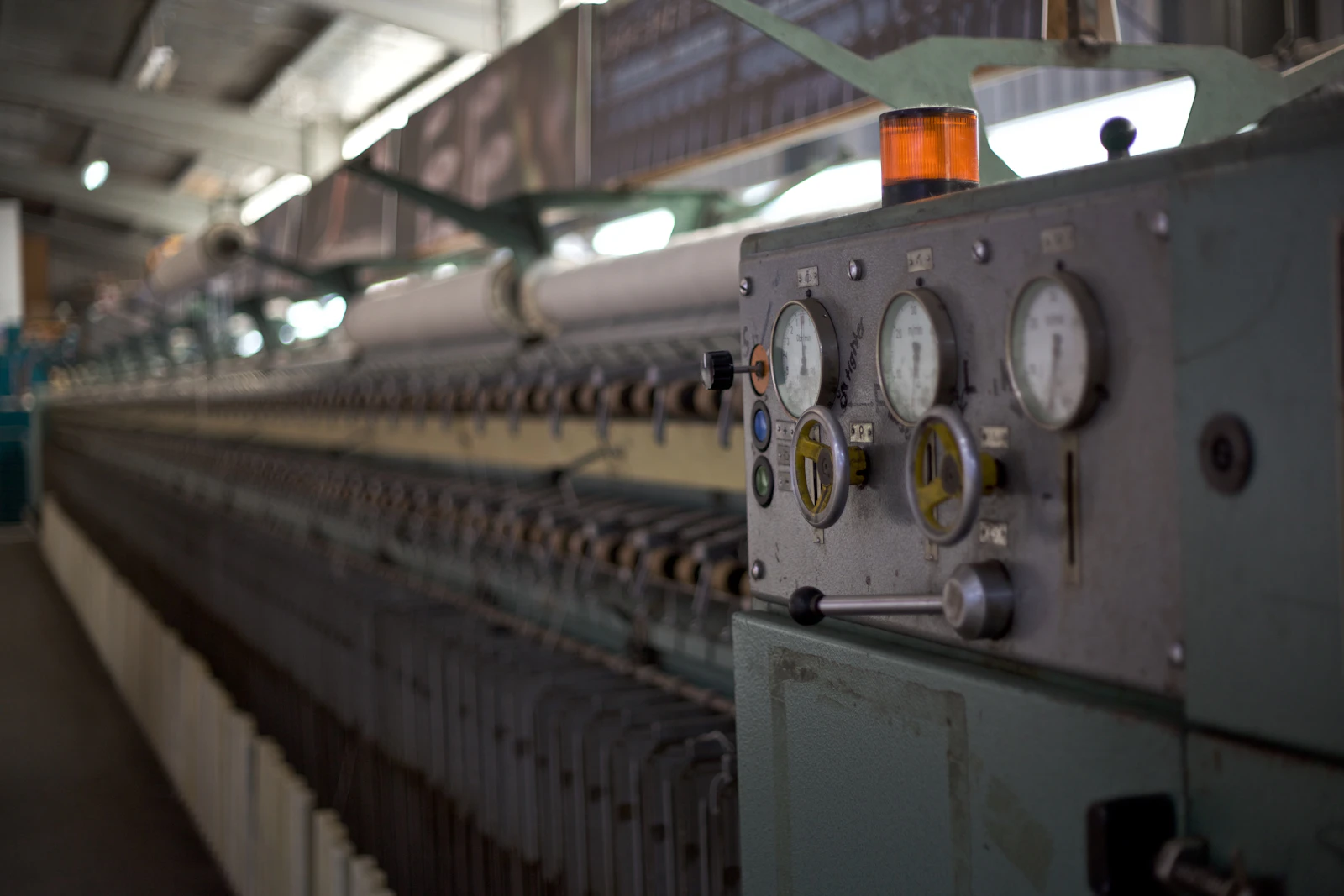
Most overruns in threading machine equipment hire costs come from renting the wrong “completeness level” of kit (forcing mid-job add-ons) or from holding the machine on rent while other sprinkler tasks consume the schedule. In Milwaukee, the cleanest way to tighten cost is to (1) standardize the package you request, (2) coordinate delivery and return to avoid weekend creep, and (3) control die condition and oil handling so cleaning/service backcharges don’t land on your closeout.
Practical levers rental coordinators use: negotiate a 4-week cap even if you expect to use the unit for 5–6 weeks (then swap/renew as needed), request that die heads be checked for sharpness before delivery, and require a pick ticket listing every accessory (stand, oiler, cutter/reamer, chip tray, foot switch if applicable). If the vendor’s system bills each accessory separately, that’s fine—what matters is that the kit is complete on Day 1 so you don’t pay courier time or second delivery.
For sprinkler system installation in existing buildings, the hidden cost is often material handling rather than the rental line. A handheld threader can be the cheaper total-cost choice when you’re doing short runs at elevation, working above finished ceilings, or threading short nipples where moving pipe to a stationary machine would add lifts, escorts, or after-hours constraints. However, handheld packages can trigger extra charges if batteries and chargers are not included; budget a battery/charger package adder of $10–$25/day when it is not bundled, and clarify replacement costs (lost/damaged batteries can be charged at $250–$450 each depending on platform and capacity).
Rental managers often focus on rates, but for fire sprinkler pipe the more expensive outcome is rework: leaking threads, misalignment, or rejected inspection points that force re-threading. To reduce rework risk while controlling hire cost, confirm that (a) the machine includes the correct die head type for the pipe standard you’re threading (NPT typical), (b) the cutting oil method is compatible with indoor containment requirements, and (c) the stand/vise setup prevents pipe chatter. If the jobsite requires extra floor protection and spill containment, budget a drip pan or containment tray at $8–$20/day and include a cleaning allowance rather than assuming “normal wear.”
Delivery radius norms: many Milwaukee-area deliveries are priced assuming a short metro radius; when projects are in outlying industrial parks or you require timed delivery into a secured site, expect premium charges or narrower delivery windows. If the branch offers “time-certain” delivery, budget a scheduling premium of $50–$125 rather than assuming it is included.
Cold-weather handling: in winter months, add time for load-in and for housekeeping (salt/slush tracked into finished areas). If the threader is staged in unheated areas, you may also see thicker oil behavior and more cleanup—budget an extra $25–$75 for additional absorbents and floor protection on occupied sites.
Downtown access constraints: if the job requires a COI for freight elevators or after-hours loading dock staffing, the schedule can push returns past cutoff times. Budget a conservative 1 extra day on your threader hold when the project is subject to elevator reservations, security escorts, or restricted receiving hours.
To compare threading machine rental quotes apples-to-apples, request every quote in the same structure: base machine, included accessories, optional accessories, and fees. Then validate these items in writing:
If you need a fast estimating rule for Milwaukee threading machine equipment hire costs tied to sprinkler system installation: (1) handheld power-drive packages typically budget in the $45–$95/day band for short bursts; (2) Ridgid 300-class stations typically budget $90–$160/day when kitted and job-ready; (3) automatic threaders typically budget $140–$295/day based on capacity and completeness. Then add delivery/pickup ($170–$350 total typical), waiver (10%–15%), consumables ($120–$350), and a cleaning/late-return contingency ($100–$300) to avoid closeout surprises.
Action item for rental coordinators: before releasing the PO, send a written “kit list” and require the counter to confirm each item is present at checkout. This single step prevents the most common cost overrun on pipe threader hire: paying for a second trip (delivery or runner) to obtain stands, dies, or oil containment after the crew has already mobilized.
